






Approving a TFT LCD module does not eliminate future supply risk. An OEM product may remain in production for years, while the panel, driver IC, connector, backlight, touch component, or manufacturing process used in its display module may change during that period.
LCD lifecycle management establishes a controlled process for handling those changes. It connects the approved module specification with product change notifications, end-of-life planning, last-time-buy decisions, replacement qualification, and production traceability.
This process differs from initial supplier selection. Supplier qualification determines whether a source is suitable before approval; lifecycle management protects the approved configuration after release. Teams still evaluating potential sources can first review this industrial TFT LCD supplier evaluation checklist.
What LCD Lifecycle Management Means for OEM Projects
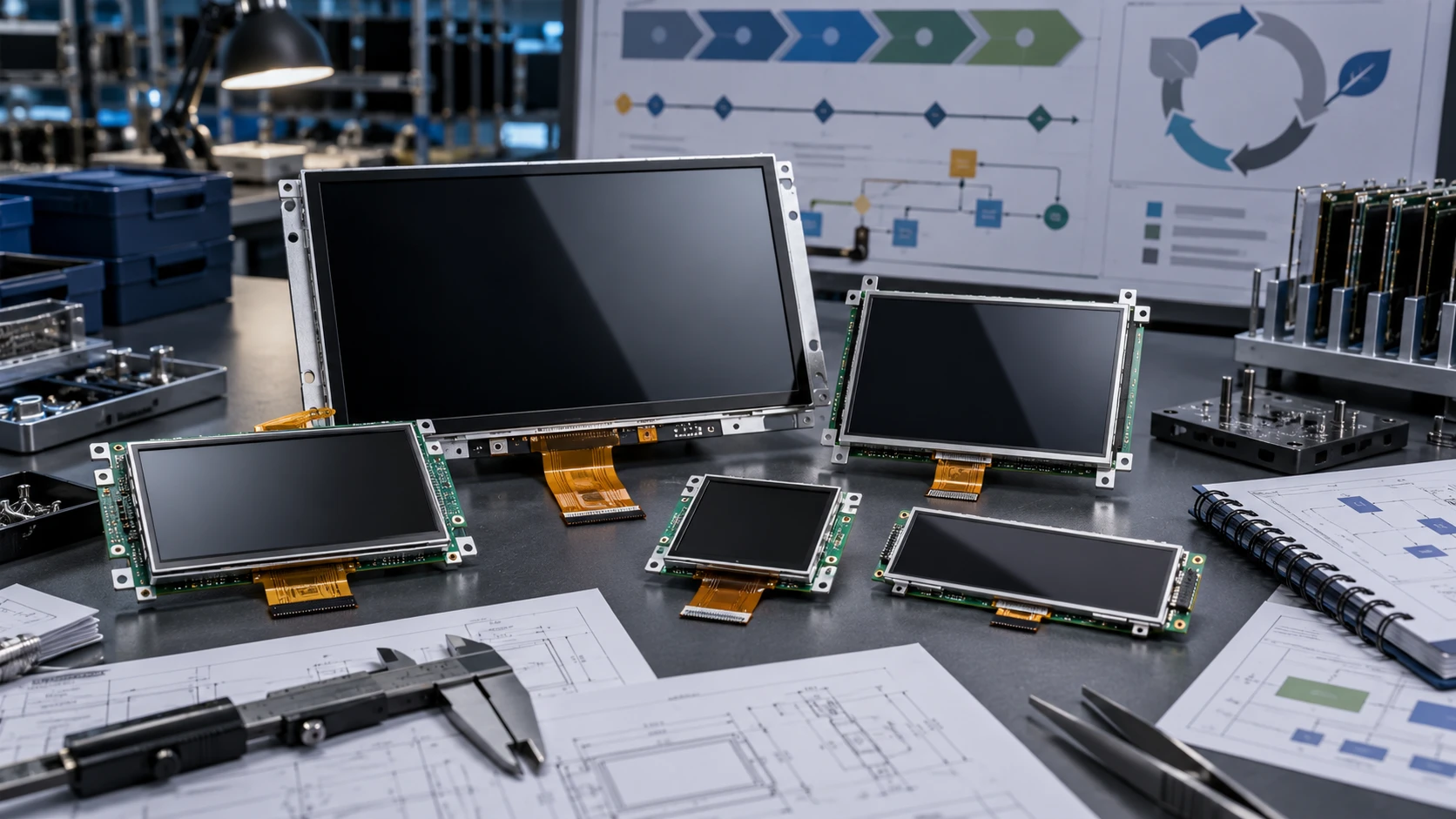
LCD lifecycle management controls a display module from design approval through production, revision changes, obsolescence events, replacement, and eventual product retirement.
A practical lifecycle plan should answer four questions:
- What exact module configuration has been approved?
- How will the OEM receive and evaluate change notifications?
- What happens if the approved module reaches end of life?
- How will a replacement be tested, documented, and released?
Inventory alone cannot provide complete lifecycle protection. It may support production temporarily, but it does not resolve compatibility, revision-control, or future availability issues.
Why TFT LCD End-of-Life Risk Appears
A TFT LCD module contains multiple components with potentially different commercial lifecycles. Changes to the panel, timing controller, driver IC, backlight assembly, flexible cable, connector, touch sensor, or bonding material may affect the completed module.
Obsolescence may occur when a component becomes unavailable, a manufacturing process changes, or demand no longer supports the original configuration. Even when a proposed replacement has the same size and resolution, it may differ mechanically, electrically, or optically.
OEM teams should therefore avoid treating a visually similar module as an automatic substitute.
Freeze the Approved Configuration as the Lifecycle Baseline
Before production release, freeze the approved TFT LCD configuration as a controlled baseline. The baseline should contain enough information to evaluate future revisions and replacement candidates.
Depending on the application, it may include:
- Module model and approved revision
- Outline, active-area, and viewing-area dimensions
- Resolution, interface, and timing requirements
- Connector model, pin assignment, and cable orientation
- Power and backlight requirements
- Brightness, viewing direction, and surface treatment
- Touch configuration
- Operating-temperature requirement
- Mechanical drawings and approved samples
- Initialization or software requirements, where applicable
The baseline should also identify the equipment revision in which the module was approved. This helps prevent a display change from being released without considering the enclosure, controller, cable, firmware, or assembly process.
Establish a PCN and EOL Response Process
A product change notification does not automatically make a module unsuitable. However, every relevant PCN or end-of-life notice should enter a documented review process.
Confirm the Event
Confirm the affected part number, component, revision, notice date, implementation schedule, last-order date, and final shipment conditions. Determine whether the event affects the complete module or one controlled component within it.
Assess Program Exposure
Identify where the module is used, forecast demand, inventory on hand, open orders, expected remaining production life, validation requirements, and any continuing supply obligations.
A low-volume program approaching retirement may require a different response from a platform expected to remain in production for several more years.
Select a Response Path
The main response options include:
- Accepting the change after technical review or testing.
- Placing a last-time buy.
- Qualifying an alternative TFT LCD module.
- Modifying the interface, cable, enclosure, or related design.
- Securing transition inventory while qualifying a replacement.
Release the Decision
Record the decision through the OEM’s engineering-change process. Update drawings, bills of materials, inspection requirements, purchasing records, software documentation, and approved samples where necessary.
Compare a Last-Time Buy With Replacement Planning
A last-time buy may protect near-term production, but it transfers supply risk into inventory. Purchase quantities should not be based only on the supplier’s order deadline.
The decision should consider forecast demand, forecast uncertainty, remaining program life, qualification time, failure allowance, storage conditions, packaging, minimum purchasing requirements, and the risk of excess stock.
Replacement planning requires engineering and validation resources, but it can reduce dependence on a finite inventory position. For longer programs, a balanced strategy may combine transition stock with immediate replacement qualification.
Qualify the Replacement Against the Approved Baseline
A replacement must be compared with the released baseline rather than a general product description. Buyers can review Miqidisplay’s TFT LCD display module range to compare available sizes, resolutions, interfaces, brightness levels, and operating-temperature options.
These modules should be treated as sourcing references, not as automatic replacements. Final suitability depends on the OEM equipment specification and the required validation process.
Mechanical Fit
Compare the outer dimensions, active area, viewing area, mounting points, bezel geometry, component height, cable exit, connector position, and installation tolerances.
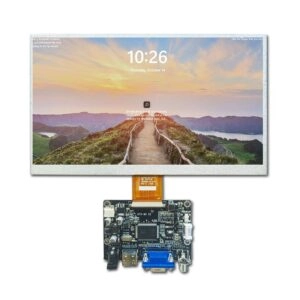
A product such as the 10.4-inch 1024 × 768 LVDS TFT LCD display illustrates why size and resolution are not sufficient selection criteria. Its complete dimensions, cable arrangement, connector position, interface, and environmental requirements must be checked against the approved baseline.
Even a small dimensional difference may affect the enclosure window, mounting structure, gasket compression, cable routing, or assembly sequence.
Electrical Compatibility
Confirm interface type, pin assignment, signal timing, input voltage, initialization requirements, backlight driving conditions, and connector compatibility.
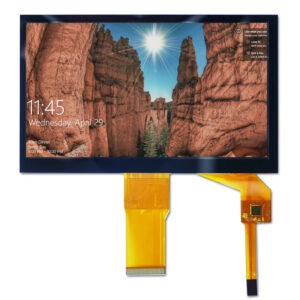
Do not rely only on resolution or connector appearance. For example, the 7-inch 800 × 480 RGB TFT LCD module uses a different interface configuration from an LVDS or MIPI module, even if another candidate has a similar physical size.
A connector can fit mechanically while using a different pin definition or electrical requirement. These differences may require cable, controller, or firmware changes.
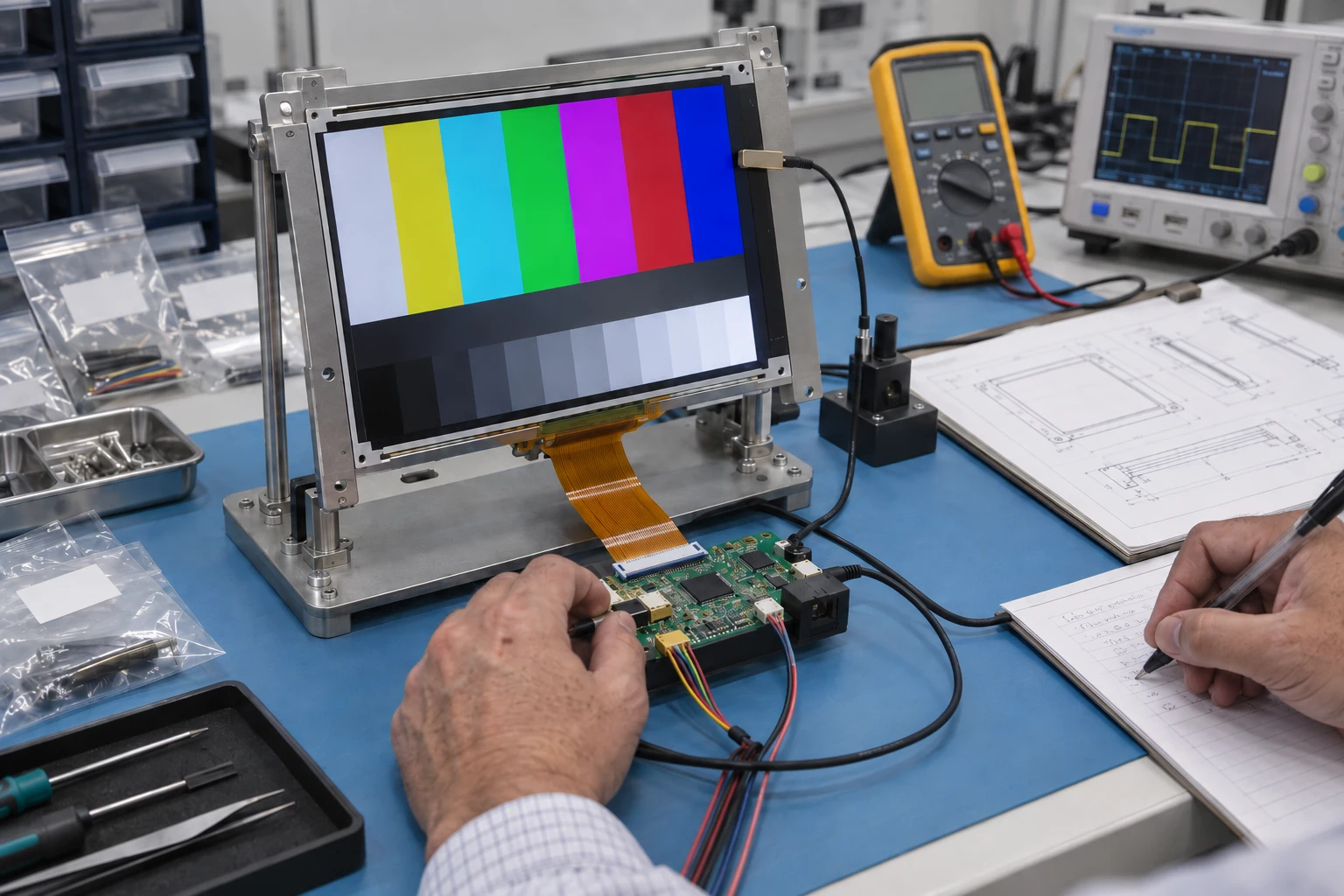
Optical and Touch Behavior
Compare brightness, contrast, viewing direction, color behavior, surface treatment, and performance under the intended operating conditions. Each requirement should be verified against the applicable product specification and equipment environment.
For a touch-enabled module, confirm the touch technology, controller, communication interface, cover structure, bonding method, firmware behavior, and mechanical stack-up.
Revision Release and Production Control
After the candidate passes the required reviews, assign it a controlled part number or approved revision. Update drawings, bills of materials, inspection criteria, software records, and approved samples before production release.
The qualification record should state whether the new module is fully interchangeable, conditionally interchangeable, or approved only for a specific equipment revision.
Maintain Lifecycle Control After Production Release
Lifecycle management continues after the replacement enters production. Engineering, procurement, and quality teams should regularly reconcile approved part numbers, supplier revisions, current drawings, incoming-inspection criteria, and production records.
When multiple revisions are approved, purchasing documents should define whether they may be mixed within an order or production batch. Module and revision traceability should be sufficient to connect future changes or production deviations with the affected equipment.
Define Supplier Responsibilities in the Lifecycle Plan
A long term TFT LCD supplier should support a defined communication and documentation process. Before production release, the OEM should clarify:
- Which changes require formal notification
- Who receives PCN and EOL notices
- What documents accompany a proposed revision
- How evaluation samples are identified
- How approved configurations are controlled in production
- What information supports last-time-buy planning
- How replacement candidates are proposed and documented
If a standard replacement does not satisfy the approved baseline, available custom display solutions may be evaluated for cable, connector, touch, brightness, or mechanical configuration requirements. Any customization should still pass the OEM’s applicable technical and production-release reviews.
Conclusion
Long-term TFT LCD supply continuity depends on controlled decisions rather than finding a similar-looking module after an EOL notice arrives.
A reliable process freezes the approved configuration, establishes PCN and EOL responsibilities, evaluates last-time-buy exposure, qualifies replacements against the baseline, and maintains revision traceability throughout production.
FAQs
When should LCD lifecycle planning begin?
It should begin before the TFT LCD module is released for production. A complete approval baseline makes later PCN, EOL, and replacement reviews more reliable.
Is the same size and resolution enough for a replacement?
No. Dimensions, mounting features, pin assignment, interface timing, voltage, brightness, viewing direction, backlight, touch configuration, and software compatibility may also require verification.
Is a last-time buy always the safest response?
No. It may support a program with predictable remaining demand, but it creates forecasting, storage, and excess-inventory risks. Longer programs may benefit from parallel replacement qualification.
What should a PCN review include?
It should identify the affected component, revision, implementation schedule, technical differences, program exposure, testing requirements, inventory impact, and final engineering decision.
Can two approved revisions be used interchangeably?
Only when their compatibility has been verified and the engineering release explicitly permits interchangeability. Otherwise, each revision should remain separately controlled.
Request a TFT LCD Lifecycle and EOL Review
If your OEM project requires long-term supply planning, replacement assessment, or revision-controlled sourcing, request a Miqidisplay technical fit review.
Provide the current module model, diagonal size, outline and active-area dimensions, resolution, interface, pin assignment, touch requirement, brightness, viewing direction, operating temperature, quantity forecast, mechanical drawings, EOL notice, and integration environment.
These inputs allow Miqidisplay to assess potential component compatibility, customization scope, sample requirements, documentation needs, and the appropriate next steps for a controlled sourcing review.