






An LCD module may remain physically compatible with an OEM product for years, yet its internal components, manufacturing process, or production status can change during that period. If these changes are not reviewed systematically, they can create qualification delays, unexpected redesign work, inventory shortages, or production interruptions.
ECN, PCN, EOL, and LTB notices help engineering and procurement teams manage these risks. The terms are related, but each requires a different response. Buyers should understand what each notice means, which functions need to review it, and when action must be completed.
ECN, PCN, EOL, and LTB: The Practical Difference
Terminology can vary between manufacturers, particularly for ECN and PCN. OEM buyers should therefore confirm how each supplier defines and distributes its notices.
| Notice | Typical Meaning | Main Purpose | Buyer Response |
| ECN | Engineering Change Notice | Records a technical or production change | Review the affected specifications and validation requirements |
| PCN | Product Change Notification | Communicates a product change to customers | Assess form, fit, function, quality, and supply impact |
| EOL | End of Life | Announces that regular production will end | Identify replacement, redesign, or final-order requirements |
| LTB | Last Time Buy | Defines the final ordering opportunity | Calculate demand and place the final non-cancellable order |
An ECN or PCN does not automatically mean that an LCD module has become unsuitable. However, the change should not be accepted solely because the model number remains unchanged. An EOL notice, by contrast, indicates that continued supply is ending. The associated LTB deadline determines how long the buyer has to protect production while preparing an alternative.
What an ECN Means for an LCD Module
An Engineering Change Notice normally documents a modification to a product, component, material, drawing, manufacturing process, test method, or production location. Some suppliers use ECNs internally and issue a separate PCN to customers. Others may provide an ECN directly to approved buyers.
For an LCD module, an ECN may involve:
- A controller or driver IC revision
- A change to the FPC, connector, backlight, or polarizer
- A material or process change
- A revised mechanical drawing
- A firmware or initialization change
- A transfer between qualified production locations
The review should begin by identifying the affected part number, revision, production date, and implementation date. Engineering should then determine whether the change affects electrical characteristics, interface timing, optical performance, mechanical integration, environmental limits, or software initialization.
Procurement should also confirm whether old and new revisions can be mixed in the same production period. Without clear revision control, receiving inspection and traceability become more difficult.
How a PCN Affects Procurement Decisions
A Product Change Notification is the customer-facing document used to communicate a planned change. A useful PCN should explain what is changing, why it is changing, which products are affected, when the change takes effect, and whether samples or supporting test data are available.
The buyer should route the notice to all affected functions rather than treating it as a purchasing document only. Engineering may need to compare specifications and drawings. Quality may review reliability data or update inspection records. Operations may need to separate revisions during pilot production. Procurement must manage timing, inventory, and supplier communication.
The level of revalidation should reflect the risk of the change. A documentation correction may require only a controlled record update. A new IC, FPC layout, optical material, connector, or manufacturing process may require sample testing in the actual host system.
The approval decision should be recorded with the reviewed documents, test results, approved revision, and implementation date. This creates a defensible change history for future production and failure analysis.
What to Do When an LCD Module Reaches EOL
An End-of-Life notice means the supplier plans to discontinue regular production of the module. Buyers should first confirm the last order date, final shipment date, minimum order quantity, order conditions, and whether existing commitments remain valid.
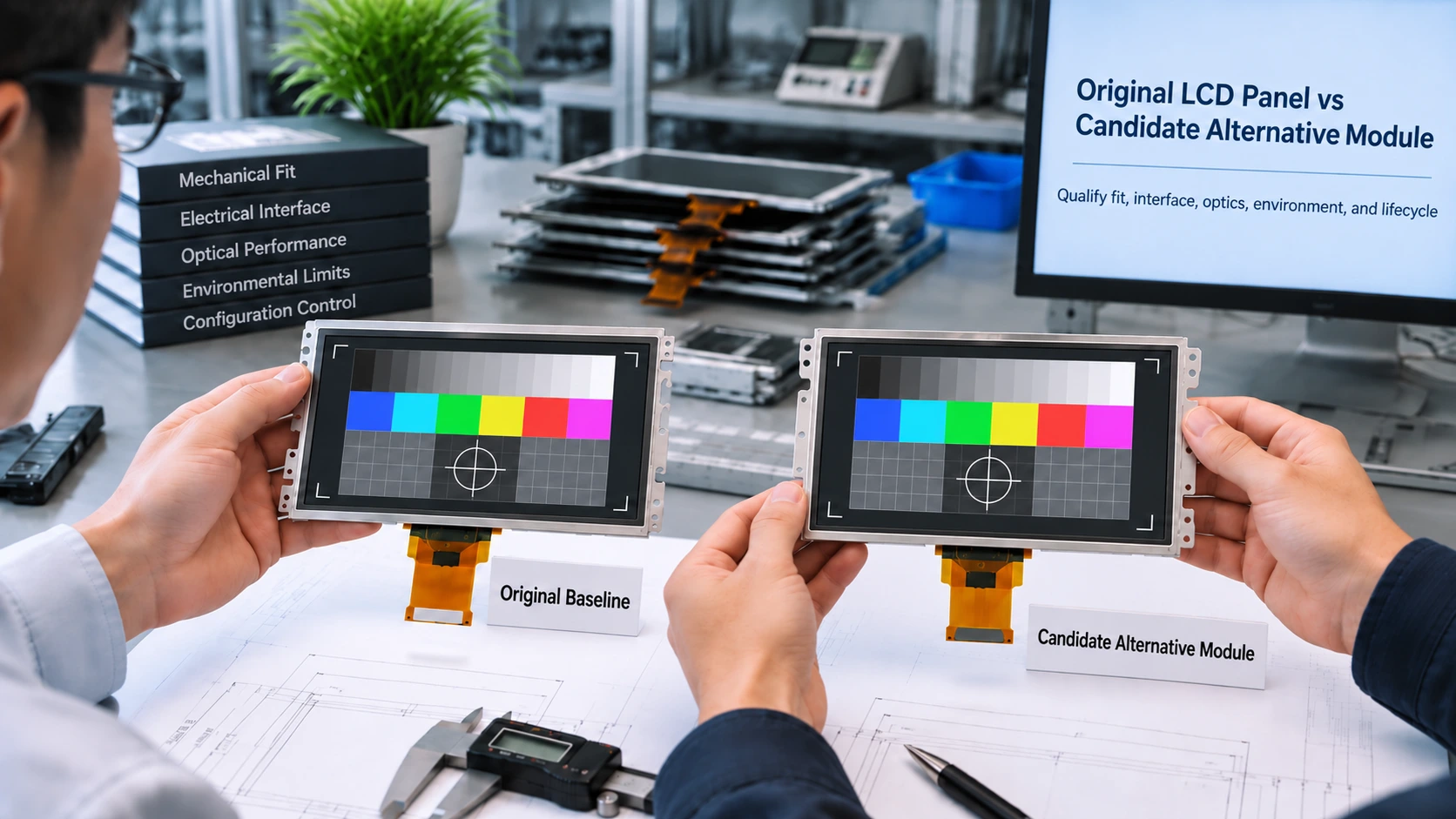
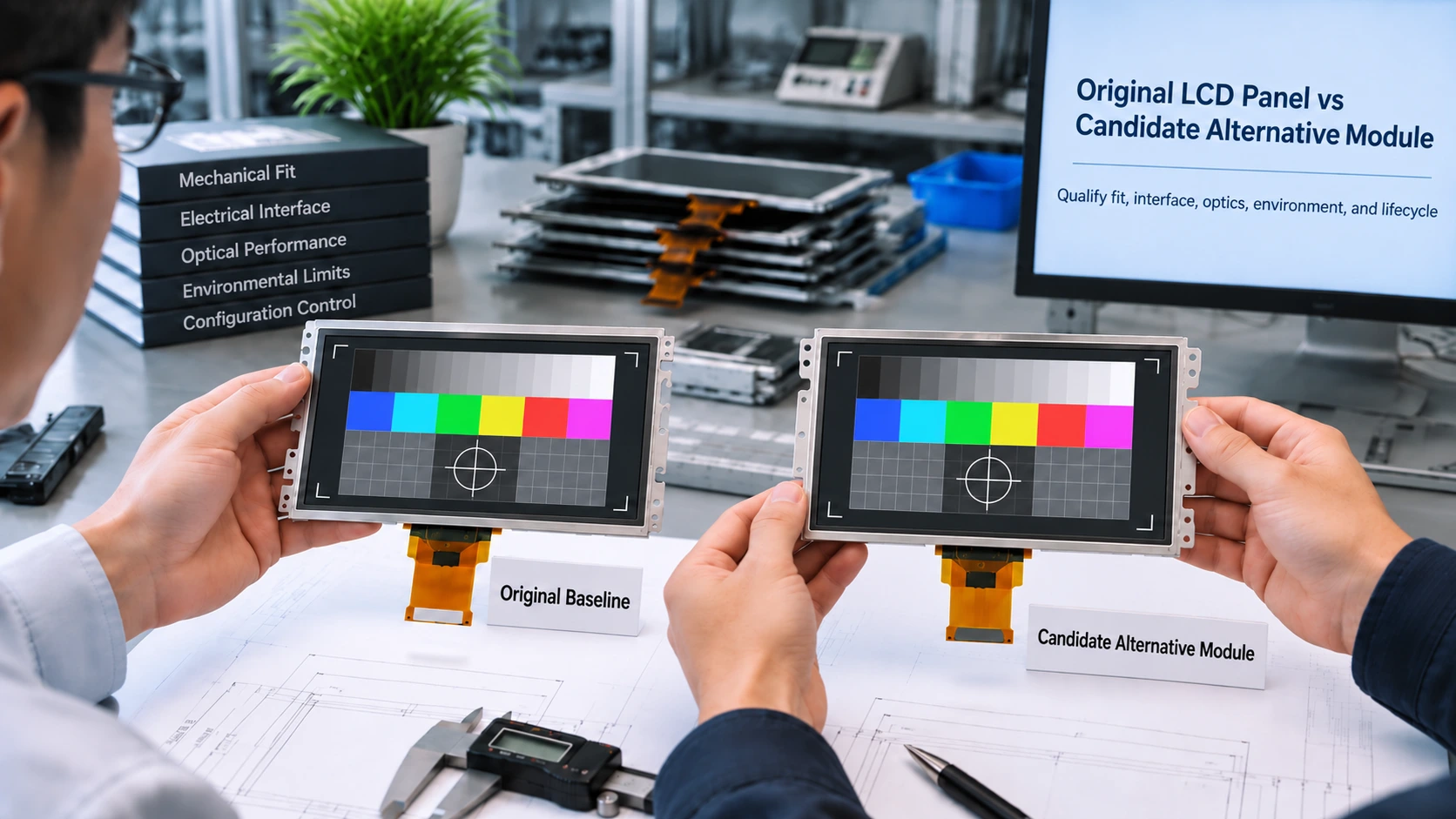
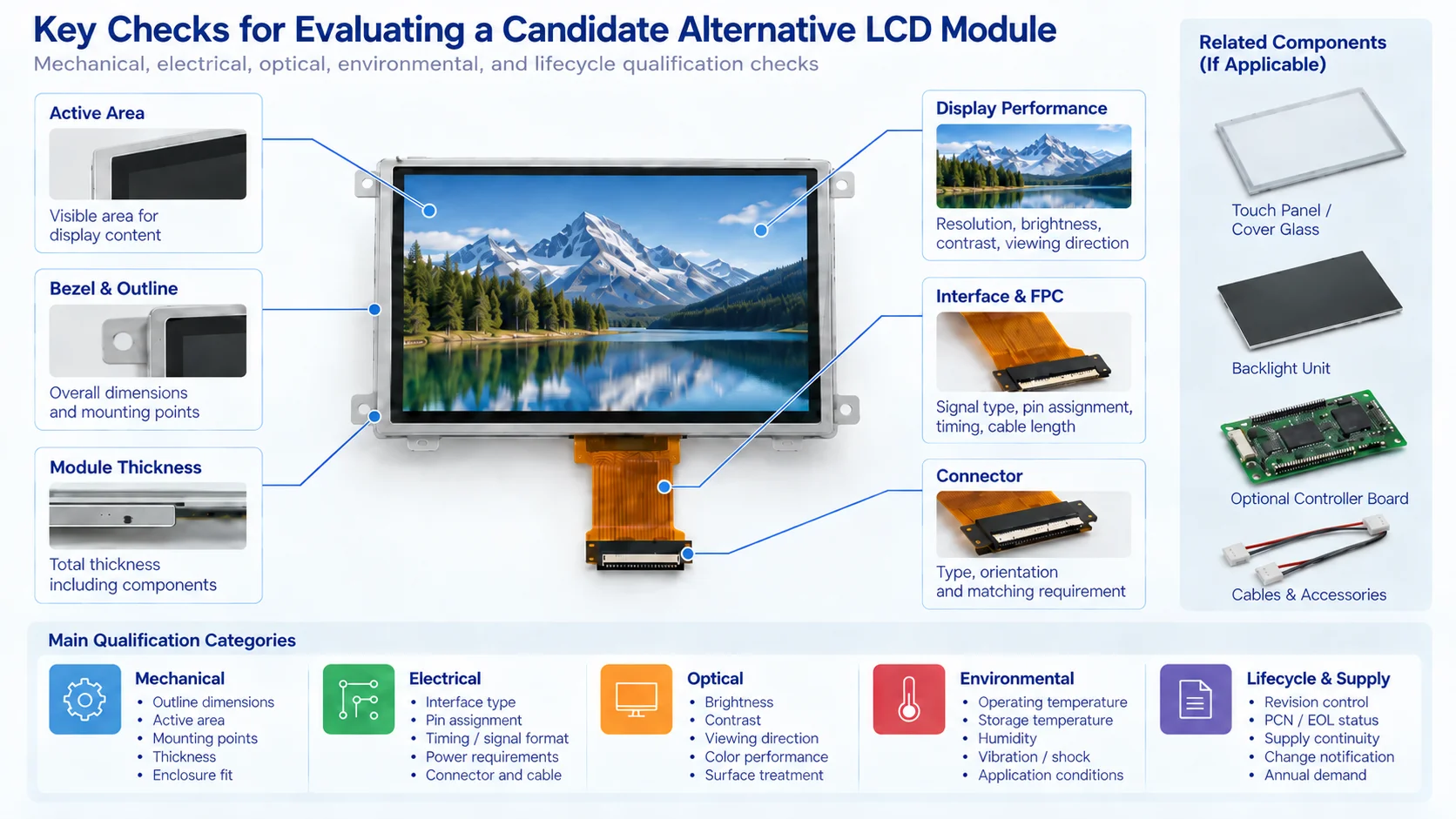
The next step is to determine whether a qualified alternative already exists. A replacement should be evaluated against the approved product requirements, not simply the diagonal size or resolution. The review may include outline dimensions, active area, mounting points, connector position, pin assignment, interface, input voltage, timing, brightness, viewing direction, operating temperature, backlight requirements, and software behavior.
A controlled comparison can follow the same principles used in a custom LCD module acceptance criteria guide.
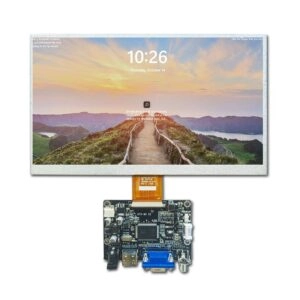
Buyers can also review available TFT LCD display modules when screening potential replacements by size, resolution, interface, brightness, and operating conditions. A category-level match is only a starting point. It does not prove electrical, mechanical, optical, or software compatibility with the approved design.
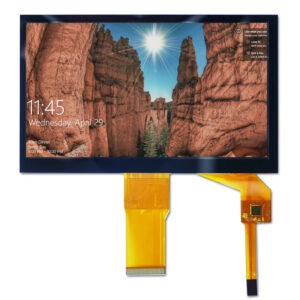
If the assembly includes a touch layer, available industrial touch panels may be reviewed separately. Touch interface, outline dimensions, cover-glass construction, bonding method, and mechanical integration must remain part of replacement validation.
How to Plan a Last Time Buy
A Last Time Buy is the final opportunity to order a discontinued LCD module before production closes. The required quantity should not be based only on recent monthly consumption.
A practical calculation should consider:
- Confirmed production demand
- Forecast demand during the redesign period
- Service or warranty obligations
- Qualification and pilot-production requirements
- Expected scrap and manufacturing yield
- Inventory already available
- Open purchase orders
- Storage life and storage conditions
Buyers should also confirm whether the LTB order is non-cancellable and non-returnable, whether partial deliveries are permitted, and whether the supplier can guarantee a consistent approved revision.
Overbuying can leave the OEM with aging inventory, while underbuying can stop production before a replacement is validated. The calculation should therefore be jointly approved by procurement, engineering, operations, quality, and the relevant product owner.
A Focused Lifecycle Notice Workflow
A controlled workflow helps prevent notices from being overlooked or approved without sufficient review.
- Register the notice.Record the affected part number, notice type, receipt date, implementation date, and response deadline.
- Identify the impact.Compare the notice with the approved specification, drawing, revision, and application requirements.
- Assign reviewers.Route technical issues to engineering, validation issues to quality, and demand or timing issues to procurement and operations.
- Define required evidence.Request revised drawings, specifications, samples, comparison data, or qualification information when necessary.
- Record the decision.Approve, reject, or conditionally approve the change with clear reasons and required actions.
- Control implementation.Update approved records, incoming inspection documents, inventory identification, and production instructions.
For EOL and LTB cases, the workflow should also include replacement qualification milestones and a supply-coverage plan.
Add Lifecycle Requirements to the RFQ
Lifecycle expectations are easier to manage when they are established before supplier approval. An RFQ can request the proposed module status, expected availability, notification lead time, traceability method, change-control procedure, and EOL support policy.
The custom TFT LCD module RFQ guide provides a broader framework for documenting electrical, mechanical, optical, environmental, commercial, and lifecycle requirements before quotation.
Evaluate Supplier Lifecycle Control
Supplier evaluation should confirm who issues change notices, how affected customers are identified, what information is included, and how much response time is normally provided. Buyers should also determine whether revision history, production traceability, replacement support, and sample coordination are available.
The objective is not to demand that a module never changes. It is to ensure that changes are communicated early enough for the OEM to make a controlled decision.
Conclusion
ECN, PCN, EOL, and LTB notices represent different stages of product and supply change. Treating them as routine purchasing messages can expose an OEM to unplanned validation, incompatible revisions, or material shortages.
A documented review process connects supplier notices with engineering approval, inventory planning, traceability, and replacement qualification. This gives OEM teams more control over both technical continuity and long-term supply.
FAQ
Are ECN and PCN the same?
Not always. An ECN usually records an engineering change, while a PCN communicates a product change to customers. Some suppliers use the terms differently, so buyers should confirm the supplier’s definitions.
Does a PCN always require full requalification?
No. The required testing depends on the nature and risk of the change. A major component, interface, optical, mechanical, or process change may require application-level testing, while a minor documentation update may not.
Can a replacement LCD module use the same size and resolution but still be incompatible?
Yes. Connector position, pin assignment, timing, voltage, initialization, dimensions, brightness, viewing characteristics, and backlight requirements may differ even when size and resolution are identical.
When should LTB planning begin?
Planning should begin as soon as the EOL or LTB notice is received. Buyers need enough time to confirm demand, assess inventory, negotiate final-order conditions, and qualify an alternative before the deadline.
Request an LCD Module Lifecycle Review
If your project is affected by an ECN, PCN, EOL, or LTB notice, provide the current module part number, specification, drawings, application requirements, forecast demand, and required delivery schedule. You can request a Miqidisplay technical fit review to discuss replacement screening, specification comparison, sample requirements, and continuity planning.
Email: mary@miqidisplay.com
WhatsApp: +86 189 6801 5464; +44 07892800850