





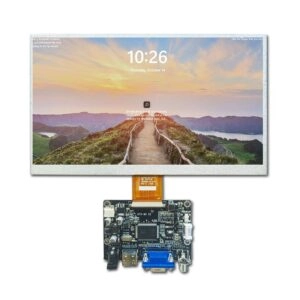
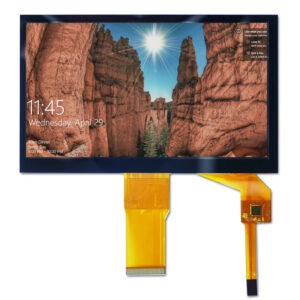


Choosing an industrial TFT LCD supplier is a technical qualification task, not a price-only comparison. An effective industrial TFT LCD supplier evaluation checklist helps engineering and procurement teams confirm display fit, quality controls, customization capability, and supply continuity before releasing an RFQ or approving samples. The process below is designed for OEM projects that integrate a screen or display module into their own equipment.

1. Start With the Application Requirements
Write the requirement before contacting an industrial LCD supplier. Define the application, user viewing distance, ambient light, expected operating hours, installation orientation, and the consequences of a display failure. This prevents suppliers from quoting different technical configurations under the same part description.
The initial requirement should include:
- Display type, diagonal size, active area, and outline dimensions
- Resolution, aspect ratio, viewing direction, and brightness target
- Interface, supply voltage, current limits, and connector orientation
- Touch requirement, cover-glass limits, and mounting method
- Operating and storage temperature
- Vibration, shock, humidity, dust, and cleaning exposure
- Annual quantity, launch schedule, and expected program life
A clear input package makes industrial LCD module sourcing more comparable because every candidate is responding to the same engineering boundary.
2. Check Technical Fit Before Commercial Fit
Mechanical and optical compatibility
Request a current mechanical drawing, not only a product photo. Check outline dimensions, active-area position, thickness, mounting holes, connector location, cable exit direction, and tolerance stack-up. A module that fits the nominal opening may still interfere with a bezel, bracket, gasket, or nearby electronics.
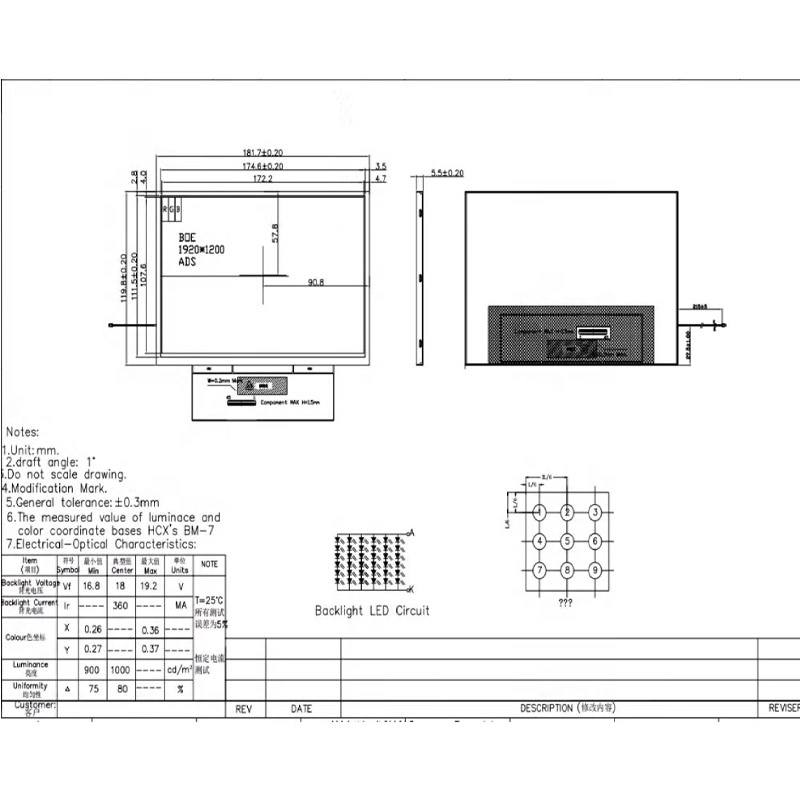
Optical requirements should define brightness, contrast, viewing direction, uniformity, response behavior, and acceptable visible defects. Ask how measurements are taken, including warm-up time, test pattern, measurement angle, and instrument position. These details are essential for a meaningful comparison between suppliers.
Interface and electrical compatibility
Confirm the exact interface and pin definition. A TFT LCD interface compatibility review should cover signal timing, initialization sequence, voltage levels, power-on behavior, current consumption, connector pitch, and cable length. Ask for the datasheet and sample-level documentation needed by the firmware and hardware teams.
Do not accept “compatible with your controller” as sufficient evidence. Request a written interface table and verify it against the host board, software configuration, and EMC design assumptions. If a custom cable or connector is required, freeze the drawing revision before sample approval.
Environmental and reliability fit
“Industrial grade” is not a test result. Ask the custom TFT LCD supplier to map the proposed module to the actual temperature, humidity, vibration, shock, and operating-duration profile. Qualification conditions should identify severity, duration, sample quantity, recovery time, and pass criteria.
The supplier should also explain how environmental changes affect optical output, adhesives, touch performance, cable construction, and mechanical fit. Requirements that are conditional on size, material, or configuration must remain clearly documented.
3. Evaluate the Supplier’s Process Capability
Quality system and traceability
A credible TFT LCD manufacturer should provide evidence of incoming inspection, in-process checks, final inspection, calibration control, nonconformance handling, corrective action, and engineering-change approval. A certificate alone is not enough; verify its scope and validity for the relevant operation.
Ask how each shipment is identified by part number, revision, production lot, and inspection status. Traceability becomes especially important when multiple sizes, interfaces, or touch options are purchased under one project family.
Customization and engineering control
For OEM work, evaluate how requirements become controlled engineering outputs. Evidence may include drawing-release procedures, sample approval records, cable and connector changes, touch integration, cover-glass options, backlight adjustments, PCB modifications, and mounting adaptations.
The key question is not whether a supplier says “customization available.” It is whether the supplier can freeze an approved configuration and reproduce it consistently. Clarify who owns the drawings, how revisions are communicated, and whether changes require written approval.
Capacity and long-term continuity
Review capacity for the exact configuration rather than the supplier’s total factory output. Discuss bottlenecks, critical materials, minimum batch size, production scheduling, and contingency options. For long-life programs, ask how substitutions, process changes, and discontinuation risks are controlled.
A useful LCD supplier qualification checklist includes a continuity plan for the approved panel, controller, touch stack, cable, connector, and mechanical parts. Electrically similar replacements should not enter production without engineering review.
4. Validate Samples With Measurable Criteria
Golden sample and document control
Before approval, define a golden sample linked to the mechanical drawing, interface table, cable drawing, optical limits, and touch behavior. State which document governs if two records conflict. This prevents later lots from being judged against informal email instructions.
Sample evaluation should use the same test setup planned for incoming inspection. Record image quality, startup behavior, touch response where applicable, fit, connector engagement, and operation across the approved voltage and temperature range.
TFT LCD quality inspection
A practical TFT LCD quality inspection plan separates functional, major, and minor defects. Define inspection distance, viewing angle, illumination, display pattern, inspection time, and allowable quantities for bright dots, dark dots, particles, scratches, stains, bubbles, and edge damage.
Use a documented sampling method for repeat lots. The acceptance number and rejection number should reflect application risk; function-critical defects normally require tighter controls than minor cosmetic variation. Require a lot report or inspection record that links results to the shipment revision.
5. Compare Program Risk, Not Just Unit Price
A lower quotation can create higher total cost when it causes redesign, extra incoming inspection, delayed integration, or an unplanned component change. Compare suppliers using the same categories:
- Technical fit and documentation completeness
- Sample quality and repeatability
- Customization scope and engineering response
- Quality evidence and traceability
- Capacity, continuity, and change control
- Commercial clarity, including tooling and test responsibilities
Ask each candidate to identify assumptions, exclusions, and verification steps. This makes supplier evaluation more transparent and gives procurement a defensible basis for negotiation.
6. Use This Industrial TFT LCD Checklist Before Approval
- Application environment and failure risks are documented.
- Size, active area, outline, thickness, and mounting tolerances are controlled.
- Resolution, brightness, viewing direction, and optical limits are measurable.
- Interface, voltage, timing, pinout, and connector details are confirmed.
- Touch, cover glass, cable, and mechanical customization are defined.
- Operating and storage temperature requirements are mapped to tests.
- Sample results are recorded against a signed golden sample.
- Defect classes, inspection conditions, and sampling rules are agreed.
- Lot traceability and engineering-change approval are documented.
- Capacity, lifecycle, substitution, and continuity risks have an owner.
7. Applying the Checklist With Miqidisplay
Miqidisplay presents a range of TFT LCD display modules for component-level integration. One verified example is a 3.5-inch IPS module with 480 × 800 resolution, MIPI interface, 300 cd/m² brightness, capacitive touch support, and a stated operating range of -20°C to 70°C. The final suitability of any module still depends on the buyer’s host electronics, enclosure, optical conditions, and environmental profile.
For projects requiring changes to cable configuration, touch components, cover glass, interfaces, PCB details, mounting, or backlight parameters, review the custom display solutions available for OEM development. The 3.5-inch IPS TFT LCD module page also shows the type of dimensional, electrical, and environmental information that should be captured during qualification.
Conclusion
A strong industrial TFT LCD supplier evaluation checklist turns a broad sourcing exercise into a controlled engineering decision. Define the application first, verify mechanical and electrical fit, inspect the supplier’s process evidence, approve samples against measurable criteria, and assess continuity alongside price. This approach reduces avoidable redesign and gives procurement a clearer basis for selecting a component partner.
FAQs
What should I send to a supplier first?
Send the display type, diagonal size, active area, outline drawing, resolution, interface, brightness, touch requirement, temperature range, quantity, and integration environment.
How many samples are needed?
The quantity depends on application risk, configuration complexity, and the planned qualification tests. Agree the sample count and pass criteria before testing.
Is a certificate enough to qualify a supplier?
No. Confirm certificate scope, inspection records, traceability, change control, customization procedures, and evidence that the exact configuration can be reproduced.
When should acceptance criteria be finalized?
Finalize them before signing the golden sample and before releasing production orders. Otherwise, later lots may be judged against undocumented expectations.
For a project-specific review, request a Miqidisplay technical fit assessment and provide your display type, size, dimensions, active area, resolution, interface, touch requirement, brightness, viewing direction, operating temperature, mechanical constraints, quantity, drawings, and integration environment. These inputs allow the technical team to assess component compatibility, customization scope, sample requirements, and documentation needs before a quotation decision.
Email: mary@miqidisplay.com
WhatsApp: +86 189 6801 5464; +44 07892800850