






01 / Challenge
Challenge
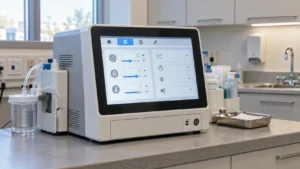
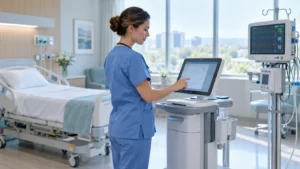
Medical equipment control interfaces need to organize settings, equipment status and workflow controls on a readable screen while fitting the enclosure and touch assembly. This concept evaluates a 15-inch, 4:3 display for an indoor medical equipment console, focusing on information layout, touch integration and the optical stack.
02 / Solution
Solution
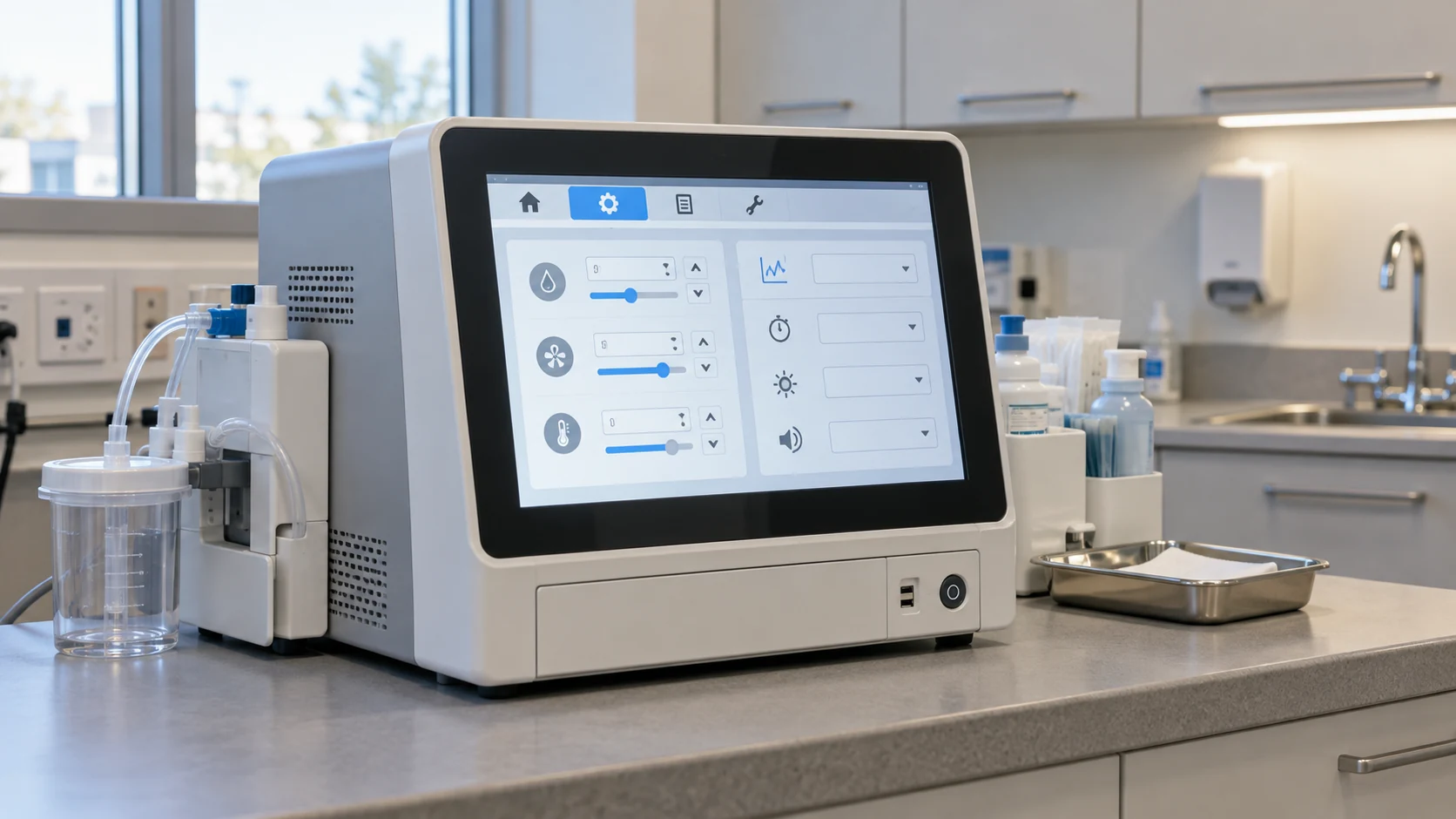
The proposed configuration uses the 91-15001-001 display assembly with 1600 × 1200 resolution. Its 4:3 format provides a defined layout area for grouped controls and parameter fields. The design combines a G+G touch structure, optical bonding and specified cover-glass treatments, with eDP input and an LVDS connection defined on the conversion board.
1600 × 1200 information layout
The native resolution contains 1.92 million pixels, calculated from 1600 × 1200. It provides a basis for arranging equipment information and controls. Font size, viewing distance and interface contrast should be evaluated on a prototype; resolution alone does not establish diagnostic suitability or calibrated image reproduction.
Bonded touch and cover-glass construction
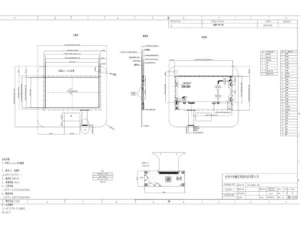
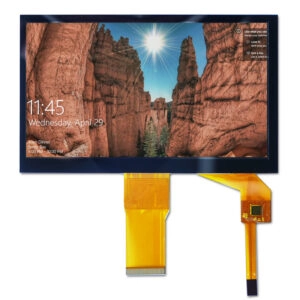
The drawing specifies G+G construction, GT9110H touch IC, 10 touch points and optical bonding. It also defines a 2.0 mm chemically strengthened cover, 0.70 mm ITO glass, surface hardness ≥7H and minimum light transmittance of 82% in the touch-assembly table. AG treatment is specified at gloss 70 ±15%, with AF coating and a water contact angle ≥110°. These construction requirements support integration review; they do not establish disinfectant compatibility, antibacterial performance or glove operation.
Defined electrical and environmental boundaries
The specification identifies eDP as the module interface and provides a 30-pin eDP input definition at J4, including two main-link lanes. The board also defines LVDS at J1. The operating range is −10°C to +50°C and the storage range is −20°C to +60°C. Host timing, power sequence, touch communication and enclosure thermal conditions require engineering confirmation before equipment integration.
Technical specifications
| Item | Specification |
|---|---|
| Model | 91-15001-001; Rev. A; 2023-05-04 |
| Size | 15 inch |
| Native resolution | 1600 × 1200 (UXGA) |
| Aspect ratio | 4:3, calculated |
| Pixel count | 1,920,000, calculated |
| Signal interface | eDP input J4; LVDS connection J1 on board |
| Contrast | 800:1 minimum; typical value not listed |
| Viewing angles | 85° U/D/L/R typical, CR ≥10 |
| Response time | 35 ms maximum |
| NTSC ratio | 45% minimum |
| Brightness | TBD; no confirmed luminance |
| Touch structure | G+G; optical bonding |
| Touch IC | GT9110H |
| Touch points | 10 |
| Cover glass | 2.0 mm; chemically strengthened |
| ITO glass | 0.70 mm |
| Touch surface hardness | ≥7H, drawing requirement |
| Touch transmittance | 82% minimum, touch-assembly table |
| Surface treatments | AG gloss 70 ±15%; AF; water contact angle ≥110° |
| Assembly outline | 273.63 × 343.63 × 11.15 mm nominal; drawing orientation |
| LCM active area | 228.50 × 304.88 mm, drawing orientation |
| Operating temperature | −10°C to +50°C |
| Storage temperature | −20°C to +60°C |
Reliability requirements
| Item | Specification |
|---|---|
| High-temperature operation | 50°C; 120 h |
| High-temperature storage | 60°C; 120 h |
| Low-temperature operation | −10°C; 120 h |
| Low-temperature storage | −20°C; 120 h |
| Humidity | 40°C; 90% RH; 120 h |
| Thermal shock | −10°C → 25°C → 50°C; 0.5 h → 5 min → 0.5 h; 10 cycles |
| ESD requirements | HBM ±8 kV, 330 Ω; 150 pF; MM ±200 V, 200 pF; 0 Ω |
These are specification requirements, not completed project test records. ESD model conditions do not establish medical equipment EMC certification. Final inspection after testing requires 24 hours at room temperature.
03 / Result
Result
The proposed assembly brings a 15-inch UXGA screen, bonded multi-touch construction and defined integration conditions into one equipment-interface brief. It gives the development team concrete inputs for enclosure design, user-interface layout and prototype testing. Final performance should be validated in the intended equipment and operating environment.
Discuss Your Medical Equipment Display Requirements
Share your enclosure drawing, host interface, user-interface layout and operating environment with Miqidisplay to review the display and touch configuration.