





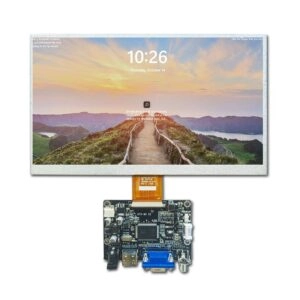
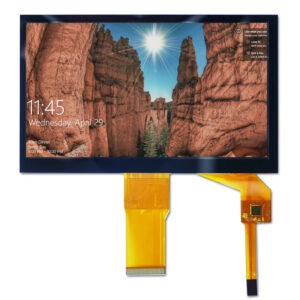

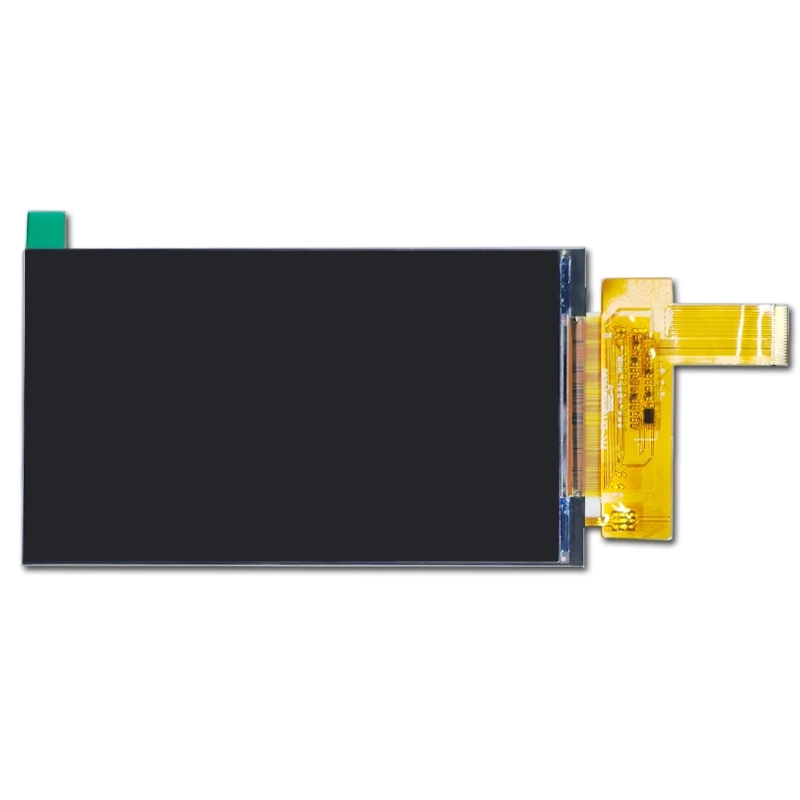
A custom TFT LCD module RFQ should convert product requirements into a package that qualified display manufacturers can evaluate consistently. Precision reduces interpretation gaps, unsuitable substitutions, and review time while improving comparison across engineering, sourcing, quality, and finance teams.
For business buyers, an effective RFQ defines the application, display performance, integration boundaries, validation expectations, forecast volume, and lifecycle conditions.
1. State the Application and Project Stage
Begin with a concise application description and the current development phase. The supplier should understand whether the module is intended for industrial equipment, medical instrumentation, access-control hardware, transportation electronics, test equipment, or another professional product category.
State whether the project is at concept, prototype, validation, pilot production, or mass production. Include the planned sample date, qualification date, production launch, expected service life, and target markets. Application context helps the engineering team judge optical, mechanical, environmental, documentation, and supply requirements.
2. Define Mechanical and Dimensional Requirements
Module Geometry
Specify diagonal size, active area, outline dimensions, maximum thickness, aspect ratio, orientation, corner geometry, and allowable tolerance. Attach a dimensional drawing whenever enclosure constraints already exist. Clearly mark keep-out zones, bezel limits, mounting points, datum references, connector position, cable exit direction, and bending restrictions.
Integration Constraints
Describe how the module will be retained inside the product, including brackets, adhesive areas, gasket interfaces, screw locations, compression limits, and cable clearance. For a custom shape, provide a native mechanical file and a PDF drawing.
3. Specify Optical Performance
Optical requirements should reflect the operating environment rather than a preference for maximum specifications. Include resolution, pixel arrangement, display mode, viewing direction, viewing angle, luminance, contrast ratio, color depth, gamut, response time, refresh rate, uniformity, and color variation.
Brightness should be expressed in candelas per square metre and paired with an environmental condition. Perceived performance also depends on ambient light, cover lens treatment, bonding, polarizer selection, and viewing angle. For wide viewing performance, state the required image quality from each direction.
Acceptance limits for bright dots, dark dots, mura, light leakage, scratches, contamination, and cosmetic defects should also be included. A supplier cannot price an appropriate inspection level without an agreed appearance standard.

4. Detail the Electrical Interface and Timing
The RFQ should identify the host processor output and the preferred display interface, such as RGB, LVDS, SPI, MCU, MIPI DSI, or eDP. MIPI DSI, for example, is defined as a high-speed serial connection between a host processor and a display module, so lane count, data rate, command mode, video mode, and control requirements must be aligned with the host design.
Provide logic voltage, power rails, current limits, power-up sequence, power-down sequence, signal levels, pixel clock, synchronization timing, frame rate, initialization code expectations, and backlight control method. Include the proposed connector family, pin count, pin assignment, cable length, cable orientation, and mating-cycle requirement.
A host schematic, interface block diagram, and timing reference can prevent compatibility errors. When firmware support is expected, define whether initialization code, register settings, or integration guidance is included.
5. Describe Touch and Cover Lens Requirements
When touch is required, identify capacitive or resistive technology, touch points, controller location, interface, glove operation, water tolerance, palm rejection, and accuracy. State whether the sensor will be separate or integrated with the TFT LCD module.
Cover lens requirements should include glass thickness, dimensions, shape, edge treatment, printed border, opening windows, surface hardness, optical coatings, and bonding preference. The drawing should distinguish visible area, active area, and cover-lens viewing area.
6. List Environmental and Reliability Conditions
Define operating and storage temperature, humidity, thermal cycling, vibration, mechanical shock, electrostatic discharge, relevant ultraviolet exposure, and expected operating hours. A wide-temperature request should state dwell time, temperature profile, and performance criteria.
State whether the product will face condensation, chemicals, dust, repeated cleaning, altitude, or continuous vibration. Reliability requirements should distinguish survival from full optical performance, since brightness, response time, or color may shift at temperature extremes.
Include the qualification plan, sample quantity, test duration, pass criteria, and reporting format.
7. Identify Required Customization
Common customization items include flexible printed cable routing, connector changes, pinout adjustments, interface conversion, circuit board shape, component placement, touch integration, cover lens geometry, optical bonding, mounting features, and backlight characteristics. Define these early because each can affect tooling, engineering charges, lead time, and minimum order quantity.
Flexible-circuit requirements deserve particular precision. Industry design standards address flexible and rigid-flexible printed board structures, making bend area, copper direction, stiffener position, thickness, and connector reinforcement important RFQ inputs.
8. Set Quality, Compliance, and Documentation Expectations
Define the quality system, inspection method, sampling level, traceability, lot identification, change control, and failure-analysis response. Request a preliminary specification, final drawing, interface definition, inspection criteria, reliability report, material declaration, and approved sample record.
Compliance requirements should match the destination market and final product classification. When RoHS documentation is required, the RFQ should request current declarations and supporting material information because the directive restricts specified hazardous substances in electrical and electronic equipment.
9. Include Commercial and Supply-Chain Data
Provide prototype quantity, annual forecast, order frequency, production duration, target cost range, delivery location, packaging needs, and trade terms. Ask suppliers to separate sample, tooling, engineering, certification, unit-price, and freight assumptions.
The quotation should state minimum order quantity, production and sample lead times, price breaks, payment terms, warranty scope, capacity assumptions, and validity. For long-life equipment, request change notification, discontinuation notice, last-time-buy support, approved alternates, and continuity planning.
10. Define the Quotation Response Format
A strong RFQ tells suppliers how to respond. Request a compliance matrix covering every requirement, with each line marked compliant, noncompliant, or subject to clarification. Require all deviations to be listed explicitly rather than buried in notes.
The response package should include the proposed specification, drawing, optical data, electrical characteristics, interface details, reliability evidence, customization scope, tooling assumptions, schedule, commercial terms, and open questions. This structure reduces the risk of selecting a low quotation that misses the actual design during final sourcing approval.
FAQ
What files should accompany a custom TFT LCD module RFQ?
The core package should include a requirement specification, dimensional drawing, host interface information, environmental profile, forecast volume, schedule, and quality criteria. Add a three-dimensional enclosure model or host schematic when integration constraints are complex.
Should an RFQ specify a target price?
A realistic target range can improve feasibility discussions but should not replace detailed requirements. Cost depends on size, resolution, optical performance, touch construction, tooling, validation, quantity, and supply commitment.
How should display defects be addressed?
The RFQ should define allowable bright dots, dark dots, mura, cosmetic defects, contamination, light leakage, and inspection conditions. Acceptance criteria should state viewing distance, ambient illumination, inspection time, and sampling method.
What causes quotation delays?
Delays commonly result from missing drawings, undefined timing, unclear brightness conditions, incomplete touch requirements, uncertain volume, or conflicting mechanical limits. A consolidated package allows engineering and commercial review to proceed in parallel.
Work With a Qualified Custom TFT LCD Module Manufacturer
Miqidisplay is an advanced display technology manufacturer and solutions supplier specializing in LCD, TFT, IPS, selected OLED and VFD display modules, panels, and related display components. Its product scope focuses on display screens and customized display modules rather than finished display systems or complete equipment. Procurement teams can contact Miqidisplay’s sales team to submit application details, dimensional drawings, interface requirements, optical targets, environmental conditions, forecast volumes, and project milestones. For sales enquiries and custom display projects, contact mary@miqidisplay.com. Technical and order-related enquiries can be sent to sale@miqidisplay.com. Direct communication is also available by telephone or WhatsApp at +86 189 6801 5464, or via WhatsApp at +44 07892800850.