





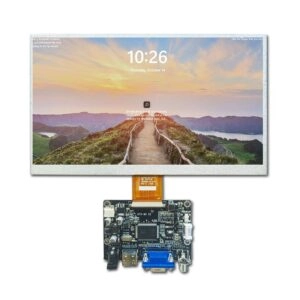
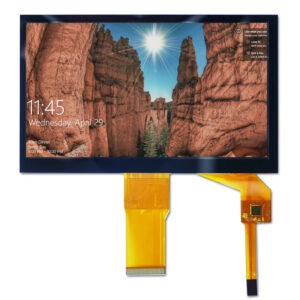


Custom LCD modules should not be approved on size and resolution alone. In industrial sourcing, a module must fit the mechanical design, communicate correctly with host electronics, meet optical requirements, survive the specified environment, and remain consistent across repeat production. Acceptance criteria convert those expectations into measurable pass/fail rules before sample approval and mass production.
A strong specification aligns engineering, quality, and procurement. It should define the approved configuration, test method, defect classification, sampling plan, and disposition process for nonconforming lots. The criteria should be measurable, revision-controlled, and agreed before purchase orders are released.

Start With Application Risk and the Approved Configuration
Define the Industrial Operating Profile
The first step is to translate the application into engineering limits, including operating and storage temperature, humidity, vibration or shock, expected operating hours, ambient light, viewing direction, mounting constraints, and electrical limits.
IEC 61747-10-2 provides environmental test methods for liquid crystal display devices, while IEC 61747-10-1 addresses mechanical robustness. These references help define project-specific tests instead of relying on broad descriptions such as “industrial grade.”
Lock the Golden Sample and Drawing Revision
A signed golden sample should represent the approved appearance and construction. It should be tied to a controlled mechanical drawing, interface definition, cable drawing, connector specification, and optical requirements.
Document precedence should also be established. A controlled drawing can govern dimensions, while an approved interface document can govern timing and pin assignments.
Define Core Technical Acceptance Criteria
Optical Performance
Optical criteria should state limits for luminance, contrast ratio, viewing characteristics, uniformity, response behavior, and visible defects. Warm-up time, measurement angle, test pattern, ambient light, and instrument position should also be controlled.
IEC 61747-30-1 defines measuring methods for transmissive LCD modules. The acceptance document should identify both the target value and the measurement method.
Mechanical Fit and Custom Features
Mechanical criteria should cover outline dimensions, active-area position, thickness, mounting locations, connector position, cable length, cable exit direction, pin pitch, and tolerances. Cover glass, adhesive, gasket, bracket, or other custom mounting features should also have controlled dimensions.
Cable configuration, connector type, PCB layout, interface options, cover glass, mounting details, and backlight parameters should be frozen by revision rather than handled as informal instructions.

Electrical and Functional Performance
The specification should lock interface type, supply voltage, current limits, pin definition, signal timing, and connector orientation. Functional acceptance should confirm correct resolution, stable image output, reliable power-on behavior, and operation across the approved voltage range.
Environmental and Reliability Requirements
Reliability tests should reflect the real service profile. Qualification may include high- and low-temperature operation, temperature cycling, damp heat, vibration, shock, or extended powered operation.
IEC 60068 provides general environmental test methods, while the LCD-specific IEC 61747 series adds display-related guidance. Each requirement should state test severity, duration, sample quantity, recovery time, and post-test pass criteria.
Cosmetic and Pixel Defect Rules
Visual inspection should use defined inspection zones and defect categories for bright dots, dark dots, particles, scratches, stains, bubbles, edge damage, and other appearance defects. Inspection distance, angle, illumination, image pattern, and inspection time should also be specified.
Critical defects affecting function, safety, or assembly should be separated from major and minor appearance defects.
Evaluate the LCD Module Supplier Before Approval
Check Certifications and Quality-System Controls
Certification is useful evidence, but procurement should also verify certificate scope and validity, incoming material control, in-process inspection, final inspection, calibration, nonconformance handling, corrective action, traceability, and engineering change procedures.
ISO 9001 requires organizations to evaluate quality-system performance and control processes needed to meet requirements. Certificates should therefore be supported by project-level records and audit evidence.
Assess Capacity and Supply Continuity
Capacity review should focus on the exact custom configuration rather than total factory output. Important items include monthly capacity, bottlenecks, critical material lead times, minimum production batch, production lead time, safety-stock options, and contingency plans.
Long-life industrial programs also need clear rules for material substitutions, component changes, process changes, and discontinuation risks. Unapproved substitutions should not enter production simply because a replacement appears electrically similar.
Verify Customization Capability
A qualified supplier should convert requirements into controlled engineering outputs. Evidence can include drawing-release procedures, sample approval records, cable and connector customization, PCB modifications, cover-glass options, backlight adjustment, and mechanical integration support. The key issue is the ability to freeze an approved configuration and reproduce it consistently.
Define Incoming Inspection and Mass-Production Controls
Use a Documented Sampling Plan
Incoming inspection should define the lot, sample size, defect classification, acceptance number, and rejection number. ISO 2859-1:2026 specifies acceptance sampling systems for inspection by attributes and provides a recognized basis for lot-by-lot sampling.
AQL values should be selected according to application risk. Function-critical defects may require stricter limits than minor appearance defects. The specification should also define when tightened inspection or additional testing is triggered.
Require Traceability and Change Approval
Each shipment should be traceable to part number, revision, production lot, and inspection status. Engineering changes should require written approval before implementation because changes to cable geometry, connector construction, optical materials, adhesives, or backlight components can affect fit, function, appearance, or reliability.
Procurement Checklist for Custom LCD Module Acceptance
Before supplier approval, the sourcing package should define:
- Approved part number and revision
- Mechanical drawing and critical tolerances
- Interface, pin definition, voltage, timing, and connector orientation
- Optical performance and defect limits
- Operating and storage temperature
- Reliability test conditions and pass criteria
- Cosmetic inspection conditions and defect classes
- Golden sample and first-article approval method
- Sampling plan and AQL by defect class
- Required certificates and quality records
- Capacity, lead time, and supply-continuity controls
- Traceability and engineering change approval
A complete acceptance package makes quotations more comparable because every supplier is pricing the same technical obligation.
FAQ: Custom LCD Module Acceptance Criteria
What should be defined first for a custom LCD module?
The application environment and highest technical risks should be defined first. Mechanical fit, optical readability, temperature performance, electrical compatibility, and supply continuity can then be converted into measurable limits.
Should acceptance criteria be finalized before sample approval?
Yes. Criteria should be drafted before sample evaluation and finalized before the golden sample is signed. Otherwise, later lots may be judged against undocumented requirements.
How should pixel and cosmetic defects be controlled?
The specification should define defect type, inspection zone, maximum size, allowable quantity, lighting, distance, angle, image pattern, and inspection time. Critical, major, and minor defects should have separate rules.
What should procurement verify in a custom LCD manufacturer?
Supplier evaluation should cover quality-system evidence, certificate scope, testing capability, traceability, capacity, customization procedures, engineering change control, lead time, and continuity planning.
How can mass-production consistency be protected?
The approved drawing, golden sample, interface definition, inspection plan, and change-notification rules should remain revision-controlled. Changes affecting fit, function, optical performance, or reliability should require documented approval.
Source Custom LCD Modules from a Manufacturer for OEM Production
Miqidisplay supplies custom LCD, TFT, and IPS screen modules for industrial OEM projects, with customization covering interfaces, cables, connectors, PCB configurations, cover glass, backlight, and mechanical requirements. Procurement and engineering teams can submit the required screen size, resolution, interface, operating conditions, customization requirements, and estimated order volume through the Contact Us page for specification review, sample evaluation, lead-time assessment, and project quotation.