


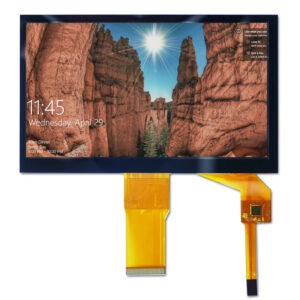

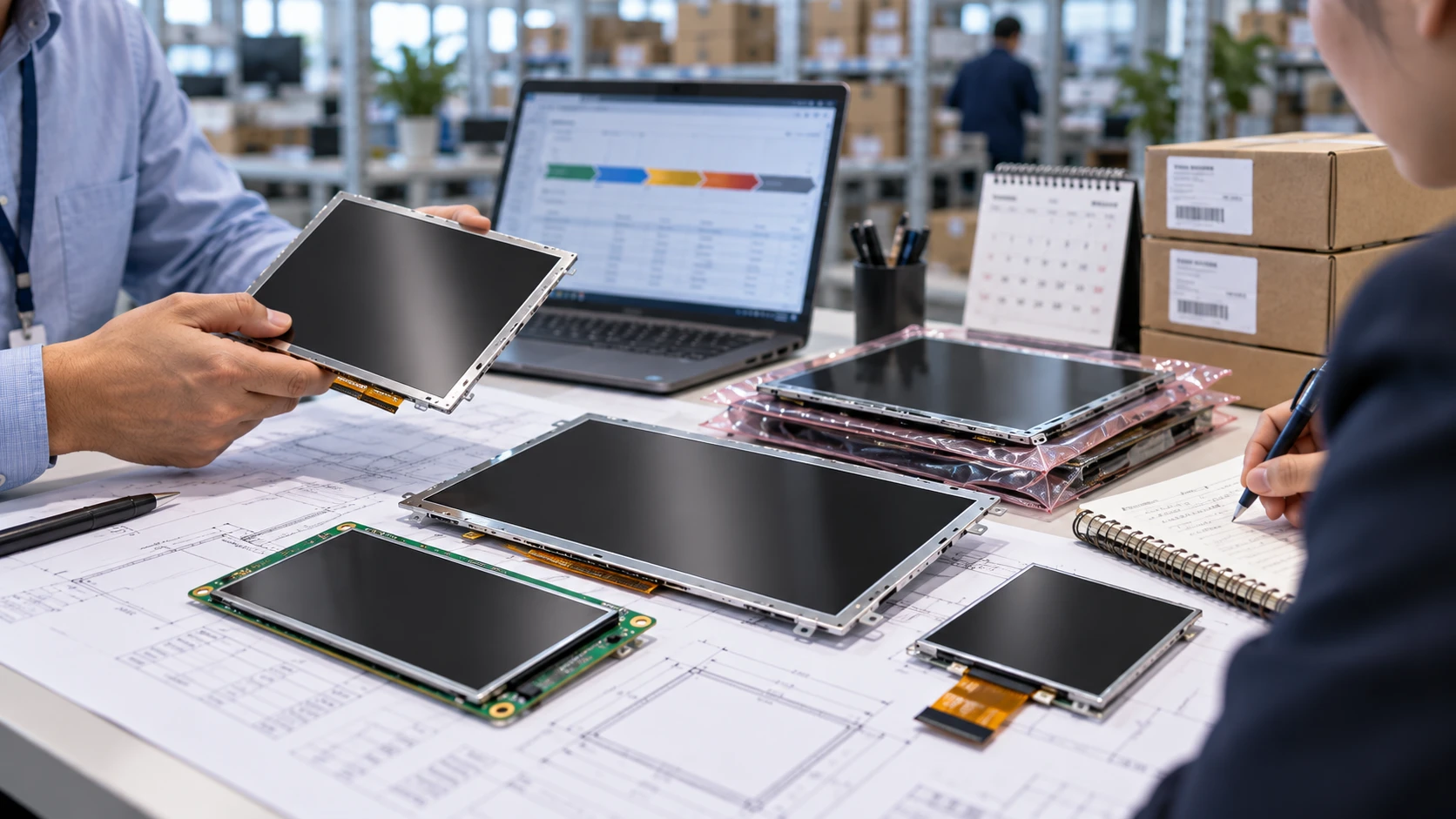
LCD panel lifecycle status tells OEM buyers where a specific model stands in the manufacturer’s supply cycle. Mass Production means the panel is in normal production. EOL, or End of Life, is the formal notice that production will be discontinued. Last Buy Order is the final purchasing window before the order deadline. Last Production identifies the final planned manufacturing batch, while Last Delivery refers to the final shipment or delivery stage.
These terms should always be reviewed at the exact model and revision level. A panel listed by a supplier may belong to an available product range, but the listing alone does not confirm the manufacturer’s current lifecycle status, remaining production capacity, or future delivery date. This article explains lifecycle terminology and commercial milestones. It does not replace the engineering qualification process required when an alternative panel is considered.
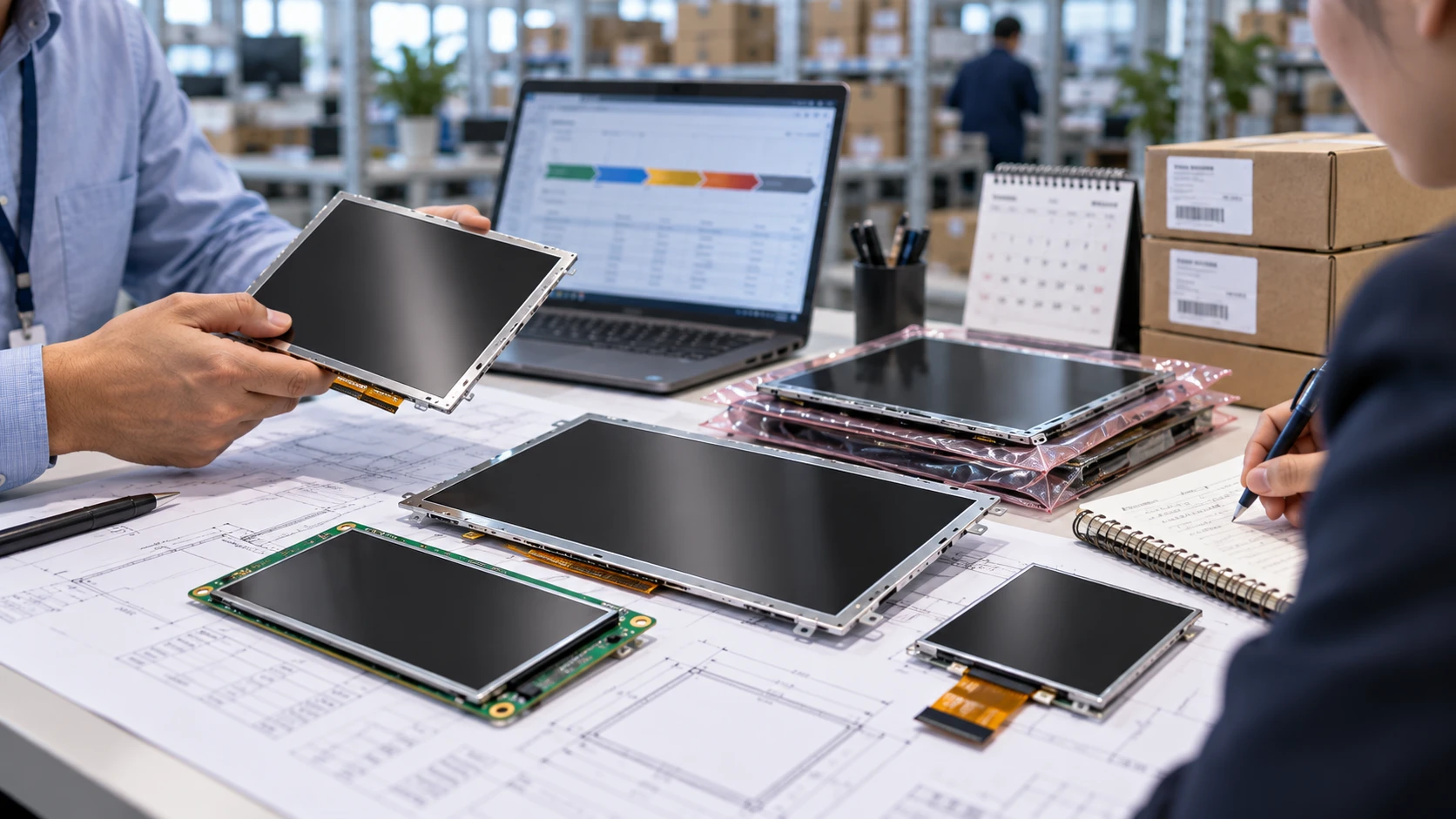
Why LCD Lifecycle Status Matters to OEM Buyers
An LCD panel can remain visible in a supplier’s catalog even when its manufacturing status has changed. For this reason, current availability and long-term supply continuity should be treated as separate questions.
This distinction is important for OEM projects that require a stable display component across several purchasing cycles. Engineering teams may need to confirm whether the original panel is still in normal production. Procurement teams may need to understand whether a final order is possible, how much quantity can be accepted, and when the final delivery could occur.
A lifecycle notice can also affect:
- New product development
- Existing product manufacturing
- Service-part planning
- Inventory decisions
- Display-module qualification
- Mechanical and electrical design reviews
The five lifecycle terms describe different points in the supply sequence. They should not be used interchangeably.
How Miqidisplay’s Website Relates to Lifecycle Status
Miqidisplay’s website presents original LCD screens and display-module sourcing options for OEM projects. Buyers can review the original LCD screen category and additional original LCD screen options when searching for a component that matches an existing design or a new project requirement.
The website also presents custom display solutions for projects that require a specific size, interface, optical configuration, touch function, mechanical format, or other integration requirement.
However, a product category or online listing should not be treated as an official lifecycle notice. The current status of a specific LCD panel must be confirmed against the manufacturer’s notice, model number, revision, and commercial conditions.
What Mass Production Means
Mass Production means that a panel model is in the manufacturer’s normal production phase. The model is generally intended to be produced on an ongoing basis according to the manufacturer’s production plan, order conditions, and available capacity.
For OEM buyers, Mass Production usually indicates that the model is more suitable for regular purchasing than a panel that has already entered an end-of-life process. It may support continuing production, engineering validation, and planned replenishment.
Nevertheless, Mass Production does not mean unlimited availability. Actual supply may depend on:
- The exact model and revision
- Production capacity
- Order quantity
- Allocation policy
- Commercial terms
- Component and material availability
- The manufacturer’s current product plan
A supplier listing may show that a panel belongs to an available product portfolio, but buyers should still confirm current production status through the relevant manufacturer or authorized supply channel.
What an EOL Announcement Means
An EOL announcement is a formal notice that a manufacturer intends to discontinue production of a defined LCD panel, revision, or product family. EOL does not always mean that the product becomes unavailable immediately. It usually begins a transition period during which final orders and final production arrangements may be handled.
An EOL notice should be reviewed for the following information:
- Affected part numbers
- Affected revisions or suffixes
- Announcement date
- Last Buy Order deadline
- Last Production arrangement
- Expected delivery conditions
- Any restrictions on cancellation or quantity changes
An EOL announcement may be issued because of product-line changes, manufacturing strategy, component availability, demand conditions, or other commercial and technical factors. The reason is less important than the dates and conditions that apply to the specific model.
The existence of an EOL notice does not automatically identify a suitable replacement. A potential alternative must be reviewed against dimensions, active area, resolution, interface, mounting, optical requirements, touch configuration, and the surrounding product design.
What Last Buy Order Means
Last Buy Order, also called Last Time Buy, is the final purchasing window announced for the affected model. Orders submitted after the deadline may no longer be accepted under the manufacturer’s normal process.
The Last Buy deadline is important because it may be the final opportunity to secure the original panel for an existing design. Before placing a final order, buyers should confirm:
- Whether the order must meet a minimum quantity
- Whether the order can be changed or canceled
- Whether delivery can be split
- Whether the order is subject to allocation
- Whether the quoted date is an order deadline or a delivery date
- Whether the order must be approved by the manufacturer
The Last Buy Order date is not necessarily the same as the final delivery date. An order may be accepted before the deadline but delivered later according to the manufacturer’s production schedule, allocation plan, and logistics conditions.
What Last Production Means
Last Production identifies the final planned manufacturing opportunity for the affected model. It describes when the manufacturer expects to complete the final production batch or production arrangement.
Last Production is different from Last Buy Order. The first refers to manufacturing; the second refers to the purchasing deadline. Buyers normally need to complete their commercial decision before Last Buy Order closes so that the manufacturer can include the required quantity in the final production plan.
Last Production does not automatically mean that every order submitted before the deadline will be produced in the same quantity or delivered at the same time. Production capacity, material availability, order confirmation, and allocation terms may affect the final result.
What Last Delivery Means
Last Delivery refers to the final shipment or delivery stage for the affected model. It may describe factory shipment, supplier dispatch, or customer receipt, depending on the wording used in the official notice or contract.
This distinction matters because shipping time, customs processing, consolidation, and other logistics conditions may occur after factory production is completed. Buyers should confirm what the stated date actually represents.
Last Delivery may depend on:
- Completion of the final production batch
- Order quantity and allocation
- Shipping method
- Delivery destination
- Contractual terms
- Logistics and import conditions
A final delivery date should therefore be treated as a model-specific commercial commitment, not as a general industry rule.
How the Five Statuses Connect
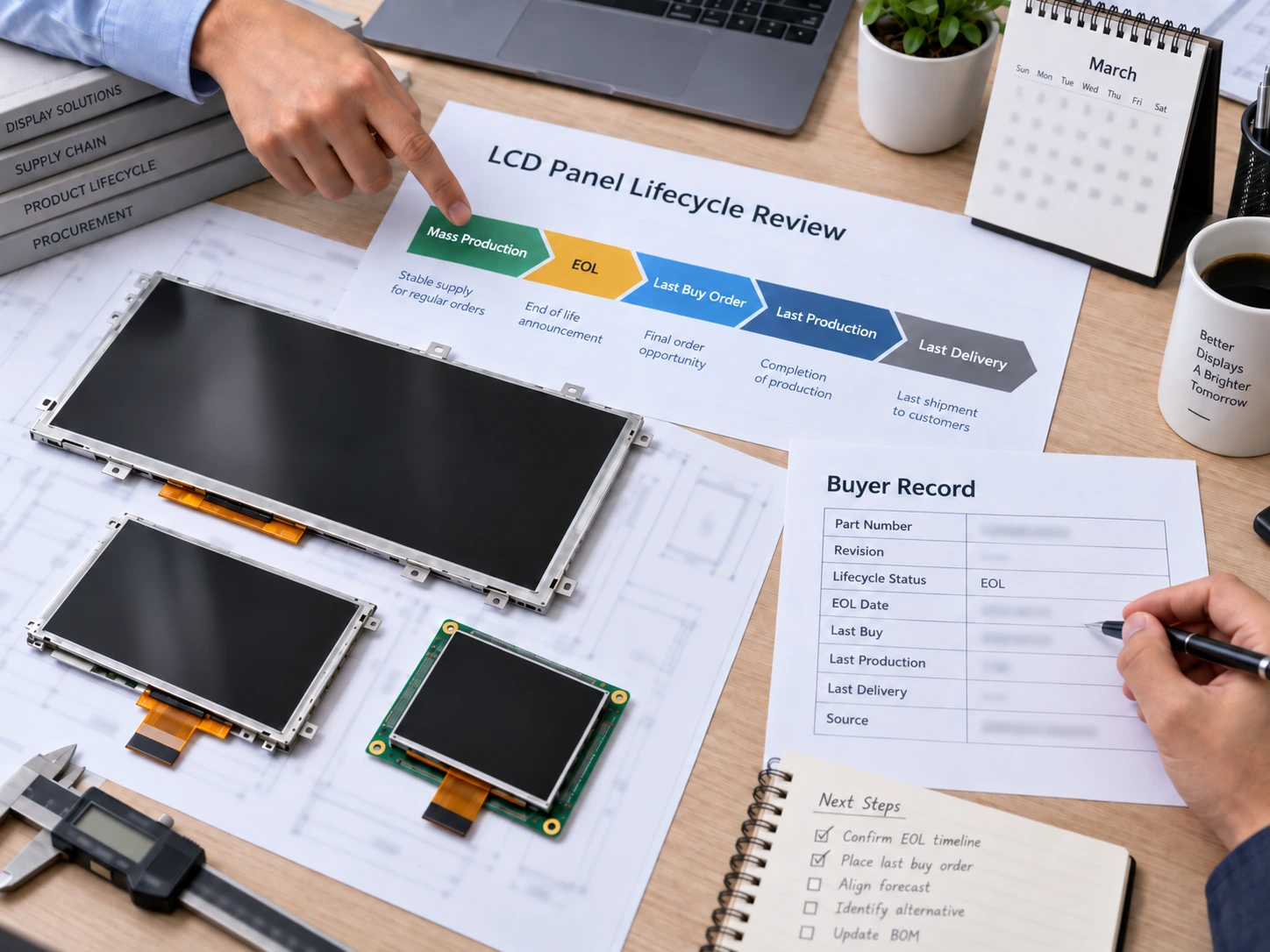
A typical lifecycle transition is: Mass Production → EOL Announcement → Last Buy Order → Last Production → Last Delivery. These milestones may overlap or vary by manufacturer, so the exact dates, order conditions, production arrangements, and delivery responsibilities must be confirmed for the specific model and revision.
| Status | Main Meaning | Typical Buyer Question |
| Mass Production | Normal manufacturing phase | Can the model support regular purchasing? |
| EOL | Formal discontinuation notice | Which models and revisions are affected? |
| Last Buy Order | Final purchasing deadline | Can the required quantity still be ordered? |
| Last Production | Final planned manufacturing | When will the final batch be produced? |
| Last Delivery | Final shipment or delivery stage | When and under what conditions will the order arrive? |
The sequence is not a substitute for a formal notice. Exact dates, order conditions, production arrangements, and delivery responsibilities must be confirmed for the specific model and revision.
What Buyers Should Record
For each LCD panel under review, record only the information needed to identify its current status:
- Exact manufacturer part number
- Product revision or suffix
- Current lifecycle status
- EOL announcement date, if applicable
- Last Buy Order deadline
- Last Production information
- Last Delivery information
- Source and date of the official notice
This record helps engineering and procurement teams avoid confusing a supplier’s current listing with a manufacturer’s formal lifecycle commitment. Broader activities such as redesign, alternative-panel qualification, and inventory planning should be handled as separate project decisions.
How Miqidisplay Can Support a Lifecycle Review
When an LCD panel in an OEM project is approaching EOL, the buyer can provide the current model number, revision, outline dimensions, active area, resolution, interface, touch requirement, brightness, viewing direction, operating temperature, quantity, drawings, and integration environment.
Miqidisplay can review the stated display requirements and assess whether an original LCD screen or a custom display-module sourcing path may be relevant. This information can also help clarify which technical documents, sample requirements, mechanical checks, and commercial details still require confirmation.
Product availability, lifecycle status, replacement suitability, pricing, minimum order quantity, lead time, and delivery arrangements must be confirmed for the specific project. No general website listing should be interpreted as a fixed supply guarantee.
Conclusion
LCD lifecycle terminology is most useful when every status is tied to an exact model, revision, date, and official source. Mass Production, EOL, Last Buy Order, Last Production, and Last Delivery describe different points in the supply sequence.
Understanding the differences helps OEM buyers avoid treating current availability as a long-term supply commitment. It also creates a clearer basis for deciding whether to continue purchasing the original panel, review a custom display-module option, or begin a separate engineering qualification process.
FAQs
Is an LCD panel in Mass Production guaranteed to remain available?
No. Mass Production indicates the current manufacturing phase, but actual availability may depend on the manufacturer’s production plan, capacity, allocation, order conditions, and model revision.
Is Last Buy Order the same as Last Delivery?
No. Last Buy Order is the final purchasing deadline. Last Delivery refers to the final shipment or delivery stage and may occur later.
Can a supplier website confirm that a panel is not EOL?
Not by itself. A website listing may show that a product belongs to a supplier’s portfolio, but the lifecycle status should be confirmed through the manufacturer’s formal notice or current supply confirmation.
Does EOL automatically mean a replacement panel is available?
No. A replacement requires technical and commercial evaluation. Dimensions, active area, resolution, interface, mounting, optical properties, touch configuration, and project conditions should be reviewed.
Request an LCD Panel Lifecycle Review
If an LCD panel in your OEM project is approaching EOL, contact Miqidisplay for a technical fit review. Please include the current model number, revision, display size, outline dimensions, active area, resolution, interface, touch requirement, brightness, viewing direction, operating temperature, quantity, drawings, and integration environment.
These details help the technical team assess whether the original LCD screen remains suitable, whether a custom display-module route may be relevant, and which technical or commercial conditions still require confirmation.
Email: mary@miqidisplay.com
WhatsApp: +86 189 6801 5464; +44 07892800850