





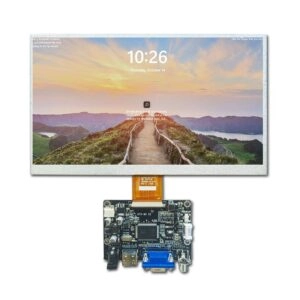
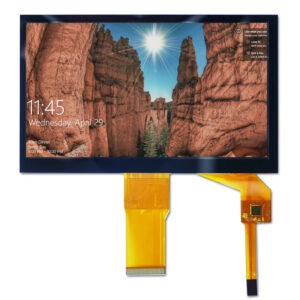

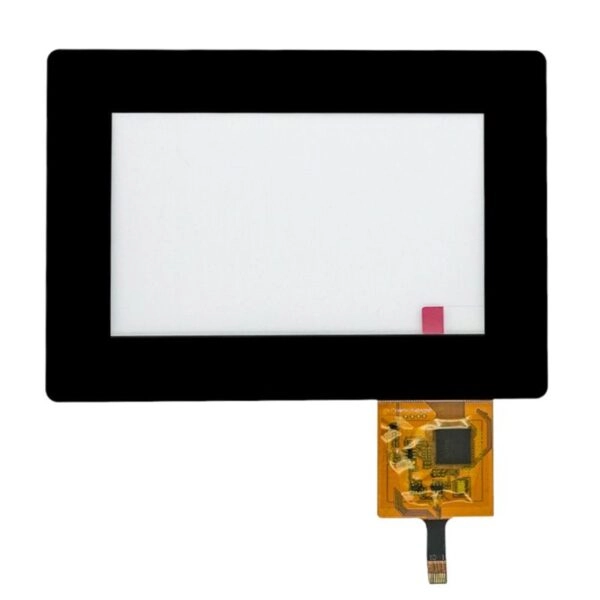
Medical touch screens are visual and input components in diagnostic instruments, treatment equipment, laboratory systems, emergency devices, and display interfaces used in clinical terminals. A projected capacitive touch screen, commonly called a PCAP touch screen, combines clear images with direct interaction. Clinical staff can review data, select functions, and enter parameters without separate input hardware.
Healthcare environments place unusual demands on touch technology. Fluids, gloves, repeated cleaning, electrical interference, and long operating cycles can affect accuracy and durability. A suitable medical touch screen requires coordinated sensing, cover glass, bonding, controller tuning, and mechanical integration.
Touch Screen Medical Applications
Capacitive touch screens can be integrated into ultrasound systems, electrocardiography equipment, dialysis equipment, blood gas analyzers, automated external defibrillators, dental equipment, laboratory analyzers, and clinical terminals. The screen functions as the visual and touch interface rather than as a complete medical device.
PCAP technology provides responsive operation through protective glass. Multi-touch allows gestures, larger controls, and simplified navigation. It can reduce physical keys and support a sealed front structure that is easier to clean. Medical equipment intended for repeated use should be designed so that its external surfaces can be cleaned adequately under the validated process defined for the finished device.
Challenges in Healthcare Environments
Medical touch screens often need stable operation when used with:
- Water, saline, cleaning residue, ultrasound gel, or other conductive fluids.
- Surgical gloves, examination gloves, or multiple glove layers.
- Equipment that produces electromagnetic disturbances.
- Repeated wiping and disinfection procedures.
- Custom front glass, seals, cables, and mechanical assemblies.
These conditions may cause false touches, missed inputs, surface wear, or unstable sensing. The screen should be evaluated with the final grounding, cabling, firmware, enclosure, and cleaning process.
Fluids and Gels
Conductive liquids can change the electrical field detected by a capacitive sensor. Droplets may come from saline, cleaning, or medical gels. A poorly tuned panel may interpret liquid as finger input, causing unintended commands or blocking operation.
Advanced Fluid Handling
A medical PCAP touch screen should distinguish intended input from liquid contact. Performance depends on liquid composition, cover glass thickness, grounding, and construction.
Important considerations include:
- Touch rejection while droplets remain on the glass.
- Stable input during light surface moisture.
- Fast recovery after wiping.
- Reduced false activation near screen edges.
- Coordination between firmware and cover glass.
Water resistance is not a universal performance claim. Engineering teams should define the liquid condition, test method, and acceptance criteria, then verify behavior in the final enclosure. Touch configurations intended for medical environments may combine fluid handling, glove support, stability, and interference resistance, but these functions must be validated under the actual application conditions.
Surgical and Examination Gloves
Gloves separate the finger from the capacitive sensor. Material, thickness, moisture, and layer count can affect response. Performance with a thin examination glove may differ from performance with thicker surgical gloves.
Gloved Touch Operation
Glove compatibility usually requires increased sensitivity and application-specific tuning. Excessive sensitivity may increase false input under wet conditions or electrical noise. The final configuration must balance glove response, liquid rejection, and interference resistance.
A medical touch specification should define:
- Glove material and approximate thickness.
- Single-layer or multilayer operation.
- Minimum target size in the interface.
- Dry and damp surface conditions.
- Bare-finger operation after glove mode is enabled.
Larger icons, sufficient spacing, and clear feedback can improve gloved accuracy. The touch panel and graphical layout should be developed together.
Electrical Noise Interference
Medical electrical equipment may contain pumps, power converters, high-frequency circuits, and grounded subsystems. Electromagnetic disturbances can cause touch-point drift, intermittent response, phantom input, or communication loss.
Stable Touch Performance
Stability depends on sensor routing, controller selection, firmware, cable length, shielding, grounding, and enclosure construction. Frequency adjustment and filtering may help, but system-level testing remains essential.
IEC 60601-1-2 defines requirements and tests related to electromagnetic disturbances for medical electrical equipment and systems. A touch screen component alone does not establish compliance. The finished equipment must be assessed under the applicable standard and intended environment.
Useful integration practices include:
- Keeping touch cables away from noisy power paths.
- Applying suitable grounding and shielding.
- Controlling cable length and connector placement.
- Testing touch operation during every equipment mode.
- Evaluating the final assembly rather than an isolated sample.
Advantages of PCAP Touch Screens for Healthcare Equipment
Clear and Durable Front Surface
A glass touch surface provides optical clarity and contact resistance. Cover glass thickness, edge shape, printed borders, and surface treatments can be customized. Special surface options should be supported by verified material data and application testing.
Cleaning-agent compatibility should be confirmed with the selected glass, coating, printing ink, bonding material, and sealing structure. Resistance to one cleaning solution does not automatically establish resistance to every disinfectant or wiping procedure.
Multi-Touch and Precise Input
PCAP technology can support multiple touch points for zooming, scrolling, and image repositioning where the software permits them. The active touch-point count should match the interface design.
Touch accuracy should be evaluated across the full active area, including corners and edges. Testing should also cover repeated selection, dragging, gesture input, and operation near graphical controls that perform critical functions.
Optical Bonding
Optical bonding joins the touch panel and LCD with transparent material. It can reduce internal reflections, improve perceived contrast, limit the internal air gap, and strengthen the front assembly.
The bonding material should be selected for optical performance, temperature range, long-term stability, and compatibility with the LCD and cover glass. The bonding process should also account for bubbles, contamination, material shrinkage, and dimensional tolerances.
Flexible Integration
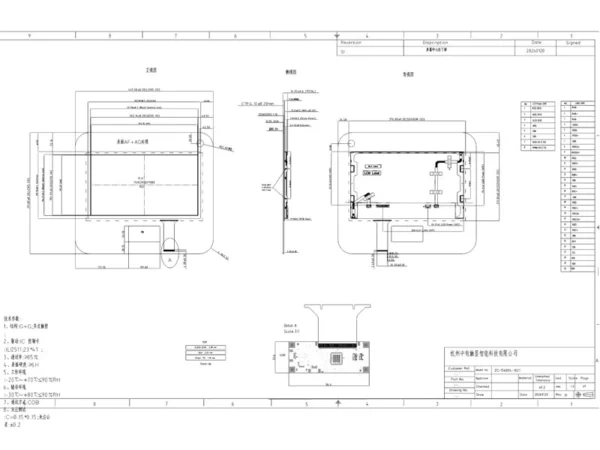
Medical projects may require custom cover glass, cables, connectors, touch-panel outlines, mounting adhesive, interfaces, or printed borders. Early coordination reduces late-stage changes and supports consistent assembly. Available display customization can include glass shape and thickness, cable position, connector configuration, bonding, surface treatment, and mounting features.
Projects with non-standard optical, mechanical, or interaction requirements may also benefit from specialized display technologies selected for the intended medical application.
Selecting a Capacitive Touch Screen for Medical Applications
Define the Application Conditions
The project specification should identify:
- Display size, resolution, viewing direction, and brightness.
- Active area and overall dimensions.
- Glove type and liquid exposure.
- Cleaning agents and wiping frequency.
- Touch and display interfaces.
- Operating and storage temperatures.
- Cover glass, bonding, sealing, and mounting requirements.
- Expected quantity and supply period.
These details allow the touch panel, LCD, controller, cable, and glass structure to be evaluated as an integrated screen assembly.
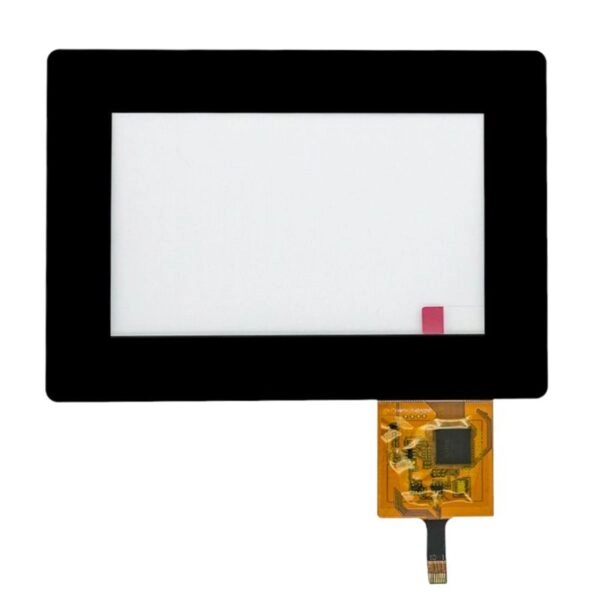
Validate the Integrated Sample
A sample should be tested inside the intended enclosure with final cable routing, power supply, grounding, and nearby electronics. Glove operation, liquid behavior, touch accuracy, visual quality, temperature performance, and electromagnetic behavior should be reviewed before approval.
Touch firmware, glass stack-up, adhesive, cable design, and display revision should be documented. A stable bill of materials and change-notification process help prevent changes in sensitivity, optical performance, or mechanical fit.
FAQ
What touch technology is suitable for medical equipment?
PCAP is often selected when clear glass, multi-touch input, and gesture support are required. The final choice depends on glove type, liquid exposure, cleaning method, and system architecture.
Can a capacitive touch screen work with medical gloves?
Yes. The sensor, controller, cover glass, and firmware must be configured for the specified glove material and thickness. Performance should be validated with the actual gloves used in the clinical workflow.
Can PCAP screens operate when the surface is wet?
Some PCAP solutions can reject droplets or maintain limited operation under defined wet conditions. Results vary with liquid type, quantity, grounding, glass thickness, and tuning. Final assembly testing is required.
Does a touch screen component meet IEC 60601-1-2 by itself?
No. The standard applies to medical electrical equipment and systems. Component selection can support the design, but compliance is established through evaluation of the complete equipment.
Why Is Optical Bonding Useful in Medical Displays?
Optical bonding can reduce reflections, improve perceived contrast, limit the internal air gap, and increase assembly strength. Material compatibility and long-term reliability must be verified.
What Information Is Needed for a Custom Quotation?
Typical information includes size, resolution, touch type, cover glass drawing, interface, cable details, brightness, temperature range, glove requirements, liquid conditions, bonding needs, estimated volume, and project schedule.
Contact a Medical Touch Screen Display Manufacturer and Supplier
Miqidisplay is a display manufacturer supplying LCD and TFT display screens, capacitive touch panels, and custom LCD and capacitive touch screen solutions for business customers. Available customization includes touch-panel glass thickness and shape, cover glass, optical bonding, cable and connector adjustments, interface options, and mechanical fitting support.
Medical device manufacturers, engineering companies, OEM buyers, and sourcing teams can visit the Contact Us page and submit project specifications, target quantity, drawings, environmental requirements, and delivery schedule. The sales and engineering teams can then review the application and provide a suitable screen proposal and quotation.
Email: mary@miqidisplay.com
WhatsApp: +86 189 6801 5464; +44 07892800850