






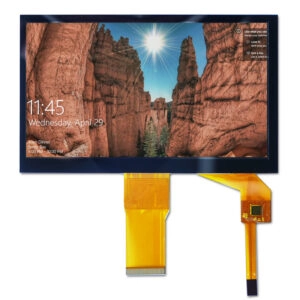











When several product lines share an AUO panel, size the purchase commitment from their combined approved demand over a defined period. Add one justified shared inventory buffer, then subtract usable stock and existing committed receipts due within that period. Pool quantities only where engineering has approved the same complete panel model and configuration for every affected product line.
Before placing the order, separate the forecast quantity, the binding purchase commitment, and the delivery release schedule. Check whether the remaining product lines could consume the committed panels if one launch slips or demand falls. Confirm quantity-change rights, deferral limits, and final delivery obligations with the supplier so the approved commitment reflects both production needs and acceptable excess-inventory exposure.

Confirm What Can Actually Be Shared
Create a commonality matrix before combining quantities. Record the complete panel model and suffix, approved revision, equipment bill of materials, and qualification status for every product line. Matching diagonal size and resolution does not establish interchangeability.
Check mechanical dimensions, connector position, pin assignment, interface timing, optical requirements, and operating conditions. Separate panel demand from demand for cables, touch components, or other additions that differ between products.
For example, Miqidisplay lists the B070ATN01.2 LCD module as a 7-inch, 1024 × 600 panel with an LVDS interface. Those shared headline specifications would not, by themselves, qualify it across two equipment designs.
If both designs approve the same panel but require different cables, the panel may remain pooled while cable quantities stay separate. Establish the point at which stock becomes dedicated to a product line. Once a configuration changes, its apparent availability to another line may disappear.
Build One Time-Phased Demand Plan
Use weekly or monthly buckets matched to production scheduling. For each line, calculate panel requirements from the approved build plan and panels per assembly. Include separately authorized engineering builds and a documented allowance for production losses where justified.
Distinguish firm builds from forecast demand and unapproved opportunities. Do not count customer orders again if they already consume the forecast. Likewise, avoid adding a second loss allowance when the manufacturing plan already includes it.
Choose the commitment horizon from the confirmed replenishment process, review frequency, and commercial commitment window. An annual forecast can support a sourcing discussion without becoming an annual purchasing obligation.
Timing matters as much as the total. A receipt arriving after a production requirement cannot cover that requirement unless the schedule changes. Maintain a running projected balance to expose shortages hidden by a positive quarter-end total.
Calculate the Net Additional Commitment
A useful starting calculation is:
Net additional commitment = approved demand within the horizon + target ending buffer − usable opening inventory − existing committed receipts within the horizon.
Use the same dates and configuration boundary for every term. Usable opening inventory excludes quarantined panels, incompatible revisions, and stock already reserved for requirements outside this plan. Existing receipts must be counted once and checked against required dates.
The following hypothetical example assumes one panel per assembly, no additional production-loss allowance, and all existing receipts arriving before they are needed.
| Planning input | Panels |
| Product line A: approved demand | 600 |
| Product line B: approved demand | 400 |
| Product line C: approved demand | 200 |
| Shared ending buffer | 100 |
| Usable opening inventory | 250 |
| Existing committed receipts | 150 |
| Net additional commitment | 900 |
Here, 1,200 + 100 − 250 − 150 gives 900 panels. This is a planning result, not a supplier MOQ or recommended order quantity for every project.
Next, apply confirmed ordering increments and minimums. Record any rounding as additional exposure. If commercial terms require a larger quantity, procurement should show who approves the difference and where those panels could be consumed.
Set the Shared Buffer From Combined Risk
Inventory pooling can reduce duplicated buffers when approved stock can move between lines and their demand variations partly offset one another. It does not remove forecast uncertainty.
Review the combined demand history and forecast errors over a consistent horizon. If all lines respond to the same customer cycle or launch event, they may rise or fall together. A buffer based on independent demand would then understate the shared exposure.
Use one documented method tied to the required availability target, replenishment variability, and consequences of shortage. Avoid adding each line’s full safety stock on top of a central buffer. Keep any program-specific reserve visible and explain why it cannot be shared.
Where history is thin, test explicit scenarios: one launch slips, all lines accelerate, or a receipt misses its required date. A forecast percentage alone does not explain which risk the buffer covers.
Separate Commitment From Delivery Releases
Ask the supplier to distinguish the forecast, binding quantity, release schedule, and any capacity reservation. A blanket purchase order can organize repeated deliveries, but its label does not establish cancellation rights or guarantee reserved supply.
Request written answers to these questions:
- Which quantities become binding, and on what dates?
- Can unreleased quantities be reduced, deferred, or reassigned?
- What are the minimum shipment quantities and ordering increments?
- When must the remaining balance be taken?
- Who owns and bears responsibility for supplier-held stock?
- What revision and lot restrictions apply to later releases?
Staggered delivery may reduce stock physically held at the buyer’s facility while leaving the full purchasing responsibility intact. Compare both the inventory profile and the remaining obligation before approving the arrangement.
Stress-Test the Quantity Before Approval
Return to the example. If approved demand falls from 1,200 to 800 panels after the additional 900 becomes binding, total available supply remains 1,300 panels. The ending balance becomes 500, including the intended 100-panel buffer. The downside therefore leaves 400 panels above target.
Estimate how quickly the remaining approved programs could consume that excess. Check whether delayed launches, configuration changes, or product retirement would prevent transfer between lines. Do not treat an unqualified future design as a disposal plan.
If exposure exceeds the business’s tolerance, negotiate a shorter commitment window, smaller binding tranches, or clearly defined flexibility. Confirm supplier acceptance before relying on any option.
A discontinuation notice requires a separate decision process. Use LCD lifecycle and supply-continuity planning when evaluating a final purchase against replacement qualification.
Prepare a Supplier-Ready Commitment Review
Assign one owner to reconcile consumption, open orders, inventory status, and the shared forecast. Review the plan regularly and whenever a launch, approval, or delivery assumption changes. Product teams should see allocations without independently ordering the same pooled requirement.
When reviewing Miqidisplay’s AUO LCD panel range, identify the exact approved model before requesting a quantity-based assessment. Submit demand by period, existing inventory and orders, proposed binding quantity, release dates, and requested flexibility. Ask which arrangements are available for that specific requirement.
Conclusion
A defensible AUO panel purchase commitment combines verified interchangeability, dated net demand, one justified buffer, and an explicit downside check. Approve the purchasing obligation separately from delivery timing, then keep one shared inventory record across product lines.
FAQs
Can different AUO model suffixes share one inventory pool?
Only after engineering verifies interchangeability and releases written approval. Keep unapproved variants separately controlled.
Should the commitment equal the annual forecast?
Only when that exposure is justified and approved. The forecast horizon and binding purchasing window can differ.
Does monthly delivery reduce the committed quantity?
Not automatically. The agreement must state whether unreleased quantities can be changed.
What if one product line is delayed?
Recalculate dated requirements and remaining obligations. Reallocate panels only to approved configurations with actual demand.
Request a Shared AUO Panel Procurement Assessment
Before committing to a shared AUO panel quantity, request a Miqidisplay procurement assessment. Send the complete panel model and suffix, approved configuration for each product line, demand by month, usable inventory, outstanding purchase orders, proposed commitment quantity, and delivery release schedule. Identify any requirements for quantity changes, deferred deliveries, or allocation between product lines. Include the applicable datasheet and drawings, noting differences in interface, touch configuration, or mechanical requirements. This information gives Miqidisplay a basis to review the specific sourcing requirement and clarify which quantity, release, and configuration conditions can be offered before your team approves the purchase commitment.
Email: mary@miqidisplay.com
WhatsApp: +86 189 6801 5464