





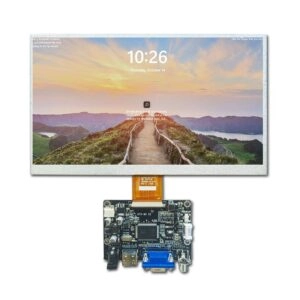
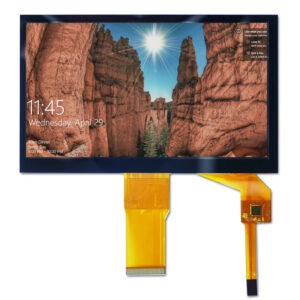

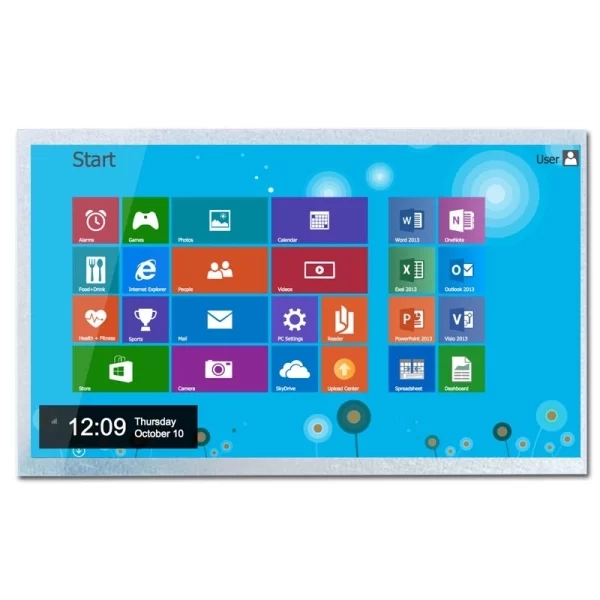
Selecting an industrial LCD panel solely by unit price can create expensive lifecycle problems. A low quotation may look attractive, yet the real outcome depends on integration effort, operating stability, visual performance, supply continuity, quality consistency, and engineering support. For industrial equipment manufacturers, system integrators, and original equipment producers, the correct decision is the panel that meets the complete requirement with the lowest controllable lifecycle risk.
Why Unit Price Is an Incomplete Procurement Metric
An LCD panel is an engineered component within a larger system. Its value depends on controller architecture, enclosure design, thermal conditions, viewing geometry, cable routing, production volume, and expected service life.
A lower-priced panel may require a different interface board, revised tooling, longer validation, additional shielding, or repeated firmware adjustment. Those indirect costs can exceed the initial saving. Procurement teams therefore need a total-cost model covering engineering, testing, yield loss, logistics, inventory exposure, and redesign risk.
Calculate Total Cost of Ownership
A practical comparison should include unit cost at prototype and production quantities, tooling, controller and cable changes, inspection, line-stop exposure, replacement stock, long-term availability, and engineering hours. The quotation should represent a stable industrial solution rather than a temporary component bargain.
Start With the Application Environment
Industrial LCD panel selection should begin with a documented operating profile rather than a broad “industrial grade” label.
Temperature and Thermal Behavior
Operating and storage temperature ranges must match the equipment environment. Cold conditions can affect liquid crystal response, while sustained heat can influence optical consistency and component aging. Evidence should cover the required range, not only a room-temperature sample.
Qualification may include temperature cycling, humidity, shock, and vibration. IEC 60068 provides environmental test frameworks, while the IEC 61747 family addresses assessment and measurement methods for liquid crystal display modules. These references support repeatable qualification instead of subjective approval.
Brightness, Contrast, and Ambient Light
Brightness should match illumination. Excessive brightness can increase power demand and thermal load, while insufficient brightness can reduce readability. Contrast, reflection, viewing angle, and luminance uniformity also matter when critical status information is displayed.
Readability should be evaluated in the intended installation, including cover material, air gap, coating, and enclosure geometry. An application-level sample remains necessary.
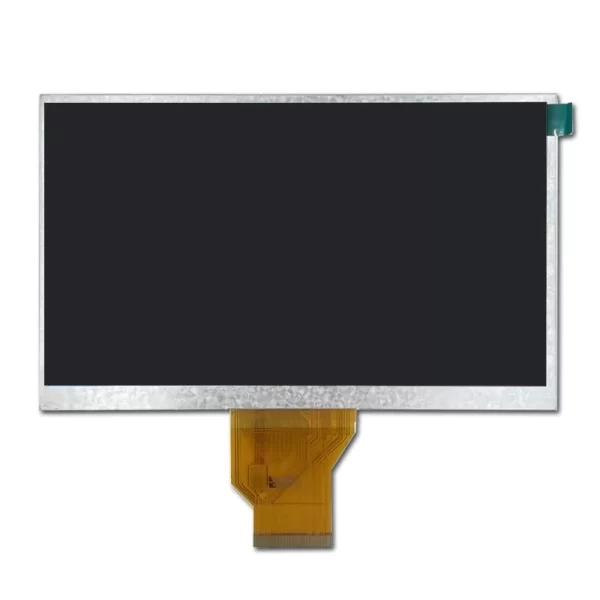
Verify Electrical and Mechanical Compatibility
Interface and Signal Requirements
The interface must match the processor, timing controller, resolution, refresh requirement, and voltage levels. Common options include LVDS, RGB, MIPI, SPI, MCU, and other digital interfaces.
Confirmation should include pin definition, timing parameters, power sequencing, initialization requirements, connector orientation, cable position, and signal integrity. Small differences can delay a project.
Mechanical Drawing and Installation Fit
Procurement approval should include a controlled drawing review covering active area, outline size, thickness, mounting points, bezel clearance, connector location, cable bend radius, and tolerance stack-up.
Custom cable length, pin assignment, connector type, PCB layout, cover glass, mounting features, and backlight characteristics may reduce assembly complexity when defined early. The reviewed product and custom-solution information confirms that these categories are available within the referenced scope.
Evaluate Visual Performance Beyond Resolution
Resolution is only one part of image quality.
Viewing Angle and Color Stability
Industrial operators may view a panel from different positions. IPS technology can provide wide viewing behavior, but contrast and color shift should still be validated at the actual installation angles. Performance may also differ in portrait and landscape layouts.
Response Time and Motion Content
Response performance matters when the screen presents moving machinery, camera feeds, rapidly changing values, or animated graphics. Temperature can alter perceived response, so evaluation should cover the slowest expected condition. IEC methods for transmissive TFT LCD motion performance support defined test content and repeatable criteria.
Pixel Quality and Uniformity
Pixel-defect policy, luminance uniformity, color consistency, and cosmetic acceptance criteria should be agreed before volume production. A single sample may not represent production variation. Written standards reduce disputes during incoming inspection.
Examine Reliability and Supply Continuity
Industrial projects often remain in production for years. A low-cost panel with uncertain continuity can force an expensive redesign.
Product Lifecycle and Change Control
Procurement teams should assess expected availability, revision control, notification procedures, and replacement strategy. Optical, electrical, or mechanical changes should require defined notice and review.
A second source may be useful, but interchangeability must be demonstrated. Panels with the same size and resolution can differ in timing, dimensions, brightness, connector position, and optical behavior.
Manufacturing Consistency and Quality Documentation
Supplier evaluation should cover material control, process inspection, final inspection, traceability, defect handling, and corrective-action capability. Project-specific quality data is more valuable than a certificate alone.
Sample approval should be followed by a pilot build using production-intent units. This stage reveals assembly yield, cable stress, optical variation, thermal behavior, and software stability before larger commitments.
Use a Weighted Supplier Evaluation Process
Price should remain part of the decision without dominating it. A weighted score can cover technical compliance, reliability evidence, customization capability, lead time, lifecycle support, quality response, and commercial terms.
For critical programs, technical compliance should be a gate. A panel that fails a mandatory interface, temperature, mechanical, or optical requirement should not rank favorably because its unit price is low.
Build an RFQ That Produces Comparable Quotations
A precise request for quotation reduces hidden assumptions. The RFQ should state annual volume, production date, size, resolution, interface, brightness, viewing direction, temperature range, mechanical constraints, cable and connector requirements, quality criteria, sample quantity, and lifecycle expectation.
Suppliers should identify deviations clearly. This creates an auditable comparison and prevents a low quotation from excluding essential requirements.
FAQ
What is the biggest risk of selecting an LCD panel only by price?
The largest risk is lifecycle cost caused by integration problems, inconsistent quality, unsuitable environmental performance, or early discontinuation. These issues can trigger redesign, delays, excess inventory, and field failures.
Which specifications should be mandatory in an industrial LCD RFQ?
Mandatory fields include size, resolution, interface, brightness, viewing characteristics, temperature range, outline dimensions, connector details, cable requirements, quality criteria, volume, and lifecycle expectations.
Is the highest brightness always the best choice?
No. Brightness must match ambient light, power limits, thermal design, optical stack, and readability targets. Unnecessary brightness can increase power consumption and heat.
Why is sample validation necessary?
A datasheet cannot fully represent enclosure effects, viewing geometry, cable routing, controller timing, software behavior, thermal conditions, or production tolerances. Application-level validation confirms integration performance.
How should procurement compare two technically acceptable LCD panels?
The comparison should consider total cost of ownership, reliability evidence, supply continuity, customization, quality controls, lead time, engineering responsiveness, and commercial terms alongside unit price.
Partner With an Industrial TFT LCD Module Manufacturer
Miqidisplay is an advanced display technology and solution supplier focused on LCD, TFT, IPS, VFD display modules and specialized accessories rather than complete equipment. Its portfolio includes standard and customized screen options across multiple sizes, resolutions, interfaces, brightness levels, and operating-temperature ranges, supported by customization for cables, connectors, interfaces, PCB configurations, cover glass, mounting features, and backlight requirements. Industrial procurement teams seeking a matched panel, quotation, sample plan, or customization review can submit application requirements through the Contact Us page. A complete inquiry should include target size, resolution, interface, brightness, temperature range, mechanical drawing, annual volume, and project schedule so the manufacturer can provide a relevant B2B proposal.
Email: mary@miqidisplay.com
WhatsApp: +86 189 6801 5464; +44 07892800850