

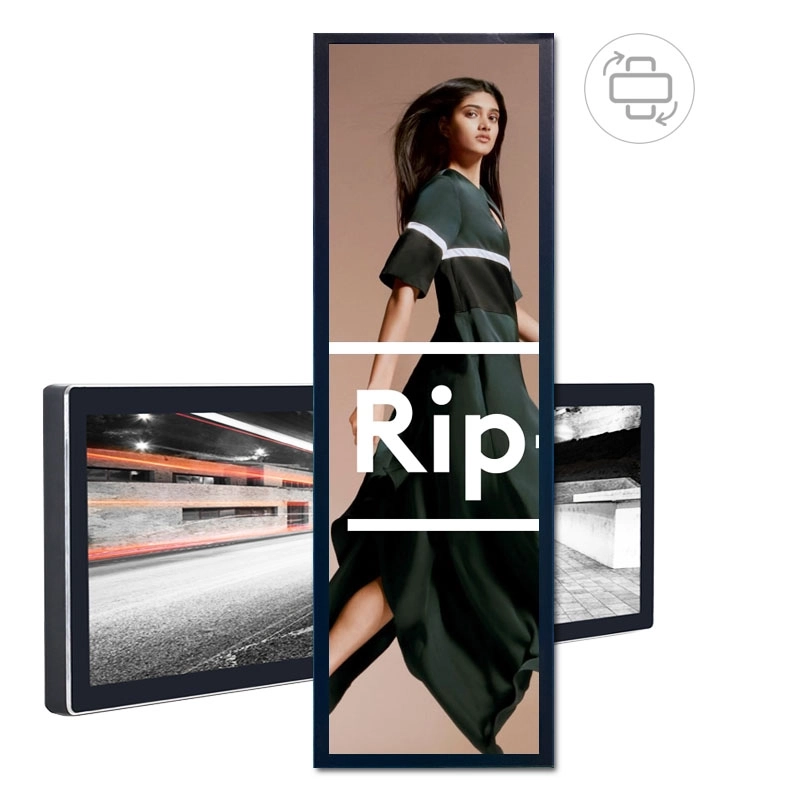
The stretched bar LCD is used in industrial applications where a longer and thinner display is required than can be accommodated by a standard rectangular shaped display. The very wide screen can be used for machine status displays, for production lines, for transport applications, for industrial equipment and also for warehouse management systems.
For B2B procurement teams, the best stretched bar LCD screen is not simply the model with the highest resolution or largest size. A suitable panel must match the mechanical structure, operating environment, electrical interface, production schedule, and sourcing plan.
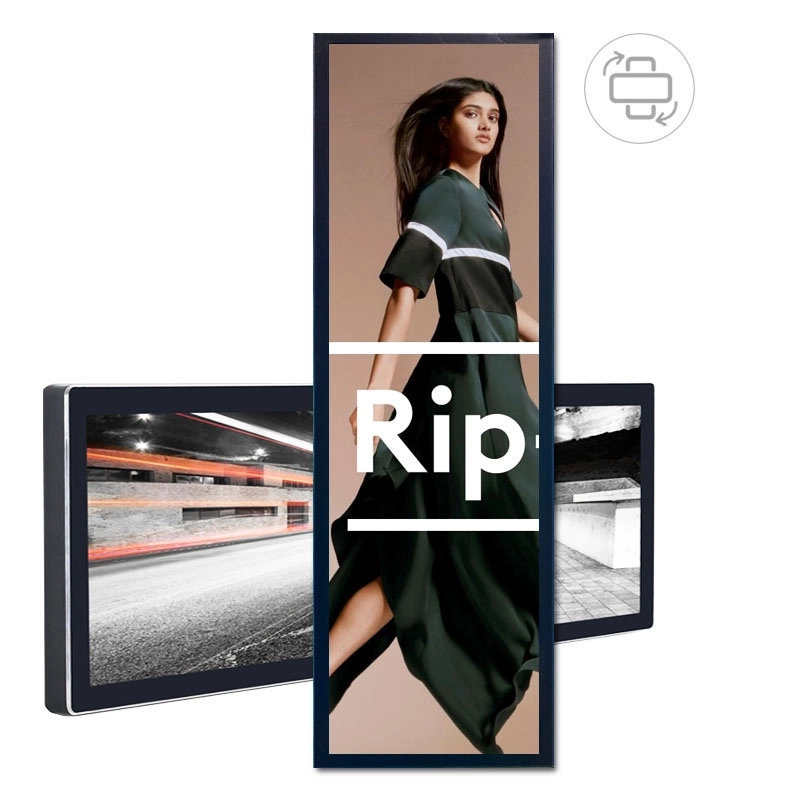
What Defines a High-Quality Industrial Stretched Bar LCD Screen?
A high-quality industrial LCD screen should provide stable visual performance while meeting the dimensional, environmental, and sourcing requirements of the finished equipment.
Optical Performance for Industrial Use
Industrial screens often present operating data, status information, warning symbols, production quantities, and process graphics. Readability is therefore a primary purchasing criterion.
Important optical factors include:
- Resolution:Required text size, graphic detail, and information density
- Brightness:Indoor, semi-outdoor, or strong ambient-light suitability
- Contrast ratio:Clear separation between text, icons, and backgrounds
- Viewing angle:Stable readability from different positions
- Color consistency:Similar performance across production batches
- Surface treatment:Reduced reflection under factory lighting
Mechanical Accuracy and Panel Structure
Mechanical compatibility is critical because stretched bar panels often fit into narrow, customized enclosures. Procurement teams should review the active area, outline dimensions, thickness, bezel width, connector location, flexible cable direction, mounting tolerance, cover glass dimensions, and touch-panel thickness before enclosure tooling begins.
Key Technical Specifications to Consider
Technical specifications should be assessed according to the actual industrial project rather than compared as isolated numbers.
Screen Size, Aspect Ratio, and Resolution
Stretched bar LCD screens are available in compact, medium, and large formats. The correct size depends on installation space, viewing distance, content layout, and information density.
Common ultra-wide resolutions may include 1920 × 540, 1920 × 360, or 3840 × 1080. Higher resolution may increase interface requirements and project cost, so selection should match the intended content and host platform.
Specification review should confirm:
- Required text and graphic density
- Normal viewing distance
- Horizontal or vertical installation
- Number of information zones
- Compatibility with the host platform
Brightness and Environmental Conditions
Brightness requirements vary between factories, vehicles, outdoor cabinets, and controlled indoor environments. Environmental evaluation should include operating temperature, ambient-light intensity, humidity, vibration, dust exposure, and expected daily operating hours.
For strong ambient light, high brightness, optical bonding, suitable cover glass, and surface treatment may be evaluated together.
Interface and Connector Compatibility
The selected LCD panel must match the host electronics. Common panel-level interfaces include LVDS, eDP, MIPI, RGB, and other embedded signal formats.
Purchasing specifications should confirm signal interface, operating voltage, connector model, pin definition, cable orientation, flexible cable length, timing parameters, and touch interface before sample production.
Comparing Industrial Stretched Bar LCD Screen Configurations
Standard Stretched Bar LCD Panels
Standard panels are suitable when size, resolution, interface, and brightness already match an existing specification. They can reduce development time and are generally preferred for fixed dimensions, common interfaces, faster sampling, and predictable volume purchasing.
Customized Stretched Bar LCD Panels
Customized panels are appropriate when a project requires non-standard dimensions, specific cable routing, different connectors, cover glass, touch integration, or a modified optical structure.
Common customization items include:
- Flexible cable length and direction
- Connector type and pin assignment
- Cover glass shape and surface printing
- Touch-panel integration
- Optical bonding
- Brightness adjustment
- Mechanical outline modification
- Interface adaptation
Customization should be based on engineering documents, target quantities, testing requirements, and the production schedule.
Industrial Applications of Stretched Bar LCD Screens
Factory Automation Equipment
A stretched bar screen can fit above a machine door, along a production cell, or within a narrow control area. It can present operating states, production counts, process values, alarm information, and work instructions without requiring a conventional large panel.
The main procurement concerns are mechanical fit, readability, continuous operation, electrical compatibility, and supply consistency.
Industrial Instruments and Measurement Systems
Measurement equipment may require a long screen for waveform data, multiple readings, trend information, or segmented status zones. A stretched panel can provide a wider information area while preserving a low-height structure.
Important purchasing factors include resolution, response time, contrast, connector position, and dimensional tolerance.
Warehouse, Transportation, and Energy Equipment
Warehouse terminals, sorting systems, rail vehicles, agricultural machinery, power distribution systems, and process equipment can use stretched panels for order data, route information, operating states, and multiple status values.
Procurement evaluation should focus on brightness, temperature range, vibration tolerance, connector stability, documentation, and batch consistency.
How to Evaluate a Stretched Bar LCD Supplier
B2B purchasing decisions should consider both the screen specification and the supplier’s production capability.
Engineering Support and Documentation
A qualified supplier should provide accurate mechanical drawings, interface details, pin definitions, optical specifications, and environmental parameters.
These documents allow engineering and procurement teams to confirm whether a panel matches the electrical and mechanical requirements of the project before samples are ordered.
Sample Validation and Quality Control
Before volume purchasing, samples should be tested in the actual equipment environment for dimensional fit, image quality, brightness, interface stability, touch performance, temperature behavior, and continuous operation.
Quality-control discussions should cover:
- Incoming-material inspection
- Production-process inspection
- Final visual and electrical testing
- Batch consistency
- Packaging standards
- Traceability requirements
Sample approval criteria should be documented before mass production. This helps align the expected optical performance, dimensions, electrical characteristics, and acceptable appearance standards between the purchaser and supplier.
MOQ, Lead Time, and Supply Continuity
Industrial projects often have long product cycles. Procurement teams should confirm minimum order quantity, sample lead time, production lead time, forecast requirements, and long-term availability. Stable sourcing and repeatable production are often more important than a small unit-price difference.
Annual purchasing forecasts can also help a supplier prepare panel materials, customized cables, touch components, and cover glass in advance. This is particularly important for projects requiring non-standard dimensions or project-specific interfaces.
Key Factors Influencing Pricing and Procurement Value
The price of a stretched bar LCD screen depends on panel size, aspect ratio, resolution, brightness, temperature range, touch integration, cover glass, optical bonding, cable and connector customization, interface modification, order quantity, testing, and packaging.
A complete request for quotation should include:
- Expected annual quantity
- Target screen size
- Outline and active-area dimensions
- Required resolution
- Signal interface
- Connector and pin requirements
- Brightness target
- Operating-temperature range
- Touch requirements
- Cover glass requirements
- Sample schedule
- Planned mass-production date
Detailed purchasing information allows a supplier to recommend a technically accurate and commercially suitable screen. It also reduces the risk of receiving quotations based on assumptions that do not match the final project.
Procurement value should therefore be evaluated through technical suitability, sample performance, customization capability, production consistency, commercial terms, and supply continuity rather than unit price alone.
FAQ
What Is the Most Important Specification for an Industrial Stretched Bar LCD Screen?
There is no single specification that determines suitability. Mechanical dimensions, resolution, brightness, interface, temperature range, and sourcing stability must be evaluated together.
Can a Stretched Bar LCD Screen Be Customized?
Yes. Common customization options include flexible cables, connectors, pin definitions, touch panels, cover glass, surface printing, brightness, bonding, and mechanical dimensions.
Why Is Sample Testing Important Before Mass Production?
Sample testing confirms mechanical fit, optical performance, interface compatibility, and environmental suitability before a large purchasing commitment is made.
Should a Standard or Customized LCD Panel Be Selected?
A standard panel is suitable when its dimensions, interface, brightness, and resolution meet the project specification. A customized panel is more appropriate when special cables, connectors, cover glass, touch functions, optical structures, or mechanical dimensions are required.
Partner with an Industrial Stretched Bar LCD Screen Manufacturer and Supplier
Miqidisplay is an industrial LCD screen manufacturer and supplier supporting OEM and ODM purchasing projects. Its capabilities include stretched bar LCD panels, custom flexible cables, connector modification, interface adaptation, touch integration, cover glass, optical bonding, customized brightness, a nd mechanical structure adjustment. Equipment manufacturers, industrial solution providers, distributors, and procurement teams can submit drawings, target specifications, estimated quantities, and project schedules for technical review and quotation. Business inquiries may be sent to mary@miqidisplay.com, while technical project details may be sent to sale@miqidisplay.com. You can also contact directly via WhatsApp at +86 189 6801 5464.