





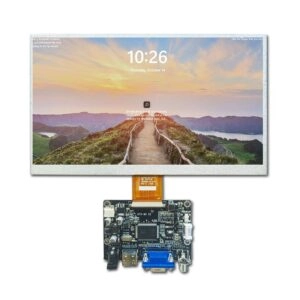
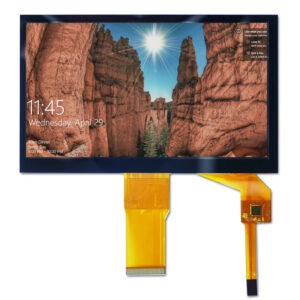

A TFT LCD screen on an industrial machine can be more than just a display of information. Its readability, user interaction, and perception of quality of the end product can all be impacted by the appearance of the display. If a TFT LCD screen looks yellow, has color shift or simply does not look like other units that were made as part of the same production run, the issue could be a number of things including a defect, allowable tolerance or something that can be corrected with calibration.
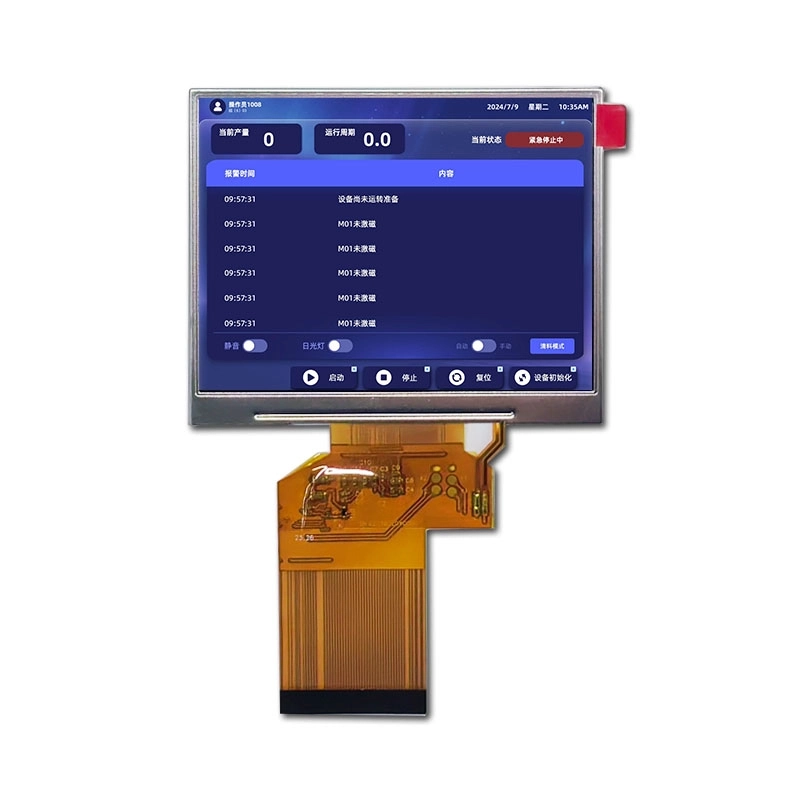
Why a TFT LCD Screen May Look Yellowish
Backlight White Point and Color Temperature
TFT LCD screens do not emit light by themselves. Light is supplied by an LED backlight and then passes through optical films, the liquid crystal layer, polarizers, and color filters. A yellowish TFT LCD appearance is usually caused by several optical and electrical factors working together.
The most common reason is the backlight white point. If the LED backlight is designed with a warmer color temperature, the screen may look more yellow compared with a cooler white display. This does not always mean the display is defective. The key point is whether the chromaticity value remains within the agreed specification.
LED Bin Variation in Production Lots
LED bin variation can also cause color differences. Even within the same screen model, small differences in brightness and wavelength may occur between different LED batches. These differences can become visible when units are compared side by side during mass production or incoming inspection.
Optical Material Aging in Harsh Environments
Material aging is another important factor. High temperature, strong light, long operating hours, and harsh industrial environments may affect polarizers, diffuser films, light guide plates, and optical bonding materials. Over time, some materials may yellow or degrade, causing the screen to show a warmer color cast.
Color Shift Is Not Always a Hardware Defect
TFT LCD screens also have different viewing-angle characteristics. IPS TFT LCD screens usually provide better viewing angle and color stability than TN panels, making them suitable for applications that require stable image performance from different viewing directions.
How Industrial Buyers Should Evaluate Color Difference
Use Specifications Instead of Visual Judgment Only
For B2B purchasing, visual comparison alone is not sufficient. A professional evaluation should be based on agreed specifications and controlled test conditions.
Confirm Standards Before Mass Production
The following criteria should be specified by the buyer for all displays before mass production: color temperature, chromaticity tolerance, luminance, viewing angle, operating temperature, connector, touch, and backlight. The approved sample shall be the production reference.
Keep Inspection Conditions Consistent
During incoming inspection, color difference should be measured under the same ambient light, display settings, signal input, and brightness level. Results may be misleading if screens are driven by different boards or tested under different environments.
Define Non-Conformance Clearly
A screen should be considered non-conforming only when measured values are outside the agreed tolerance limits or when the visual difference affects the functionality, safety, or brand image of the final product.
Key Procurement Questions to Ask Before Ordering
Technical and Quality Questions
For industrial TFT LCD screen projects, buyers should confirm the following points before sample approval and mass production:
What are the brightness, color temperature, and chromaticity tolerance values?
Are LED binning, backlight brightness, and white balance controlled for batch consistency?
Is the screen suitable for the required operating temperature and field environment?
Which interfaces are available, such as RGB, LVDS, MIPI, HDMI, SPI, or other project-specific options?
Can the FPC, connector, pin definition, PCB layout, or cable structure be customized?
Does the project require capacitive touch, resistive touch, cover glass, optical bonding, anti-glare treatment, or strengthened surface protection?
These questions help reduce potential issues such as color complaints, wrong assembly parts, supply instability, and design changes during product development.
Engineering Methods to Improve Color Consistency
LED Bin Selection and Backlight Control
A reliable TFT LCD supplier can improve screen consistency through LED bin selection, backlight design control, material supply control, white balance adjustment, gamma tuning, and production inspection.
Customization for Industrial Equipment Design
For industrial use, backlight brightness, interface, touch panel, cover glass, connector position, cable length, PCB, and mounting method can be customized according to the final equipment design.
Balancing Brightness, Heat, and Lifetime
For outdoor or high-brightness applications, the backlight must support good readability while balancing power consumption, heat generation, and expected service life. For factory equipment, terminals, or harsh environments, mechanical fit, touch durability, electrical compatibility, and optical stability should be considered together.
Conclusion
Focus on Specifications, Not Zero Deviation
TFT LCD yellowish tint and color shift may be caused by backlight color temperature, LED binning, optical material aging, display calibration, viewing angle behavior, or normal production variation. For industrial buyers, the goal is not to demand absolutely zero color deviation. The right approach is to establish reasonable specifications, approve a reliable production sample, and work with a supplier that can control consistency in mass production.
FAQ
Why does a TFT LCD screen look yellowish?
A TFT LCD display may look yellowish because of the LED backlight white point, warmer color temperature, LED bin variation, optical material aging, or white balance settings. In industrial projects, a slight yellowish tint is not always a defect if the display stays within the agreed specification.
Is color difference between TFT LCD production batches normal?
Yes. Minor color difference between production batches is normal in TFT LCD display manufacturing. LEDs, optical films, polarizers, light guide plates, and other materials can have small batch-to-batch variations. Buyers should evaluate color difference based on approved samples, specifications, and measured tolerance ranges.
Is IPS TFT LCD better for industrial applications?
IPS TFT LCD displays usually offer better viewing angle and color stability than TN panels. For industrial equipment where operators may view the display from different positions, IPS TFT LCD is often a better choice.
Work with a Reliable TFT LCD Screen Manufacturer and Supplier
Start Your Industrial TFT LCD Display Project with Miqidisplay
For industrial equipment manufacturers, choosing the right TFT LCD screen supplier is not only about screen size or price. It is about long-term color consistency, stable supply, engineering support, customization capability, and reliable mass production control.
Miqidisplay is a professional display manufacturer providing industrial TFT LCD display solutions for test instruments, energy systems, handheld terminals, outdoor devices, and other industrial applications. Miqidisplay support customization for backlight brightness, interface, touch panel, FPC, connector, cable, PCB, cover glass, optical bonding, and mounting structure.
If your project requires a stable TFT LCD screen with controlled color performance and industrial-grade customization support, contact Miqidisplay to discuss your requirements, sample testing, and mass production needs.
Email: mary@miqidisplay.com
WhatsApp: +86 189 6801 5464