

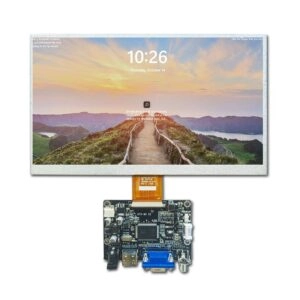
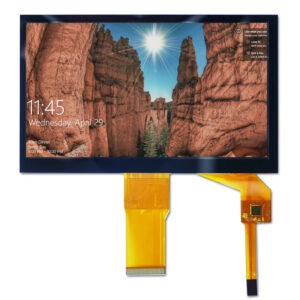

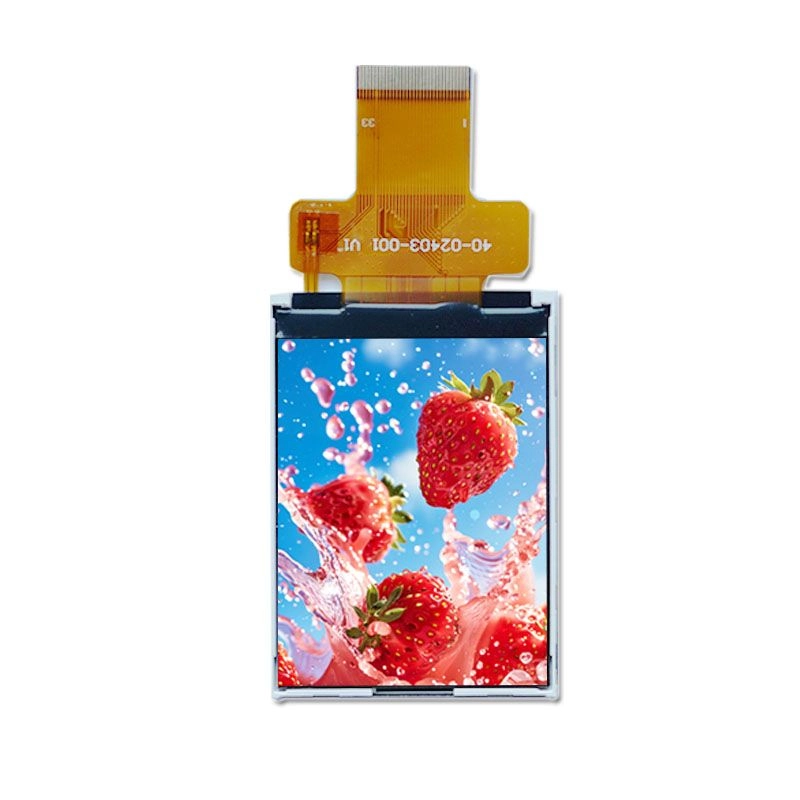
Introduction to Sunlight Readable LCD Screens
Industrial-grade sunlight readable LCD displays are designed for outdoor industrial applications.Typical applications include factory automation equipment, construction machinery, transportation equipment, energy infrastructure, marine equipment, and outdoor terminals.
While brightness is an indicator of outdoor readability, it is not the sole determining factor. Other key elements including contrast, reflectance, optical bonding, viewing angle, temperature, touch, and cover glass all contribute to the final displayed image on a screen and enable outdoor readability.
The Most Important Parameters of Outdoor LCD Screens
Important parameters include:
- Brightness measured in nits or cd/m²
- Native and effective contrast ratio
- Surface reflectance
- Anti-reflective or anti-glare treatment
- Air bonding or optical bonding
- Viewing angle and color stability
- Operating and storage temperature
- Backlight lifetime and power consumption
- Touch panel integration
- Cover glass strength and transparency
- Resistance to vibration, dust, moisture, and chemicals
These parameters should be evaluated together because touch panels, cover glass, adhesives, and coatings change final performance.
Contrast Ratio of Outdoor LCD Screens
The contrast ratio on an LCD screen is the difference between the lightest white and the darkest black. This can be important to make sure that text, warning signs and symbols, graphics and operating data can be seen clearly.
Datasheet Contrast Ratio Versus Effective Contrast Ratio
Datasheet contrast is normally measured under controlled indoor conditions. Outdoor applications face much stronger ambient light.
Sunlight reflected by the screen surface, touch panel, cover glass, and optical layers increases the apparent brightness of dark areas. Black becomes gray, colors lose saturation, and fine details become harder to distinguish.
Effective contrast includes ambient reflection and is therefore a more practical indicator of sunlight readability. A bright screen with high reflection may perform worse than a lower-reflection screen with a properly bonded optical structure.
Evaluating Real-World Contrast
Effective contrast is influenced by:
- Backlight luminance
- Native black level
- Cover glass reflectance
- Touch panel transparency
- Number of optical interfaces
- Surface coating
- Viewing direction
- Ambient light level
Procurement evaluation should use the complete LCD screen assembly. Sample testing under representative lighting is more reliable than comparing panel specifications alone.
How Sunlight Affects Outdoor LCD Screen Readability
Direct sunlight can be much stronger than the light emitted by a conventional LCD screen. Even limited reflection may reduce contrast and make information difficult to read.
Brightness and Ambient Light
Standard indoor LCD screens often provide about 250 to 400 nits. Semi-outdoor applications may require 600 to 1,000 nits, while direct-sunlight applications often require 1,000 nits or more.
The required brightness depends on:
- Screen orientation
- Duration of sunlight exposure
- Cover glass and touch panel transmission
- Surface reflectance
- Viewing distance
- Screen content
- Environmental temperature
Higher brightness increases power consumption and heat. The target should balance readability, power requirements, temperature limits, and expected service life.
Reducing Reflections
Reducing reflection can improve readability more efficiently than increasing brightness alone. Every air-to-glass boundary reflects part of the incoming light.
Anti-reflective coatings reduce mirror-like reflection. Anti-glare treatments diffuse strong light. Excessive anti-glare treatment may reduce sharpness, so the surface treatment should match the required viewing distance and graphic detail.
Protection Glass, Air Bonding, and Optical Bonding
Outdoor industrial LCD screens often require cover glass to resist impact, dust, moisture, oil, chemicals, vibration, and repeated touch operation. The integration method directly affects optical performance.
Protection Glass and Air Bonding
Air bonding leaves a gap between the LCD panel or touch panel and cover glass. This structure is cost-effective for indoor or shaded applications with moderate readability requirements.
However, the air gap creates additional reflective surfaces. Internal reflection can reduce contrast, soften details, and produce a washed-out appearance under sunlight.
Optical Bonding
Optical bonding fills the gap between screen layers with transparent adhesive. Removing the air gap reduces internal reflection and improves light transmission.
Main benefits include:
- Higher effective contrast
- Better sunlight readability
- Improved color saturation
- Greater structural rigidity
- Lower risk of internal condensation
- Better resistance to dust and moisture
- Improved touch accuracy
- Reduced parallax
Optical bonding suits screens used in machinery, transportation, marine systems, energy equipment, and outdoor terminals.
Surface Treatment Options
Common options include:
- Anti-reflective coating
- Anti-glare treatment
- Hard coating
- UV-resistant materials
- Oleophobic coating
- Chemical-resistant cover glass
A high-performance screen may combine high brightness, optical bonding, anti-reflective cover glass, and a durable surface coating.
Selecting Sunlight Readable LCD Screens for Industrial Procurement
Industrial purchasing should begin with the operating environment and a clear screen specification.
Key Procurement Requirements
A purchasing specification should define:
- Screen size, active area, and resolution
- Required brightness and viewing angle
- Operating and storage temperature
- Touch panel type
- Cover glass thickness and shape
- Surface treatment and bonding method
- Interface, connector, and cable requirements
- Mechanical dimensions
- Expected annual volume
- Sample validation requirements
- Product lifecycle and supply continuity
Standard Screens Versus Custom Screens
Standard LCD screens can reduce development time and initial cost when size, interface, brightness, and dimensions already match the project.
Custom LCD screens are appropriate when a project requires modified brightness, special cover glass, a specific connector, custom cable routing, touch integration, optical bonding, or non-standard dimensions.
The decision should consider total project cost. A compatible screen can reduce redesign, shorten validation, and lower sourcing risk.
Evaluating a Screen Supplier
Industrial buyers should assess:
- Sample and production quality
- Consistent optical performance
- Clear technical documentation
- Customization capability
- Batch consistency
- Environmental validation
- Long-term availability
- Production-volume scalability
Sample approval should confirm optical performance, mechanical fit, electrical compatibility, touch response, and environmental stability.
Operating and Storage Temperatures
Outdoor LCD screens may face cold starts, solar heating, seasonal changes, and heat inside enclosed equipment.
Low-Temperature Performance
At low temperatures, liquid crystal response becomes slower and transitions may smear. Wide-temperature LCD materials and controlled startup may be required.
High-Temperature Performance
Direct sunlight can raise screen temperature above ambient temperature. Heat from the backlight and surrounding electronics may increase the load.
Excessive temperature may cause temporary image blackening, reduced stability, or accelerated aging. Qualification should include realistic solar exposure and enclosure temperature conditions.
FAQ
Is High Brightness Alone Enough?
No. Surface reflection, cover glass, touch panel construction, and air gaps between layers all reduce contrast in practice.
What Is the Main Benefit of Optical Bonding?
The glass treatment reduces internal reflection, increases clarity of vision, strengthens the screen structure and also improves reading in the sun.
What Should Be Confirmed Before Volume Purchasing?
Brightness, optical structure, interface, dimensions, touch requirements, temperature range, sample performance, batch consistency, and long-term supply should be confirmed.
Contact a Sunlight Readable LCD Screen Manufacturer and Supplier
Miqidisplay is an LCD screen manufacturer and supplier serving OEMs, equipment manufacturers, engineering companies, and industrial buyers. Its screen capabilities include high-brightness TFT LCD screens, sunlight readable LCD modules, touch integration, optical bonding, wide-temperature options, custom cover glass, interface customization, and cable and connector customization. Project specifications, target brightness, dimensions, interface requirements, touch requirements, application conditions, and expected order volume can be submitted through the “Contact Us” page for technical evaluation, screen recommendations, sample planning, and a B2B quotation.