





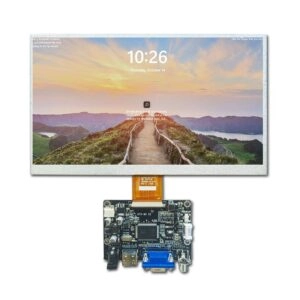
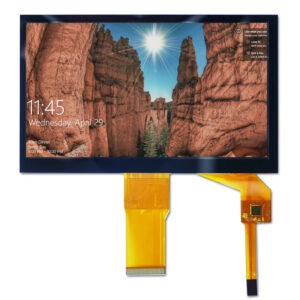

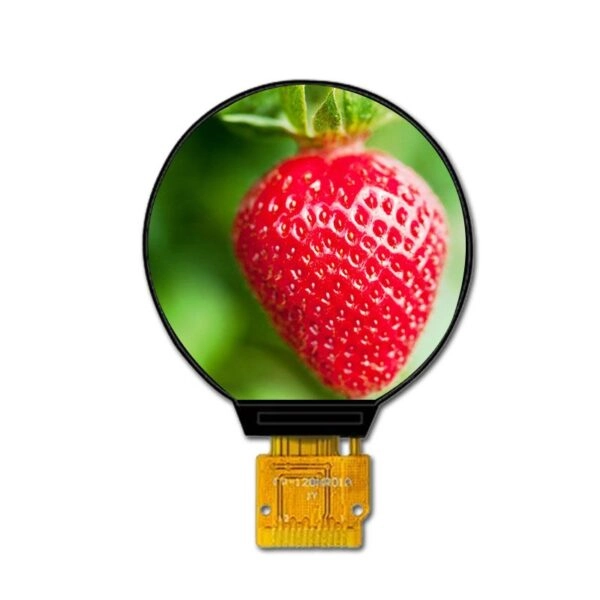
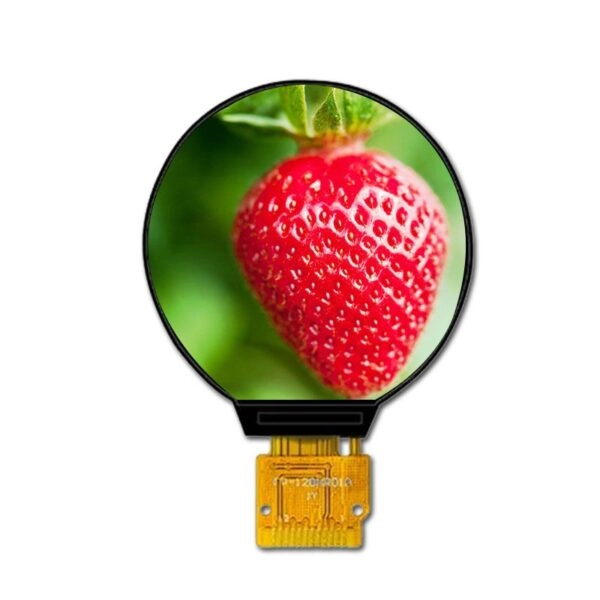
Round displays are circular flat-panel screens designed to present digital information inside housings that do not follow the conventional rectangular format. Most modern round display products use TFT LCD technology, supporting full-color graphics, responsive updates, compact dimensions, and flexible interfaces. Their geometry suits industrial instruments, rotary controls, embedded equipment, and products that replace traditional dial-based components.
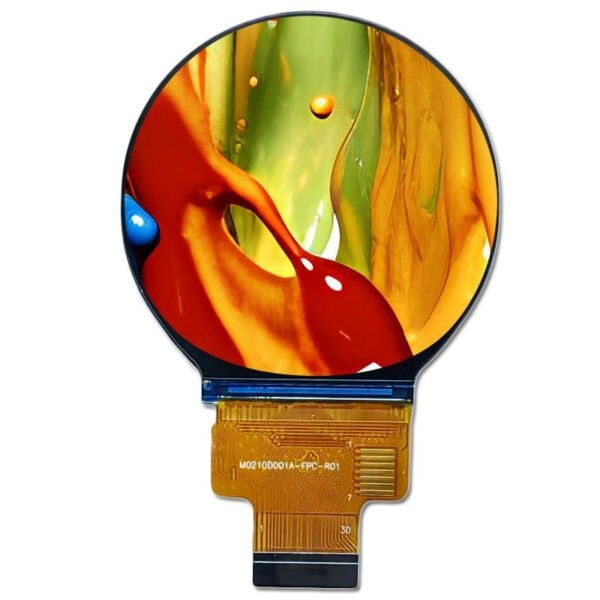
A circular TFT LCD screen can show values, warnings, operating modes, status rings, menus, trend graphics, and system alerts while retaining a familiar circular appearance.
Round LCD modules use pixel matrices arranged inside a circular active area. Typical resolutions include 240 × 240, 360 × 360, 480 × 480, 720 × 720, and 800 × 800. Interfaces may include SPI, QSPI, RGB, MIPI, and LVDS. Selection depends on graphics, refresh requirements, controller resources, cable design, environment, and production volume.
What Are the Main Benefits of a Round LCD Screen?
The main advantage of a round LCD screen is its fit with circular mechanical structures. This shape reduces wasted enclosure space and improves visual consistency.
Efficient Use of Circular Housings
A rectangular panel behind a round opening often creates unused corners, oversized bezels, or unnecessary mechanical depth. A circular display aligns naturally with the visible aperture and surrounding controls.
Key benefits include:
- Better use of limited front-panel space
- Easier integration into rotary controls and instrument clusters
- Balanced alignment with circular buttons, dials, and bezels
- Reduced need for decorative masking
- Greater freedom for compact enclosure design
This geometry is valuable where panel density, cable routing, and operator access require careful management.
Familiar Gauge-Like Visual Design
Industrial operators recognize dials, scales, pointers, and circular status indicators. A round TFT LCD display can reproduce these patterns with dynamic data.
The interface may switch between views such as:
- Speed, pressure, flow, temperature, or rotational data
- Alarm states and threshold indicators
- Equipment mode and process stage
- Progress rings and countdown graphics
- Diagnostic codes and operating information
- Multilingual symbols and instructions
Digital layouts can change with operating conditions, allowing one screen to replace several fixed indicators.
Compact Full-Color Information Area
Round LCD technology supports text, icons, charts, and color-coded warnings. Full-color output separates normal, caution, and critical states.
A circular interface can place the primary value centrally, secondary values around the perimeter, and warnings in radial zones for rapid recognition.
Flexible Mechanical and Optical Customization
A standard circular TFT LCD module may be adapted through changes to the cover glass, touch layer, flexible cable, connector location, backlight performance, or mounting structure.
Common customization items include:
- Cover-glass shape, thickness, printing, and surface treatment
- Capacitive or resistive touch integration
- Flexible cable length and pin assignment
- Connector orientation and bonding position
- Brightness adjustment
- Wide-temperature component selection
- Optical bonding
- Gaskets, brackets, adhesives, and mounting features
These options help the screen fit specific custom equipment.
What Are the Main Applications of Round Screens?
Round screens work best where a circular interface has functional or mechanical meaning. Industrial applications gain compact packaging and configurable digital content.
Industrial Instruments and Electronic Gauges
Circular displays can replace mechanical gauges in factory equipment, test systems, energy devices, pumps, compressors, and process instruments. A single screen may present a simulated pointer, numeric value, unit label, limit zone, and alarm message.
Digital graphics allow scale ranges and units to change by operating mode. This flexibility can reduce the number of instrument variants across a product family.
Rotary Control Knobs
A round LCD placed inside a rotary control creates a compact interface for selecting speed, power, temperature, timing, pressure, or process settings. The central display updates as the knob turns, confirming the selected value.
This format suits industrial ovens, laboratory systems, production equipment, dispensing systems, and specialized control panels. Control action and visual response remain in the same location.
Factory Automation Equipment
Production machinery often requires compact status displays near switches, valves, actuators, or adjustment points. A circular TFT screen can show local conditions without occupying the rectangular space required by a larger panel.
Possible functions include:
- Machine state indication
- Cycle progress
- Tool position
- Load or torque level
- Local alarm messages
- Setup confirmation
- Production count
- operating-hour status
Local information can reduce movement across a workstation and make machine conditions easier to interpret.
Transportation and Specialty Vehicle Instruments
Round TFT LCD modules suit digital instrument clusters, auxiliary gauges, battery indicators, speed displays, and equipment status panels. Their shape fits established dashboard conventions while supporting configurable graphics.
Industrial vehicles, agricultural machinery, construction equipment, and material-handling systems may use circular displays for robust, compact integration.
Medical and Laboratory Equipment
Compact circular screens can support analyzers, dosing devices, diagnostic instruments, laboratory controllers, and portable medical equipment. The format works well for central values, progress indicators, timing cycles, and status symbols.
Selection should consider image clarity, viewing angle, cleanable cover materials, interface compatibility, operating life, and stable supply.
How Can a Display Manufacturer Support Round LCD Projects?
A successful round LCD project requires more than selecting diameter and resolution. Mechanical, electrical, optical, environmental, and supply-chain requirements must be reviewed together.
Technical Specification Review
The initial specification should define:
- Active area and outer dimensions
- Resolution and pixel density
- Interface and controller compatibility
- Brightness and viewing-angle targets
- Operating and storage temperature
- Touch requirement
- Cover-glass design
- Flexible cable and connector details
- Expected annual volume
- Product life-cycle expectations
Early review reduces the risk of enclosure conflicts, insufficient bandwidth, incorrect voltage levels, or unsuitable environmental performance.
Prototype and Validation Support
Prototype samples help confirm readability, graphic layout, mechanical fit, cable routing, touch behavior, and thermal performance under realistic operating conditions.
Important checks include start-up behavior, image stability, viewing direction, vibration resistance, temperature cycling, connector retention, and long-duration operation.
Production and Supply Planning
Industrial programs often require consistent specifications for years. A qualified round LCD supplier should support controlled revisions, documented parameters, production scheduling, quality inspection, and component-change communication.
Stable sourcing matters when a display is integrated into a custom front panel. A later replacement may require new tooling, software changes, cable redesign, or additional certification work.
FAQ
What Is a Round LCD Display?
A round LCD display is a circular flat-panel module that presents graphics, text, values, and status information. It commonly uses TFT LCD technology and fits compact circular housings.
Which Interfaces Are Commonly Used?
Common interfaces include SPI, QSPI, RGB, MIPI, and LVDS. Selection depends on resolution, refresh rate, processor capability, cable design, and system architecture.
Can Round LCD Modules Support Touch Input?
Yes. Capacitive or resistive touch layers may be integrated according to size and project requirements. Cover-glass thickness, bonding method, sensitivity, and environmental conditions require review.
What Specifications Matter Most for Industrial Use?
Key specifications include operating temperature, brightness, viewing angle, interface stability, mechanical dimensions, cable design, connector reliability, product life cycle, and supply continuity.
Partner with an Industrial Round LCD Display Manufacturer and Supplier
Miqidisplay is a display manufacturer serving B2B industrial projects with round TFT LCD screens, standard LCD modules, and custom display development. Engineering support covers size and resolution selection, interface matching, cover glass, touch integration, cable configuration, brightness, wide-temperature requirements, and production planning.
For a project evaluation or quotation, submit target dimensions, resolution, interface, temperature range, annual quantity, and application details through the Contact Us page so the sales and engineering teams can review the requirements and recommend a reliable, production-ready display solution.
Email: mary@miqidisplay.com
WhatsApp: +86 189 6801 5464; +44 07892800850