





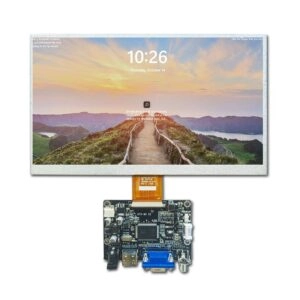
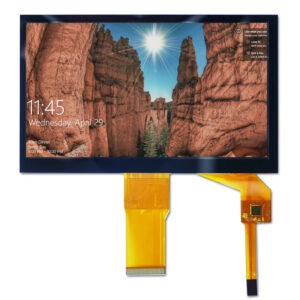

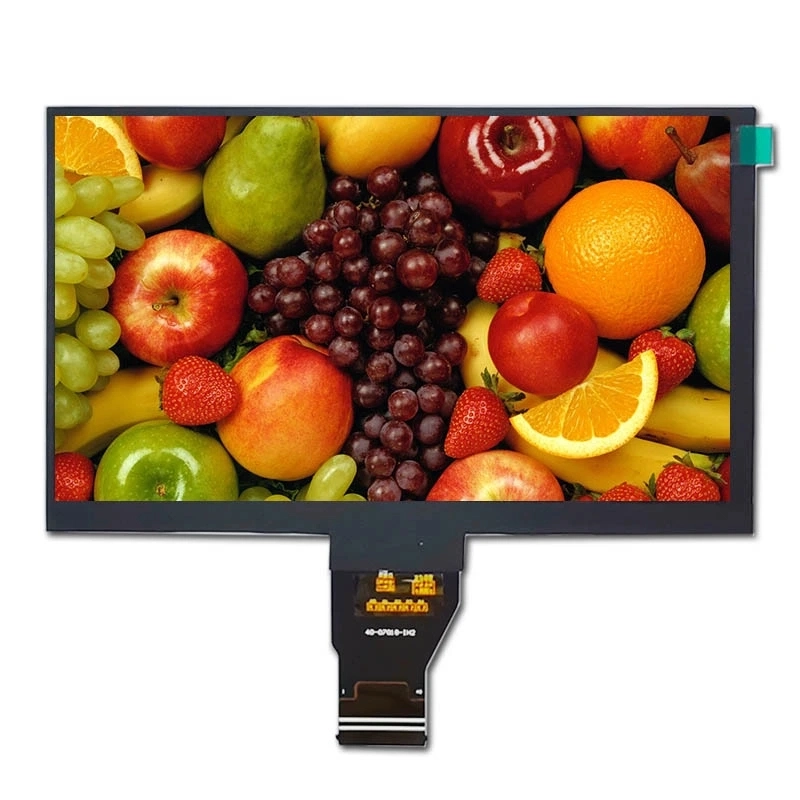
A 7 inch TFT screen is extensively employed in industrial machinery since it features a practical display area while maintaining a small form factor. The screen can display process information, alarms, process diagrams, test results, and configuration menus while still taking up minimal space in the cabinet. Size, however, does not necessarily indicate good performance capability.
Factors that influence integration include resolution, brightness, viewing angle, interface type, temperature range, touch capability, connector style, and reliability of supply. The selection process should start with consideration of the environment and the controller design, followed by optics, electronics, and mechanics.
What Are the Basics of a 7 Inch TFT Screen?
What Is a 7 Inch TFT Screen and How Does It Work?
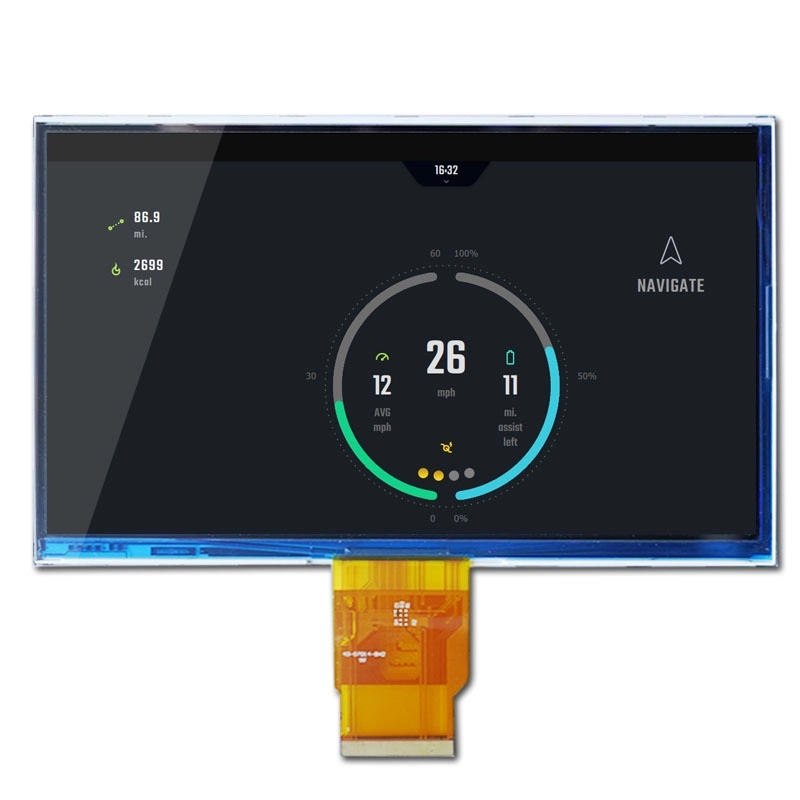
A 7 inch TFT display is a thin-film transistor LCD that has an active region measured diagonally which is about seven inches. The active matrix technology uses switching by transistors to allow image control, fast response time, high contrast ratios, and color reproduction.
In machinery, the display is used for outputting images. It gets the data of the images from the controller board via an interface. Good performance of the display is also based on proper power, thermal management, and mechanical design.
Why Is Size Important When Choosing a Display?
The seven-inch format balances readability and enclosure efficiency. It provides enough area for status indicators, numerical data, trend lines, menus, and warning messages while remaining suitable for embedded installation.
Typical applications include:
- Factory automation equipment
- Measurement and test instruments
- Production inspection systems
- Energy control equipment
- Medical and laboratory devices
- Access control terminals
Landscape orientation supports wide layouts, while portrait orientation suits narrow housings. Active area, bezel width, connector position, and viewing direction should be confirmed before enclosure design is finalized.
Key Technical Specifications to Consider
What Resolution Should Be Selected for a 7 Inch TFT Screen?
Resolution determines how sharply text, icons, and graphics appear. Common industrial options include 800 × 480 and 1024 × 600. An 800 × 480 screen can support basic control pages, numerical readouts, large buttons, and simple diagrams. A 1024 × 600 screen provides more room for trend charts, diagnostic graphics, and multi-panel layouts.
Resolution selection should consider:
- Font size and viewing distance
- Quantity of information shown
- Graphic complexity
- Controller capacity
- Memory and bandwidth
- Compatible display timing
The highest resolution is not always the best choice. Excess pixel density may add cost, power consumption, and development complexity without improving usability.
How Important Are Brightness and Contrast Ratio?
Effects on readability include the presence of brightness in cases where the light intensity is too strong either from the factory light, near windows, or from reflecting machinery. In this case, standard brightness will be adequate while high brightness will suit high ambient light conditions.
The contrast ratio shows the difference between bright and dark portions of an image. High contrast will help in reading warning signs, fine print, and lines. The cover glass, air gap, surface treatment, viewing angle, and bonding technique affect readability as well.
Should Capacitive or Resistive Touch Technology Be Selected?
Projected capacitive touch supports high transparency, smooth gestures, and multi-point input. Resistive touch responds to pressure and may suit operation with gloves or a stylus.
Key touch factors include:
- Glove type and thickness
- Required touch accuracy
- Cover glass thickness
- Electrical noise immunity
- Touch controller compatibility
Touch performance should be tested after the final cover glass, bonding, grounding, enclosure, and cable arrangement are defined.
Environmental and Durability Considerations
Will the Screen Operate in a Controlled or Harsh Industrial Environment?
An indoor clean cabinet is designed with different specifications from one that is exposed to dust, vibration, high levels of light, change in temperature, or constant operation. For such demanding applications, the equipment will need to be bright, operable at all temperatures, equipped with reinforced cover glass, optical bonding, robust connector design, and mounting.
The degree of protection provided by the finished equipment will depend on its total enclosure. Just having a screen does not constitute a sealed system.
How Does Temperature Range Affect Performance?
Liquid crystal response changes with temperature. Low temperatures may slow pixel transitions, while high temperatures can affect contrast, adhesive performance, and service life.
Industrial validation should review operating temperature, storage temperature, start-up conditions, internal enclosure temperature, exposure duration, and heat generated by nearby components. Measurements should be taken close to the installed screen position.
What About Vibration and Shock Resistance?
Industrial machinery can expose a display to repeated vibration and occasional shock. Reliability depends on mounting design, connector retention, cable routing, bracket stiffness, and protection from concentrated stress.
Mounting points should distribute load evenly. Flexible cables should not be sharply bent or placed under tension. Prototype testing should reproduce the expected vibration profile and installation orientation.
Interface Options and System Compatibility
Which Interface Types Are Compatible With the System?
The interface must match the controller board, resolution, pixel clock, color depth, cable length, and electromagnetic environment.
Common Interface Options:
- RGB:Suitable for embedded systems with short signal paths.
- LVDS: Common where stable high-speed transmission is required over longer internal cables.
- MIPI:Suitable for compact, high-resolution designs with dense signal routing.
- HDMI:Suitable for TFT LCD screen modules configured with a compatible signal conversion board.
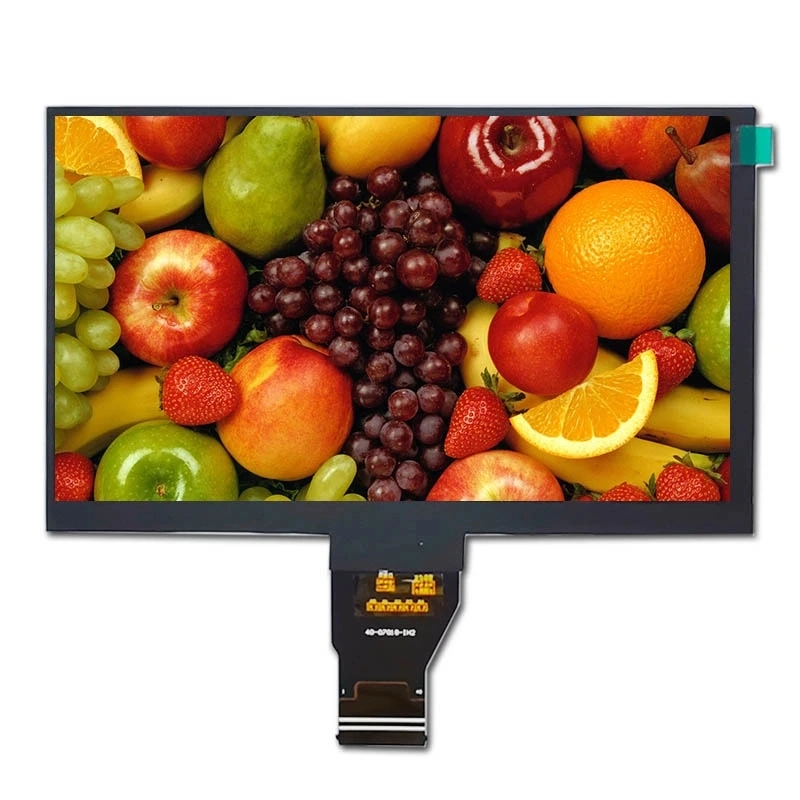
Connector position, cable direction, pin assignment, and signal voltage can affect enclosure and controller-board layout.
How Is Compatibility With the Controller Board Confirmed?
Compatibility requires more than matching an interface name. Native resolution, timing parameters, input voltage, connector pinout, pixel format, backlight power, power sequence, and touch protocol must align.
A datasheet review should be followed by sample testing under cold start, maximum brightness, repeated power cycling, representative image patterns, and the expected cable length.
Visual Quality Factors That Influence Industrial Use
What Role Does Viewing Angle Play in Display Performance?
Viewing angle determines whether color, contrast, and information remain stable when the screen is viewed from above, below, or the side. IPS technology generally provides wider viewing angles and more consistent color than narrow-angle structures.
Wide viewing performance is useful when several operators observe the same equipment or when installation height prevents direct alignment. The final enclosure and cover glass should be included in viewing tests.
How Important Are Color Gamut and Accuracy?
Many industrial interfaces do not require an extremely wide color gamut, but they do require repeatable color separation. Red alarms, yellow warnings, green operating states, and gray backgrounds must remain distinct.
Inspection images and color-based classification may require tighter control of white point, gamma, brightness uniformity, and color consistency.
Choosing the Right Supplier for Industrial 7 Inch TFT Screen Projects
What Supplier Capabilities Matter?
Industrial procurement requires more than a suitable sample. A qualified supplier should support stable documentation, revision control, traceable specifications, lifecycle communication, and repeatable production quality.
Key Supplier Evaluation Points:
- Product availability and expected lifecycle
- Clear datasheets and mechanical drawings
- Sample-to-production consistency
- Change notification procedures
- Quality inspection controls
- Technical support during integration
- Forecast-based volume planning
Which Customization Options Reduce Integration Risk?
Useful options include flexible cable length and direction, connector type, pin assignment, cover glass, touch integration, optical bonding, brightness adjustment, mounting adhesives, gaskets, brackets, and interface adaptation.
Customization should begin with mechanical drawings, electrical requirements, environmental limits, annual demand, target service life, and validation standards.
FAQ
What Is the Most Common Resolution for a 7 Inch TFT Screen?
Common industrial resolutions are 800 × 480 and 1024 × 600. Selection depends on text size, controller capacity, interface design, and graphic detail.
Is an IPS Panel Necessary for Industrial Equipment?
IPS is recommended when wide viewing angles and stable color are important. A narrower-angle panel may suit equipment viewed directly from a fixed position.
How Much Brightness Is Required for Factory Use?
Required brightness depends on ambient lighting, cover glass, reflection, and viewing distance. Strong ambient light may require a high-brightness panel.
Which Interface Is Best for a 7 Inch Industrial TFT Screen?
RGB, LVDS, MIPI, and HDMI suit different controller architectures, cable lengths, resolutions, and integration methods.
What Information Should Be Prepared Before Requesting a Quotation?
Project teams should prepare size, resolution, brightness, interface, viewing angle, temperature range, touch requirements, connector details, drawings, forecast quantity, and expected lifecycle.
Partner With an Industrial TFT LCD Screen Manufacturer and Supplier
Miqidisplay is an advanced display technology and solutions supplier offering LCD, TFT, IPS, VFD screens, and specialized accessories for industrial projects. Submit application requirements through the Contact Us page to receive a project-focused screen recommendation, customization review, and business quotation
Email: mary@miqidisplay.com
WhatsApp: +86 189 6801 5464; +44 07892800850