


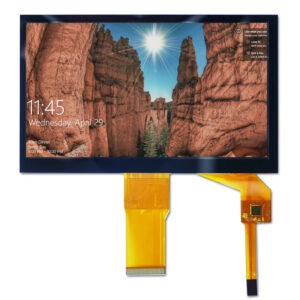

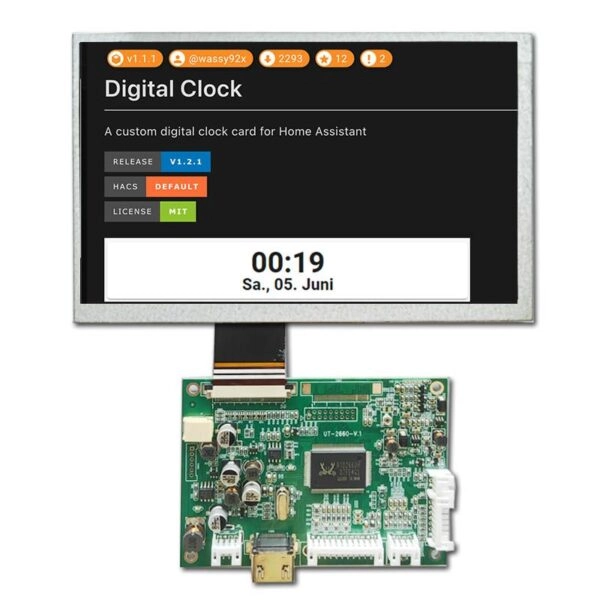
HDMI is one of the most widely adopted interfaces for transmitting digital video and audio. Its broad compatibility, straightforward cabling, and stable signal delivery make it valuable when an industrial TFT LCD display must connect to different computing platforms without complicated interface development.
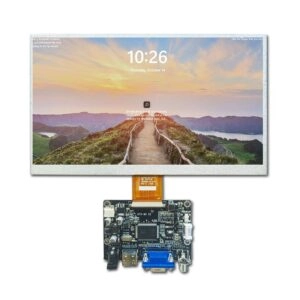
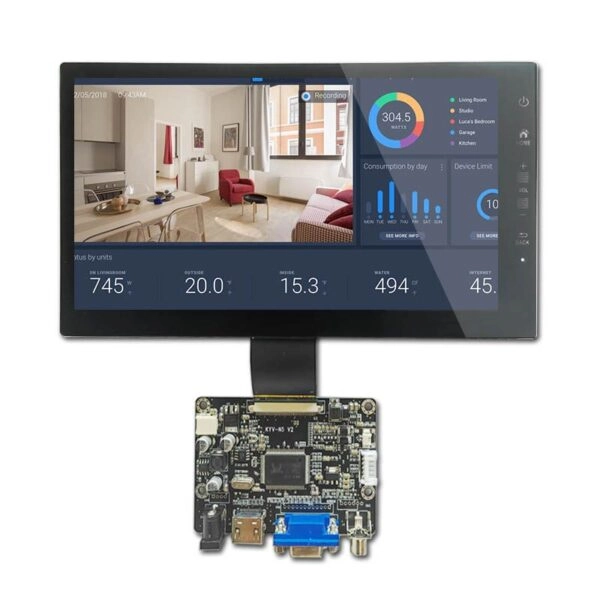
An HDMI display series combines a TFT LCD screen with a compatible controller solution, allowing standard video signals to appear on an industrial display module. Instead of developing a dedicated graphics interface for every project, equipment designers can use a familiar connection method that shortens integration time and simplifies prototype testing.
This flexibility matters in industrial applications, where the same screen may work with several processing platforms. Factory equipment, test instruments, medical devices, security terminals, transportation equipment, and energy systems can all benefit from a standardized connection.
HDMI: Why Is It So Useful?
The main advantage of HDMI is its ability to provide a common digital video connection between a source device and a display screen. Many computing platforms already generate HDMI signals, so the screen can receive graphics without a proprietary video protocol.
When connected to a compatible host, the operating system can normally identify the screen as an available display output. Graphics are generated by the host and transferred through the HDMI cable, reducing application-specific display programming.
Simple and Familiar Digital Connection
HDMI carries high-quality digital image signals through a standardized connection. For industrial equipment developers, this provides:
- Faster connection between the LCD screen and host system
- Reduced dependence on proprietary graphics interfaces
- Easier evaluation during prototyping
- Convenient host-platform changes
- Support for common resolutions
- Lower integration complexity
The screen remains a display component rather than a complete computing system. Processing, software, data handling, and graphics generation remain on the external host. This allows the display and computing sections to be selected independently.
Broad Compatibility with Industrial Computing Platforms
An HDMI TFT LCD display can connect with many types of industrial computing hardware when the host provides a compatible HDMI output and supports the required resolution. Typical sources include:
- Industrial computers
- Embedded computing boards
- Single-board computers
- Inspection and measurement systems
- Video processing units
- Security controllers
- Medical equipment platforms
- Laboratory systems
This is useful for equipment manufacturers developing several product versions. A common display series can remain while the processing platform changes according to performance, software, availability, or cost.
Faster Prototyping and Product Development
Display integration can delay projects when engineers must develop low-level timing, signal conversion, or graphics-control functions. HDMI shifts much of that work to established hardware and software standards.
During early development, an HDMI screen can help verify:
- Display size and aspect ratio
- Interface layout and readability
- Resolution and viewing distance
- Mechanical installation space
- Cable routing and connector access
- Touchscreen operation when required
These checks can be completed before the final enclosure and electronics are defined, reducing later redesign and compatibility problems.
Touch and Power Integration Options
Touch functionality is often required in industrial devices, but the touch signal is generally handled separately from the HDMI image signal. A USB connection can provide touch-data communication, while power may use a dedicated input or an appropriate USB arrangement.
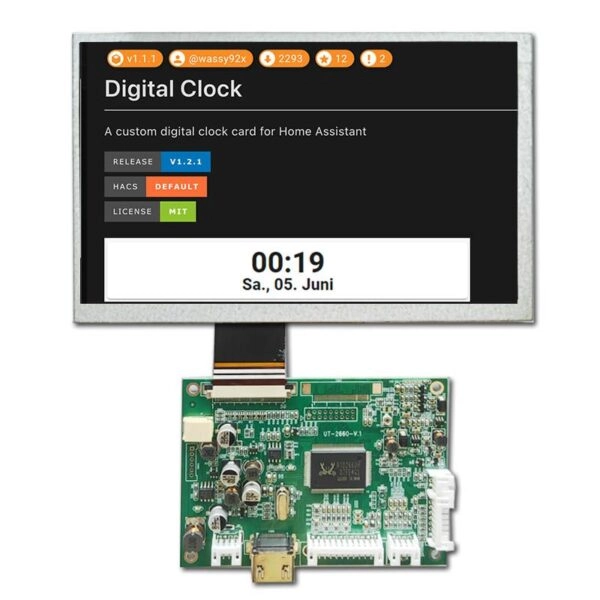
Capacitive touch supports multi-point interaction, while resistive touch suits pressure-based input or certain industrial gloves. Selection should reflect the operating method, cover requirements, environment, and service life.
Important integration details include:
- Touch technology and controller compatibility
- Required power input
- Cable type and length
- Connector position
- Grounding and signal stability
- Cover-glass thickness
- Bonding method
- Mechanical tolerances
External Brightness Control
Industrial screens operate under changing ambient light. Excessive brightness can increase power consumption and visual fatigue, while insufficient brightness reduces readability.
External brightness control allows the host system or equipment electronics to adjust the backlight level. PWM is a common method because it provides predictable adjustment and practical system integration.
Brightness control supports different operating modes, lower power use, operator comfort, application-specific luminance, and thermal management. The required range should match the installation environment.
Industrial Applications of HDMI TFT LCD Displays
An HDMI display series is valuable in projects requiring reliable visual output, host compatibility, and repeatable sourcing.
Factory Equipment and Automation Systems
Industrial machinery requires clear presentation of operating states, production data, process graphics, alarm messages, and configuration information. An HDMI LCD screen can receive these outputs from an external industrial computing platform while remaining a separate display module.
Applications include production equipment, inspection stations, machine-vision systems, packaging machinery, process equipment, and automated assembly lines.
Test, Measurement, and Medical Equipment
Test instruments display waveforms, numerical readings, graphs, camera images, and analysis results. Medical devices require clear presentation, stable performance, and careful mechanical integration. HDMI display modules can support laboratory analyzers, diagnostic instruments, imaging peripherals, testing systems, and other equipment based on embedded or industrial computing platforms.
A suitable industrial TFT screen should be evaluated for resolution, contrast, viewing angle, operating temperature, response time, brightness, and long-term availability.
Transportation, Energy, and Security Systems
Transportation equipment, energy devices, access-control terminals, and security systems depend on continuous visual communication. Screen selection should consider vibration, temperature variation, operating hours, electrical conditions, and installation space.
An HDMI TFT display simplifies host compatibility while matching screen specifications to the industrial environment.
Selecting the Right HDMI Display Configuration
A successful display project depends on more than screen diagonal. The complete specification should be reviewed before prototype approval.
Key Selection Factors
- Screen size and active viewing area
- Native resolution and aspect ratio
- TFT or IPS viewing characteristics
- Brightness and contrast
- Operating and storage temperature
- HDMI controller compatibility
- Touchscreen type
- Power requirements
- Mechanical outline and mounting
- Cable and connector orientation
- Product lifecycle
- Customization and volume requirements
Recent Product Directions
Industrial HDMI display development increasingly focuses on flexible configurations. Common options include bare TFT LCD modules with compatible controller boards, screens with capacitive or resistive touch, customized cable assemblies, modified connectors, tailored PCB layouts, and application-specific cover glass.
The best configuration depends on equipment architecture. A compact device may prioritize low power and limited depth, while an inspection system may require higher resolution, wider viewing angles, or increased brightness. Early communication of electrical, optical, mechanical, and environmental requirements helps prevent conflicts.
FAQ
Is an HDMI TFT display a complete computer?
No. It is a display screen or module that receives image signals from an external computing platform. The host performs processing and generates the graphical content.
Does HDMI transmit touch data?
Normally, no. HDMI carries the image signal, while touch data is commonly transmitted through a separate USB connection.
Can an HDMI screen work with different industrial computers?
Yes, provided the host has a compatible HDMI output and supports the screen’s native resolution and timing requirements.
What information is needed for a quotation?
Key details include screen size, resolution, brightness, viewing angle, interface, touch requirements, operating temperature, dimensions, connector position, quantity, and project schedule.
Can HDMI TFT LCD screens be customized?
Customization may include cable length, pin assignment, connector orientation, touch technology, cover glass, bonding, PCB shape, mounting design, and brightness.
Partner with an Industrial Display Manufacturer and Supplier
Miqidisplay is an advanced display technology and solution supplier offering LCD, TFT, IPS, and VFD display screens, specialized accessories, and custom display services. Equipment manufacturers, OEM and ODM companies, system integrators, and industrial distributors can visit the Contact Us page to submit screen specifications, discuss customization requirements, and request a project quotation.
Email: mary@miqidisplay.com
WhatsApp: +86 189 6801 5464; +44 07892800850