


Transparent displays have come up as a key technology in today’s visual tools. These new screens mix digital info with real spots. They let people see shown details and things behind the glass at the same time. Uses go from retail window ads and museum shows to car insides and smart home fits. The two main methods behind this new tech are transparent OLED and transparent LCD. This full look checks their gaps in main areas. It helps businesses pick the right choice for their needs.
Technology Comparison
Transparent displays use different base ways. These ways shape how well they work, their build, and their fit.
Transparent LCD Technology
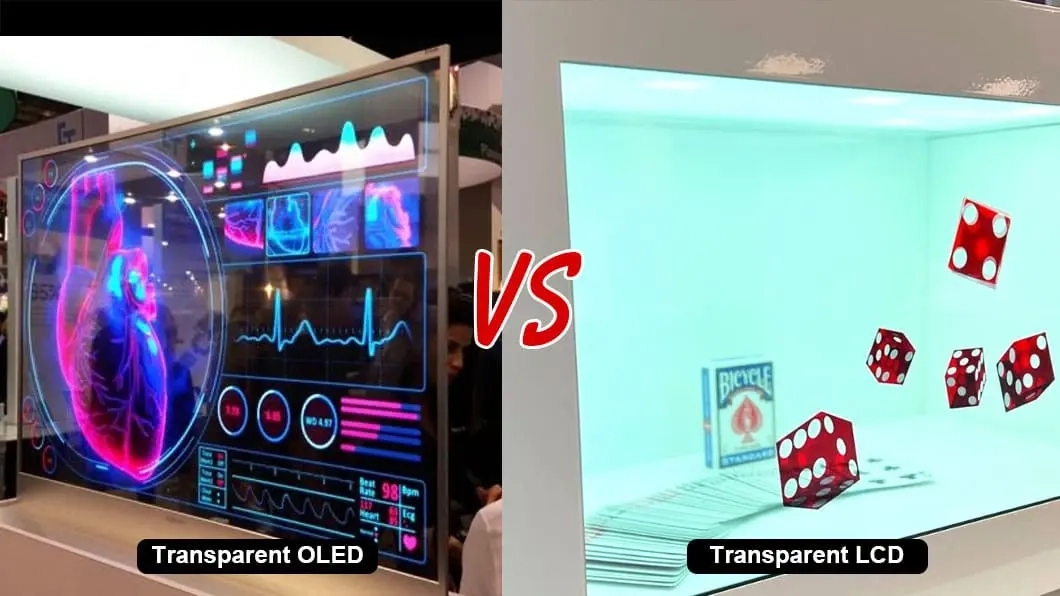
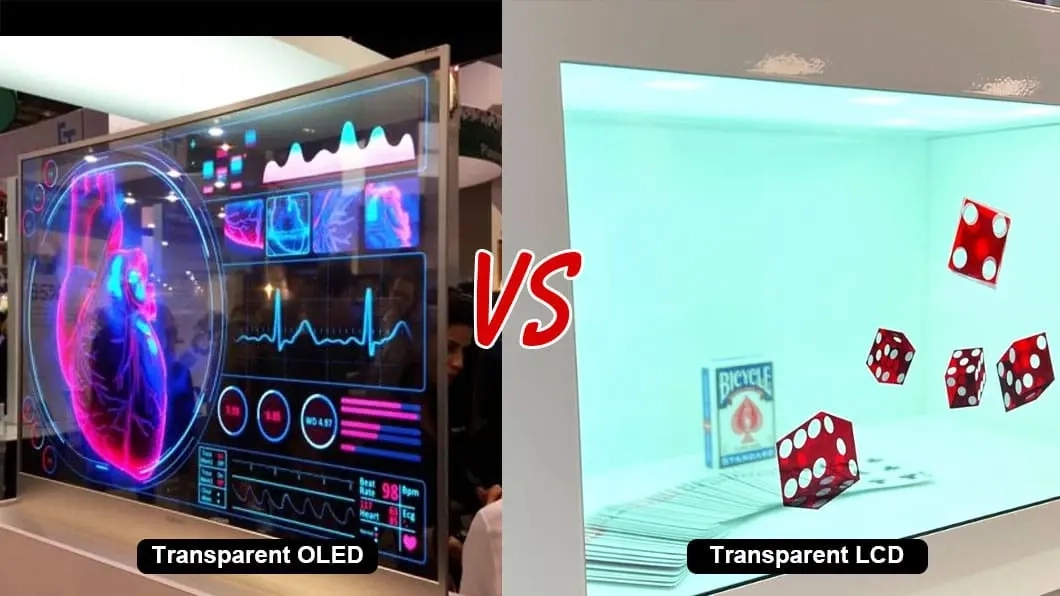
Transparent LCD works with a light back source. This light goes through a liquid crystal level. Power sent to the crystals changes their place. This controls light flow to make pictures. See-through level usually sits at 30% to 50%. Higher levels cut light strength. This happens from light take by the liquid crystals and light-sort layers. The need for back light makes a thicker build. It also calls for steady light for clear sight.
Transparent OLED Technology
Transparent OLED uses pixels that make their own light. Each organic light-emitting diode creates light on its own. No back light is needed. See-through electrodes like indium tin oxide (ITO) or new stuff let light pass while showing info. See-through often hits 40% to 60% or more. It keeps light strength and picture good even in pass-through way. No back light lets for thinner, lighter boards with better fit chance.
Key Technical Differences
Self-light in transparent OLED gives built-in gains in light use and build ease. This beats the back-light need of transparent LCD. Reply times are quicker with OLED. This comes from pixel control. LCD may show slower changes. View angles stay wide in OLED. There is no big color change. LCD can have twists in off-side views.
Display Performance Comparison
Work measures set how well they do in tough spots.
Color Reproduction and Vibrancy
Transparent OLED makes bright, true colors. Self-light pixels do this. It reaches high full color and rightness. Transparent LCD colors look a bit dull. This is due to back light sort and light loss. It cuts full color in see-through uses.
Contrast Ratio
OLED gets near-endless contrast. It turns pixels full off for real darks. This often goes over 1,000,000:1. LCD contrast stays near 1,000:1. This leads to gray darks and less deep. It shows clear in low-light or high-see-through cases.
Viewing Angles and Brightness Balance
OLED keeps steady picture good over wide angles. There is little change. LCD work drops at side angles. Color flip or fade can happen. Some setups let transparent LCD hit higher top light. But transparent OLED sets light and see-through better. It keeps sight without too much power use.
Transparency and Image Clarity
OLED does best in high see-through and clear pictures at once. Self-light skips back-light fog. LCD gives up light for more see-through. It often needs outer light fixes.
Application Scenarios Comparison
Some places like one tech over the other. This bases on needs for money, work, and lasting.
Retail and Window Advertising
Transparent OLED gives brighter, more grabby sights. It has better contrast. This fits top window shows. Bright info over goods pulls eyes.
Museum and Exhibition Showcases
Both tech fit item shows. But OLED’s better color and contrast boost move holo effects. LCD gives steady work for big, money-watch sets.
Automotive Interiors and HUDs
OLED’s quick reply and wide-angle clear do better in change sun light. It cuts glare and boosts read in car boards or heads-up displays.
Smart Home and Interior Design
OLED fits smooth with smart glass for new uses. It offers top looks. LCD fits real, money-set smart home parts.
High-Value Product Displays
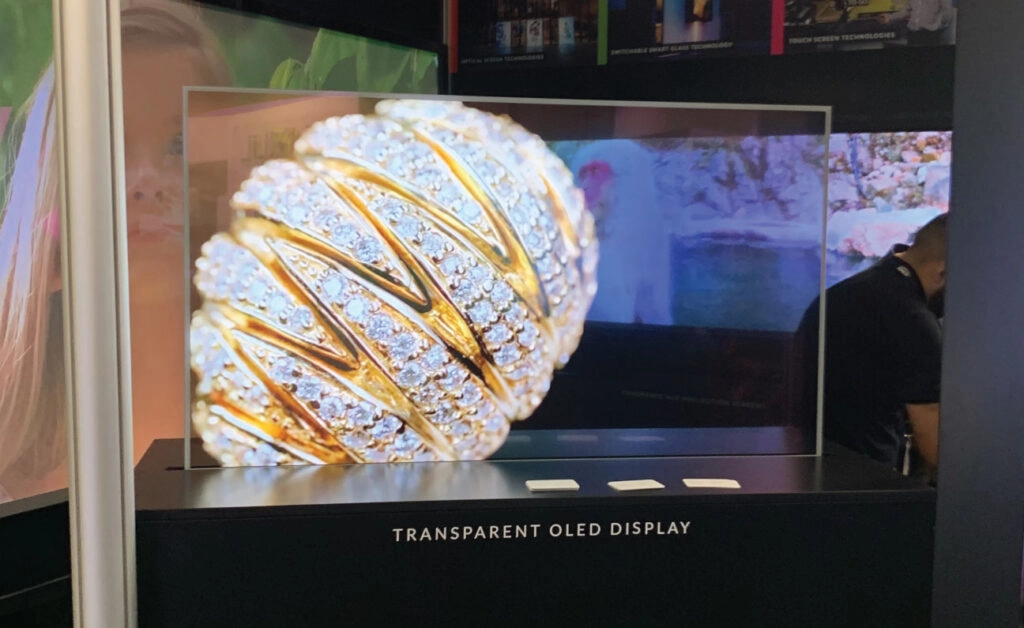
OLED’s fine draw shows in jewel or watch cases. Life-like detail and endless contrast point out fine parts.
Industry and Market Analysis
Market Growth and Adoption
OLED tech shows fast step-up. Need for top, deep feels drives it. LCD stays main in money-watch, high-out parts. Future looks say OLED will take share in special markets in next few years.
Production and Cost Considerations
Transparent LCD gains from set make steps. This leads to lower money and more out for big runs. Transparent OLED needs hard make. This includes right electrode and seal layers. It brings higher costs and make issues. This holds for big sizes.
Challenges and Future Trends
Challenges for Transparent OLED
High make costs, electrode last worries, and seal problems cut grow size. Big boards stay hard to make at high out.
Challenges for Transparent LCD
Low contrast, tight view angles, and light limits at high see-through cut top uses.
Emerging Trends
Bend see-through OLED vows shape-fit displays for new builds. Fit with augmented reality (AR) and virtual reality (VR) boosts move skills. Transparent MicroLED may mix high light and long life in next steps.
Transparent OLED vs Transparent LCD: Which is Better for Your Project?
Pick bases on main needs. Transparent OLED fits high-work, top cases. These need great sight good and move. Transparent LCD does well in money-good, steady sets. There basic see-through and lasting work.
Miqidisplay
Miqidisplay stands as a leading display manufacturer specializing in transparent LCD and OLED solutions. With over 20 years of OEM/ODM expertise, the company delivers Grade A panels, customizable features including touch integration, media boards, and bezel options across sizes from 10 to 98 inches. Miqidisplay supports diverse applications in retail, museums, automotive, and exhibitions through precision engineering and reliable supply chains.
FAQ
What is the main difference between transparent OLED and transparent LCD?
Transparent OLED uses self-emissive pixels for higher transparency, contrast, and color quality without a backlight, while transparent LCD relies on a backlight and liquid crystals, resulting in lower contrast and more limited performance.
Which technology offers better transparency?
Transparent OLED typically achieves 40%-60% or higher light transmission, outperforming transparent LCD’s 30%-50% range while preserving image quality.
Is transparent OLED more expensive than transparent LCD?
Yes, transparent OLED involves more complex production, leading to higher costs compared to the mature, cost-effective transparent LCD processes.
What applications favor transparent OLED?
High-end retail, luxury product showcases, automotive HUDs, and interactive exhibitions benefit from OLED’s superior contrast, color, and fast response.
Can transparent displays be customized for specific needs?
Both technologies support customization, including sizes, touch capabilities, resolutions, and integrations for tailored business requirements.
How do viewing angles compare?
Transparent OLED provides wide, consistent viewing angles with no significant degradation, whereas transparent LCD may show color shifts or loss at off-angles.
Partner with a Trusted Transparent Display Manufacturer
Clients seeking reliable transparent LCD or OLED solutions can leverage Miqidisplay‘s expertise as a dedicated display manufacturer. With proven capabilities in custom OEM/ODM projects, advanced R&D, strict quality controls, and global support, Miqidisplay delivers tailored transparent displays for retail, automotive, exhibition, and specialized applications. Contact the team today to discuss project specifications, request samples, or explore custom solutions that enhance visual impact and operational efficiency.