





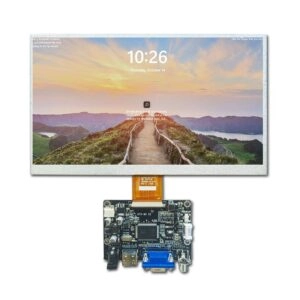
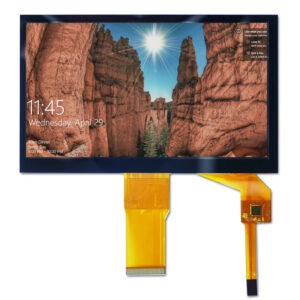

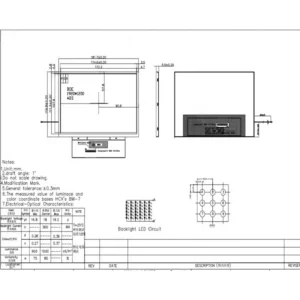
Selecting a TFT LCD module for medical equipment is both an engineering and procurement decision. A screen that meets the basic size and resolution requirements may still create problems if the interface does not match the processor, the FPC exits in the wrong direction, the module does not fit the enclosure, or the product cannot support the required production lifecycle.
For OEM equipment manufacturers, the objective is therefore not to identify the highest-specification screen. It is to select a TFT LCD module that can be integrated, validated, sourced, and produced consistently.
This guide provides a practical procurement workflow for evaluating TFT LCD modules before sample approval and volume production.
1. Build the TFT LCD Requirement List Before Requesting a Quote
A supplier can recommend a suitable module only when the project requirements are clear.
Start by defining the parameters that directly affect screen selection:
- Screen size
- Resolution
- Active area
- Module outline dimensions
- Thickness
- Display orientation
- Brightness
- Viewing angle
- Operating temperature
- Interface
- Connector and pin definition
- Touch requirements
- Cover-glass requirements
- Available enclosure space
These requirements should come from the actual medical equipment design rather than from a preferred LCD model.
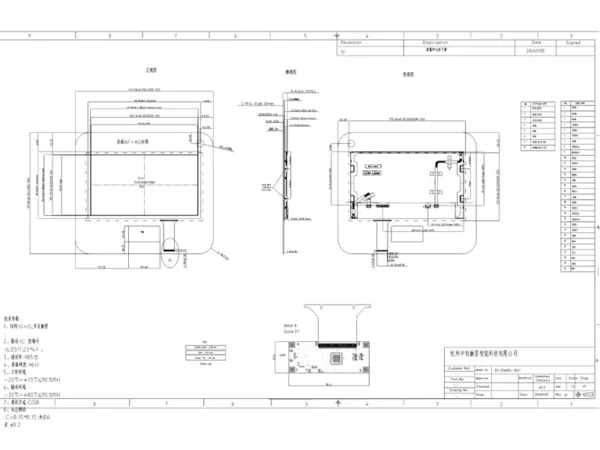
For example, a screen may have the correct diagonal size but an unsuitable active area, connector position, or module thickness. Checking the mechanical drawing early can prevent unnecessary sample testing.
Resolution should also match the information displayed by the equipment. Waveforms, graphs, status information, numerical values, and multi-zone interfaces may require different pixel densities.
Selecting unnecessarily high resolution can increase processor load, interface bandwidth, power consumption, and cost without providing a meaningful benefit to the finished equipment.
2. Screen Candidates for Electrical Compatibility
After identifying several possible TFT LCD modules, eliminate models that are difficult to integrate electrically.
Confirm the Interface
Common embedded TFT LCD interfaces include RGB, LVDS, MIPI, and SPI.
The required interface should be checked against:
- Processor or display controller
- Resolution and bandwidth
- Signal voltage
- Timing requirements
- Pin definition
- Cable length and routing
Do not assume that two modules using the same interface are automatically interchangeable. Connector type, pin assignment, timing configuration, and power requirements may still differ.
Check FPC and Connector Position
FPC direction is a common issue in compact OEM equipment.
Before approving a sample, compare the LCD drawing with the enclosure and PCB layout. Confirm:
- Connector location
- FPC exit direction
- Cable length
- Bending space
- Retention method
- Clearance from nearby components
If the standard configuration does not fit the design, ask whether the supplier can provide a customized cable, FPC, or connector arrangement.
Review Power Requirements
The RFQ should also confirm logic voltage, backlight input, current consumption, brightness control, and power sequencing.
These factors affect the equipment power architecture and should be reviewed before the LCD becomes part of the approved design.
3. Verify Mechanical Fit Before Ordering Multiple Samples
Mechanical compatibility should be treated as a purchasing requirement, not only an engineering detail.
Review the supplier drawing for:
- Overall module dimensions
- Active-area position
- Thickness
- Frame dimensions
- Mounting structure
- Keep-out zones
- Tolerances
The screen must fit the enclosure without excessive mechanical pressure.
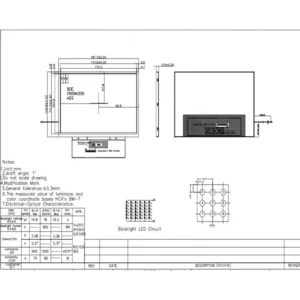
OEM teams should avoid selecting a module based only on a product-page size description. A 5-inch or 7-inch TFT LCD can have different outline dimensions, frame structures, FPC positions, and mounting requirements depending on the model.
Where the enclosure design is already fixed, send the supplier a mechanical drawing during the quotation stage.
4. Decide Touch, Cover Glass, and Bonding Requirements Early
Touch and front-glass requirements can change the total dimensions and integration method of the screen assembly.
If touch input is required, define whether the project needs capacitive or resistive touch and confirm:
- Touch active area
- Controller compatibility
- Cover-glass thickness
- Touch accuracy
- Glove operating requirements
- Cable location
- Electrical noise conditions
Cover glass may also require a specific thickness, shape, border printing, or surface treatment.
For projects requiring optical bonding, the bonding requirement should be identified before final sample approval because it changes the screen stack structure and optical performance.
Customized touch panels, cover glass, cables, connectors, or bonding should therefore be included in the initial RFQ rather than added after the standard TFT LCD has already been approved.
5. Evaluate Optical Specifications in the Actual Equipment
Brightness, contrast, viewing angle, uniformity, and reflection all influence screen readability.
However, procurement teams should avoid approving a module from datasheet values alone.
The final appearance can be affected by:
- Front cover glass
- Optical bonding
- Surface treatment
- Enclosure design
- Ambient lighting
- Viewing position
IPS TFT LCD modules may be suitable when wide viewing angles are required, but the complete screen assembly should still be tested in the intended equipment.
The practical question is not whether one LCD has the highest brightness or widest viewing angle. It is whether the selected module provides sufficient readability for the actual equipment operating environment.
6. Include Reliability and Supply Requirements in the RFQ
A TFT LCD module may meet the initial engineering specification but still be unsuitable for an OEM project if supply continuity is uncertain.
Before supplier approval, confirm:
- Operating temperature
- Storage temperature
- Backlight life
- Expected operating hours
- Product lifecycle status
- Estimated annual quantity
- MOQ
- Prototype availability
- Volume lead time
- Change-notification process
- End-of-life communication
Long-term availability is particularly important because replacing a screen after equipment validation may affect the enclosure, PCB, firmware, cable design, touch assembly, and product approval process.
The lowest unit price is therefore not always the lowest total project cost.
7. Send a Complete TFT LCD RFQ
A detailed RFQ reduces repeated communication and allows the supplier to determine whether a standard screen or customized solution is more appropriate.
An OEM TFT LCD RFQ should normally include:
- Required screen size and resolution
- Target brightness
- Viewing-angle requirement
- Interface
- Operating temperature
- Module dimension limits
- Connector or FPC requirements
- Touch requirements
- Cover-glass requirements
- Mechanical drawings when available
- Prototype quantity
- Estimated annual demand
- Target production schedule
If an existing model is being replaced, also provide the original LCD specification or drawing so the supplier can compare mechanical and electrical compatibility.
8. Validate the TFT LCD Sample Before Supplier Approval
Sample testing should reproduce the intended equipment configuration as closely as possible.
Check:
- Mechanical fit
- Interface compatibility
- Startup and image stability
- Brightness and viewing angle
- Power consumption
- FPC and connector position
- Touch response
- Cover-glass fit
- Cable routing
- Operation inside the final enclosure
If customization is involved, do not approve volume production from the standard sample alone.
The final customized drawing should be reviewed and approved before production.
Important controlled documents may include:
- TFT LCD drawing
- Pin definition
- FPC or cable drawing
- Touch-panel specification
- Cover-glass drawing
- Appearance criteria
These documents help ensure that purchasing, engineering, quality teams, and the supplier are evaluating the same configuration.
Common OEM Procurement Mistakes
Several purchasing mistakes can create redesign work later:
- Selecting a screen by diagonal size only
- Requesting samples before confirming the interface
- Ignoring FPC or connector direction
- Choosing excessive resolution
- Adding touch or cover-glass requirements too late
- Testing the screen outside the actual enclosure only
- Comparing suppliers by unit price alone
- Failing to confirm long-term availability
- Approving customized products without final drawings
A structured RFQ and sample-validation process can reduce these risks before the TFT LCD enters volume production.
FAQ
What Information Should an OEM Provide When Requesting a TFT LCD Quote?
Provide the required size, resolution, brightness, interface, operating temperature, mechanical limits, touch requirements, drawings, prototype quantity, annual demand, and production schedule.
Can the TFT LCD Cable or Connector Be Customized?
Depending on the project, customization may include FPC or cable length, connector position, touch-panel configuration, cover glass, optical bonding, mounting details, and backlight requirements.
Should OEM Buyers Select the Highest-Resolution TFT LCD?
Not necessarily. Resolution should match the interface design, processor capability, viewing distance, screen size, and amount of information displayed. Excess resolution can increase system requirements without improving practical usability.
Why Should Product Availability Be Checked Before Approval?
Changing a TFT LCD after equipment development can affect mechanical, electrical, firmware, and validation work. Confirming lifecycle and supply conditions reduces future redesign risk.
Request a TFT LCD Module for an OEM Medical Equipment Project
Miqidisplay supplies TFT LCD modules and customized display components for OEM equipment manufacturers.
Project requirements can include interface, FPC or cable configuration, connector position, touch panel, cover glass, optical bonding, mounting details, and backlight specifications.
To evaluate a TFT LCD module for a medical equipment project, submit the required size, resolution, interface, mechanical drawing, touch requirements, prototype quantity, estimated annual demand, and production schedule through the Contact Us page for technical review, sample evaluation, and quotation.
Email: mary@miqidisplay.com
WhatsApp: +86 189 6801 5464; +44 07892800850