







Introduction: Why Industrial TFT LCD Module Selection Determines Project Lifecycle Success
For long-life industrial HMI projects, selecting a TFT LCD module is not simply a display specification decision. It is a strategic supply chain decision that directly affects product reliability, production continuity, maintenance costs, and future upgrades.
Industrial equipment is usually designed for extended service periods, often requiring stable display performance over years of operation. Unlike short-cycle consumer electronics, industrial applications require careful evaluation of display lifespan, environmental adaptability, supplier capability, customization flexibility, and long-term availability.
A suitable industrial TFT LCD module must match not only the technical requirements of the equipment but also the procurement expectations of engineering teams, OEM manufacturers, system integrators, and industrial solution providers. Factors such as operating temperature range, interface compatibility, quality management systems, production capability, and engineering support should all be considered during supplier evaluation.
1. Define Industrial TFT LCD Module Requirements Before Supplier Evaluation
1.1 Analyze Application Environment and Operating Conditions
The first step in selecting an industrial TFT LCD module is understanding the actual working environment.
Industrial equipment may operate continuously under temperature fluctuations, vibration, dust exposure, or demanding installation conditions. Therefore, display selection should consider:
- Operating temperature range
- Storage temperature range
- Display brightness requirements
- Viewing angle requirements
- Continuous operating hours
- Mechanical installation limitations
- Interface compatibility
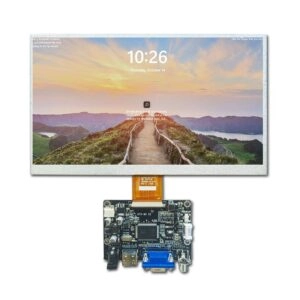
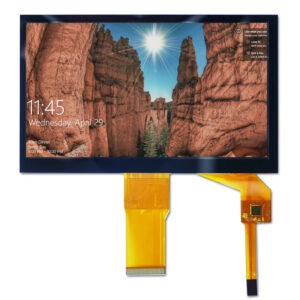
For example, different industrial applications may require compact TFT LCD modules for embedded equipment or larger customized display modules for complex information visualization. Miqidisplay industrial TFT LCD products include various sizes, resolutions, and interfaces designed for different integration requirements.
A professional supplier should help analyze the complete application scenario instead of only providing a single display specification.
2. Evaluate TFT LCD Module Reliability for Long-Term Industrial Use
2.1 Operating Temperature Capability
Temperature performance is one of the most important factors in industrial display selection.
Industrial environments may experience extreme temperature conditions compared with standard indoor applications. A TFT LCD module with a suitable temperature range can improve system stability and reduce unexpected failures.
For example, industrial TFT LCD modules from Miqidisplay are available with different temperature specifications depending on product design. Some industrial TFT LCD modules are designed for applications requiring wider operating temperature capability.
During supplier assessment, procurement teams should request detailed environmental specifications rather than relying only on standard product descriptions.

2.2 Display Lifetime and Continuous Operation
Long-life HMI projects require displays that can maintain stable image quality during extended operation.
Important evaluation factors include:
- Backlight lifetime
- Brightness stability
- Contrast performance
- Color consistency
- Component availability
A supplier with experience in industrial projects should understand the importance of lifecycle planning and provide suitable product recommendations based on expected usage periods.
3. Select the Right Display Specifications for Industrial HMI Integration
3.1 Size and Resolution Selection
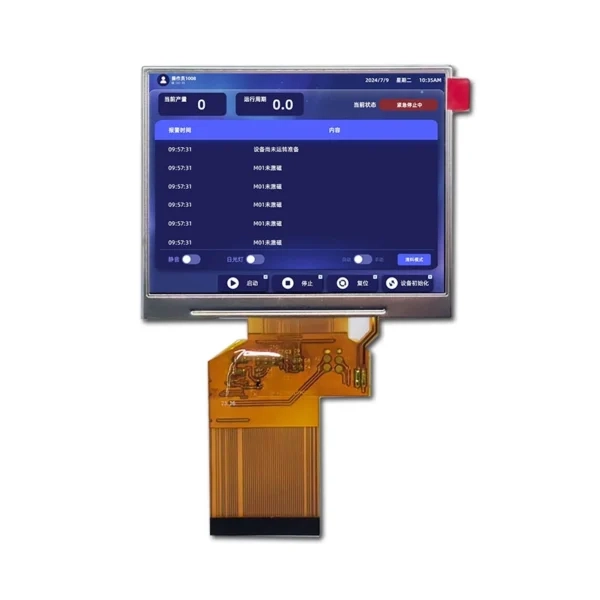
The correct TFT LCD module size depends on equipment design, user interface requirements, and available installation space.
Common industrial considerations include:
- Compact modules for embedded devices
- Medium-size panels for equipment control interfaces
- Larger TFT LCD modules for industrial interface applications
Resolution selection should balance visual requirements, processing capability, and project cost. Higher resolution is not always the optimal choice if the system hardware and application environment do not require it.
Miqidisplay offers industrial TFT LCD modules with multiple sizes and resolutions, including compact modules and larger industrial panels for different integration scenarios.
3.2 Interface Compatibility
Interface selection directly affects hardware design and development efficiency.
Industrial TFT LCD modules may support different interfaces depending on system architecture, including:
- SPI
- RGB
- LVDS
- MIPI
- EDP
A qualified supplier should provide technical support during interface matching, including connector requirements, signal compatibility, and integration considerations.
Miqidisplay industrial TFT LCD solutions include multiple interface options to support different engineering requirements.
4. Assess Supplier Manufacturing Capability and Quality Management
4.1 Manufacturing Experience and Production Stability
For long-term industrial projects, supplier capability is as important as product specifications.
A reliable TFT LCD module supplier should have:
- Stable manufacturing processes
- Experienced engineering teams
- Consistent quality control
- Strong production management
- Long-term project support capability
Supplier evaluation should include production capacity, quality inspection processes, delivery performance, and experience with similar industrial applications.
Miqidisplay presents itself as an advanced display technology and solutions supplier with industrial display experience, customized engineering capabilities, and certified manufacturing facilities.
4.2 Certification and Quality System Evaluation
Industrial buyers should review supplier quality management systems before project approval.
Important evaluation points include:
- Quality certifications
- Manufacturing process control
- Incoming material inspection
- Reliability testing procedures
- Production traceability
For industrial equipment manufacturers, supplier quality management directly influences final product reliability and customer satisfaction.
5. Consider TFT LCD Customization Capability
5.1 Why Customization Matters for Industrial Projects
Many industrial applications cannot use completely standard display modules.
Customization may involve:
- Cable length adjustment
- Connector modification
- Interface adaptation
- Mechanical structure adjustment
- Cover glass customization
- Backlight adjustment
- Touch panel integration
A supplier with strong customization capability can reduce redesign costs and improve product integration efficiency.
Miqidisplay provides customized customized display modules including cable adjustments, connector modifications, interface integration, PCB adjustments, mounting solutions, and display structure customization.
5.2 Engineering Support During Development
Industrial display projects often require cooperation between display suppliers and engineering teams.
Professional suppliers should provide:
- Technical documentation
- Product recommendations
- Sample evaluation support
- Engineering communication
- Custom solution discussion
This cooperation helps shorten development cycles and reduces risks during mass production.
6. Evaluate Supply Chain Reliability for Long-Life Projects
6.1 Long-Term Product Availability
Industrial equipment manufacturers often need products to remain available for many years.
Supplier evaluation should include:
- Product lifecycle planning
- Replacement options
- Production continuity
- Inventory management capability
A display supplier should have experience supporting long-term industrial projects rather than focusing only on short-term sales.
6.2 Delivery Capability and Project Management
Stable delivery performance is essential for industrial procurement.
Key supplier evaluation factors include:
- Production scheduling capability
- Order management process
- Communication efficiency
- Delivery reliability
A supplier with organized project management can support both prototype development and volume production requirements.
7. Common Mistakes When Choosing an Industrial TFT LCD Module
7.1 Selecting Only Based on Price
The lowest-cost display solution may create higher risks in long-term industrial projects.
Potential problems include:
- Limited product availability
- Insufficient customization support
- Difficult lifecycle management
- Higher replacement risks
Industrial procurement should focus on total project value rather than initial purchase price alone.
7.2 Ignoring Supplier Engineering Capability
A display is a critical component of industrial equipment. Supplier engineering capability can significantly influence project success.
A supplier should be evaluated not only as a component provider but also as a technical partner capable of supporting integration requirements.
Conclusion: Choosing the Right Industrial TFT LCD Module Supplier
Choosing an industrial TFT LCD module for a long-life HMI project requires careful evaluation of reliability, interface compatibility, customization capability, engineering support, and long-term availability.
Miqidisplay provides industrial TFT LCD modules and customized display solutions for OEM and industrial applications. Explore our industrial TFT LCD displays or custom display solutions, or contact Miqidisplay with your project requirements to receive a suitable display recommendation.
Email: mary@miqidisplay.com
WhatsApp: +86 189 6801 5464; +44 07892800850
FAQ
What factors are most important when selecting an industrial TFT LCD module?
The most important factors include operating temperature range, display lifetime, interface compatibility, brightness requirements, customization capability, supplier quality management, and long-term supply reliability.
Why is supplier capability important for long-life industrial display projects?
Supplier capability affects product consistency, delivery stability, technical support, and lifecycle management. A capable supplier can reduce risks during development and mass production.
Can industrial TFT LCD modules be customized for specific equipment requirements?
Yes. Industrial display projects often require customization such as cable adjustment, connector modification, interface adaptation, mechanical changes, and display configuration adjustments.
How should companies evaluate TFT LCD module suppliers?
Companies should evaluate manufacturing experience, certifications, production capability, engineering support, customization ability, and previous industrial project experience.
What display interfaces are commonly available for industrial TFT LCD modules?
Industrial TFT LCD modules may support interfaces such as SPI, RGB, LVDS, MIPI, and EDP depending on application requirements and system architecture.