


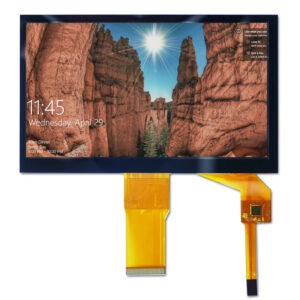

Stretched displays are increasingly used in industrial equipment where conventional screens cannot fit narrow or elongated spaces. Their ultra-wide format allows OEMs to present alarms, operating data, navigation, and system status without increasing enclosure height.
Selecting the right bar type TFT requires careful evaluation of dimensions, resolution, brightness, interface, touch technology, operating temperature, and supplier capabilities. This guide explains the key purchasing factors for industrial buyers, engineers, and equipment manufacturers.
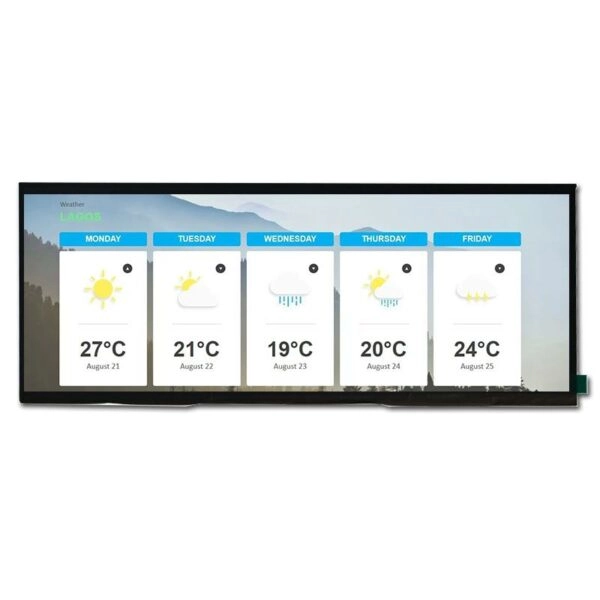
What Is a Stretched Display?
A stretched display, also called a bar type TFT display, strip LCD, or ultra-wide LCD, uses an elongated active area designed for narrow equipment openings.
Unlike conventional 4:3 or 16:9 screens, stretched displays fit naturally into machine panels, vehicle dashboards, transportation systems, charging equipment, medical devices, access-control terminals, and commercial installations where vertical space is limited.
For industrial OEMs, the main value is not only appearance. A bar type TFT can present alarms, process values, operating modes, navigation, maintenance information, and system status across one continuous interface without increasing enclosure height.
When Should an OEM Choose a Bar Type TFT?
A stretched TFT is suitable when:
- A standard display cannot fit the available mechanical opening
- Multiple operating values must remain visible simultaneously
- The equipment requires a long horizontal or vertical user interface
- Separate indicators and small displays need to be consolidated
- The design requires high brightness, wide temperature, touch, or custom cover glass
- The host platform uses LVDS, MIPI DSI, RGB, SPI, MCU, or eDP
- The product needs a more integrated industrial appearance
Typical users include machine builders, embedded-system manufacturers, transportation integrators, medical-equipment companies, energy-system suppliers, and terminal manufacturers, transportation integrators, medical-equipment companies, energy-system suppliers, and kiosk manufacturers.
Key Specifications Buyers Should Confirm
Mechanical Dimensions
Diagonal size alone is not enough. Buyers should verify:
- Active-area dimensions
- Overall outline
- Display thickness
- Mounting points
- Bezel width
- Connector position
- FPC or cable direction
- Horizontal or vertical orientation
- Cover-glass dimensions
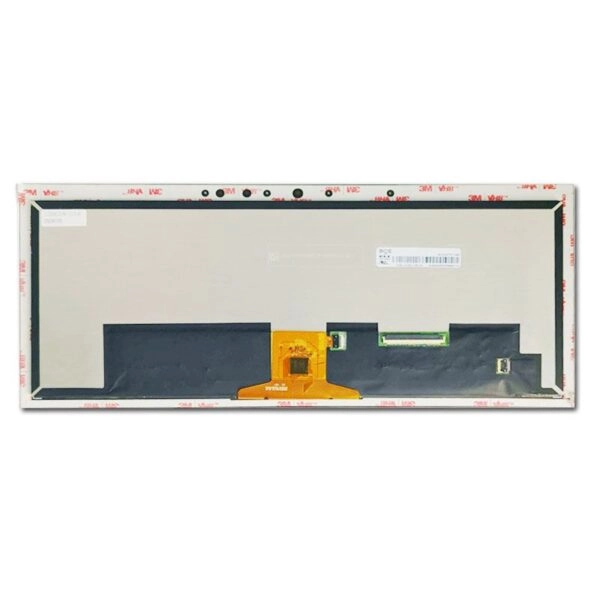
Because stretched panels are long and narrow, the mounting structure must support the display evenly and avoid twisting, excessive pressure, or cable interference.
Resolution and Content Layout
Resolution should match the information density and viewing distance.
A machine-status display may require clear values and alarms, while a transportation or signage system may need route maps, multilingual text, or panoramic content.
The selected host processor must also support the required timing, aspect ratio, and resolution.
Brightness and Optical Performance
Indoor industrial equipment may use moderate brightness, while charging stations, transportation terminals, vehicles, and semi-outdoor systems may require high-brightness backlights.
Buyers should also consider:
- Anti-glare treatment
- Anti-reflective coating
- Optical bonding
- Cover-glass transmission
- Automatic brightness control
- Nighttime dimming
- Viewing angle
- Backlight uniformity
Brightness should be evaluated after touch and cover glass are installed, not only from the bare-panel specification.
Operating Temperature and Reliability
Industrial suitability depends on the complete specification.
Important factors include:
- Operating and storage temperature
- Cold-start behavior
- Backlight lifetime
- Continuous operating hours
- Vibration and shock
- ESD and EMC performance
- Dust and moisture protection
- Heat dissipation
- Connector retention
- Long-term component availability
Ingress protection and regulatory compliance must be evaluated at finished-equipment level.
Main Industrial Applications
Factory Automation
Bar type TFT displays can show production speed, temperature, pressure, alarm status, maintenance prompts, recipes, and machine states across one interface.
They are used in packaging machinery, CNC equipment, printing systems, production lines, test instruments, warehouse automation, and robotics.
Transportation
Stretched displays fit above vehicle doors, inside dashboards, along platforms, and within passenger-information systems.
Typical content includes route maps, station information, speed, battery status, navigation, warnings, transfer information, and service notices.
Energy and Charging Equipment
Electric-vehicle chargers, battery-storage systems, inverters, power cabinets, and industrial power supplies can use narrow TFT displays to present voltage, current, charging progress, pricing, thermal warnings, and fault codes.
Medical and Laboratory Equipment
A bar display can organize patient values, settings, test status, alarms, and operating prompts without increasing device size.
Medical projects should evaluate cleaning resistance, glove operation, readability, product lifecycle, risk management, and finished-device compliance.
Building and Access Systems
Elevators, room-control panels, security terminals, smart lockers, and visitor systems can use stretched displays for floor information, access status, instructions, announcements, and emergency messages.
Customization Options for OEM Projects
Industrial projects often require more than a standard panel.
Customization may include:
- Display size and resolution
- Brightness and backlight
- Operating-temperature range
- LVDS, MIPI DSI, RGB, SPI, MCU, eDP, or other module-level interfaces
- Connector type and position
- Cable or FPC length
- PCAP or resistive touch
- Cover-glass size, shape, printing, and thickness
- Optical bonding
- Custom mounting tabs, adhesive frame, cover glass, and module structure
Early coordination between the display supplier, mechanical engineers, electronics engineers, and procurement team can reduce redesign risk.
How to Evaluate a Stretched Display Supplier
Before approving a supplier, procurement teams should confirm:
- Availability of specifications and mechanical drawings
- Standard-sample support
- Customization capability
- Interface-matching experience
- Touch and optical-bonding capability
- Wide-temperature and high-brightness options
- Prototype and pilot-production support
- Quality-inspection procedures
- Failure-analysis support
- Production lead time
- Minimum order quantity
- Product lifecycle and change-notification process
- Technical communication during integration
The lowest initial price may not provide the lowest total project cost. Mechanical redesign, unstable interfaces, insufficient brightness, touch problems, or unexpected component changes can create significant delays.
Prototype Validation Before Mass Production
The prototype should be tested in the actual equipment.
Recommended checks include:
- Mechanical fit and cable routing
- Brightness under real lighting
- Viewing angle
- Touch accuracy
- Glove and wet-touch operation
- High- and low-temperature performance
- Vibration and shock
- Signal integrity
- ESD and EMC behavior
- Power sequencing
- Heat dissipation
- Long-duration operation
Mass production should begin only after optical, electrical, mechanical, touch, and environmental performance are approved.
Information Required for an Accurate Quotation
To receive a useful technical proposal and quotation, buyers should provide:
- Required active area or maximum outline
- Resolution
- Preferred interface
- Host processor, mainboard, or embedded computing platform
- Brightness requirement
- Operating-temperature range
- Touchscreen type
- Cover-glass drawing
- Mounting method
- Prototype quantity
- Estimated annual volume
- Required certifications
- Target production date
Drawings, photos, system block diagrams, and existing display specifications can help the supplier identify a suitable standard product or determine whether customization is required.
FAQ
Can the brightness of a bar type TFT LCD be customized?
Yes. Brightness and backlight specifications may be adjusted according to indoor, vehicle, transportation, industrial, or semi-outdoor viewing conditions. Final readability should be evaluated after the touch panel and cover glass are installed.
What customization options are available for OEM projects?
Customization may include screen size, resolution, brightness, backlight, interface, connector position, FPC length, touch technology, cover-glass shape and printing, optical bonding, mounting tabs, adhesive frames, and module structure.
Is optical bonding recommended for industrial applications?
Optical bonding can improve perceived contrast, reduce internal reflections, limit condensation between layers, and strengthen the integrated screen structure. It is especially useful when the equipment is installed under bright lighting or changing environmental conditions.
What tests should be completed before mass production?
Prototype validation should cover mechanical fit, cable routing, brightness, viewing angle, touch accuracy, temperature performance, vibration, shock, signal integrity, ESD, EMC, power sequencing, heat dissipation, and continuous operation.
Can a standard stretched TFT LCD be modified for a custom project?
Some standard modules can be adapted through changes to the touch panel, cover glass, connector, FPC, brightness, interface, or mounting structure. Fully custom dimensions or resolutions require a separate feasibility review based on technical requirements and order volume.
Partner With Miqidisplay
Miqidisplay supports OEM and ODM projects involving stretched bar TFT LCD screens, TFT LCD modules, touch panels, cover glass, optical bonding, FPC cables, connectors, and mechanical customization.
For product selection or a custom quotation, send your required dimensions, resolution, interface, brightness, operating temperature, touch requirements, prototype quantity, and estimated annual volume to mary@miqidisplay.com or sale@miqidisplay.com.
You can also contact Miqidisplay through WhatsApp at +86 189 6801 5464 to discuss drawings, samples, technical requirements, and production planning.