




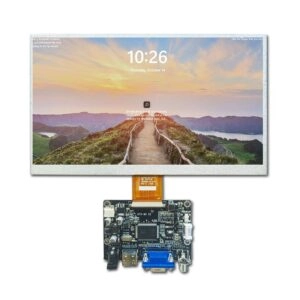
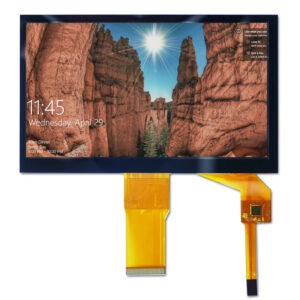

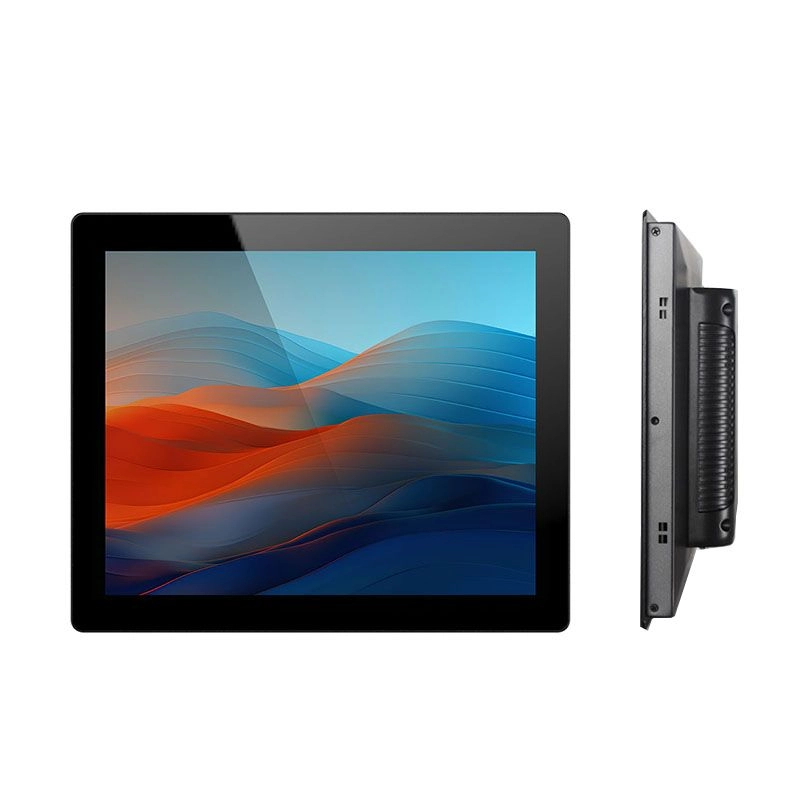
Industrial LCD screens are used in factory equipment, automated production lines, transportation systems, energy facilities, medical equipment, security systems, outdoor terminals, and other environments where stable visual performance is essential.
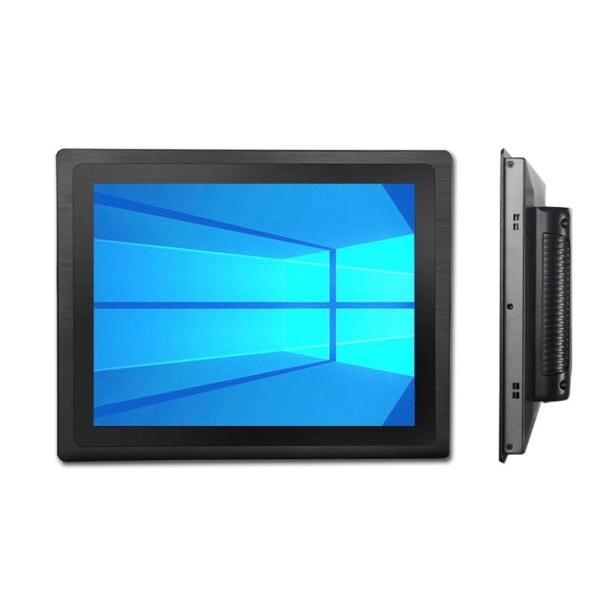
For industrial buyers, selecting a screen is not only a matter of comparing size, resolution, and price. The selected product must also match the operating temperature, daily working hours, static-content duration, brightness requirement, electrical specification, installation space, and expected project lifecycle.
Image retention is one risk that should be considered when a screen displays fixed text, icons, status fields, warning areas, or high-contrast graphics for long periods. Although image retention is often temporary, visible traces can affect product appearance, operator confidence, customer acceptance, and project qualification.
A reliable industrial purchasing decision should answer four questions:
- Is the screen suitable for the real operating environment?
- Are the specifications supported by relevant test data?
- Can the supplier maintain consistent production quality?
- Will the same product remain available throughout the equipment lifecycle?
Why Image Retention Matters in Industrial Applications
Industrial equipment often operates under conditions that are more demanding than ordinary commercial use.
Typical application conditions may include:
- Continuous or extended daily operation
- Fixed screen layouts
- Repeated status information
- High ambient temperatures
- Large temperature variations
- Outdoor or high-brightness environments
- Long equipment service life
- Strict visual-quality requirements
Under these conditions, an unsuitable LCD screen may lead to repeated sample testing, delayed product approval, inconsistent image quality, additional validation costs, supply changes, or customer complaints.
A low initial unit price may therefore create a higher total procurement cost if the product lacks stable materials, reliable test data, controlled production, or long-term availability.
Key Specifications for Industrial Screen Selection
1. Static-Content Duration
Buyers should estimate how long the same content remains visible during normal operation.
The RFQ should state:
- Operating hours per day
- Duration of unchanged content
- Percentage of the screen occupied by fixed elements
- Frequency of content changes
- Contrast between text, graphics, and background
- Whether the screen operates continuously
This information allows the supplier to evaluate image-retention risk and recommend a more suitable screen.
2. Operating and Storage Temperature
Industrial screens may be installed in enclosed equipment, production facilities, vehicles, outdoor terminals, or locations with strong seasonal temperature changes.
Buyers should verify:
- Minimum operating temperature
- Maximum operating temperature
- Storage temperature range
- Test duration and test method
- Performance near the upper temperature limit
- Whether the quoted model matches the tested model
A wide-temperature claim should be supported by documentation. Buyers should also distinguish between short-term function at an extreme temperature and long-term operation under the same condition.
3. Continuous Operating Capability
Some industrial projects operate only during working hours, while others require 24-hour operation.
The procurement specification should define:
- Daily operating hours
- Annual operating days
- Expected equipment lifetime
- Typical and maximum temperature
- Required brightness
- Static-content duration
The supplier should confirm in writing that the proposed screen is suitable for these conditions.
4. Brightness and Visibility
Brightness should be selected according to the actual installation environment.
Buyers should define:
- Indoor or outdoor use
- Ambient lighting
- Viewing distance
- Direct sunlight exposure
- Required visual contrast
- Expected brightness stability
The supplier should provide typical brightness, minimum brightness, tolerance, measurement conditions, and uniformity data. Comparisons between suppliers should use equivalent test conditions.
5. Viewing Angle and Installation Direction
The required viewing angle depends on equipment position and user location.
Buyers should specify:
- Primary viewing direction
- Horizontal and vertical viewing requirements
- Portrait or landscape installation
- Acceptable color shift
- Acceptable contrast reduction
Samples should be tested in the same direction and position planned for the final equipment.
6. Electrical Compatibility
The industrial LCD screen must match the customer’s electrical design.
The specification should include:
- Resolution
- Interface type
- Signal timing
- Supply voltage
- Connector type
- Connector position
- Cable direction
- Power-consumption limits
Any customized electrical configuration should be documented and validated before mass production.
7. Mechanical Dimensions
Small dimensional differences can affect installation, tooling, and replacement compatibility.
Buyers should confirm:
- Active area
- Viewing area
- Outline dimensions
- Thickness
- Mounting dimensions
- Connector position
- Cable direction
- Dimensional tolerances
A controlled drawing with a revision number should be approved before sample confirmation.
8. Manufacturing Consistency
Two screens with similar basic specifications may perform differently because of variations in materials, process control, and inspection standards.
Buyers should ask about:
- Exact model number
- Production origin
- Incoming material inspection
- Production inspection process
- Lot traceability
- Aging-test procedures
- Sampling standards
- Functional and cosmetic defect criteria
- Material and process change control
The supplier should not change critical materials, specifications, or production processes without formal notification and customer approval.
Documents Industrial Buyers Should Request
Before approving a screen, buyers may request:
- Product datasheet
- Controlled mechanical drawing
- Electrical specification
- Interface timing information
- Operating-temperature test report
- Storage-temperature test report
- Brightness and uniformity data
- Viewing-angle data
- Image-retention test data
- Reliability test report
- Material compliance documents
- Inspection standard
- Lot-traceability procedure
- Quality-management certification
- Product change-notification procedure
- Product discontinuation-notification procedure
These documents should be reviewed before sample approval and mass-production release.
Sample Evaluation for Industrial Projects
A datasheet alone is not sufficient for final approval. Samples should be tested under conditions that reflect the actual industrial application.
Evaluation may include:
- Visual inspection
- Dimensional verification
- Electrical compatibility
- Interface stability
- Brightness and uniformity
- Color consistency
- Viewing angle
- Temperature performance
- Long-duration static-content testing
- Continuous-operation testing
- Lot-to-lot comparison
Test conditions and acceptance criteria should be documented in advance. Buyers should also confirm that approved samples use the same model, materials, and production process planned for mass production.
Comparing Industrial Screen Suppliers
Supplier quotations should be compared on the same technical basis.
Buyers should confirm whether each quotation includes the same:
- Screen size and resolution
- Brightness and tolerance
- Temperature range
- Viewing-angle requirement
- Electrical interface
- Mechanical dimensions
- Inspection standard
- Testing scope
- Documentation package
- Product availability commitment
- Change-notification terms
A lower quotation may exclude testing, traceability, tighter tolerances, documentation, or long-term supply support.
For industrial projects, buyers should evaluate total procurement risk rather than unit price alone.
What to Include in an RFQ
A complete industrial LCD screen RFQ should include:
- Application type
- Screen size and resolution
- Active area and outline dimensions
- Brightness requirement
- Viewing-angle requirement
- Operating and storage temperatures
- Daily operating hours
- Static-content duration
- Electrical interface
- Supply voltage
- Connector and cable direction
- Annual quantity
- Sample quantity
- Target sample date
- Target production date
- Required test reports
- Required compliance documents
- Expected product availability period
Complete information reduces quotation changes, sample revisions, and technical misunderstandings.
FAQ
What information should be included in an industrial LCD screen RFQ?
An RFQ should include the application, screen size, resolution, brightness, temperature range, interface, voltage, dimensions, operating hours, and touchscreen requirements. Buyers should also provide sample quantity, annual demand, target schedule, and required test or compliance documents.
Should buyers select a TFT LCD module or a complete industrial monitor?
A TFT LCD module is suitable for customers that already have an enclosure, controller board, power system, and integration capability. A complete industrial monitor is more suitable when the project requires an integrated housing, controller, interface, touch function, and mounting solution.
How should industrial LCD screen samples be tested?
Samples should be evaluated for dimensions, electrical compatibility, brightness, uniformity, viewing angles, temperature performance, and continuous operation. Testing should reproduce the actual installation conditions and use acceptance criteria agreed upon before approval.
How can buyers evaluate an industrial LCD manufacturer or supplier?
Buyers should assess technical support, customization capability, quality control, traceability, testing procedures, and production consistency. They should also confirm the supplier’s change-notification, product-discontinuation, and long-term supply procedures.
Partner with an Industrial LCD Display Manufacturer and Supplier
Miqidisplay supports equipment manufacturers, OEM and ODM companies, system integrators, engineering contractors, distributors, and other B2B buyers seeking industrial LCD screens, TFT LCD modules, touch displays, and complete industrial monitors.
Whether your project requires a standard display or a customized solution, Miqidisplay can review requirements related to screen size, resolution, brightness, operating temperature, interface, touch technology, cable configuration, connector position, cover glass, mounting structure, and backlight performance.
To discuss your project, submit your required screen size, resolution, brightness, temperature range, interface, dimensions, quantity, and production schedule.
Click “Contact Us” to send your requirements and receive an industrial LCD screen recommendation and quotation for your application.