





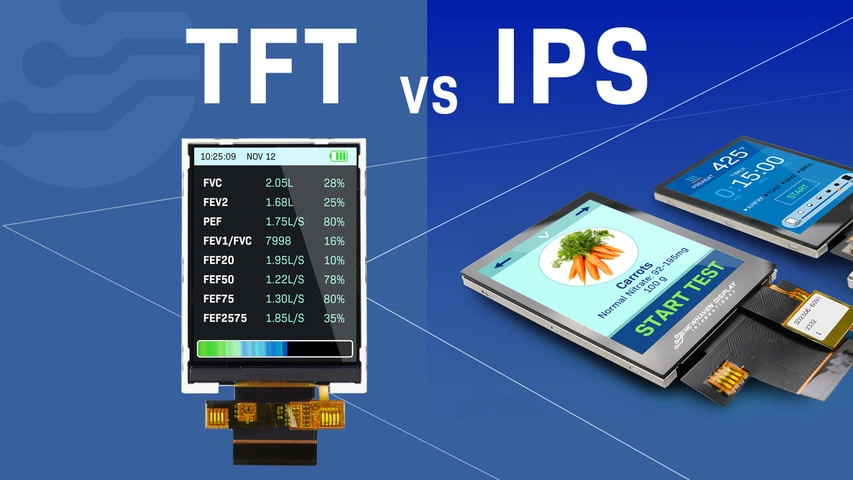
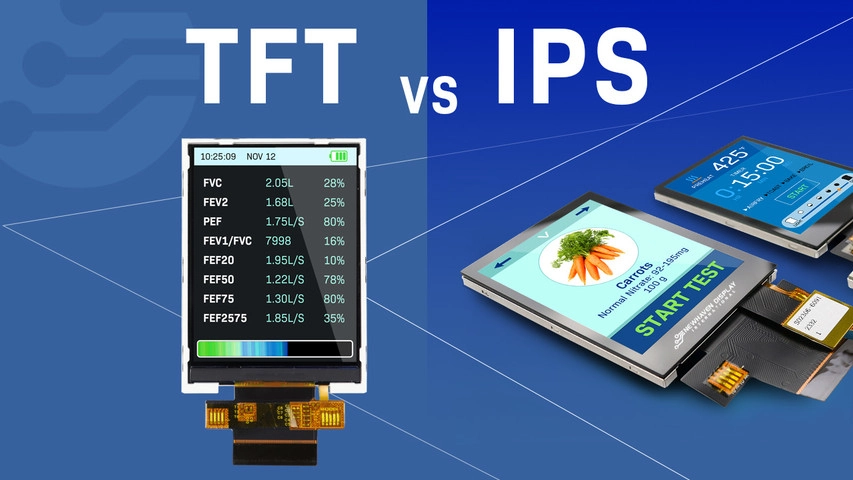
Display technologies can seem complicated. Specifications often list terms like TFT and IPS side by side. TFT and IPS are not completely different types. IPS is actually an improved version built on the TFT foundation. Knowing this connection helps make clearer choices in product design. Visual quality, strength, and cost all matter a lot here.
Understanding TFT Technology
TFT, or thin-film transistor, serves as the main structure for most modern active-matrix LCD screens. Each pixel gets its own transistor to control it. This setup allows exact voltage to reach the liquid crystals. As a result, it brings benefits like fast refresh rates, steady performance, and dependable color display. TFT screens are common in places that need quick updates, small sizes, and tough operation.
Standard TFT panels offer a good mix of performance and price. They show up often in industrial control panels, medical diagnostic tools, handheld devices, and embedded systems. These setups value fast response more than wide viewing options. The screens deliver clear images when viewed straight on. However, problems appear at side angles. Colors can shift and brightness can drop. Their popularity comes from solid reliability in settings with steady light and fixed viewing spots.
Introducing IPS: A Type of TFT
IPS, or in-plane switching, came about to fix weak points in older TFT-based LCDs. It does not replace TFT. Instead, IPS improves the basic system. The thin-film transistor array stays the same. But the way liquid crystals line up and react changes quite a bit.
In regular TFT panels, liquid crystals twist up and down when voltage hits them. This limits even light flow at slanted angles. IPS makes crystals turn sideways, flat along the panel surface. This side-to-side motion allows smoother light passage. It gives better color accuracy and much wider viewing angles—usually up to 178 degrees from every direction.
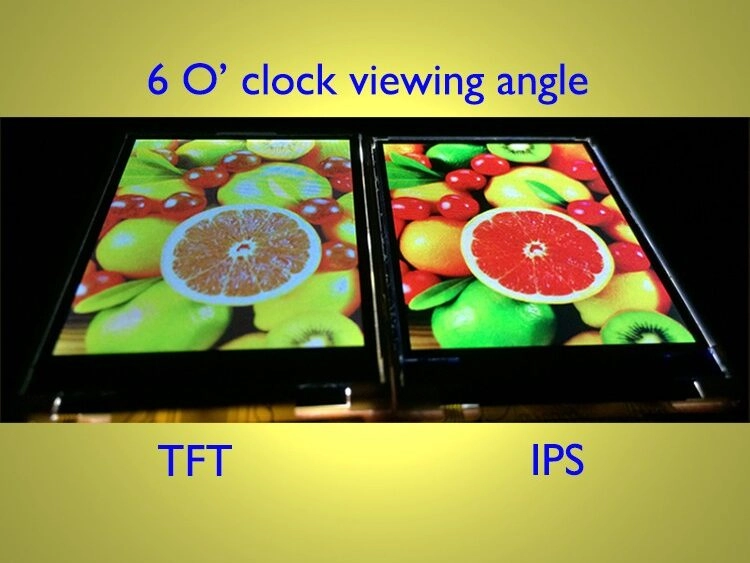
Real-world tests show the difference clearly. IPS keeps brightness, contrast, and true colors no matter where you look from. These features help a lot in group work, slanted setups, or devices with changing views. IPS panels keep the TFT base but improve light handling for better use in tough situations.
Standard TFT Displays vs IPS Displays: Key Differences
Viewing experience: Standard TFT panels show clear drops in color strength and brightness from off-center spots. This often creates faded looks or gamma changes. IPS handles this much better. It keeps the image looking right over wide angles. It supports multiple viewers or moving positions easily.
Color consistency:IPS provides steady colors across the whole screen. It reduces edge warping or shade differences. Standard TFT versions can cause small color shifts, especially near edges or at angles. This affects tasks that need high accuracy.
Refresh behavior:Standard TFT setups often allow slightly faster pixel changes. This helps in uses with quick updates, like gauges or video streams. IPS panels have improved response times a lot. Still, some very fast needs might prefer classic TFT types.
Power use: IPS sometimes needs stronger backlights to keep top brightness and evenness. This can raise power use in battery-powered or portable gear. Standard TFT choices usually give better efficiency in similar setups.
Cost considerations:Standard TFT screens stay cheaper. They appeal for large production runs where top visuals are not key. IPS has gotten easier to afford. Yet it still costs a bit more due to better features.
When to Use Standard TFT vs IPS
The type of use decides between standard TFT and IPS. Standard TFT fits places with steady straight-on viewing and managed light. Examples include fixed industrial HMIs, portable diagnostic tools, metering devices, and machinery interfaces. Here, speed and low cost matter more than angle range.
IPS screens work better when shared views, detailed graphics, or tilted mounting are needed. Medical imaging tools, multi-operator stations, public kiosks, automotive dashboards, and outdoor or semi-outdoor setups gain from IPS stability. In products with touch use or frequent angle changes, IPS improves ease of use and overall feel.
Beyond specs, choices look at how users interact, surroundings like room light or shaking, and the display’s role in the final item. Weighing these points leads to the best results without extra cost.
Common Misconceptions
Many people wrongly think TFT and IPS compete as separate technologies. In truth, IPS is a special kind of TFT. Both use thin-film transistor grids to control pixels. IPS stands out by changing crystal direction to boost angles and colors.
Some believe IPS stays too costly or hard to add in. Better production methods have cut the price gap. Many IPS panels now match common interfaces and sizes. This makes them simple to use in various projects.
Lastly, the idea that IPS always beats standard TFT ignores real needs. IPS shines in picture quality. But standard TFT holds advantages in quick response and power saving for certain jobs. The right pick depends on what the application truly needs, not general claims.
Choosing the Right Display for Your Product
Picking between standard TFT and IPS means matching real use conditions. Straight-on, budget-focused applications lean toward standard TFT for good efficiency and trust. Needs like exact colors, wide angles, or group use point toward IPS.
Other factors include mounting position, interface match, power limits, toughness to environment (like wide temperature ranges or high brightness for sunlight readability), and links with touch or driver boards. Careful review of these helps find the best technology for lasting success.
Miqidisplay
Miqidisplay stands as a leading manufacturer, supplier, and factory of TFT LCD displays, including standard TFT and IPS TFT variants. With over 20 years of OEM/ODM expertise, the company offers a wide portfolio of LCD, TFT, IPS, and OLED solutions, ranging from small 0.96-inch modules to larger panels up to 23.8 inches or more. Products feature diverse interfaces (HDMI, MIPI, LVDS, RGB, SPI), capacitive/resistive touch options, wide viewing angles (178° in IPS), high-brightness configurations (up to 1000+ nits), wide temperature operation (-30°C to 85°C in many models), and custom R&D support. Certified under ISO-9001, ISO-14001, and TS-16949, Miqidisplay serves industrial, medical, automotive, smart home, and consumer sectors globally, with fast prototyping, strict quality control, and 90% on-time delivery. For tailored display solutions that match specific project needs, contact the team directly.
FAQ
What is the main structural difference between standard TFT and IPS displays?
Standard TFT uses vertical liquid crystal alignment, while IPS employs horizontal in-plane switching for improved light uniformity.
Are IPS displays always more power-hungry than standard TFT?
Not necessarily; it depends on backlight design and brightness targets, though IPS may require more power to achieve consistent performance at wide angles.
Can standard TFT displays support touch interfaces effectively?
Yes, both standard TFT and IPS integrate well with capacitive or resistive touch layers, depending on application requirements.
How do viewing angles impact industrial applications?
Narrow angles in standard TFT suit fixed-position setups, whereas IPS wide angles enhance usability in multi-user or angled-mount industrial environments.
Is customization available for TFT and IPS panels?
Customization covers size, resolution, interface, brightness, temperature range, and touch integration to fit precise product specifications.
Partner with a Trusted TFT LCD Manufacturer and Supplier
Manufacturers, OEMs, and product developers seeking reliable TFT LCD or IPS TFT displays benefit from partnering with an experienced factory like Miqidisplay. As a dedicated manufacturer and supplier, the company provides custom solutions, rapid prototyping, high-quality panels from trusted sources, and comprehensive support for industrial, medical, automotive, and consumer projects. Contact the sales team today at mary@miqidisplay.com, via WhatsApp at +86 188 7965 2960, or through 24/7 live chat to discuss requirements, request samples, or obtain a quote. Move projects forward with proven display expertise and global delivery reliability.