







Capacitive touchscreens stand as a key technology in current screen setups. They offer quick response, strong build, and backing for multi-touch moves. These screens fit well with TFT LCD panels. They allow exact user action in home devices and tough work uses. Knowing the inner build and work ways shows why capacitive tech does well in point and trust next to old choices.
Main Components of Capacitive Touchscreens
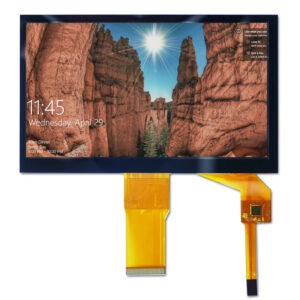
The main parts of a capacitive touchscreen cover the cover glass, the touch sensor, and the touch controller board. Each part adds to full work, safety, and signal handle.
Cover Glass of Capacitive Touchscreen
The cover glass, also called the glass cover, gives body safety. It acts as the outside style layer for the whole touchscreen unit. Makers often make it from glass or fake stuff like PMMA or polycarbonate. Glass types include chem-strong glass for thin shapes. They also include heat-strong glass for thick uses over 3 millimeters. Thickness usually goes from 0.55 millimeters to 1.8 millimeters. This mix keeps lasting with clear sight.
Regular glass shows a light green shade from iron oxide. This shows most at the sides. Ultra-clear glass mixes cut this to keep true color show from the base TFT LCD panel. After-make strong steps boost safety and hit fight. Chem-strong glass fits thin covers under 3 millimeters. Heat strong fits thick ones for better safety space. Side finish with C-cut shapes cuts chip risks in handle or use in rough spots.
CTP Touch Sensor
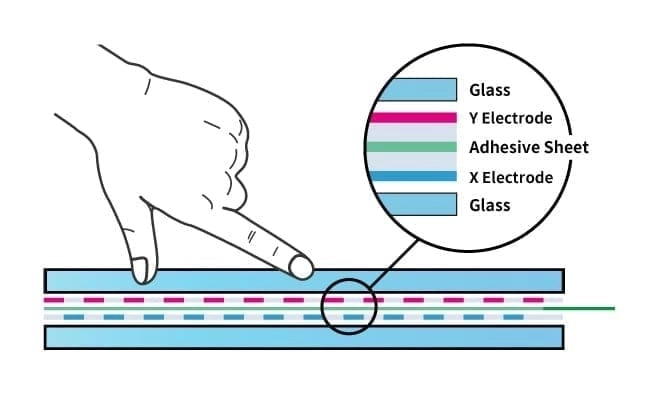
The capacitive touch sensor makes the main spot layer. It has two hold layers covered with Indium Tin Oxide (ITO). They sit in up-down and side-way electrode lines that form a net grid. Scan happens on each line to check hold changes. When a lead thing, like a finger, nears the top, it shifts the local power field. This raises hold at set cross points. The setup finds the right touch spots from these cross points.
Most sensors use two-side ITO glass. Patterns come from exact cut steps. Another one-side ITO (SITO) way cuts the pattern on one side. It sticks set X or Y electrodes. This cuts stuff costs but keeps work in some setups. This layer build sticks right to the TFT LCD panel. It often uses light stick or air-space ways. This keeps high light pass and low side-look error.
Extra adds cover no-glare (AG), no-shine (AR), no-print (AF), or no-germ covers on the cover lens. These boost see in bright spots and clean in health or work use. Multi-touch backing, up to 5-point or 10-point find, rests on new grid plans and signal handle math.
CTP Touch Controller Board
Electrodes from the touch sensor link to a set touch controller board. This is also known as the control IC board. This part scans the net all the time. It handles raw hold data. It turns it into number spots for the main setup. Pick of the controller rests on the aim use, area states, and needed parts.
Usual talk links cover I2C and SPI. They fit with many small controls and handlers. Main check points hold board size, power save, power-match (EMC), static out (ESD) guard, and wave fight. New controllers back set works like run in water-proof or salt spots, glove-find, and custom move spot. These parts matter for work screens and panel PCs in plants, auto setups, or outside stands.
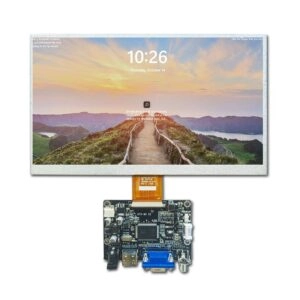
In mixed units, the controller board often teams with TFT LCD drive boards. These back links like HDMI, LVDS, MIPI, or RGB/TTL. This mix lets easy-plug work in built systems.
How Capacitive Touchscreens Detect Touch: The Working Principle
Capacitive touch find works on hold change in a power field. The sensor makes a grid of shared or own-hold electrodes. In a shared-hold setup, send (TX) and get (RX) lines cross with no touch. They make small holds at each cross.
When a finger hits the cover glass, it acts as a lead. It takes a bit of charge from the power field. This cuts the shared hold between the hit TX and RX lines. The controller scans lines and rows one after or in mixed ways. It checks these small changes. These stay in the femtofarad range. It uses fast number-to-analog changers.
Signal handle math clean noise. They put base set. They count exact X-Y spots through mix math. Multi-touch cases fix many at-once hold drops. They use new net math and fake-touch cut ways. The full step takes milliseconds. It gives smooth response even on big panels up to 32 inches. This happens when full stick with TFT LCD shows.
Area parts like temp shifts or power mix get fix through live base track and shield layers. Wide-temp plans keep steady work from -30°C to 80°C. This matters for work auto gear in change states.
Advantages of Capacitive Touch Technology in Display Applications

Capacitive touchscreens give some tech gains over push choices. They bring higher lasting. The find layer sits under a hard cover glass. This fights wear from many hits. Sight clear stays better with low light loss. This keeps bright colors and high side shows of new IPS TFT LCD panels. Backing for multi-touch moves boosts user setups in hard soft spots.
In work spots, capacitive sensors show good no-mix power and steady. Parts like glove hit and water-proof grow use in make floors, health spots, or outside sets. Sun-see adds, from high-light backs up to 1000 nits with light stick, keep see under straight light.
Mix with TFT LCD panels lets thin, light units fit for tight-space gear. All-side IPS types keep steady image good from wide looks. Wide-temp and rough builds stand shake, dust, and hit. These come in auto, move, and army uses.
Industrial Integration: TFT LCD with Capacitive Touch in Monitors and Panel PCs
Many work screen systems mix TFT LCD panels with aimed capacitive (PCAP) touch layers for man-machine links (HMIs). Work screens usually go from 10.1 inches to 21.5 inches. They offer point sets like 1280×800, 1024×768, or 1920×1080. These units back many video ins like VGA, HDMI, and DVI. They add capacitive touch for easy run.
Work panel PCs grow this mix. They put x86 handlers (like Intel Celeron or Core i5 series) right with the screen and touch parts. No-fan plans keep quiet, sure run in dust or high-shake spots. Link picks grow to hold LAN, RS-232, USB, COM ports, and GPIO. This helps easy mix into control setups for auto, health, shop, and move fields.
Custom sets let changes to cover glass thick, shape, cable paths, links, and mount holds. Light stick cuts air spaces. It boosts lasting, side, and fight to wet or dirt. Such fixes meet set needs like IP65/IP67 guard levels or high-light work for sun-out sets.
Material Science and Manufacturing Considerations for Capacitive Touchscreens
ITO stays the usual clear lead stuff. It balances lead and sight clear. But on-going work looks at other picks like silver wire or graphene films. These bring better bend or cost save in next plans. Cut steps need tiny-level point to keep even electrode space. They cut see of the grid pattern.
Stick ways, air-space or right light stick, shape unit work a lot. Light stick boosts body strength. It cuts inner shines. This helps sun-see TFT LCD units. Cover glass strong via ion swap (chem) or heat (temp) steps makes press top stress. This boosts scratch and hit fight.
Quality check holds many-step looks. These cover sight even, touch line, signal-to-noise parts, and area stress tests. Papers like ISO 9001, ISO 14001, and RoHS match keep to world make rules.
Applications Across Industries
Capacitive touch mixed with TFT LCD sees use in many fields. In work auto, workers link with machine HMIs under gloves or in dirt states. Health gear gains from clean, easy-wipe tops with no-germ covers. Move systems use rough panels for car boards or rider info shows. Shop stands and number signs use multi-touch for fun user times.
Special-shape or pull shows grow work to one-kind forms. Such as bar-type signs or round links for tool sets.
FAQ
What is the main difference between mutual capacitance and self-capacitance in touch sensors?
Mutual capacitance uses separate transmit and receive electrodes for better multi-touch accuracy and ghost-touch rejection, while self-capacitance measures changes on individual electrodes and is simpler but more prone to interference in complex scenarios.
Can capacitive touchscreens operate reliably in industrial environments with gloves or water exposure?
Yes, specialized controllers and sensor designs support glove operation by adjusting sensitivity and include waterproof features through sealed constructions or conformal coatings, making them suitable for harsh factory or outdoor use.
Conclusion
As a professional display manufacturer and supplier, Miqidisplay delivers one-stop custom solutions for TFT LCD modules and capacitive touchscreens tailored to industrial monitors, panel PCs, and specialized applications. With over 20 years of OEM/ODM expertise, advanced R&D capabilities, and strict quality controls under ISO and other certifications, the company supports projects requiring custom sizes, shapes, high-brightness enhancements, wide-temperature operation, and rugged integrations.
Contact the expert team today to discuss specific requirements and receive a tailored solution framework that meets demanding industrial and commercial needs.