






In a modern operating room, a standard monitor becomes a weak link. A display that lags, glares, or cannot connect to equipment introduces risk and inefficiency during surgery.
Medical displays serve as a central component in operating rooms. They deliver precise real-time visualization for surgical navigation, high brightness to overcome ambient light, multiple inputs for equipment integration, ergonomic designs to reduce fatigue, and sterile surfaces for infection control.
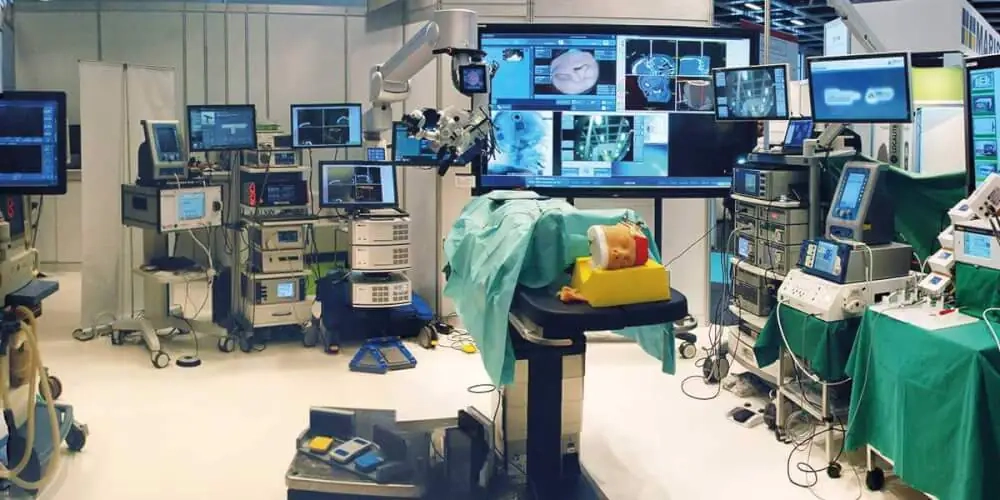
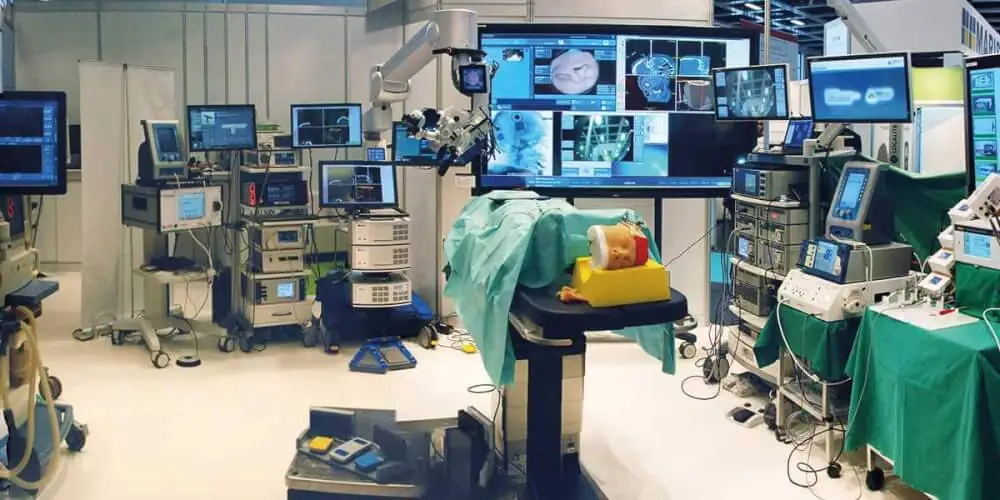
Medical Displays in the Operating Room
The surgical display functions as more than a screen. It acts as the surgeon’s visual command center. It integrates data from multiple sources. It presents information with the clarity and reliability required for complex procedures. The performance of this equipment directly affects surgical precision, team efficiency, and patient safety. The sections that follow explore the key roles that a purpose-built medical display must fulfill to meet the demands of today’s operating room environment.
Real-Time Visualization Enhances Surgical Precision
During minimally invasive surgery, a delayed image can lead to a critical error. This lag between action and visual feedback undermines surgical confidence and control.
Real-time visualization provides surgeons with instantaneous visual feedback. Low-latency performance proves essential for precise hand-eye coordination when guiding instruments such as endoscopes or catheters. This capability ensures maneuvers remain accurate and safe.
In any minimally invasive procedure, the surgeon’s eyes remain fixed on the monitor. The monitor offers the only view of the operative field. Any delay between the movement of an instrument inside the patient and its appearance on the screen can prove disorienting and dangerous. Such lag may cause a surgeon to overshoot a target. It may also cause the surgeon to fail to react promptly to an unexpected event, such as bleeding. For this reason, minimizing latency stands as a primary design goal for any surgical display. Advanced signal processing ensures this delay remains imperceptible. It creates a seamless connection between the surgeon’s hands and eyes. This connection forms a fundamental element of video-assisted surgery. High-performance monitors deliver near-instantaneous feedback. They grant surgeons the confidence to perform intricate tasks with high precision. This feature represents a core requirement for patient safety rather than a luxury.
High Brightness Displays Improve Visibility Under Surgical Lights
Intense surgical lights remain essential. Yet they create powerful reflections on monitor screens. This glare can wash out the image. It forces the surgical team to squint and lose focus.
High-brightness displays employ powerful backlights. They produce a vivid image that resists being washed out by intense overhead surgical lighting. When paired with anti-glare surfaces, these displays ensure excellent visibility and contrast from any angle in the operating room.
The operating room counts among the most brightly lit environments in any hospital. While this lighting supports direct vision, it poses a significant challenge for video displays. Ambient light can easily overpower a standard monitor’s backlight. It causes the image to appear faded and desaturated. Darker areas of the image, which often contain critical anatomical information, may lose all detail. To address this issue, medical displays must deliver significantly higher brightness output than consumer or office monitors. Brightness is measured in candelas per square meter (cd/m²), or nits. While a typical office monitor may reach only 250-300 nits, a surgical display frequently requires 800 nits or higher. Specialized models achieve 1000 nits for optimal performance in demanding conditions. This high brightness combines with advanced anti-glare screen surfaces. They diffuse reflections from overhead lights. Such technology maintains contrast and color fidelity even in the most challenging lighting. It allows the entire surgical team to maintain an uncompromised view.
High brightness also supports consistent performance across varying lighting scenarios within hybrid operating rooms. Displays engineered with robust LED backlighting systems provide uniform luminance without hotspots. They preserve fine detail in both bright and shadowed tissue areas. This uniformity proves particularly valuable during procedures involving fluoroscopy or endoscopic imaging.
Display Brightness Recommendations for OR Environments
Surgical displays with brightness levels between 250 and 350 nits prove unsuitable for standard operating rooms. They fail to overcome strong ambient lighting. Levels from 400 to 600 nits offer adequacy in lower-light environments such as certain endoscopy suites. Brightness exceeding 800 nits, and up to 1000 nits in advanced configurations, delivers excellent performance in brightly lit general and hybrid operating rooms.
Multiple Inputs Support Diverse Surgical Equipment
A modern operating room contains equipment from various vendors with different connection types. Relying on multiple monitors or swapping cables during a procedure creates inefficiency and disruption.
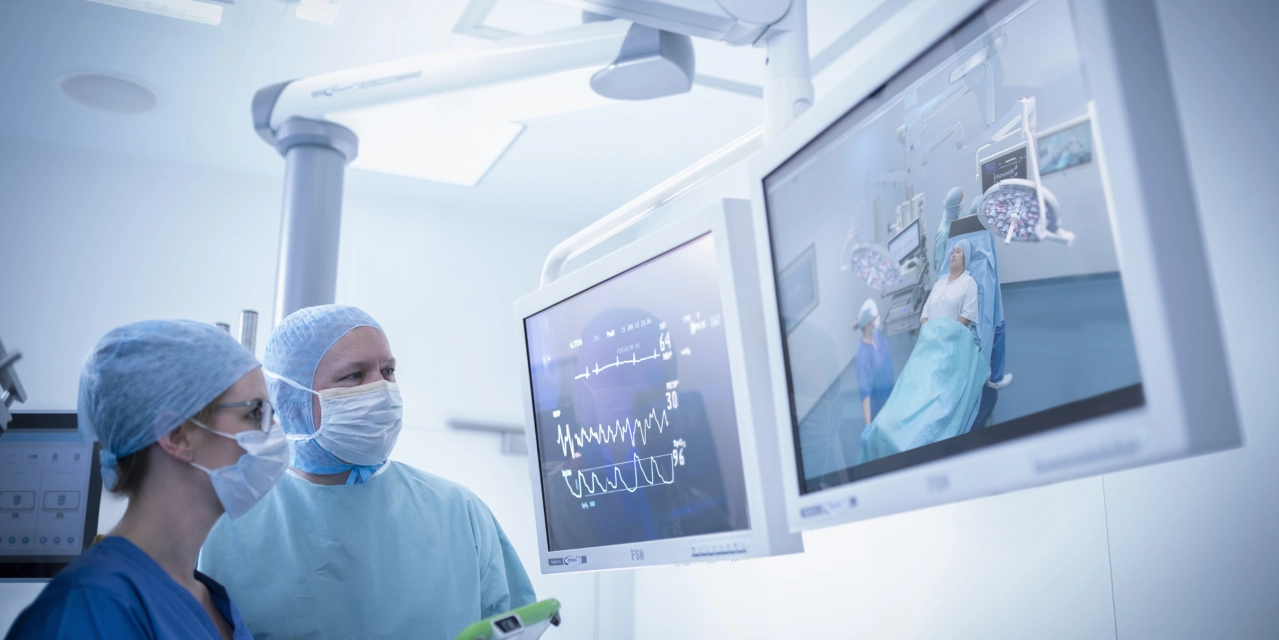
Surgical displays equipped with multiple inputs, such as SDI, HDMI, and DisplayPort, function as a central hub. They connect to all imaging equipment simultaneously. They enable surgeons to switch views or display multiple sources on one screen. This setup streamlines the surgical workflow.
The hybrid operating room operates as an ecosystem of specialized technology. A versatile surgical display must connect to devices seamlessly. This requirement demands a wide array of input ports. It includes legacy connections and modern standards. The inclusion of 3G-SDI proves essential for C-arms and room cameras. It offers advantages including long cable runs without compression or latency. The ability to display sources simultaneously through Picture-in-Picture or Picture-by-Picture layouts further enhances workflow efficiency. Larger-format displays often incorporate these capabilities.
Beyond basic connectivity, advanced input management systems allow for automatic source detection and seamless switching. Some configurations support synchronized multi-modal imaging.
Common Inputs on Surgical Displays
3G-SDI serves C-arms, room cameras, and legacy HD sources with advantages including long cable runs, locking connectors, and low latency. HDMI addresses modern 4K and full HD endoscopic cameras as well as ultrasound systems. It delivers high bandwidth for detailed video. DisplayPort manages higher video sources. It offers very high bandwidth and support for advanced features. DVI remains relevant for older systems. It ensures secure digital connections. These varied inputs allow displays to serve as universal hubs.
Ergonomic Designs Reduce Surgeon Fatigue
Surgeons often stand for hours in fixed or awkward positions. A poorly designed or positioned monitor adds to this physical strain. It contributes to neck pain and eye fatigue.
Ergonomically designed displays feature lightweight construction for easy mounting on adjustable arms. They incorporate wide viewing angles and flicker-free technology. These elements together reduce physical and visual strain. They help surgeons maintain comfort and concentration during long procedures.
The well-being of the surgeon directly correlates with patient safety. Fatigue represents a significant risk factor. Equipment design plays a substantial role in mitigating it. Lightweight designs facilitate mounting on fully articulating boom arms. Wide viewing angle technology ensures consistent image quality from off-center positions. Many high-quality displays utilize flicker-free DC dimming. They deliver a stable image comfortable for extended procedures.
Further ergonomic considerations include matte finishes that minimize reflections and adjustable mechanisms.
Infection Control Drives Demand for Easy-to-Clean Surfaces
The operating room demands absolute sterility. Standard monitors with vents, seams, and textured plastics prove difficult to disinfect properly.
Displays built for infection control incorporate a seamless, edge-to-edge glass front. They include a sealed housing with an IP rating against fluids. They also feature a fanless design. This construction eliminates places for germs to hide. It allows for rapid, effective cleaning.
Maintaining a sterile field remains fundamental. True surgical displays receive design from the ground up for cleanability. The front consists of a single solid surface of protective glass sealed to the chassis. This approach often achieves an IP65 rating on the front. The housing utilizes chemically resistant materials. A fanless design removes a potential contamination point. It ensures silent operation. Antibacterial coatings or glass treatments further enhance hygiene. They inhibit microbial growth. Smooth contours prevent liquid pooling. They streamline cleaning protocols.
Signal Processing and Color Accuracy in Medical Displays
Beyond core visibility and connectivity, advanced signal processing contributes significantly to overall performance. Dedicated video processing optimizes incoming signals with noise reduction, edge enhancement, and gamma correction tailored to anatomical visualization. Accurate color reproduction ensures tissue hues appear true to life. Consistent grayscale tracking supports diagnostic confidence in overlays.
Durability and Long-Term Reliability Features
Operating rooms subject equipment to continuous use, vibrations, and frequent cleaning. Purpose-built medical displays incorporate industrial-grade components rated for extended lifespans. Rugged architectures resist electromagnetic interference. Wide operating temperature ranges ensure stable performance. These elements reduce downtime. They support cost-effective management of surgical suites.
Integration with Touch and Interactive Capabilities
Modern surgical workflows benefit from touch-enabled interfaces on auxiliary displays. Capacitive touch options allow sterile draping or gloved operation. When integrated, these features enable direct annotation or menu navigation. They help while maintaining focus on high-resolution imaging feeds. Such interactivity streamlines documentation without cluttering the sterile field.
FAQ
How do multiple inputs benefit operating room workflows?
Multiple inputs allow simultaneous connection to diverse equipment such as endoscopes, C-arms, and ultrasound systems. They enable efficient multi-source viewing.
What features support infection control in medical displays?
Seamless glass fronts, IP65-rated sealed housings, fanless designs, and antibacterial materials facilitate thorough disinfection. They minimize contamination risks.
Conclusion
As a leading display manufacturer and supplier, Miqidisplay specializes in providing high-quality custom TFT LCD solutions, industrial monitors, and tailored display modules suitable for demanding medical and healthcare environments.
With over 20 years of OEM/ODM expertise, ISO-certified facilities, and capabilities in high-brightness backlights up to 1000 nits, multi-interface integration, sealed IP65 enclosures, capacitive touch options, antibacterial glass, and custom optical bonding, Miqidisplay supports medical device manufacturers and system integrators seeking reliable, purpose-built components for surgical visualization.
Contact the Miqidisplay team to discuss project specifications, request prototypes, or explore partnership opportunities for developing tailored medical display solutions that enhance procedural efficiency and safety.