
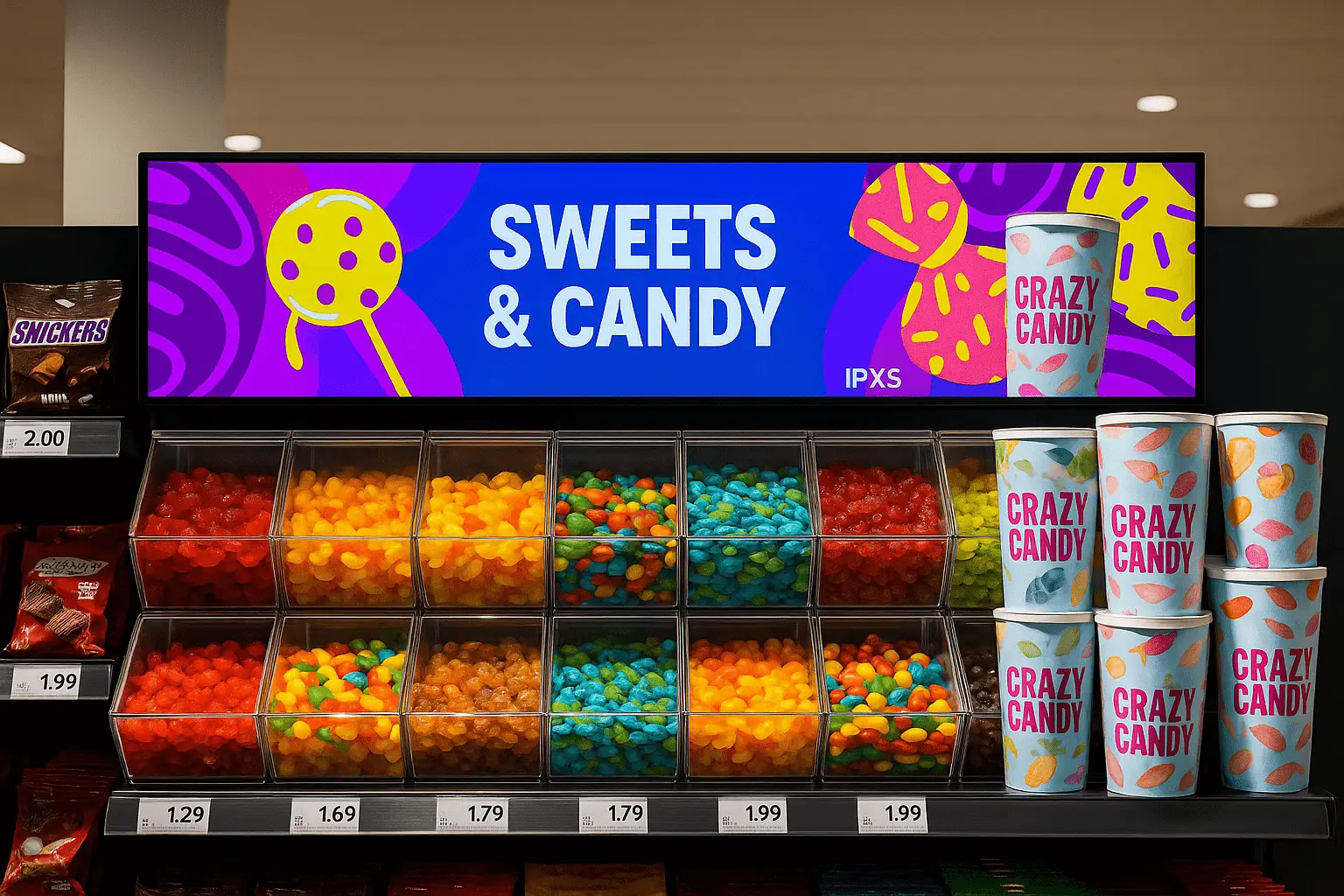
Winning the “Last Meter”: The Rise of Shelf-Edge Screens
In the retail world, the “last meter” stays the key spot for customer buying choices. Ads on TV or billboards help build awareness. Yet the last choice happens right at the shelf. For many years, this area used simple things like paper price tags and cardboard shelf talkers. Now a big hardware change improves this space. It comes from the stretched bar LCD display, also called an ultra-wide or bar-type screen.
These screens move away from normal 16:9 shapes made for home viewing or video walls. Regular screens do not work well on shelf edges. They have too much height. That blocks the view of products. Stretched bar LCDs fix this problem with long aspect ratios. Examples include 16:3, 32:9, or special sizes like 1920×360, 1920×540, 1920×720, and 3840×1080. The thin shape fits exactly on the narrow shelf strip once used only for prices. It turns the full shelf length into a lively digital area. Products stay fully visible. The resolutions keep text clear for things like prices and nutrition facts. At the same time, the layout packs more details into valuable retail space.
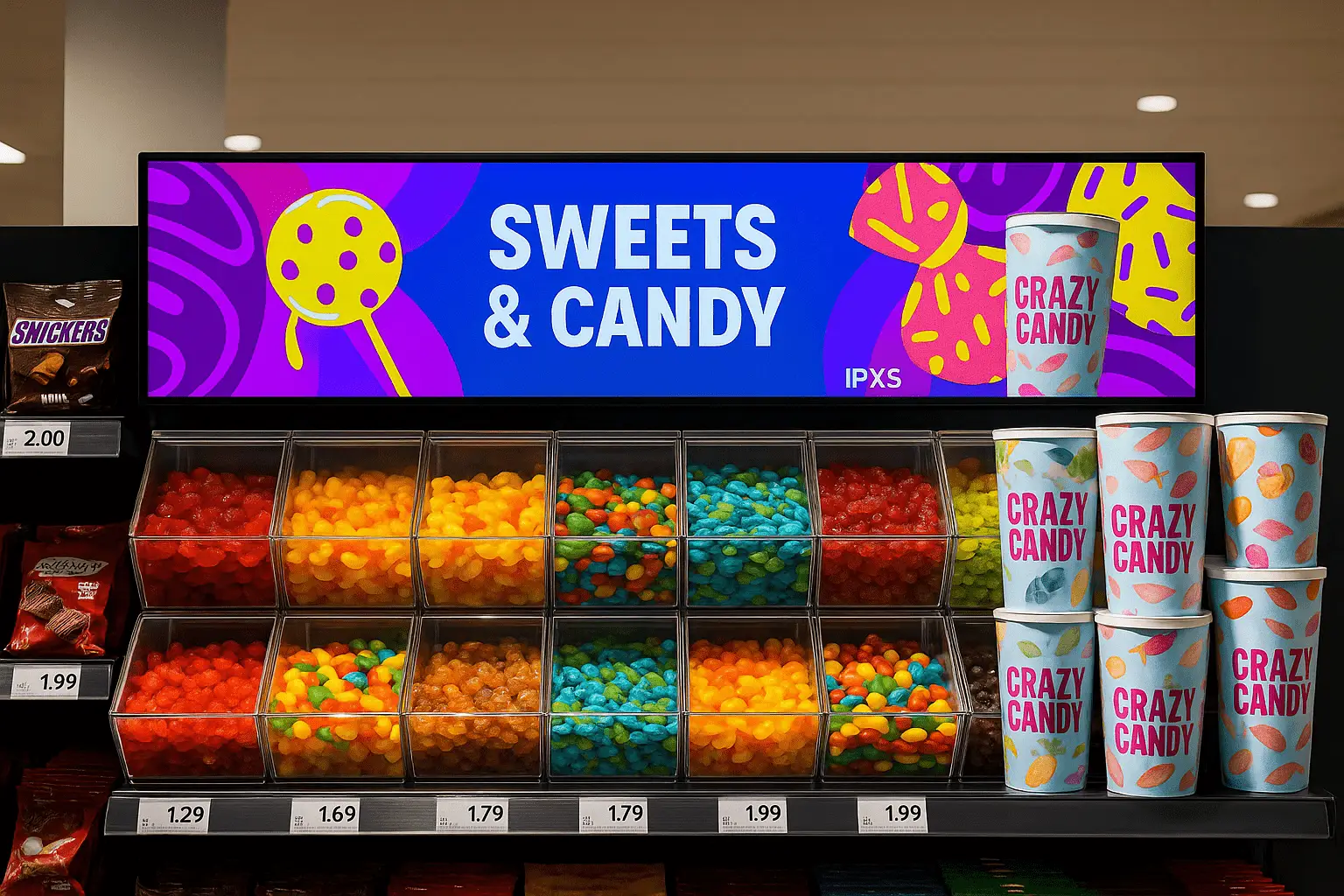
Core Advantages Over Traditional Displays
Stretched bar LCDs give better use of space than ordinary monitors. Their thin builds and small bezels let them blend smoothly into current shelf setups. They handle lots of information at once. So they show prices, deals, and pictures together on one long surface.
Dynamic Pricing and ESL Integration
The move to digital shelf tools comes in part from progress in Electronic Shelf Labels (ESL). Old e-ink ESL units show basic prices. But they miss bright colors and moving images. Stretched bar LCDs go beyond that. They combine ESL features with smooth video and colorful graphics. This mix brings steady price trust plus eye-catching promo material.
Automated Pricing Synchronization
Automatic price changes form a main benefit. The screens link to Point of Sale (POS) systems and stock databases with common connections. This setup allows instant price shifts in every store. In promo times, like weekend drink deals, the displays update right away. No hand work is needed. That cuts out tiring tag swaps and drops price mistakes a lot.
Inventory-Driven Content Switching
Stock control gets extra help from this link. When items run low, the screens change messages on their own. They might show QR codes that lead to online orders. Middleware parts make smooth contact between POS, ERP systems, and the screens. Data moves correctly. Real-time changes happen over wireless networks or cloud services.
The Power of “Point of Decision” Marketing
Right at the shelf, stretched bar LCDs bring focused content exactly when buying interest is highest. A customer in the snacks section sees a bright animation of a product being used. It spreads across a meter-wide screen. This “point of decision” approach does well at pushing quick buys. It uses fast and relevant pictures tied to the moment.
Cross-Selling and Upselling Strategies
Uses cover cross-selling hints. For example, they pair related items with special discount offers shown in a lively way. Nutrition facts and labels like “organic” or “low-sugar” show up from product data.
Aisle-Wide Synchronization Effects
Matching content over several shelf units builds smooth effects. Think of flowing animations down an aisle. This strengthens brand feel and sets stores apart from others. High-resolution panels keep images sharp for clear product shots. Wide viewing angles hold good quality from different shopper spots.
Technical Challenges and Solutions
Making stretched bar LCDs needs special methods. These include exact cuts on LCD glass and custom backlight work. The goal keeps even light over long sizes.
Overcoming Ambient Light Interference
Store lighting often beats normal screen power. High-brightness choices, from 700 to 1500 nits or more in some models, keep content easy to see under strong ceiling lights. Better models add anti-glare layers, stronger contrast ratios (like 3000:1 or 4000:1), and LED backlights. These give steady results.
Ensuring Physical Durability in High-Traffic Zones
Screens sit at hand or hip height. So they face hits from carts, bags, or hands. Tough builds use tempered glass fronts, strong cases, and treated surfaces with anti-smudge traits. Normal operating temperatures run from 0°C to 50°C. Some types handle wider ranges for different store settings.
Installation and Integration Considerations
Good setup needs care with mounting and power setup. Many stretched bar LCDs work with VESA brackets, clamp-on shelf parts, or special slim mounts. These hold firmly without sticking out too much. Connection choices like HDMI, USB, RJ45, RS-232, and Wi-Fi allow easy ties to main media players, networks, or cloud systems.
Mounting Options for Retail Environments
Clamp-on brackets for shelves permit fast fixing to current gondola setups. Wall or hanging styles fit end-cap or aisle signs. Portable stands work for short-term deals.
Connectivity and Remote Management Features
Content management systems (CMS) allow far-off changes, time plans, multi-zone designs, and live matching. For big setups, daisy-chaining or network rules keep playback the same across aisles or stores. Power-over-Ethernet (PoE) choices make wiring simpler in large retail spaces. They lower setup trouble and expense.
Key Performance Features and Specifications
New stretched bar LCDs focus on business-level parts for steady work. IPS panels offer wide viewing angles up to 178 degrees. Colors and contrast stay even from side spots usual in aisles. High contrast and true color help lively promo clips and fine images.
Display Panel and Brightness Capabilities
Low energy use comes from LED backlights and power-save settings in quiet hours. Some models add touch options for features like product questions. Resolutions go from Full HD levels in small sizes to 4K range in big ones. They handle sharp content with no blurry spots.
Durability and Operational Reliability
Strength levels back 24/7 running. Mean time between failures (MTBF) fits long business needs. Industrial panels often include anti-vibration and EMI protection. This keeps stable work in crowded retail places.
Applications Beyond Traditional Retail
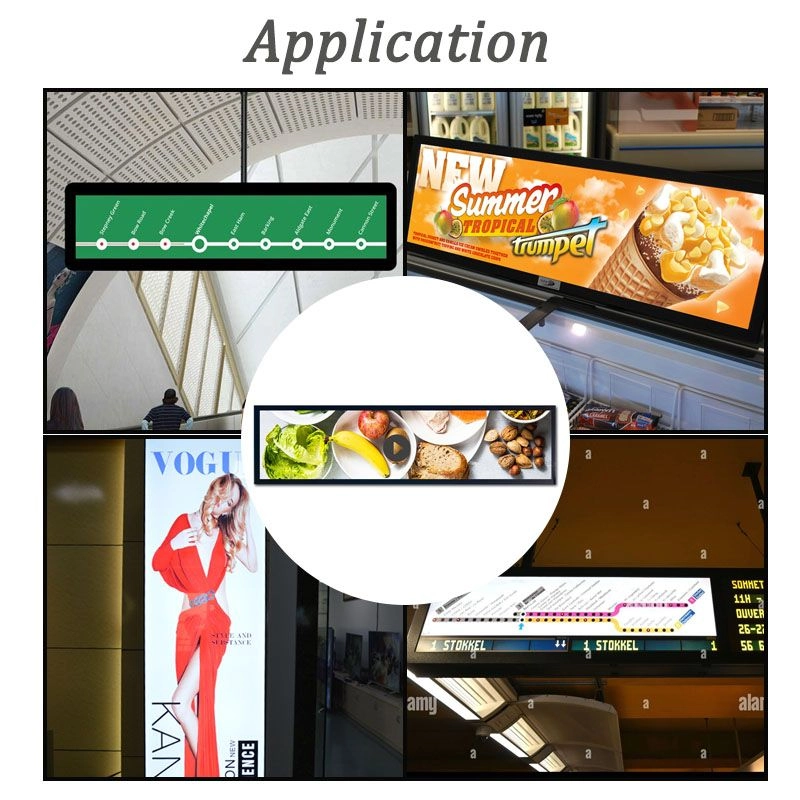
Retail shelf edges lead in use. Still, stretched bar LCDs reach other areas. They serve transport spots for live schedules and platform details, factory control boards for status checks, and hotel places for menu signs or way-finding. In banks or clinics, long formats show lines or directions well. Bigger sizes, up to 86 inches with resolutions like 3840×1080, fit wide public info screens in malls or airports.
Specialized Uses in Non-Retail Sectors
Transport uses gain from high-brightness types readable in sun for outside or partly covered signs. Hospitality uses small bar screens for coffee machine controls or self-serve stations.
Stretched bar LCD displays change shelf-edge talk. They blend smart selling with strong media. Retailers get ways to auto-run tasks, lift quick sales, and build deep brand moments at the last buying step.
Miqidisplay, as a leading LCD display manufacturer and stretched LCD monitors supplier, focuses on top stretched bar LCD answers made for retail and business needs. With more than 20 years in OEM/ODM work, Miqidisplay supplies solid, custom displays. These come in sizes from 19.5 inches to 88 inches, resolutions like 1920×540 and 3840×1080, high-brightness choices, and strong link features. Companies looking for dependable, pro-level stretched bar LCDs gain from complete service, tight quality checks, and worldwide help.
FAQ
What are the typical aspect ratios for stretched bar LCD displays?
Common ratios include 16:3, 32:9, and custom formats like 1920×360 or 3840×1080, optimized for shelf-edge or elongated signage without obstructing products.
How do stretched bar LCDs integrate with existing retail systems?
These displays connect to POS and inventory databases via interfaces such as HDMI, USB, RJ45, or RS-232, enabling real-time pricing updates and automated messaging through middleware and cloud platforms.
What brightness levels are recommended for retail environments?
High-brightness models (700-1500 nits or more) perform effectively under strong ambient lighting, ensuring clear visibility in supermarkets and stores.
Are stretched bar LCDs durable for high-traffic areas?
Yes, professional units feature tempered glass, reinforced frames, anti-smudge coatings, and wide operating temperatures (0°C to 50°C), withstanding bumps and continuous use.
Can content be managed remotely across multiple locations?
CMS platforms support remote updates, scheduling, synchronization, and multi-zone displays for consistent branding across stores or aisles.
Partner with a Trusted Stretched LCD Manufacturer and Supplier
Businesses and retailers keen on better shelf-edge ads with modern stretched bar LCD displays should reach out to Miqidisplay, a professional display manufacturer and stretched LCD monitors supplier. Check custom sizes, brightness options, and connection choices to match exact needs. Contact today to talk about projects, get quotes, or set up meetings for custom answers that improve retail results.