

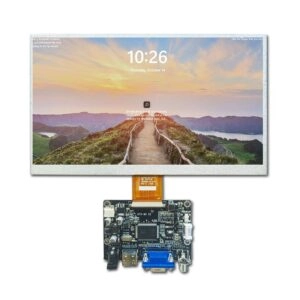
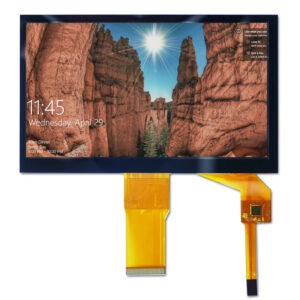
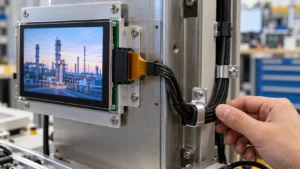




Choosing between AUO and Innolux panels for an industrial HMI should be treated as a sourcing and lifecycle decision rather than a brand preference. Both manufacturers offer panel families designed for demanding industrial use. AUO describes its general industrial display portfolio around high reliability, brightness, wide-temperature resistance, shock resistance, and stable operation, while Innolux describes its industrial panels as offering wide operating temperature, wide viewing angle, high contrast, fast response, and high reliability.
For OEMs, machine builders, system integrators, and industrial procurement teams, the most useful comparison framework covers technical fit, supplier qualification, certification evidence, production capacity, lifecycle continuity, customization, and total sourcing risk.
Start With the Exact Industrial Application Requirements
An effective AUO vs Innolux comparison begins with a controlled specification rather than a catalog search. The RFQ should define active area, outline dimensions, resolution, aspect ratio, interface, connector position, power limits, operating and storage temperature, brightness, contrast, viewing direction, response time, touch requirements, and expected annual volume. These parameters create a measurable baseline for candidate parts.
Compare Environmental Performance at Model Level
Industrial environments can expose a panel to heat, cold, vibration, humidity, dust, continuous operation, and repeated power cycles. AUO states that some general display solutions support wide-temperature operation from -20°C to 70°C and are designed for stability under demanding conditions. Innolux also positions its industrial panel range around wide operating temperature and high reliability.
Portfolio-level statements should not replace datasheet verification. Procurement approval should rely on the specified limits and test evidence for the exact candidate part. Panels with the same size and resolution may differ in temperature limits, brightness, interface timing, mechanical tolerances, and optical characteristics.
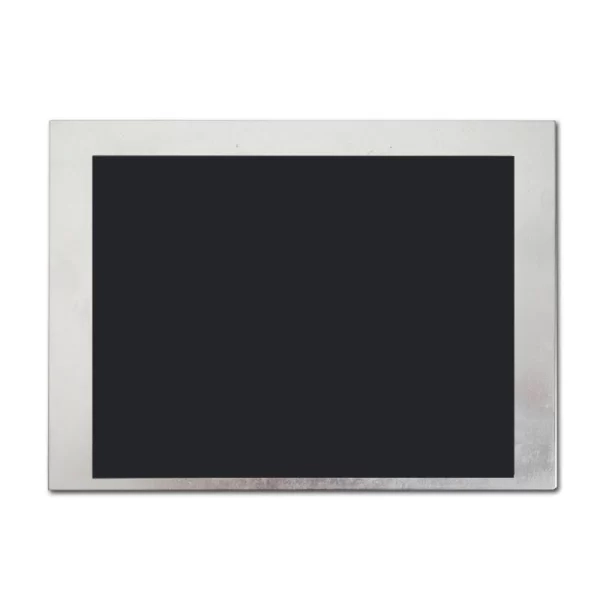
Evaluate Optical Performance Under Real Installation Conditions
Brightness alone does not determine industrial readability. Contrast, viewing angle, surface treatment, color consistency, uniformity, reflection control, and temperature behavior should also be assessed. Samples should be tested inside the intended enclosure with the planned cover lens, bonding structure, ambient lighting, and power configuration.
Compare AUO and Innolux Through Supplier Qualification
A technically suitable panel can still create procurement risk if documentation, traceability, change control, or commercial support is weak. Supplier qualification therefore needs to run in parallel with engineering evaluation.
Review Quality Management and Traceability
A qualified supplier should provide controlled datasheets, mechanical drawings, interface specifications, inspection criteria, compliance declarations, reliability records, material information, packaging requirements, and a defined change-notification process.
Traceability should connect finished modules to critical materials and production batches. The purchasing organization should identify the approved panel source, driver IC, flexible cable revision, connector, polarizer, adhesive structure, touch configuration where applicable, and inspection record. Unapproved substitutions can create compatibility problems even when headline specifications appear unchanged.
Verify Certification Scope Instead of Accepting Logos
Certification review should focus on evidence, not marketing marks. Quality-management certificates, environmental-management documentation, and market-specific substance compliance should be checked for scope, manufacturing site, issuing body, and validity. Product-level declarations should match the exact material set being purchased.
This matters because the panel manufacturer, module integrator, and commercial supplier may represent different stages of the supply chain. Approval of one organization does not automatically qualify every downstream configuration.
Assess Capacity and Long-Term Supply Continuity
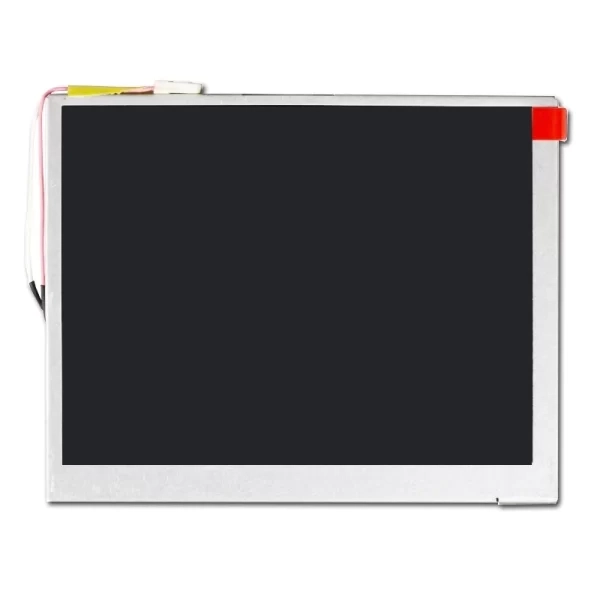
Capacity evaluation is not limited to theoretical factory output. Industrial buyers need evidence that the approved part can be supported through forecast changes, peak demand, constrained materials, and lifecycle events.
Innolux publicly describes major TFT production locations in Taiwan and module production locations in several Chinese cities, indicating a broad manufacturing footprint. AUO positions its industrial-oriented display business around stable use and diversified industrial applications. Corporate scale is relevant, but the decisive procurement question remains the continuity plan for the specific panel.
Ask for a Part-Level Supply Plan
A sourcing review should cover expected annual demand, peak monthly demand, MOQ, standard lead time, allocation rules, safety-stock policy, last-time-buy procedures, replacement planning, and end-of-life notification. Capacity planning should also consider yield assumptions and recovery plans for constrained components.
For long-life industrial equipment, continuity can carry more weight than small differences in initial unit price. Uncertain availability can create repeated qualification costs and production risk.
Compare Customization Capability Beyond the Base Panel
Standard AUO or Innolux panels may still require module-level adaptation before they fit an industrial design. Common requirements include cable length or pin changes, connector selection, interface adaptation, backlight parameter adjustment, touch integration, cover glass, optical bonding, mounting features, and PCB changes.
Evaluate Engineering Review Before Approving Samples
A capable display manufacturer or supplier should review the complete application specification before recommending a part. Engineering feedback should identify interface limits, signal-timing risk, dimensional tolerance conflicts, thermal concerns, optical trade-offs, and lifecycle constraints. Prototype documentation should include revision-controlled drawings, datasheets, interface definitions, and approval records, with retained golden samples where appropriate.
Customization changes supplier risk. A modified cable, connector, cover glass, or bonding structure becomes part of the approved configuration. Material locking, revision control, and first-article inspection are therefore essential before volume production.
Build a Cross-Functional AUO vs Innolux Decision Process
The final decision should combine engineering, quality, procurement, operations, and compliance input. Technical scoring can cover optical performance, interface compatibility, mechanical fit, temperature range, power requirements, and customization. Quality scoring can cover traceability, defect criteria, reliability evidence, process control, and corrective-action capability. Commercial scoring can cover total cost, lead-time stability, MOQ, capacity, lifecycle support, and contract terms.
No fixed rule makes AUO or Innolux universally better for industrial HMI projects. One project may prioritize wide-temperature performance and mechanical compatibility; another may prioritize continuity, optical behavior, or a specific interface. The strongest sourcing decision is the panel that closes critical technical and supply risks with documented evidence.
FAQ
Is AUO better than Innolux for industrial HMI applications?
Neither brand is automatically better across all industrial projects. Selection should be based on the exact panel model, operating limits, optical performance, interface, mechanical fit, reliability evidence, lifecycle status, and supply plan.
What is the most important specification when comparing industrial panels?
No single specification is sufficient. Temperature range, brightness, viewing angle, contrast, interface timing, dimensions, power requirements, and lifecycle availability should be reviewed together.
How should certification be checked during panel sourcing?
Certificates and compliance documents should be verified for scope, manufacturing site, issuing body, validity, and relevance to the exact supplied part. Supporting process records and product declarations should be included in supplier qualification.
Why does production capacity matter for industrial panel procurement?
Industrial equipment often remains in production for years. Capacity, forecast alignment, lead-time stability, safety stock, material constraints, and end-of-life procedures influence the risk of production interruption or forced redesign.
When is customization necessary?
Customization may be required when a standard panel does not match cable routing, connector position, interface requirements, optical stack, mounting structure, touch configuration, or mechanical limits. Early engineering review reduces requalification risk.
Contact an Industrial LCD Manufacturer and Supplier
Miqidisplay supports industrial buyers, OEM projects, and procurement teams with TFT LCD and IPS screen sourcing and customization. Contact Miqidisplay through the Contact Us page with panel specifications, quantity requirements, and project schedules to discuss suitable screen options, availability, and customization needs.