





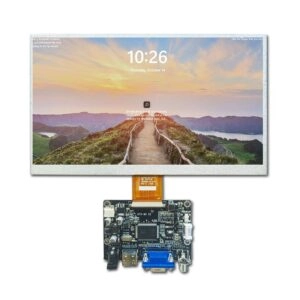
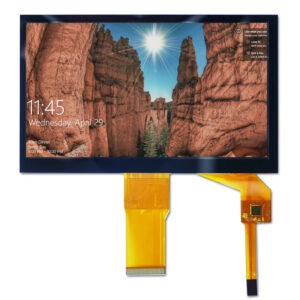





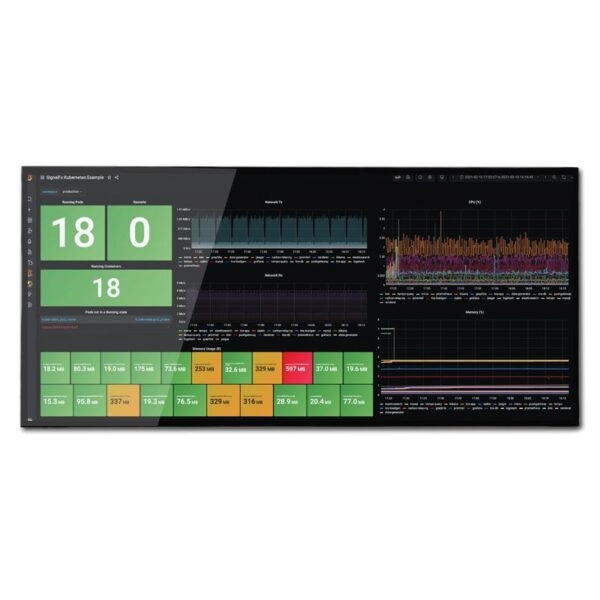
Mixed polarizer versions can create hidden risks in industrial LCD panel sourcing. Panels with the same size, resolution, interface, and nominal brightness may still use different polarizer constructions or revisions, leading to variations in contrast, viewing performance, reflection, surface appearance, and optical consistency.
For industrial projects, these differences can affect sample approval, mass-production consistency, and long-term supply control. Avoiding mixed versions therefore requires more than matching a panel part number. Procurement teams need clear specifications, supplier traceability, controlled change procedures, incoming inspection, and qualified customization support.
Define the Polarizer as a Controlled Specification
The first control point is the purchase specification. A procurement package should identify the polarizer as a critical optical material rather than leaving it inside a generic panel description.
Lock Optical Requirements, Not Only the Part Number
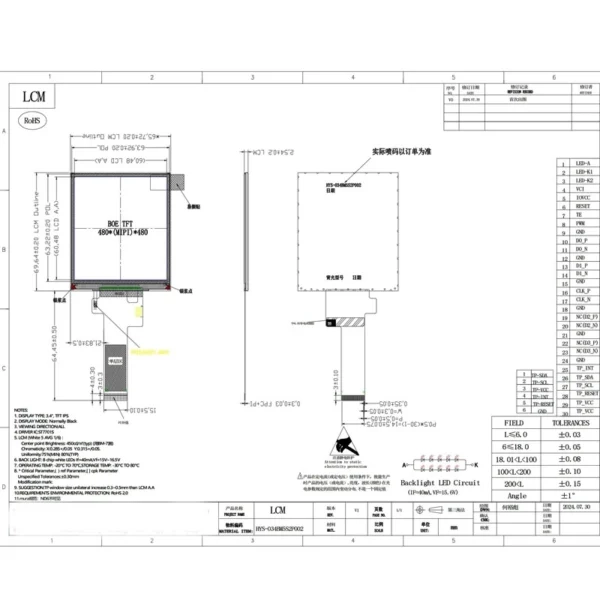
A controlled LCD specification should define luminance, contrast ratio, viewing direction, viewing angle, color tolerance where relevant, uniformity, surface treatment, reflection expectations, and operating-temperature performance. The approved polarizer version or supplier-controlled identifier should also be recorded when available.
A commercial part number can remain unchanged while subcomponents evolve. Procurement teams should request confirmation that quoted, sampled, and mass-production configurations match. Any planned substitution in polarizer film, adhesive system, surface treatment, optical compensation film, or the related optical stack should require documented review before shipment.
Use Golden Samples and Revision-Controlled Documents
Golden samples provide a physical reference when datasheets do not capture every visible attribute. Retained samples should be linked to a drawing revision, specification revision, production lot, approval date, and supplier declaration. Visual comparison conditions should also be standardized for ambient illumination, viewing distance, viewing angle, warm-up time, and test image.
Strengthen Supplier Evaluation Before Mass Production
Avoiding mixed polarizer versions depends heavily on supplier discipline. Price, lead time, and basic electrical compatibility are insufficient criteria for industrial LCD panel sourcing.
Audit Traceability and Change Control
A qualified supplier should be able to trace finished LCD panels to critical materials and production batches. Polarizer identity, panel lot, cable revision, connector configuration, backlight configuration, adhesive materials, and inspection records should be recoverable from production documentation. This material genealogy makes containment possible when variation appears.
The supply agreement should define advance notification for material substitutions, process changes, tooling changes, production transfers, and discontinuation events. Quality-management frameworks emphasize control of externally provided products and documented handling of changes, supporting this approach to supplier governance.
Verify Certification Scope, Not Just Certificates
Certification is useful only when its scope matches the manufacturing activity being sourced. Procurement teams should verify the certificate holder, manufacturing site, certification scope, issuing body, and validity. A recognized quality-management system can support disciplined document control, nonconforming-product handling, corrective action, calibration, and process records.
Certification should not replace process evidence. Supplier qualification should also examine lot records, incoming inspection controls, final inspection criteria, change-notification procedures, corrective-action records, and document-revision controls.
Evaluate Capacity and Material-Control Discipline
Capacity assessment is also a version-control issue. When demand exceeds allocated capacity or a material becomes constrained, substitution pressure increases.
Review Capacity and Critical-Material Supply
Evaluation should cover normal output, peak-load capability, allocated capacity, production lead time, critical-material lead time, yield assumptions, safety-stock policy, and recovery planning. For long-life industrial programs, forecast accuracy and order flexibility should be discussed before serial production.
Assembly capacity alone is not enough. The review should include the supply plan for approved polarizer materials, minimum purchase quantities, replenishment cycles, storage limits, and alternate-material policy.
Separate Approved Alternates from Unapproved Substitutions
Dual sourcing can improve continuity, but alternate configurations should be qualified intentionally. An approved alternate needs its own revision status, sample approval, optical comparison, reliability evidence, and change history. Mixing two acceptable but visually different versions in one shipment may still be unacceptable.
Purchase orders should state whether mixed revisions are prohibited within a lot, shipment, production batch, or project. Packaging labels and conformity documents should identify the applicable revision so receiving inspection can verify segregation.
Build Incoming Inspection Around Polarizer Risk
Receiving inspection should detect configuration drift before panels enter production.
Combine Document Checks with Optical Verification
Incoming inspection can compare lot identification, revision documents, packaging labels, and supplier records against the approved specification. Optical verification should then check selected characteristics under controlled conditions, including luminance, contrast, viewing behavior, color consistency, surface appearance, and uniformity when relevant.
When previous version mixing has occurred, side-by-side comparison against retained golden samples can be added. Any unexplained visual difference should trigger quarantine and supplier review rather than acceptance based only on electrical function.
Preserve Lot Identity Inside the Factory
Version control can still fail after receipt if lots are mixed during storage or line feeding. Warehousing and production systems should preserve supplier lot and revision identity through storage, kitting, production, and finished-product records. First-in-first-out practices should not override revision segregation.
Evaluate Customization Capability as a Risk-Control Tool
Customization capability can help stabilize a long-term LCD configuration when standard market panels change too frequently.
Confirm Engineering Ownership of the Optical Stack
A capable LCD manufacturer or supplier should be able to review polarizer selection together with viewing direction, surface treatment, optical bonding, cover glass, brightness target, operating temperature, and enclosure conditions. Engineering review should identify which optical attributes are fixed, tunable, or dependent on upstream material availability.
For custom or semi-custom projects, controlled drawings and specifications should define critical optical requirements and revision boundaries. Sample approval should precede volume commitment, and the transition from prototype to production should include a documented configuration check.
Require a Formal Path for Future Changes
No industrial sourcing program can guarantee that materials will remain unchanged indefinitely. The stronger strategy is to control how change occurs. A supplier should provide advance notice, reason for change, affected part numbers, old and new revision identification, comparison data, sample availability, qualification evidence, and implementation date. This turns a surprise substitution into a controlled engineering-change process.
FAQ
Can the Same LCD Panel Part Number Contain Different Polarizer Versions?
Yes. A panel identifier does not always expose every internal material revision. Procurement specifications should control approved optical performance, revision status, lot traceability, and change notification in addition to the commercial part number.
What Is the Fastest Way to Detect Mixed Polarizer Versions?
Check lot and revision documentation first, then conduct a controlled side-by-side optical comparison against an approved sample. Differences in surface appearance, contrast, viewing behavior, reflection, or color can indicate an optical-stack variation.
Should an “Equivalent” Polarizer Be Accepted Automatically?
No. Equivalence should be treated as a qualification claim. Optical performance, environmental behavior, reliability evidence, and production consistency should be reviewed before an alternate enters serial production.
Which Supplier Documents Are Most Important?
A strong package includes a controlled specification, drawing, approved-sample record, lot traceability, inspection criteria, configuration identification, change-notification procedure, and evidence that production matches the approved revision.
Source Consistent LCD Panels from a Qualified Manufacturer
For industrial LCD sourcing, Miqidisplay supports specification matching, customization evaluation, sample review, and production planning for LCD, TFT, and IPS screen projects.
Procurement teams can submit panel specifications, optical requirements, expected volume, and change-control requirements through the Contact Us page to request a sourcing assessment and quotation. For projects concerned about mixed polarizer versions, revision consistency and change-notification requirements can be included at the RFQ stage.