





-

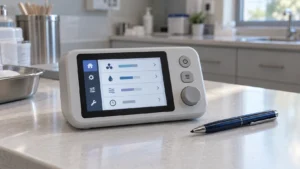
How to Write Bubble Acceptance Zones into an Optically Bonded LCD Order
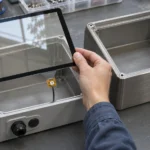
Draw the bubble acceptance zones on the optically bonded LCD assembly and cite the drawing revision on the purchase order. Each zone needs a boundary, a size and…
-
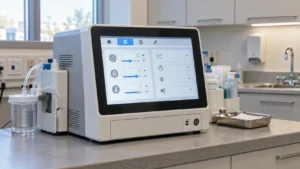
How to Set Bright and Dark Pixel Acceptance Limits for an AUO Panel Order
Set bright and dark pixel acceptance limits for an AUO panel order using the inspection specification for the exact model and suffix. Put the per-panel limits, counting rules,…
-
What to Require From Suppliers When One Capacitive Touch Panel Must Fit Two Enclosures
Put both enclosure drawings in the same RFQ. Ask the supplier to quote one capacitive touch panel part number and revision, mark up both assemblies, and identify any…
-
What Cleaning-Mode Behavior Should You Require When Sourcing a Factory Touch Panel?
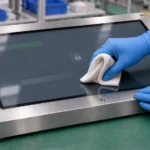
Require three things when sourcing a factory touch panel with a cleaning mode. The operator can see when touch is suspended, wiping cannot trigger a command, and touch…
-
How to Compare Outdoor LCD Quotes Using Ambient Contrast Data
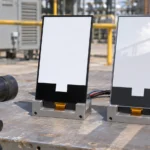
One outdoor LCD quote lists 1,200 nits for a bare panel. Another lists 900 nits through a bonded cover. Which one should you put on the shortlist? Ask…
-
18-Bit vs 24-Bit Color: Specifying TFT LCD Modules for OEM Projects
Choosing between 18-bit and 24-bit color for an OEM TFT LCD module starts with two questions: what visual detail must the application preserve, and what can the complete…
-
LCD Cable Length: How to Specify and Validate the Limit Before Procurement
LCD cable length affects signal integrity by changing the loss, delay, and noise exposure between a driver board and its panel. For procurement, the acceptable length is the…
-
4-Wire vs 5-Wire Resistive Touch: Selecting Panels for Instrument Keypads
For instrument keypads, the choice between 4-wire and 5-wire resistive touch should start with repeated-use requirements and controller compatibility. A 4-wire panel can be a practical option when…
-
Resistive Touch Screen Selection for Dusty and Damp Environments
Dust and moisture can change resistive touch screen input without changing the basic sensing principle. Loose surface dust may leave pressure detection largely unaffected, while grit, sticky deposits,…

Industrial
Rugged display solutions for demanding equipment and long product lifecycles.
View all Industrial cases →- Touch Screen30 products
- In-Cell Touch Screen4 products
- Capacitive Touch Screen26 products
- Resistive Touch Screen4 products
- Original lcd display320 products
- TFT Driver Board/HDMI Driver Board12 products
- AUO LCD Screen148 products
- Innolux LCD Screen62 products
- BOE LCD screen36 products
- Tianma LCD Screen13 products
- IVO LCD Screen11 products
- Display with Driver Board12 products
- Industrial Touch Panels26 products
- TFT LCD Display230 products
- Stretched Bar LCD Display39 products
- Round LCD Display11 products
- Standard Displays38 products
- Sunlight Readable Displays51 products
- IPS TFT Display98 products
- Wide Temperature LCD22 products
- MCU/Arduino TFT Display13 products
- HDMI TFT Display19 products
- Raspberry Pi TFT Display14 products
- Special Display Technology51 products
- Transparent LCD/OLED display12 products
- e-Paper Display Panel6 products
- OLED Display30 products
- Color Oled Displays16 products
- Flexible Oled Display2 products
- OLED Display Module Arduino6 products
- Monochrome OLED Screen6 products
- LCD Monitors54 products
- Stretched LCD Monitors17 products
- Industrial Monitors7 products
- Industrial Panel PC ▎X867 products
- Portable Monitors10 products
- Android Digital Signage13 products

Blogs
1.54-inch tri-color module Additional Portable Monitor Arduino TFT Display Customization Arduino TFT Displays arduino color oled display auo a capacitive touch screen Bar Type TFT Displays boe BOE Panels color displays color oled display E-Ink Displays flexible oled display full-color oled display full custom services HDMI TFT Displays LCD Display LCD Displays LCD Stretched Displays Miqidisplay monochrome display OLED display OLED screens Portable Monitor raspberry pi tft display resistive touch screen Round lcd display screens Stretched LCD displays,Miqidisplay stretched bar lcd display Sunlight Readable tailored solution TFT Display TFT Displays with Arduino TFT technology Touchscreen Capabilities transistor (TFT) LCD screens Transparent displays transparent LCDs Transparent OLED displays Transparent OLED vs Transparent LCD Transparent Screens Wide Temperature LCDs