





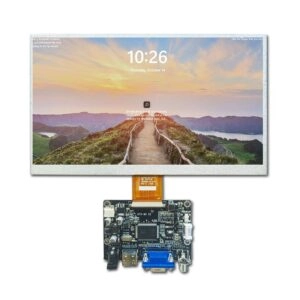
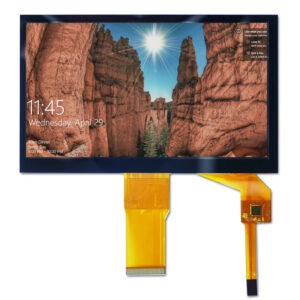






Contamination by dust particles caught between the cover glass and the LCD module could result in poor visual results, increased rejections, and inconsistent quality in industrial display applications. When cover glass integration, air gap assembly, or optical bonding is involved in a customized LCD module assembly process, the issue takes on a greater importance.
Elimination of the problem cannot be left to final inspection alone. It is important for the purchasing and engineering personnel to take a look at the bonding assembly, cleaning procedures, testing specifications, and manufacturing capability of the supplier prior to production volume.

Why Dust Gaps Form Between Cover Glass and LCD Modules
A dust gap usually refers to particulate contamination visible in the optical space between the front cover glass and the LCD surface. Risk is strongly influenced by the bonding architecture.
Air-Gap Construction Creates a Contamination Space
With perimeter or air-gap bonding, the cover glass is fixed around the edges while an internal cavity remains. That cavity can retain particles introduced during assembly or allow contamination to enter if perimeter sealing, adhesive geometry, or mechanical design is insufficient. Optical bonding instead fills the optical space with transparent bonding material, reducing the open volume in which dust or moisture can accumulate.
Contamination Can Be Introduced During Assembly
Fibers, adhesive liner debris, packaging particles, operator-generated contamination, and particles produced during glass processing can become trapped if cleaning and lamination controls are weak. Static charge can also attract airborne particles to glass and polymer surfaces.
A clean sample therefore does not prove process capability. Purchasing teams should evaluate cleanliness from incoming material preparation through cleaning, alignment, bonding, curing, inspection, and final packaging.
Use Cleanliness Requirements That Can Be Audited
ISO 14644-1 classifies cleanrooms and clean zones according to airborne particle concentration. For display-module sourcing, it provides a useful framework for discussing controlled assembly environments, but cleanroom class alone does not guarantee a clean optical stack. Handling, surface cleaning, static control, material flow, and inspection remain essential.
Define Cosmetic Acceptance Criteria in the RFQ
The RFQ should state what counts as unacceptable contamination. Useful criteria include particle size, quantity, location, visibility within the active area, inspection distance, illumination, viewing angle, inspection duration, and whether the display is powered during inspection.
A vague requirement such as “no dust” can create inconsistent decisions between engineering, procurement, supplier quality, and incoming inspection. A quantified visual standard makes sample approval and mass-production acceptance more repeatable.
Choose the Right Bonding Strategy
Optical bonding fills the gap between cover glass and LCD with optically clear material. Industry technical sources describe this construction as a way to reduce internal reflections while limiting the space available for dust, moisture, and condensation.
When Optical Bonding Is the Stronger Choice
Optical bonding is relevant when a project requires high visual quality, reduced internal reflection, improved structural integration, or stronger resistance to contamination within the optical stack. Procurement should also consider adhesive compatibility, cover-glass thickness, LCD surface condition, flatness, thermal expansion, process yield, and validation requirements.
Evaluate the Supplier’s Process, Not Only the Sample
Supplier qualification should examine whether the manufacturing process can reproduce approved optical quality across production lots.
Audit Contamination-Control Methods
Key questions should cover cleanliness of the bonding area, particle-control procedures, cleaning methods for cover glass and LCD surfaces, protective-film removal sequence, static-control practices, operator handling rules, work-in-process storage, and final packaging.
Review Inspection Capability
Incoming and outgoing inspection should identify trapped particles, bubbles, bonding voids, scratches, contamination, alignment deviation, and other optical defects covered by the agreed specification. For volume industrial programs, procurement teams can also request defect classification, sampling plans, lot traceability, and escalation procedures for recurring contamination.
Verify Certifications and Quality-System Discipline
Certifications should not be treated as substitutes for product-specific controls. A quality-management certificate can indicate documented processes, but supplier evaluation still needs to confirm how those processes apply to cover-glass integration and LCD module production.
Evidence may include current certificate scope, internal inspection procedures, incoming-material controls, process traceability, nonconformance handling, corrective-action systems, and reliability-validation records. Required compliance documents should be identified before sample approval rather than after mass production begins.
Assess Capacity Before Volume Production
Dust performance that is acceptable at prototype quantity can deteriorate when throughput increases. Capacity evaluation should therefore address more than nominal monthly output.
Check Process Capacity at the Bonding Step
Relevant questions include available bonding equipment, clean assembly stations, inspection throughput, trained operators, shift structure, peak-load handling, backup equipment, and yield management. Sufficient panel inventory does not compensate for limited bonding or inspection capacity.
Require a Controlled Ramp Plan
Before volume release, procurement teams should define pilot quantities, first-article approval, golden samples, defect thresholds, engineering-change control, traceability expectations, and corrective-action response. Early production lots help confirm that contamination controls remain stable as cycle time and workload increase.
Evaluate Customization Capability for Industrial Integration
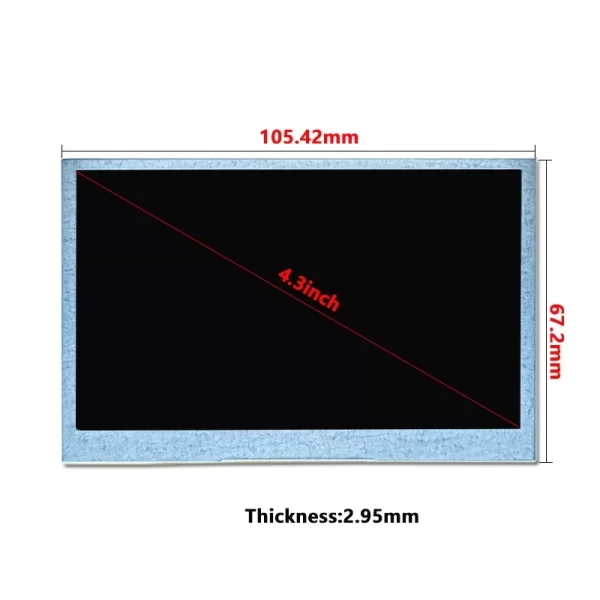
Cover glass is rarely an isolated purchasing item. Dimensions, thickness, printed border, surface treatment, bonding method, mounting geometry, cable position, connector configuration, interface, brightness target, and operating-temperature requirement can affect the final LCD module.
A qualified supplier should review these variables together and identify conflicts before tooling or mass production. Procurement should confirm whether cover-glass geometry, optical bonding, cable and connector changes, interface adaptation, mounting features, PCB adjustments, and backlight configuration can be managed under one controlled engineering change process.
Build Dust Control Into the Procurement Specification
The most reliable way to avoid dust gaps is to treat contamination as a controlled characteristic from the beginning of sourcing. The RFQ should connect optical architecture, cleanliness requirements, inspection criteria, supplier quality systems, customization scope, and volume capacity. Sample approval should verify both appearance and process readiness.
For industrial buyers, this approach improves supplier comparability and reduces the risk that a visually acceptable prototype becomes a high-rejection component after production scaling.
FAQ
What is the main cause of dust between cover glass and an LCD module?
Common causes include particles introduced during handling or bonding, inadequate surface cleaning, static attraction, contamination from materials or packaging, and insufficient control of an air-gap construction.
Does optical bonding prevent dust gaps?
Optical bonding removes the open air space by filling the gap with optically clear bonding material. This reduces opportunities for dust and moisture to occupy the optical cavity, although the bonding process itself still requires strict cleanliness control.
What should an RFQ specify for dust acceptance?
The RFQ should define particle size, quantity, inspection zone, viewing distance, lighting, inspection time, powered or unpowered condition, sampling method, and rejection criteria.
Which supplier certifications matter most?
Requirements depend on the target industry and customer quality system. Procurement teams should verify certificate validity and scope, then audit actual controls for incoming materials, bonding, inspection, traceability, and corrective action.
How should production capacity be evaluated?
Capacity reviews should include bonding throughput, clean assembly resources, inspection capacity, operator qualification, yield data, peak-load planning, backup capability, and ability to maintain the approved process at forecast volume.
Contact an Industrial LCD Manufacturer and Supplier
Miqidisplay supports industrial equipment manufacturers, OEM projects, and procurement teams with TFT LCD and IPS screen sourcing, cover glass integration, and customization. Provide the target size, resolution, interface, operating temperature, quantity, and project schedule for specification matching and customization review.
Contact Miqidisplay through the Contact Us page to discuss dust-control requirements, request a technical review, and obtain a B2B quotation.