





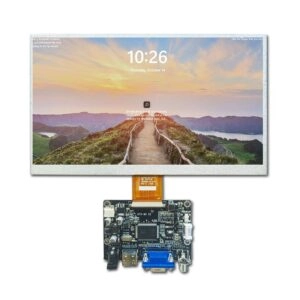
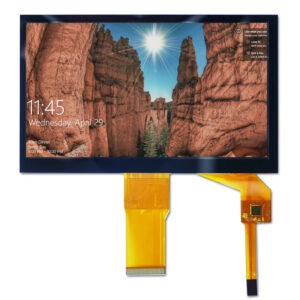

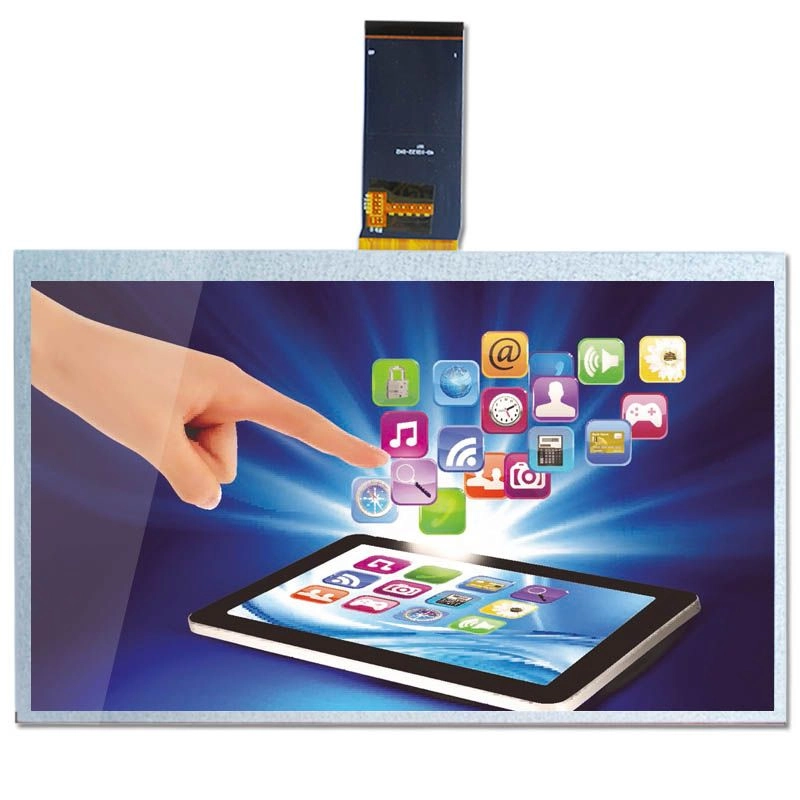
Selecting a display for industrial equipment involves more than matching size and resolution. Consumer-grade screens may perform well in controlled environments, yet industrial projects often require longer operating cycles, stable specifications, broader temperature tolerance, mechanical resilience, and dependable availability.
For system integrators, equipment manufacturers, and procurement teams, the choice should be based on operating conditions and lifecycle requirements rather than initial price alone. This guide explains the distinctions that matter.
What Are Industrial TFT Displays?
Defining Industrial TFT Displays
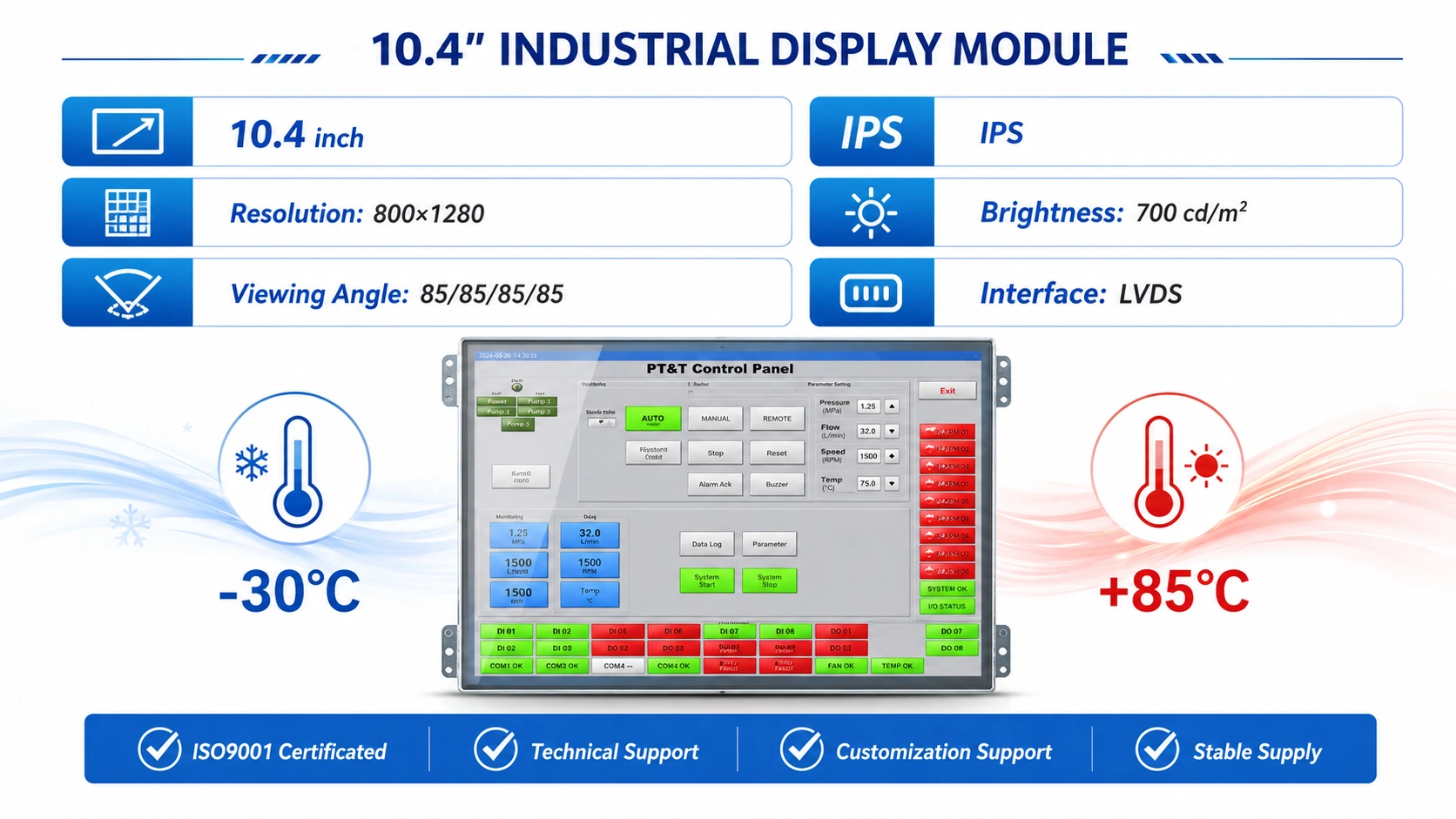
Industrial TFT displays are liquid crystal display modules engineered for predictable operation in manufacturing, energy, transportation, medical devices, laboratory systems, and building control.
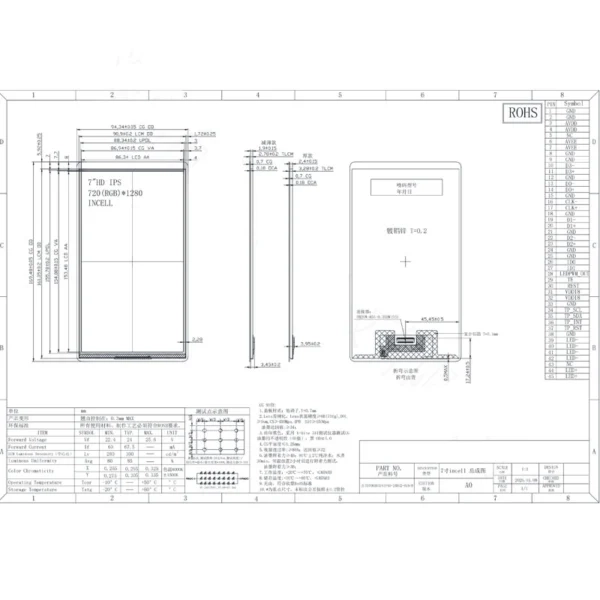
Industrial TFT displays are integrated components. Mechanical dimensions, interface signals, brightness, viewing angle, operating temperature, touch options, and connector layout must align with the host electronics and enclosure.
Common Use Cases for Industrial TFT Displays
Industrial TFT Displays are commonly integrated into:
- Factory equipment and industrial instruments
- Test and measurement instruments
- Medical diagnostic and laboratory devices
- Energy management and power-conversion systems
- Transportation equipment interfaces and control applications
- Agricultural and construction machinery
- Access control and security equipment
- Warehouse and packaging systems
These applications may involve vibration, dust, electrical noise, long operating periods, changing ambient light, or temperature variation.
Industrial TFT Displays vs Consumer Displays: What’s the Difference?
Rugged Construction and Long-Term Reliability
Industrial TFT displays are designed for repeated use and demanding installation conditions. Reinforced structures, dependable connectors, stable backlight systems, and controlled component selection help reduce failures caused by vibration, shock, thermal cycling, or extended operation.
Consumer displays are generally optimized for personal devices in controlled spaces. Their design assumptions may not support factory equipment running through multiple shifts or machinery exposed to continuous movement.
Longevity and Product Lifecycle Management
Industrial equipment may remain in production for years. A sudden display change can trigger mechanical redesign, electrical revalidation, firmware adjustment, new tooling, and certification work. Industrial TFT Display programs therefore emphasize specification stability, revision control, and supply continuity.
Consumer models change more frequently. Such turnover creates serious sourcing risk for long-lifecycle industrial equipment.
Environmental Resistance
Industrial environments can expose display modules to heat, cold, humidity, dust, vibration, and fluctuating power. Wide-temperature components and suitable materials help maintain image quality, response time, and electrical performance.
Consumer screens generally have narrower environmental operating limits. Outside intended conditions, image response may slow, brightness may shift, or component life may decline.
System Integration and Connectivity Flexibility
Industrial TFT displays support embedded designs where space, pin assignment, cable routing, and signal compatibility are tightly controlled. Interfaces may include LVDS, RGB, MIPI, SPI, MCU, or eDP, depending on size, resolution, and architecture.
Integration flexibility may include:
- Customized FPC length, shape, or pin assignment
- Connector position and orientation adjustments
- Capacitive or resistive touch integration
- Cover glass dimensions, thickness, and printing
- Optical bonding for clarity and structural stability
- Brightness and viewing-angle optimization
- Mechanical changes for enclosure compatibility
Consumer products usually provide standardized connections and fixed mechanical formats, leaving limited room for component-level adaptation.
Side-by-Side Feature Comparison
The main differences can be summarized as follows:
- Operating range:Industrial TFT Displays commonly support wider temperature conditions.
- Brightness: Industrial options can suit bright factories and high-ambient-light areas.
- Lifecycle: Industrial sourcing emphasizes stable availability and controlled revisions.
- Customization: Industrial projects may require changes to glass, touch, interface, cable, connector, and dimensions.
- Durability:Industrial modules are developed for longer cycles and greater mechanical stress.
- Documentation:Professional projects require specifications, drawings, interface details, and change communication.
Performance and Visual Clarity in Demanding Conditions
High Brightness and Strong Ambient-Light Readability
Operators must read alarms, process values, graphics, and instructions quickly. In bright production areas, insufficient luminance can reduce visibility. Higher brightness, suitable surface treatments, controlled reflections, and optical bonding can improve contrast.
Wide Operating Temperature Range
Temperature affects liquid crystal response, backlight behavior, adhesive performance, and electronic stability. Industrial TFT displays may be specified for cold starts, heated enclosures, or equipment near thermal sources. Qualification should consider operating and storage ranges.
Enhanced Durability and Shock Resistance
Machinery and transport systems can generate vibration and occasional impact. Display selection should consider module structure, connector retention, cable strain, glass strength, and bonding method, especially where access after assembly is limited.
Why Custom TFT Displays Matter in Industrial Applications
Tailored Design for Specific Needs
Standard modules support many projects, but specialized equipment often has fixed enclosure dimensions or unique electrical requirements. Custom TFT development allows the module to fit the system rather than forcing redesign around an unsuitable component.
Common customization options include:
- Cover glass shape, thickness, printing, and surface treatment
- Touch panel size and sensing configuration
- FPC layout, interface assignment, and connector selection
- Brightness, backlight power, and viewing-angle adjustment
- Optical bonding and protective material selection
- Nonstandard aspect ratios, bar formats, or compact dimensions
A defined specification can simplify assembly, reduce integration risk, and improve volume-production consistency.
Application-Specific Examples
- Factory equipment: Wide-temperature operation, vibration resistance, and readable graphics support stable production control.
- Medical devices:Consistent color, precise viewing angles, and fine-detail presentation support diagnostic workflows.
- Energy systems:Long operating cycles and stable interfaces suit converters, charging equipment, and power-management devices.
- Transportation:Strong mechanical design and dependable visibility support control panels and ticketing equipment.
- Industrial instruments:Compact dimensions, custom interfaces, and accurate graphics help test and measurement products.
Choosing the Right TFT LCD Supplier
What to Look For in an Industrial TFT Displays Supplier
A qualified supplier should understand display specifications and integration constraints. Important evaluation points include:
- Experience with industrial TFT LCD projects
- Clear technical drawings and specification control
- Customization support for glass, touch, interfaces, and FPC design
- Stable sourcing and lifecycle communication
- Sample support and engineering coordination
- Quality inspection for volume production
- Responsive quotation and project review
Benefits of Working with Custom TFT Display Experts
Specialized expertise can reduce compatibility problems before tooling or production. Early review of resolution, interface, brightness, temperature, viewing angle, touch structure, and mechanical dimensions helps prevent redesign. It also supports accurate sampling, faster qualification, and a smoother transition to volume supply.
FAQ
Are industrial TFT displays more durable than consumer displays?
Industrial TFT displays are generally developed for longer operating cycles, wider environmental conditions, and greater mechanical stress.
Can a consumer display be used in industrial equipment?
A consumer display may function in a controlled application, but lifecycle stability, temperature range, connector design, and long-term availability can create risk. Industrial projects should evaluate total integration and replacement costs.
Which specifications matter most for industrial applications?
Key specifications include size, resolution, brightness, interface, viewing angle, operating temperature, storage temperature, touch structure, connector position, mechanical dimensions, and expected lifecycle.
Why is display customization important?
Customization aligns the screen with enclosure limits, host electronics, environmental demands, and interface requirements. It can reduce redesign work and improve production consistency.
How should an Industrial TFT Display supplier be evaluated?
Evaluation should cover technical capability, documentation quality, customization experience, sample coordination, quality control, communication, and long-term supply planning.
Miqidisplay is an advanced display technology and solution supplier offering LCD, TFT, and IPS screens together with specialized accessories and custom display services. For industrial equipment projects, product selection, technical review, sampling, and volume-supply requirements can be submitted through the Contact Us page for direct assistance from the sales and engineering team.
Email: mary@miqidisplay.com
WhatsApp: +86 189 6801 5464; +44 07892800850