






Medical-grade monitors hold an important place in current health care areas. These special screens give clear views of patient signs, check images, and step videos. They allow right health calls where detail matters for care. Built just for health uses, these screens follow strict world rules. Those rules focus on safety, image truth, and work strength in hard hospital spots.
Medical-Grade Monitors: What to Expect
A medical-grade monitor includes a screen planned and checked by IEC 60601 group rules, mainly IEC 60601-1 for basic safety and key work of health power gear. This check proves the item keeps power safety. It limits wave sends and skips mix with other health tools or risks to patients. Past basic safety, these screens mix health-only traits. Such traits cover raised light levels, exact set tools, shine-block covers, and strong boxes against often clean steps.
Different Types of Medical-Grade Monitors
Medical-grade monitors meet different health needs. This brings clear hardware sets and work focuses.
Diagnostic Imaging Medical-Grade Monitors
Image and special parts count on these to judge hard images like X-rays, CT scans, MRIs, and mammograms. Clear levels often hit 3MP to 12MP. They back great detail hold. Gray show follows DICOM Part 14 (Grayscale Standard Display Function – GSDF). This lets steady show of thousands of gray tones. Plant set and built-in feelers keep light steadiness. They often need least top light of 350 cd/m² for common image work and 420 cd/m² for breast image to make sure small sick spot finds.
Surgical Medical-Grade Monitors
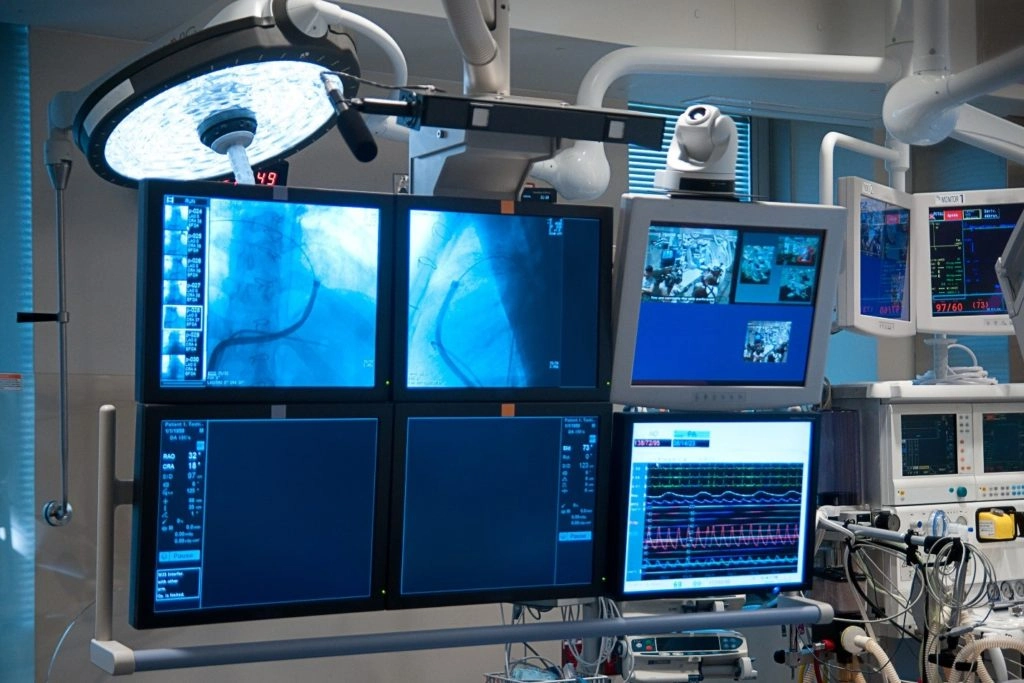
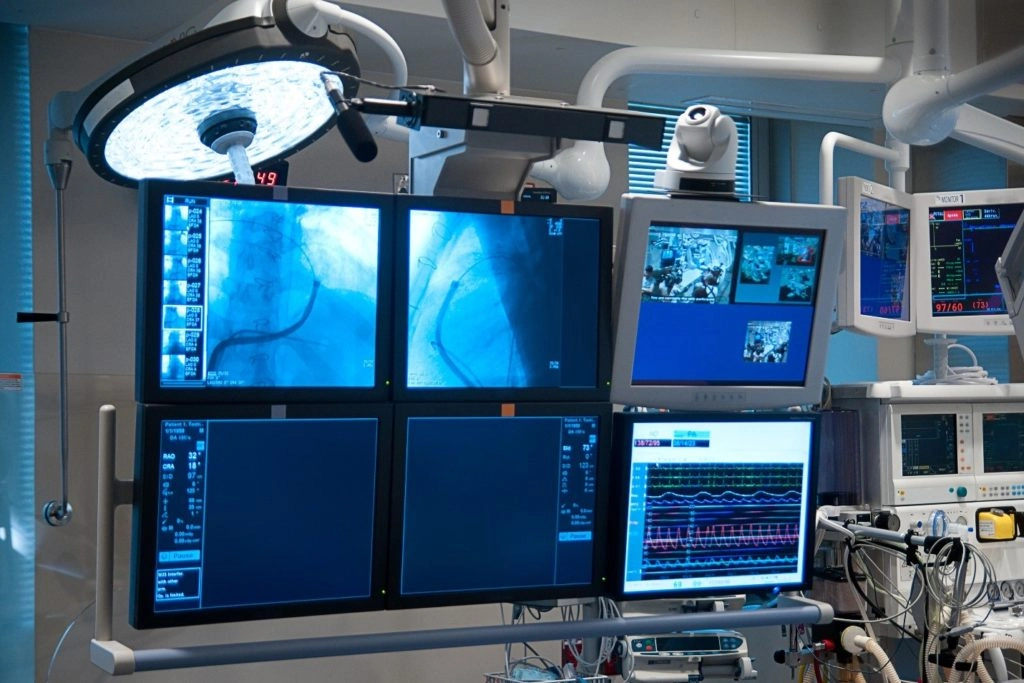
Surgery rooms need screens that show fine step details under strong light. These include endoscopies and laparoscopies. Light levels often pass 700 cd/m². Sometimes they reach 1000 nits or more to fight shine from surgery lamps. High contrast parts keep sight in bright areas. And wide sight angles back team watch. Parts include light bond to cut shine-backs and closed front parts for clean.
Patient Monitoring Displays
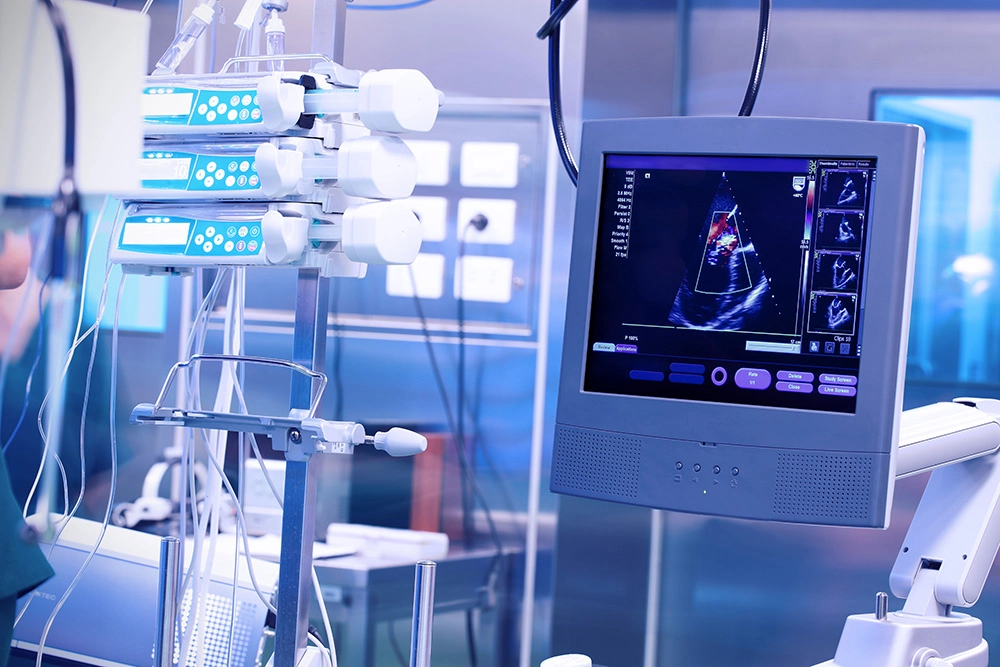
These show live key signs like heart rate, blood pressure, oxygen level, and heat. Clear reading stays key. They use big letters, high contrast, and no-flicker back light. This cuts eye tiredness during long watch shifts.
Clinical Review Medical-Grade Monitors
These work in spots like heart care, sickness study, and common health spots. They handle live data flows and images. They put first link with PACS, RIS, and EMR systems. Plus they give clear, steady show for many-user looks.
Workstation on Wheels (WoW) Medical-Grade Monitors
Move fixes need tough builds to take move shakes and hits. Touch work often uses projective capacitive tech for glove-fit talks. It pairs with germ-kill tops.
Battery-Powered Medical Displays
Fitted with quick-swap charge batteries, these back steady run in move or power-weak cases. They power both the screen and added thin clients without stop time.
Benefits of Medical-Grade Monitors
Goal-built make gives many gains in health use.
Patient Safety Assurance
IEC 60601 follow, including IEC 60601-1-2 for wave match, stops mix with heart aids, breath machines, or image types. It also makes sure no power dangers near patients.
Superior Image Quality and Consistency
New panels give high light (often held steady by back light feelers), wide color sets, and exact gray/color truth. DICOM follow makes sure even show across items and over time. This cuts check differences. Built-in light meters and auto set keep work through the life cycle.
Regulatory Compliance
Stick to DICOM (ISO 12052) rules makes sure gray truth free from picture cards or computers. Extra checks cover key work in power-noisy spots.
Durability and Operational Reliability
Parts back 24/7 steady use with low break rates and long help life. Back light hold fights normal wear. It keeps light and contrast much longer than usual screens.
Hygiene and Infection Control
High IP marks, often IP65 on front parts, let fight against dust in and low-push water jets from clean agents. Smooth builds, round sides, and germ-kill covers or glass make full clean easy with hospital-level agents. This skips harm or left bits.
Enhanced Workflow Efficiency
Parts like multi-input links (HDMI, DP, DVI, SDI), old port back, and fit changes boost ease in hard health work flows.
Key Considerations for Electromagnetic Compatibility in Medical Displays
Wave mix (EMI) brings risks in health care. Many items run at the same time there. Medical-grade monitors add shields and filters to follow IEC 60601-1-2 rules. This makes sure steady work without mix to heart aids, breath helpers, or image systems. Right ground and build cut EMI issues. They keep run wholeness.
Selecting the Right Medical-Grade Monitor
Buy choices rest on a few real factors.
Intended Application and Environment
Find main use such as check look, surgery sight, or key signs watch. And spot issues like room light or move how often.
Budget and Total Cost of Ownership
Higher start spend pays back through long life, small care, and less change needs.
System Integration Compatibility
Back for old links makes sure tie with older types without big changes.
Vendor Expertise and Customization
Groups giving fit sets, rule papers, and steady tech back make best use easy.
Certifications and Future-Proofing
Put first screens meeting now rules (IEC 60601, DICOM). They should also offer grow room for new tech like AI-help images.
Advanced Features in Modern Medical-Grade Displays
Today’s medical-grade monitors add more high-light panels for hard light. They use light bond for less shine-back. They also run in broad heat for mixed place settings. Touch choices with charge tech boost use ease. Custom links back set work flows.
FAQ
What distinguishes a medical-grade monitor from a standard consumer monitor?
Medical-grade monitors comply with IEC 60601 safety standards, feature DICOM calibration for consistent imaging, and include durability and hygiene enhancements absent in consumer models.
Why is DICOM compliance important for diagnostic monitors?
DICOM Part 14 ensures grayscale accuracy and image consistency across systems, minimizing interpretation errors in radiology and other imaging specialties.
Are medical-grade monitors suitable for surgical environments?
Yes, surgical variants provide high brightness to counter operating lights, antibacterial surfaces for infection control, and detailed resolution for precise visualization.
How do medical-grade monitors support infection control?
Sealed designs (often IP65-rated) resist cleaning agents, while antibacterial glass and coatings inhibit microbial growth.
What certifications should healthcare facilities prioritize?
Key standards include IEC 60601 for safety, DICOM for imaging accuracy, and relevant EMC guidelines to prevent interference.
Partner with a Trusted Display Manufacturer and Supplier
Healthcare organizations seeking reliable medical-grade monitors benefit from collaborating with an experienced display manufacturer and supplier like Miqidisplay. Specializing in custom LCD, TFT, OLED, and specialized display solutions, Miqidisplay delivers high-brightness surgical monitors, antibacterial glass options, and bespoke configurations aligned with precise clinical specifications. Drawing on deep expertise in medical-grade applications, including standards compliance and performance optimization, Miqidisplay assists providers in attaining superior precision, safety, and operational effectiveness. Contact the team to explore customized display options and address unique requirements effectively.