





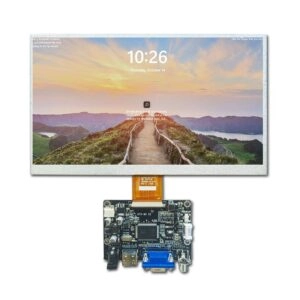
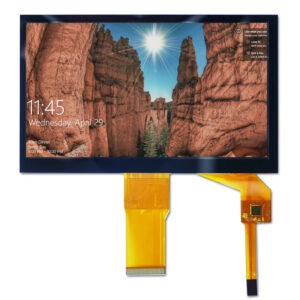
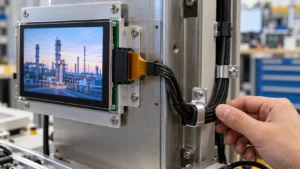




A BOE LCD panel is only one part of a custom industrial display module. Successful integration depends on matching the panel with the host electronics, mechanical enclosure, optical conditions, touch interface, operating environment, and quality requirements.
For OEM engineers and procurement teams, the key decision is not simply whether a BOE panel has the required diagonal size. The more important question is whether the selected panel can be converted into a stable, documented, and repeatable display module for the target equipment.
What Makes BOE LCD Panels Suitable for Custom Modules?
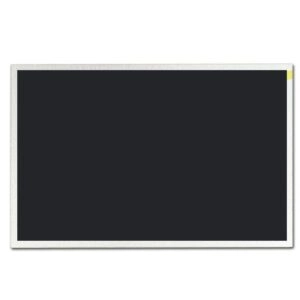
BOE LCD panels are available in multiple sizes, aspect ratios, resolutions, interfaces, and mechanical formats. Current listings in the BOE LCD screen category include conventional industrial TFT panels as well as stretched-bar and square formats.
This range can support applications such as:
- Embedded industrial instruments
- Industrial measurement equipment
- Transportation and vehicle displays
- Security and access-control equipment
- Control cabinets and operator interfaces
- Diagnostic and information terminals
- Custom equipment requiring non-standard display proportions
The correct procurement unit may be a bare LCD panel, a panel with a driver board, or a more complete display module that combines the panel with touch, cables, cover glass, mounting parts, and modified electronics. The required configuration should be defined before supplier comparison begins.
A BOE brand name does not automatically confirm suitability for a specific industrial application. Environmental conditions, electrical compatibility, mechanical tolerances, and validation results still need to be reviewed at model level.
Which BOE LCD Panel Specifications Should Be Defined First?
A purchasing specification should begin with measurable project requirements rather than a preferred model number.
1. Active area and mechanical outline
Diagonal size alone is insufficient. Engineering drawings should identify:
- Active display area
- Overall module dimensions
- Thickness and maximum component height
- Mounting-hole locations
- Bezel or border requirements
- Connector position and cable direction
- Viewing-window dimensions
- Clearance around the backlight and driver electronics
A panel may have the correct diagonal measurement but still fail to fit the enclosure because of its outline, connector location, or rear-component height.
2. Resolution and aspect ratio
Resolution should be selected according to viewing distance, information density, processor capability, and software layout. A higher pixel count can increase image detail, but it may also affect interface bandwidth, graphics processing, power consumption, and driver-board selection.
Aspect ratio is equally important. Conventional 4:3, wide-format, stretched-bar, and square panels require different mechanical openings and user-interface layouts. Any existing enclosure drawing should be compared with the panel’s active area and outline drawing before a sample is ordered.

3. Interface and electrical compatibility
The panel interface must match the host system or the selected driver board. Common interface questions include:
- LVDS, eDP, MIPI DSI, RGB, SPI, or another interface
- Connector type and pin count
- Pin assignment and signal direction
- Differential-pair mapping
- Lane count and operating frequency
- Logic voltage
- Backlight voltage and current
- Enable, PWM, and dimming requirements
- Initialization sequence and timing parameters
The current BOE category includes models identified with LVDS, eDP, and V-by-One interfaces. These labels should be treated as starting points for technical review, not as a substitute for the exact datasheet and pin map.
For a MIPI-based design, the host processor’s supported DSI implementation, lane configuration, timing, and software initialization must be checked against the selected panel. For LVDS or eDP designs, signal mapping, cable length, grounding, and electromagnetic compatibility should be reviewed during sample validation.
4. Brightness and viewing conditions
Brightness should be connected to the actual installation environment. Indoor equipment, factory-floor equipment, vehicle-mounted equipment, and outdoor-facing equipment may require different optical targets.
The quotation specification should identify:
- Brightness requirement in cd/m²
- Viewing direction and viewing angle
- Surface treatment
- Contrast requirement
- Backlight adjustment method
- Ambient-light conditions
- Whether cover glass or optical bonding is required
A high brightness value can increase heat generation and power consumption. It may also require changes to the backlight driver, thermal design, and enclosure ventilation. The selected value should therefore be based on measured viewing conditions rather than a general preference for the highest available brightness.
How Should Touch and Mechanical Customization Be Handled?
A custom industrial display module may require capacitive or resistive touch, depending on the user environment and input method.
Capacitive touch can support gesture-based interaction and a glass front surface, but glove use, moisture, electromagnetic interference, and cover-glass thickness must be evaluated. Resistive touch may be more appropriate where operation with a stylus, gloves, or firm pressure is expected.
Touch integration should define:
- Touch technology
- Active touch area
- Glass thickness and shape
- Sensor alignment
- Controller interface
- Cover-glass dimensions
- Surface treatment
- Bonding method
- Calibration and acceptance method
Mechanical accessories also affect integration risk. Cable length, connector position, PCB dimensions, mounting brackets, gaskets, and custom cover glass should be specified on controlled drawings. The custom display solutions page lists possible adjustments involving cables, touch panels, interfaces, connectors, PCB layouts, cover glass, mounting parts, and backlights. The final scope still needs confirmation for the selected BOE model and project quantity.
What Should Be Tested Before Approving a BOE LCD Module?
Sample approval should cover the complete module configuration, not only a loose panel.
A practical validation process includes:
- Drawing review
Compare the panel outline, active area, connector position, cable path, mounting features, and enclosure opening. - Electrical startup test
Confirm power sequencing, signal stability, backlight control, image initialization, and operation with the target processor or driver board. - Optical inspection
Check brightness, uniformity, viewing angle, color consistency, surface reflections, and visible defects under defined conditions. - Environmental evaluation
Test the module within the specified operating temperature, humidity, vibration, and installation conditions applicable to the equipment. - Touch verification
Check touch accuracy, edge response, false touches, glove or stylus operation, and behavior after mechanical assembly. - Repeatability review
Record the approved sample configuration, firmware or initialization data, drawings, test limits, and inspection criteria for future production batches.
The acceptance document should identify what constitutes a pass or fail. Terms such as “high quality” or “industrial grade” are too general to control production unless they are translated into measurable criteria.
How Can Procurement Teams Evaluate a Supplier?
A capable supplier should provide more than a product link and a price. The evaluation should cover technical, quality, and supply information.
Important questions include:
- Is the quoted BOE model number exact and current?
- Is the quoted item a panel, a module, or a panel combined with additional components?
- Are the datasheet, drawing, interface specification, and connector pin map available?
- Can the supplier build the requested cable, touch, cover-glass, PCB, or mounting configuration?
- How are engineering changes communicated?
- What documents accompany sample approval and mass production?
- How are visual and electrical inspection limits defined?
- Can the approved sample configuration be controlled for repeat orders?
- What packaging method is used for the panel and finished module?
- Which delivery assumptions, quantities, and destination-market requirements are included in the quotation?
Miqidisplay’s company information states that the business provides LCD and TFT display components, custom development support, engineering resources, and multi-stage inspection before shipment. These statements are relevant when evaluating a supplier, but model-specific performance, certification scope, delivery timing, and customization feasibility should still be confirmed in writing. The BOE LCD panel portfolio should be used as a starting point for model review rather than as a replacement for project documentation.
BOE LCD Panel Procurement Checklist
| Decision area | Information to confirm | Main risk if omitted |
| Panel identity | Exact BOE model and revision | Uncontrolled substitutions |
| Dimensions | Active area, outline, thickness, mounting | Enclosure mismatch |
| Resolution | Native resolution and software layout | Image scaling or unusable interface |
| Interface | LVDS, eDP, MIPI, V-by-One, or other | No communication with host electronics |
| Backlight | Voltage, current, control method | Driver or thermal problems |
| Optical design | Brightness, viewing angle, surface, bonding | Poor readability in use |
| Touch | PCAP or resistive, sensor and controller | False touches or poor usability |
| Environment | Temperature, humidity, vibration, installation | Premature field failures |
| Quality | Inspection limits and sample records | Inconsistent batches |
| Supply | Change notification and repeat-order process | Redesign or sourcing interruption |
FAQ
Can a BOE LCD panel be used in a custom industrial display module?
Yes, provided the selected model is compatible with the host electronics, enclosure, optical requirements, and operating environment. A complete module design may add a driver board, cable, touch panel, cover glass, or mounting components.
Does the BOE brand guarantee industrial performance?
No. Industrial suitability must be assessed from the exact model documentation, operating conditions, test results, and approved sample. Brand selection is only one part of supplier and component evaluation.
Which interface details should be requested?
The engineering file should include the exact interface type, connector, pin assignment, signal mapping, timing, power requirements, backlight control, and initialization information.
Is touch integration possible with a BOE LCD panel?
Capacitive or resistive touch may be integrated depending on the panel, mechanical design, controller, and application requirements. Glass dimensions, thickness, bonding, and calibration should be confirmed during development.
What information should be included in a quotation request?
The request should include panel size, active area, resolution, interface, brightness, viewing angle, touch type, operating temperature, mechanical drawings, expected quantity, destination market, and sample requirements.
Conclusion
BOE LCD panels for custom industrial display modules should be selected as part of a controlled integration process. The most important checks are exact model identity, mechanical fit, interface compatibility, backlight design, optical performance, touch configuration, environmental requirements, and repeat-order control.
Miqidisplay can review a project based on the contact and inquiry page. A useful inquiry should include the required size, resolution, interface, brightness, viewing angle, touch type, operating temperature, drawings, estimated quantity, destination market, and sample needs.