







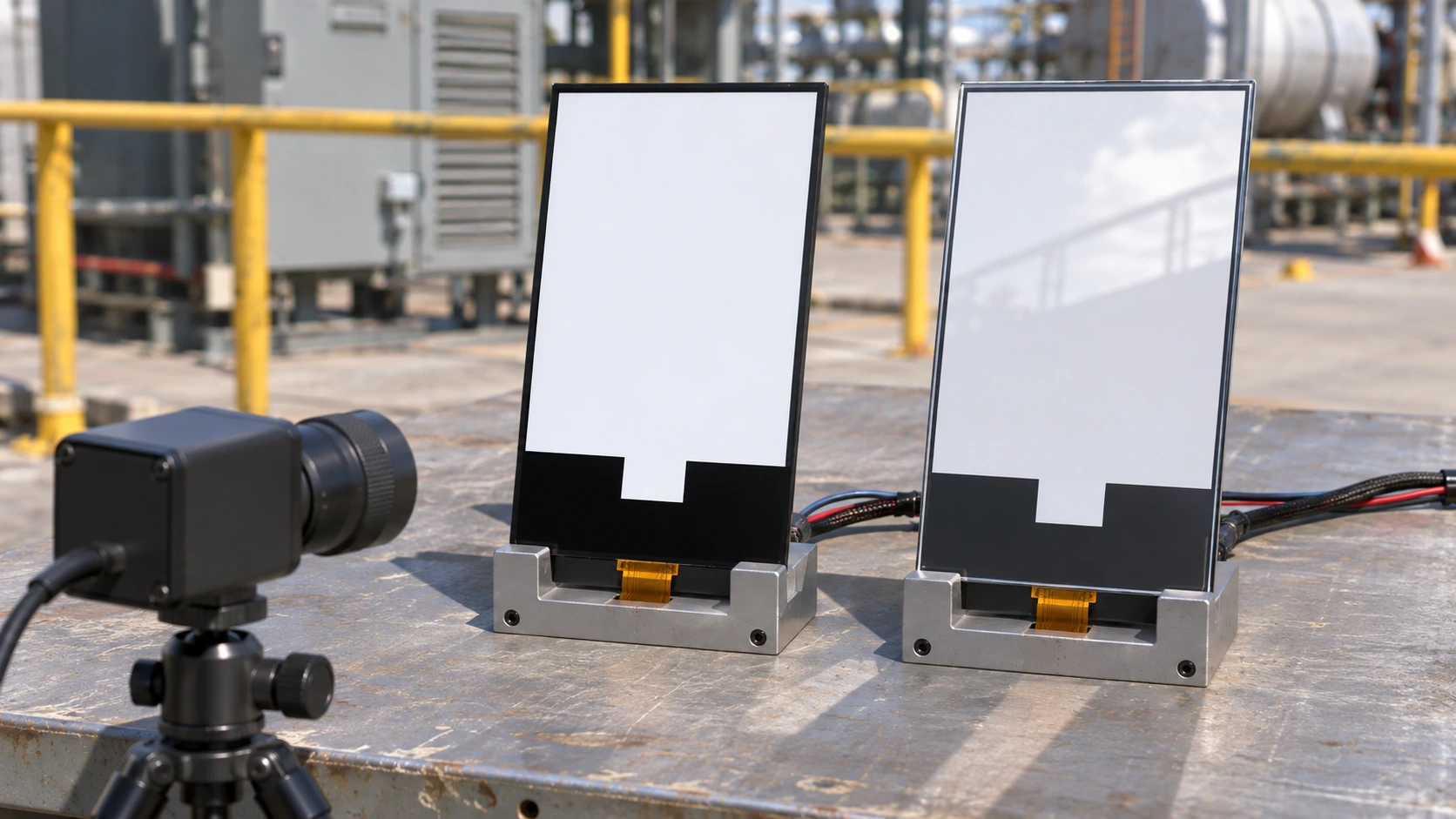
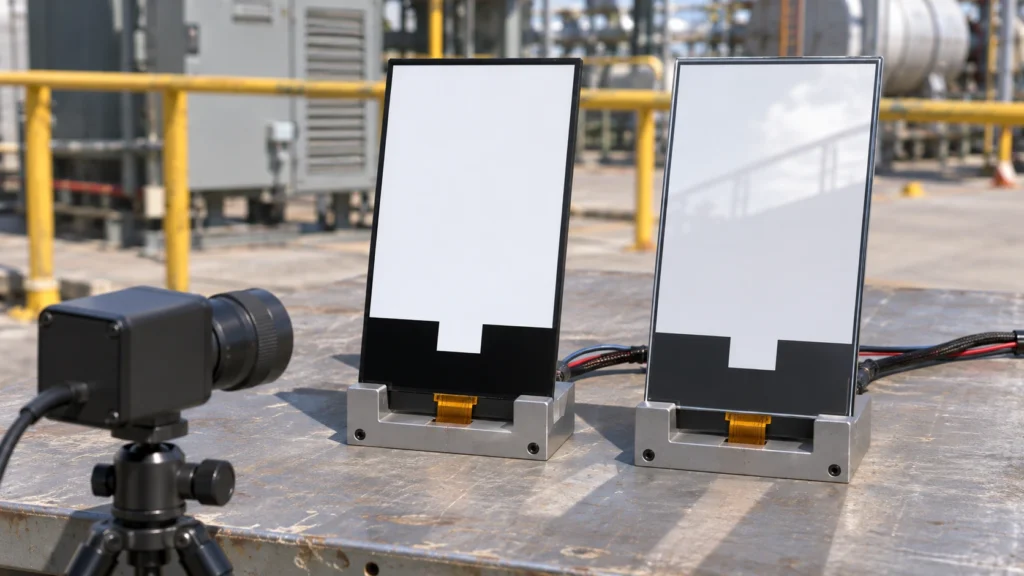
One outdoor LCD quote lists 1,200 nits for a bare panel. Another lists 900 nits through a bonded cover. Which one should you put on the shortlist? Ask both suppliers for white and black luminance under the same lighting and viewing conditions, using the assembly each quote actually prices. The resulting ambient contrast ratio tells you which screen retains more contrast in that setup. Until the figures refer to comparable conditions and the quoted builds, leave outdoor readability open on the bid sheet.
Read the Contrast Figures Before Comparing Prices
Ambient contrast ratio (ACR) is the white-state luminance divided by the black-state luminance with the specified ambient light present. Both readings include the light the screen sends toward the meter, including reflections. A dark-room contrast ratio describes the screen with ambient reflections largely absent. The two ratios answer different purchasing questions. Ask suppliers to define labels such as “reflected contrast” or “sunlight contrast” and show the readings behind them.
Look at the black reading first when a report shows unexpectedly poor contrast. Reflected light can turn the dark background behind a warning icon gray, even when the white reading looks strong. Follow the light path through the actual assembly. The supplier may have tested a bonded cover, while your drawing calls for a separate window with an air gap. List each layer and who supplies it. Carry the module report forward as partial evidence until someone tests the window in place.
Give Every Supplier the Same Test Conditions
Attach a one-page test brief to the request for quotation. Start with where the operator stands. On a tilted panel, a low sun behind the operator may send a bright reflection straight into the viewing path. An overhead source at the same lux may miss that path entirely. Give the lab the screen tilt, observer position, and relevant light directions. Ask for separate results for diffuse daylight and direct reflection if the installation sees both.
- Lighting and geometry. Specify illuminance in lux at the screen plane, source type, direction of incoming light, and viewing angle. Ask for a sketch if the angles are difficult to describe. Two tests at the same lux can yield different contrast when the light comes from different directions.
- Operating state. Specify temperature, warm-up time, and whether automatic brightness control is enabled. Ask each supplier to report the backlight drive and input power at the tested setting. If the host caps power, use the setting the proposed module can sustain within that budget.
- Test article and readings. Request the module and drawing revisions, cover and coating, touch configuration, bonding method, test pattern, and measurement locations. Ask for white and black luminance in cd/m² under each condition and the calculated ratio. Record whether each value was measured, estimated, or offered as a production minimum.
Use the Raw Readings to Rank Comparable Quotes
Suppose two transmissive LCD quotes include the same test conditions. The figures below are illustrative and refer to the exact assemblies being priced. The ambient white and black readings already include reflection.
| Quote line | Offer A | Offer B |
| Dark-room white luminance | 1,200 cd/m² | 900 cd/m² |
| White luminance under test lighting | 1,350 cd/m² | 960 cd/m² |
| Black luminance under test lighting | 151 cd/m² | 61 cd/m² |
| Ambient contrast ratio | 8.9:1 | 15.7:1 |
Offer A produces more white luminance, but its black reading under ambient light is also much higher. Offer B has more contrast under this setup. If the project’s agreed minimum were 12:1 at that viewing position, only B would clear the optical screen for that condition. Check the other required viewing positions before shortlisting it. A different light direction can change which assembly performs better.
Now suppose a third offer lists “1% reflectance” for a loose cover. Leave its ACR cell blank. The test may say something about the glass, but it gives you neither the reflected luminance of the assembled screen nor its white and black readings. Send the supplier the same lighting and geometry brief and ask for both readings on the quoted build.
Compare the Price of the Configuration That Was Tested
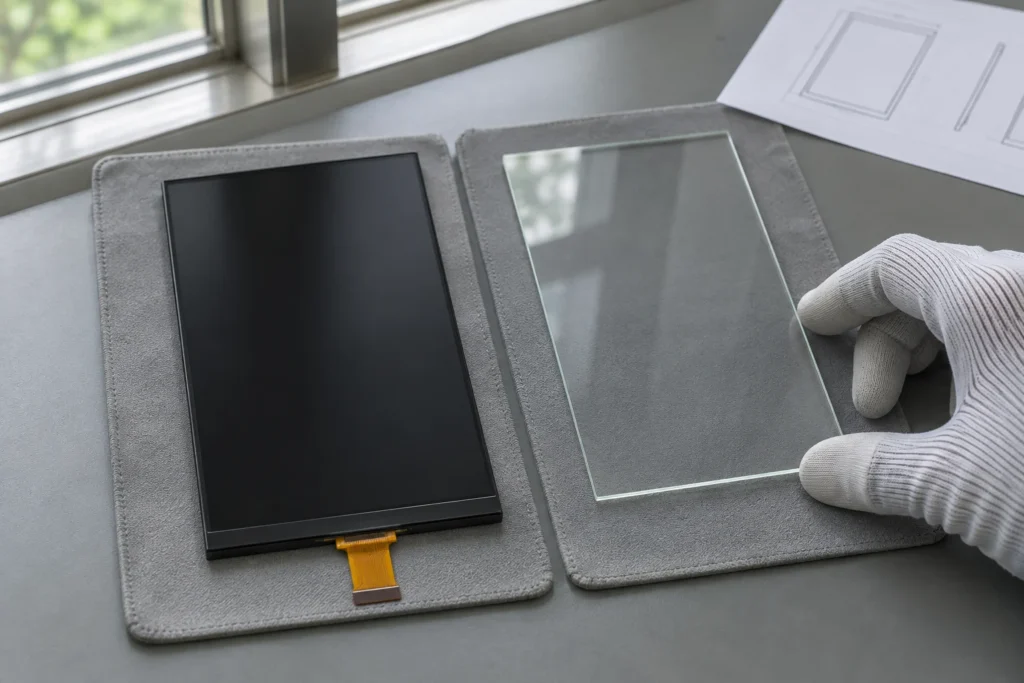
Read the optical report against the priced bill of materials. If the report names a bonded prototype and the quote names a bare panel, send the discrepancy back to the supplier. Ask for a price on the tested build or evidence for the priced build in your intended stack. Keep the part number, optical stack revision, contrast results, and unit price together on the bid sheet. Compare the recurring cost at the same order quantity. Track tooling and qualification separately so a low unit price cannot hide an upfront charge or a bonding step your team has to handle.
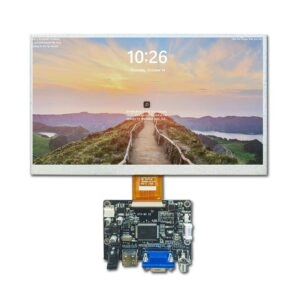
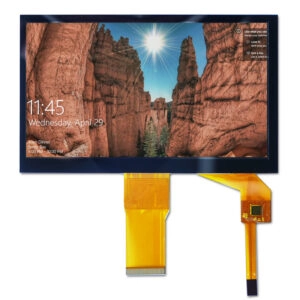
Miqidisplay lists sunlight-readable TFT LCD modules and publishes component specifications for options such as its 7-inch high-brightness MIPI LCD module. Use those specifications to screen for mechanical and electrical fit. Request ambient contrast data for the proposed build separately, especially when the price assumes a different cover, finish, or touch configuration from the one in the report.
Decide Which Quote Can Move to Sampling
Give each required lighting condition its own row on the bid sheet. Mark each row as meets the requirement, falls short, or pending evidence. That last category lets sourcing ask for a retest without treating an unverified number as a pass or a failure. A typical result from one prototype can justify ordering a sample. For production acceptance, get agreement on the minimum ratio, inspection method, and which changes to the cover, coating, bond, or polarizer would reopen the optical review.
Carry the quotation assumptions into the controlled LCD sample comparison. Use the approved drawing and test brief, then check the smallest labels, warning icons, and other content operators need to read. If two measured results are close, consider measurement uncertainty and sample variation before treating the difference as a buying advantage. Keep the raw readings and exact sample revision with the sourcing decision so engineering can verify that the approved build matches the order.
Conclusion
Rank outdoor LCD quotes after the supplier has tied each contrast result to the assembly being priced and to a defined viewing condition. Use the shared test data to identify offers that meet the project’s visibility requirement, then compare their costs and move the qualifying builds to sample review.
FAQs
What if a supplier quotes only brightness and native contrast?
Use those figures for preliminary screening. Ask for white and black luminance under the agreed ambient condition before using the quote to judge outdoor readability.
Can diffuse daylight data stand in for a direct-sun test?
Use diffuse daylight results for conditions they represent. If direct light can reflect toward the operator, include that geometry in the test brief and request a separate result.
Is there a universal ambient contrast ratio to put in an RFQ?
Set a project-specific threshold based on the viewing distance, lighting, and content operators must read. Validate the proposed threshold with representative content and a sample before making it an acceptance limit.
Request an Outdoor LCD Quote Review Using Ambient Contrast Data
Send Miqidisplay your outdoor LCD requirements and any supplier quotes or test reports you already have. Include the module size, active area, outline drawing, resolution, interface, operating temperature, order quantity, and proposed cover glass, touch layer, and bonding. Specify the target brightness, minimum ambient contrast ratio, and the lighting and viewing angles at which the screen must meet it. Miqidisplay can review the proposed module configuration, identify gaps in the contrast data, and clarify which tests are needed to compare quotes on the same basis.
Email: mary@miqidisplay.com
WhatsApp: +86 189 6801 5464