





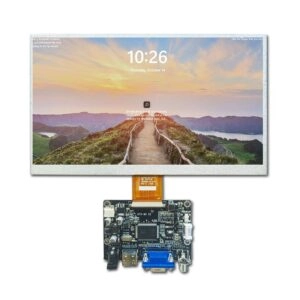
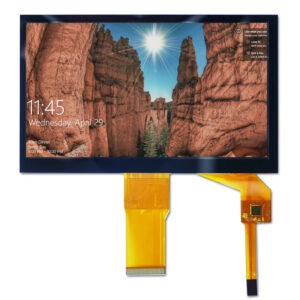





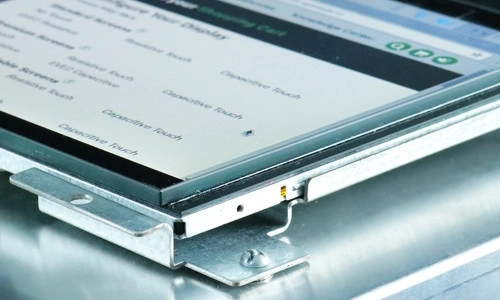
An LCD sample should not be approved because the image appears clear on a workbench. For an industrial product team, sample approval is a controlled decision that confirms mechanical fit, electrical compatibility, optical performance, environmental suitability, documentation, and repeatability.
A useful LCD sample approval checklist gives engineering, quality, procurement, and production the same pass/fail criteria. It also creates a controlled reference for the first production lot and future repeat orders.
1. Define the approval gate before samples arrive
Sample evaluation becomes inconsistent when the team decides the criteria after receiving the modules. Before testing begins, define:
- The project part number and drawing revision
- Sample quantity and sample identification
- Required test equipment and measurement conditions
- Responsible owner for each checkpoint
- Pass, conditional-pass, and fail rules
- Required evidence for final sign-off
- The process for handling nonconforming samples
The approval gate should answer one practical question: Can this exact LCD module configuration move to the next development or sourcing stage without creating an avoidable integration risk?
A sample can be technically functional but still unsuitable for production because the connector position, cable exit direction, viewing angle, touch response, or mounting tolerance does not match the equipment design.
2. Build a complete sample packet
The sample itself is only one part of the approval package. The supplier should provide documents that allow the team to identify and reproduce the tested configuration.
A practical packet normally includes:
- Product code, revision, and sample quantity
- Mechanical outline drawing with critical dimensions
- Active area, viewing area, thickness, and mounting details
- Interface type, pin definition, connector orientation, and cable drawing
- Supply voltage, current limits, timing requirements, and startup behavior
- Resolution, luminance target, contrast requirement, and viewing characteristics
- Touch-panel construction and controller information when touch is included
- Operating and storage conditions
- Inspection conditions for pixels, particles, scratches, stains, bubbles, and edge damage
- Test reports, certificates, or declarations relevant to the project
- Packaging and handling instructions
The TFT LCD display category can help buyers compare module formats, but the approval decision should always be based on the controlled project specification rather than a category description alone.
If a cable, connector, cover glass, bracket, gasket, or backlight is customized, each item should appear in the drawing set. Informal instructions in email or messaging threads are difficult to audit and can be lost between sample approval and production release.
3. Run checks in an order that exposes risk early
A structured test sequence reduces wasted effort. Start with identity and fit, then proceed to electrical, optical, touch, and environmental checks.
Configuration and visual identity
Confirm that the received sample matches the quotation, drawing, label, and purchase documentation. Record:
- Supplier part number
- Revision or date code
- Panel size and aspect ratio
- Connector and cable configuration
- Touch and cover-glass options
- Backlight configuration
- Sample serial or lot reference
Photographs of the label, connector, cable routing, rear assembly, and front appearance provide useful evidence for the approval record.
Mechanical fit
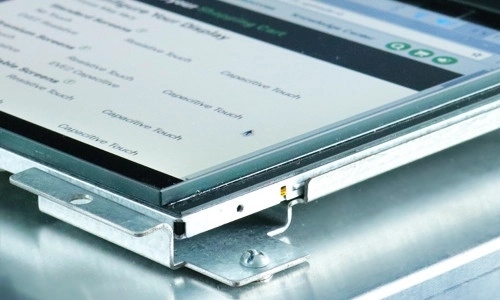
Install the sample using the intended mounting method, not a temporary arrangement that hides tolerance problems. Check:
- Overall length, width, and thickness
- Active-area position relative to the housing
- Mounting-hole location and fastener clearance
- Connector access and cable bend radius
- Interference with brackets, seals, gaskets, or neighboring parts
- Cover-glass alignment and edge clearance
- Any pressure points caused by the enclosure
Mechanical checks should include tolerance review. A sample that fits once may still create production risk if the enclosure has insufficient allowance for normal dimensional variation.
Electrical and functional behavior
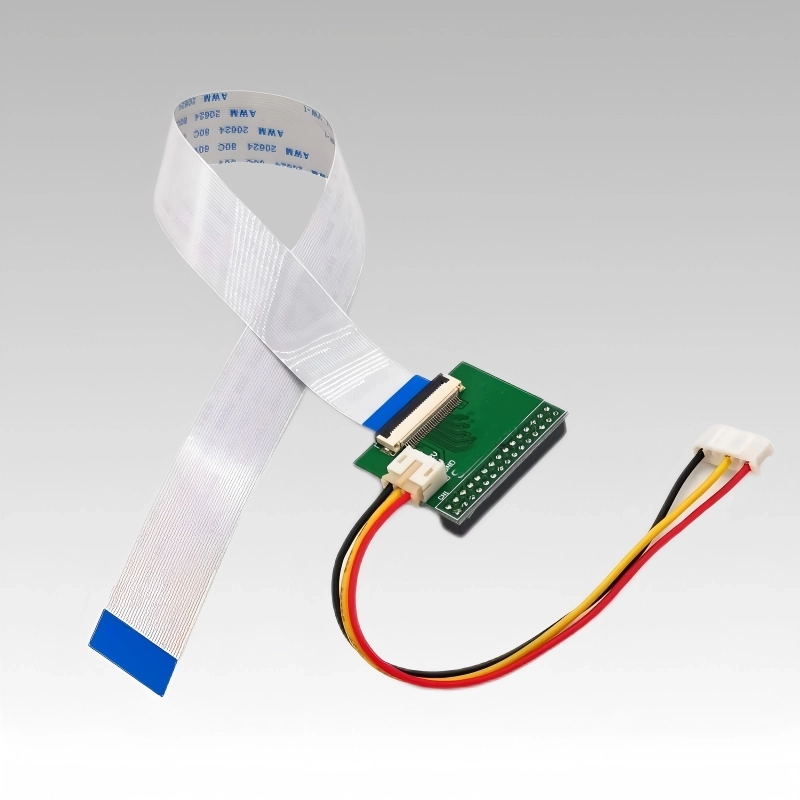
Use the intended host electronics or a documented evaluation setup. Confirm:
- Interface type and pin assignment
- Supply voltage and current behavior
- Power-on and power-off sequence
- Startup time and image stability
- Correct resolution and orientation
- Signal integrity at the required cable length
- Behavior after repeated power cycling
- Touch communication and calibration, if applicable
The test record should identify the controller board, firmware, cable, and power source used during evaluation. Otherwise, a successful sample result may not be reproducible in the final equipment.
Optical performance
Optical approval requires controlled conditions. Record the test pattern, warm-up time, instrument position, viewing angle, ambient light, and measurement equipment.
Typical checkpoints include:
- Luminance or brightness
- Contrast behavior
- Viewing-angle suitability
- Uniformity across the active area
- Color or grayscale appearance
- Response behavior for the intended interface
- Visible mura, leakage, particles, scratches, or stains
The acceptance limit should be tied to the application. A screen used behind tinted cover glass or in a bright factory may require a different optical target from one installed inside a protected cabinet.
Touch and human-input behavior
When the sample includes a touch module, test it in the complete mechanical stack. Check:
- Touch accuracy across the active area
- Edge and corner response
- Response through the intended cover glass
- Operation with gloves or specified tools
- False touches caused by vibration, moisture, or cable movement
- Gesture or multi-touch behavior required by the product
- Surface appearance after cleaning and handling
Touch approval should specify the test method and the conditions under which a response is considered acceptable.
Environmental and handling checks
Industrial product teams should translate the operating profile into sample-level checks. Depending on the application, this may include:
- Low- and high-temperature operation
- Temperature cycling
- Humidity exposure
- Vibration or shock
- Extended powered operation
- Storage and transport handling
- Connector retention and cable strain
The IEC 61747 series can provide display-related test guidance, while IEC 60068 contains broader environmental test methods. The project specification should still define the actual severity, duration, sample quantity, recovery period, and post-test pass criteria.
4. Record defects and decisions consistently
A sample approval record should make the decision understandable to someone who was not present during testing.
| Checkpoint | Evidence | Pass condition | Owner |
| Configuration | Label photographs and part number | Matches approved revision | Engineering |
| Mechanical fit | Drawing measurements and installation photos | No interference; tolerances accepted | Mechanical |
| Electrical | Test log and wiring reference | Stable image and correct interface behavior | Hardware |
| Optical | Instrument readings and test pattern | Meets project limits under stated conditions | Quality |
| Touch | Accuracy and edge-response results | Meets defined response criteria | Software or UX |
| Environment | Test report and recovery inspection | No prohibited functional or cosmetic change | Reliability |
| Documentation | Drawing, certificate, and change-control records | Complete and revision controlled | Procurement |
Use three decision states:
- Approved:all mandatory requirements pass.
- Conditionally approved:limited open items have owners and deadlines.
- Rejected:a critical requirement fails or evidence is incomplete.
Conditional approval should never become an informal release. Each open item needs a documented disposition, responsible owner, and closure date.
5. Convert sample approval into production controls
The approved sample should become a controlled reference, often called a golden sample or master sample. It should be linked to:
- The final drawing revision
- Interface and cable documentation
- Optical and cosmetic criteria
- Test methods and measurement conditions
- Packaging requirements
- Lot traceability rules
- Engineering-change notification requirements
Sample approval and incoming inspection are related but not identical. The sample stage determines whether the configuration is suitable. Incoming inspection determines whether each production lot continues to match that approved configuration.
For attribute-based inspection, ISO 2859-1 can provide a recognized sampling framework. The acceptance number should reflect application risk. Function-critical defects generally require stricter treatment than minor cosmetic variation.
Any change to the panel, cable, connector, touch stack, adhesive, backlight component, or PCB should trigger a documented review. Electrical similarity alone does not prove mechanical, optical, or reliability equivalence.
6. Questions for LCD module supplier evaluation
Before approving a sample, the purchasing and engineering teams should ask the supplier:
- Which exact part number and revision are represented by the sample?
- Which dimensions and interface details are controlled by drawing?
- What measurement conditions were used for optical results?
- Which tests were performed internally, and which require an external laboratory?
- How are cosmetic and pixel defects classified?
- What is the process for approving engineering or material changes?
- How are production lots and inspection records traced?
- What information is needed to quote customized cable, touch, cover-glass, mounting, or backlight work?
- What are the expected production lead time, minimum batch, and repeat-order conditions?
- Which project details remain unconfirmed before production release?
A supplier that answers these questions with controlled records gives the buyer a stronger basis for comparing quotations and managing future batches.
Why Miqi Display may fit a component-led review
Miqidisplay presents itself as an LCD developer and manufacturer with more than 20 years of OEM/ODM experience. Its website also describes multi-stage inspection, engineering support, and display modules intended for integration into customer equipment.
The supplier’s Custom Solutions page lists cable, touch-panel, interface, connector, PCB, cover-glass, mounting, and backlight customization. For an industrial product team, those options are relevant when the sample approval checklist must cover more than panel size and resolution.
Capability statements should still be validated against the specific project. The quotation package should identify the exact module, revision, test evidence, customization scope, and change-control process.
Final LCD sample approval checklist
Before signing the sample approval record, confirm that:
- The sample matches the approved part number and revision.
- Mechanical fit has been checked in the intended enclosure.
- Connector, cable, and mounting details are documented.
- Electrical behavior has been tested with the intended host setup.
- Optical limits and measurement conditions are recorded.
- Touch performance has been tested in the final mechanical stack.
- Environmental requirements and post-test criteria are defined.
- Cosmetic and pixel defect rules are measurable.
- Open issues have owners and closure dates.
- A golden sample and controlled drawing are identified.
- Production inspection, traceability, and change notification are agreed.
FAQ
What is the most important item in an LCD sample approval checklist?
The most important item is configuration control. A clear part number, revision, drawing, cable definition, and test setup ensure that the approved sample represents the module that will actually be produced.
Should mechanical fit be checked before optical testing?
Yes. Mechanical interference can invalidate later testing and cause expensive redesign work. Fit, connector access, cable routing, and cover-glass alignment should be checked before extended qualification.
How many samples are needed for approval?
The quantity depends on application risk, customization level, and the tests required. At least one sample may support basic fit review, but multiple samples are often needed for repeatability, environmental testing, and destructive inspection.
Is a golden sample enough to control production quality?
No. A golden sample defines the approved appearance and construction, but production also requires inspection criteria, sampling rules, lot traceability, and engineering-change control.
What should happen when a sample conditionally passes?
The approval record should identify every open item, assign an owner, define the required evidence, and set a closure point before production release. Conditional approval should not remove mandatory requirements.
Conclusion: Turn sample approval into a controlled release decision
An LCD sample approval checklist is most effective when it connects engineering evidence with procurement controls. The decision should cover fit, interface, optics, touch behavior, environment, documentation, and repeat-order risk in one revision-controlled record.
For a project entering sample review, Miqidisplay can evaluate the module specification, customization needs, test conditions, sample quantity, and delivery destination through its contact page. Supplying the mechanical drawing, interface definition, optical targets, operating profile, and required quantity gives the technical team a clear basis for compatibility review and quotation preparation.
Email: mary@miqidisplay.com
WhatsApp: +86 189 6801 5464; +44 07892800850