








Introduction
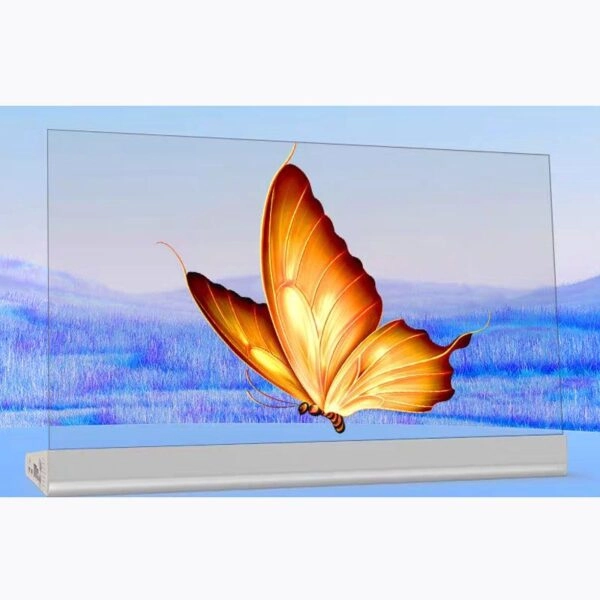
OLED transparent displays are a fusion of the OLED technology and of transparent substrates and electrodes. Unlike traditional screens that are opaque and obscure the view behind them, these display panels are transparent and therefore allow the user to see through them. And at the same time, thanks to OLED technology, they are extremely bright and highly contrasted, so that the content is “floating” in space. The result is an extremely engaging viewing experience, which is not obscured by the screen behind the content.
There are a number of industries that can benefit from displays that can display information while still being able to see through them. Such displays can be used for showcases in retail environments as well as for interactive exhibits. OLED transparent displays can be used to create high end visual applications that are of the highest clarity and quality. They are self-emissive, which allows for true black levels and accurate color.
Why It’s Interesting
OLED transparent displays hold the attention of your audience through dynamic visuals in a clear and unobstructed manner. There are several important characteristics which make OLED transparent displays very suitable for use in professional settings.
Transparent Visual Effects
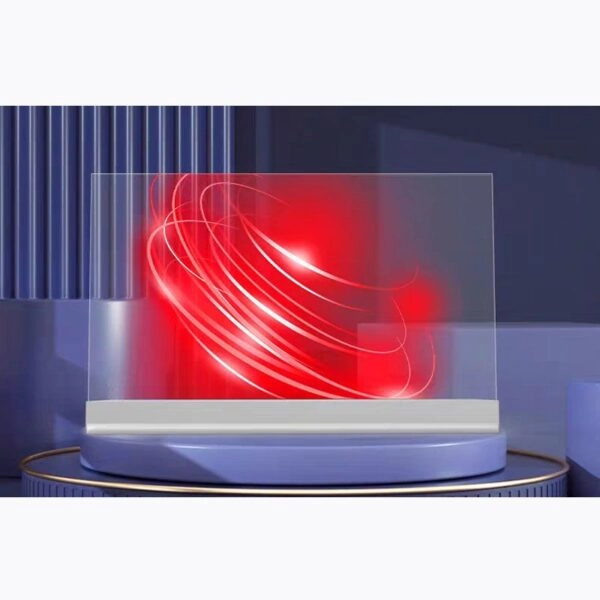
Projects projected on the physical world through the see-through ability of Proyeca’s Mixed Reality Tables create holographic-like presentations, such as graphics, videos and animations, that are superimposed to real-world objects, hence being very effective for luxury retail, art installations and product demonstrations, adding to the physical items rather than replacing them.
Interaction & Creativity
We also look at how such displays could be integrated with touch sensors, gesture recognition or even augmented reality systems, turning static displays into interactive installations that still allow the user to retain awareness of the surroundings them. They could be used as educational exhibits, interactive collaborative workspace or in a variety of experiential marketing settings.
Environment Integration
Thin display solutions such as transparent displays blend into architectural elements like glass partitions, windows and showcases and, unlike conventional monitors and display solutions, keep the natural light and spatial openness intact. In contrast to typical signage they do not produce any visual clutter.
Brand Display
Using transparent OLED panels to highlight premium products within a store environment, enabling items to be physically placed behind the screen and then have product specifications, animations and stories to be informed over the top of them to create a real and digital experience that reinforces brand messaging and creates an awesome customer experience.
Innovation
Technology has enabled us to push the boundaries of information delivery. Museums will now be able to deliver historical context around artifacts, corporate environments can now display complex data visualizations all without taking the viewer out of their surroundings.
Application Scenarios
Our OLED transparent displays serve a wide range of industries thanks to their high degree of flexibility and attractive looks.
Retail
High-end retail stores such as luxury brand flagships often use such screens for window displays as well as product showcases throughout the store. Floating information draws in the foot traffic while giving them in depth product information without distracting from the beautiful merchandise. The end result is a greatly enhanced retail experience.
Exhibitions
Museums and trade shows greatly benefit from interactive installations, where in the foreground the dynamic educational content is presented and in the background artifacts or prototypes are shown. This adds a new layer to the normal way of presentation which leads to a higher involvement of the visitors and also to a higher retention of the information.
Corporate Display
Transparent OLEDs are also used in the lobby, in conference rooms and for product presentations. They showcase brand identity and support dynamic presentations that include physical prototypes and additional digital information.
Transportation
In the automotive field, this innovative technology is employed in heads-up displays as well as interior information panels. Thanks to its transparent characteristics, all important information is always visible. Never blocking the view of the road or of the interior of the car.
Advertising & Marketing
High eye-catcher value is provided by displaying such a transparency display at airports, shopping malls or at events. The messages are clearly visible. A clear and modern design is provided.
Creation Process of OLED Transparent Displays
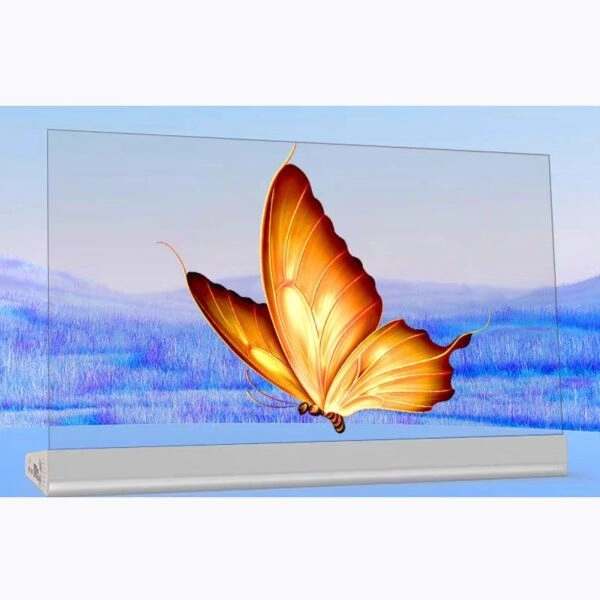
The manufacturing of transparent OLED displays requires as much attention to detail as balancing luminosity, durability and optical clearness receives.
1. Foundation of OLED Technology
Organic light-emitting diodes use carbon-based compounds. These emit light when current passes through them. This self-emissive property removes the need for backlighting. It allows thinner profiles and higher transparency than LCD alternatives.
2. Transparent Structure Design
Transparent electrodes made from indium tin oxide (ITO) or similar transparent conductive materials are used by engineers. In order to keep the transparent substrate, transparent anode and cathode layers, organic emissive materials as well as protective encapsulation layers are built into the display’s structure.
3. Manufacturing Process
Thin-film deposition techniques are used to apply organic layers of very thin dimensions. Patterning the layers creates individual pixels. The sensitive materials are then protected from degradation by moisture and oxygen by advanced sealing techniques. Finally, the layers are assembled into a complete product, including the driver electronics, and optionally touch-sensitive interfaces.
4. Technical Challenges
In our efforts to create displays that are bright and transparent we have an ongoing engineering challenge. The material selected to create the display must have sufficient luminance and in no case decrease light transmission too much. Encapsulation of the display must also be sufficient to provide reliable long term operation in a variety of environments.
5. Achieving Transparency
By optimizing the layer thickness and material selection, up to 40-70% of transparency is reached. The pixel design and electrode patterns are minimized in order to reduce the obstruction to the image, while still maintaining high image quality at all viewing angles.
6. Combining External Control Systems
A fully integrated Media Player, Touch Controller, and connectivity such as HDMI or network, enables full functionality of the system. Calibrating the installation to work effectively with the surrounding ambient lighting ensures the system delivers optimal performance.
Future Trends
Using the advancements in materials and manufacturing to increase transparency, screen size and robustness. There may also be flexible and curved transparent OLEDs for more creative applications. Also more energy efficient and longer life to allow for more use cases in various industries.
Displays will increasingly integrate with AI-powered content management systems and the Internet of Things. This will enable highly intelligent and adaptive displays, such as those that adjust to environmental conditions and take account of viewer presence. As the technology scales, transparent OLED is likely to become cost effective for use in mainstream commercial applications.
Summary
OLED transparent displays are a unique combination of stunning display, flexibility in design and functionality. The transparent displays can layer information on top of physical objects and spaces, and be a powerful tool for interaction, education and branding.
FAQ
What are the differences between OLED transparent displays and transparent LCDs?
The transparent OLED displays are self-emissive. Therefore they have a better contrast and reaction time than transparent LCDs and they don’t need a backlight. This results in better image quality in transparent applications.
What are the things to be aware of when it comes to maintenance of the displays described above?
In order to keep them functioning in an optimal manner over the long term, displays with transparent surfaces need to be cleaned regularly and must be protected from extreme humidity and temperature.
Partner with a Reliable Display Manufacturer and Supplier
Miqidisplay is happy to work with clients looking for transparent OLED display solutions of the highest quality that are completely transparent and of the best quality, whilst allowing them to customize and receive the best support from the manufacturer and supplier, who is an expert display manufacturer that produces transparent LCD and OLED displays utilizing only Grade A panels. This can also feature robust metal bezels or a frameless design, and optionally integrated media players, touch function. Displays can be produced in a wide range of sizes from 10 to 98 inches.
Manufacturers and suppliers can be provided with a tailored solution to fit their specific needs. We can produce displays of custom dimensions, with protective glass, high-brightness for industrial use, or integration into existing industrial systems. We can work with you to design Retail Displays, Exhibition Displays or even Industrial Monitors and have them manufactured by a trusted display manufacturer to provide a reliable long life solution.
Professional display manufacturers and suppliers are welcome to contact us to discuss their project requirements. Miqidisplay’s transparent OLED solutions can be customized to meet customers’ operational needs. We provide one-stop service from design to delivery for OEM and ODM displays worldwide.