







The market of digital equipment is running very fast and display technology has become the main interface between equipment, human and information. Display has stepped out of pure view and become part of product design, safety, user experience, system integration and reliability of equipment in long term operation.
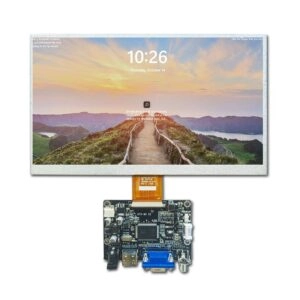
For industrial equipment, medical devices, automobiles, smart terminals, access control products and other embedded electronics, the selection of display products is crucial for the competitiveness of finished products. Using an appropriate original LCD display, custom-made TFT LCD modules, touch screens or integrated screens with driver boards can enhance user-friendliness of products, reduce development risks, and speed up time-to-market.
Key Takeaways: Why Display Technology Innovation Matters
Innovation is not merely quantifiable by higher resolution or even more vivid colors. Supply stability, compatibility of interfaces, touch performance, mechanical fit, robustness in different environments as well as scope for customization at system level are just as crucial.
Key points include:
1. Original LCD display modules for high performance enable a clear and efficient visual output.
2. Touch and interface customization allows the display modules to match the hardware, software, enclosure, and user interface requirements.
3. Application-specific engineering supports industrial, medical, automotive, security, and smart device projects.
4. B2B buyers should evaluate display size, brightness, resolution, interface, touch method, operating temperature, mounting structure, and long-term availability before selecting a display supplier.
Core Innovation One: High-Performance Original LCD Display Modules
Why Original LCD Displays Still Matter
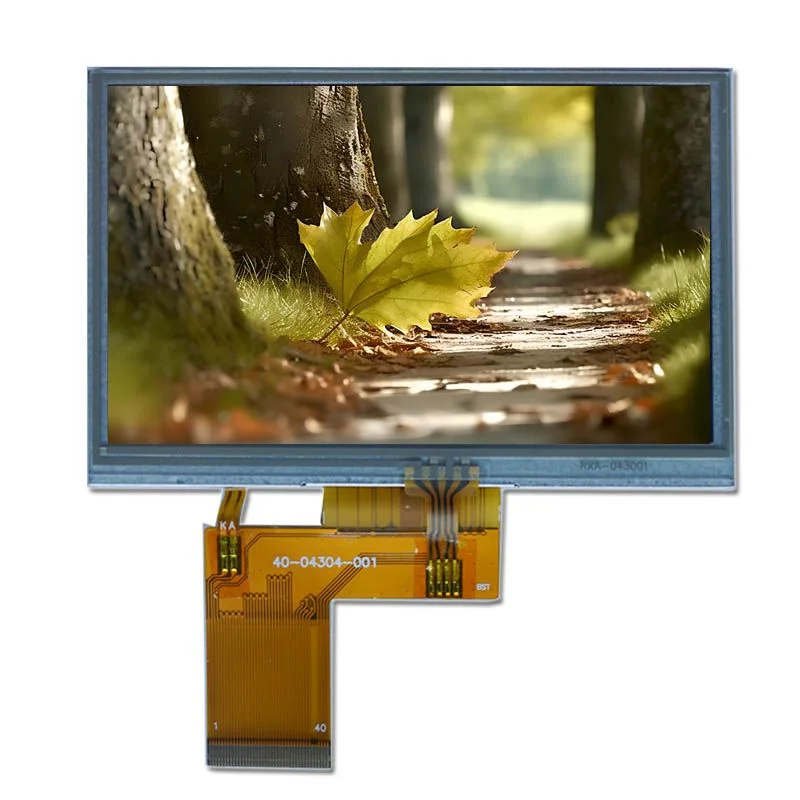
The original LCD displays are still very important as most of the professional devices in the market are using proven panels with stable specifications. A device manufacturer needs a display that has precise dimensions, the right resolution, sufficient brightness, the correct interface and suitable viewing angles as well as temperature specifications.
An original LCD display portfolio of displays allows engineers to compare different modules and to select the most appropriate display for the target application. Most important criteria are known panel structure, fixed electrical interface and reproducible visual performance.
Buying the original LCD display for your design project is not a simple purchase. It is an engineering decision with consequences for redesign costs, for the form-factor of the enclosure, for software adaptation, and for your supply-chain.
High Brightness and Visual Clarity
High brightness is important for all outdoor equipment, such as medical carts, industrial control systems, charging terminals, access control screens and vehicle-mounted displays. A screen with low brightness can look fine in an interior, but will fail outside in the sun or in very bright production halls or in very high glare situations.
High-performance LCD display modules can be designed to be more readable through a combination of the required level of brightness, contrast, viewing angle and surface treatment. In most B2B applications, readability leads to increased productivity and above all safety.
An Industrial Control Display should enable an operator to quickly read and respond to alerts. A Medical Display should allow medical professionals to effectively view images and data. A Smart Terminal Information Display should remain viewable in high use public environments over extended periods of time.
Size, Resolution, and Form Factor Flexibility
Modern product design often requires more than standard rectangular screens. Engineers may need square displays, bar-type displays, wide-format displays, compact modules, or large-format LCD panels.
A large-format and bar-type original LCD screen category can support projects that need special screen proportions for dashboards, shelf labels, industrial instruments, smart panels, and commercial control interfaces.
A suitable screen size should match the actual interaction scenario. A compact display can reduce enclosure size. A wide display can show more status information. A high-resolution display can support detailed graphics and sharper data presentation.
Core Innovation Two: Custom Touch and Interface Integration
Touchscreen Add-Ons for Better User Interaction
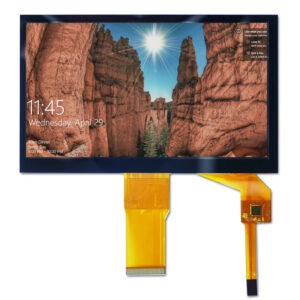
In professional markets, touch functionality has become the norm. While an untouch sensitive display can still be used for information display, touch sensitive displays greatly facilitate direct operation, reduced number of controls and an esthetically purer design.
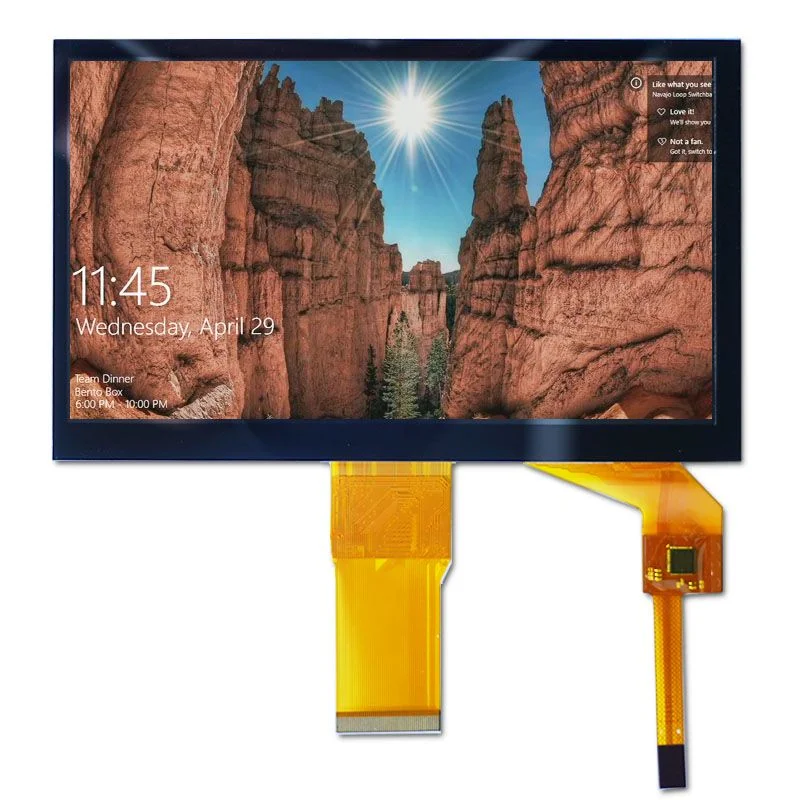
Modern smart terminals and high-end user interfaces are mostly equipped with capacitive touch screens. Resistive touch screens are still suitable for some industrial applications where due to gloves, tools etc. special input conditions are required.
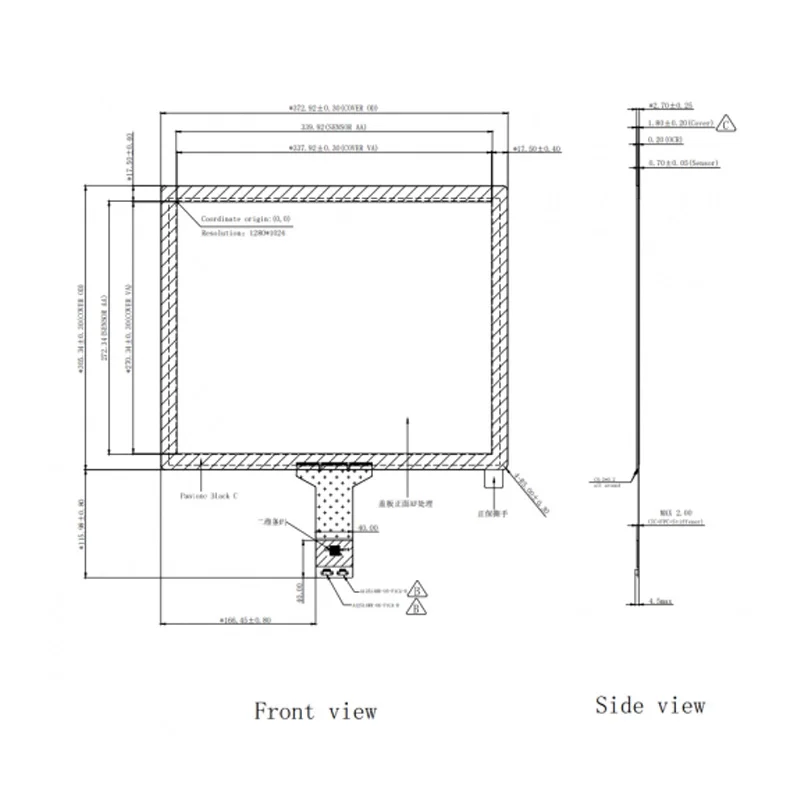
A custom touch solution should consider glass thickness, cover lens shape, bonding method, touch controller, operating environment, and enclosure design. The touch layer should not be treated as an afterthought because it directly affects user satisfaction.
Interface Customization for Faster System Integration
Display interface compatibility is an important practical issue in the development of products. Even the highest performing display does not help if the display interface is not compatible with the mainboard, processor or the corresponding control system.
Common interface requirements may involve HDMI, USB, SPI, VGA, MIPI, LVDS, RGB, eDP, or other display signal formats. A custom interface solution helps product engineers reduce adapter complexity and simplify integration.
Our custom display solutions engineering support provides a solid platform to address interface change, connector change, PCB change and integration with driver-board.
Cable, Connector, and PCB Customization
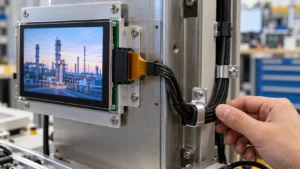
Cable length, cable position, pin assignment, connector direction, and PCB layout can determine whether a display fits inside the final device. Even a small connector position mismatch can affect assembly, enclosure design, or serviceability.
Custom cable and connector work can help improve internal routing, reduce assembly pressure, and improve long-term connection stability. PCB customization can also help align the display with system architecture, space constraints, and installation requirements.
For B2B buyers, these details are not minor accessories. These details influence production efficiency, quality control, and field reliability.
Core Innovation Three: Application-Specific Display Engineering
Industrial Displays for Harsh Operating Conditions
Industrial environments need stable and rugged display solutions. This could be a factory floor, an outdoor machine, a testing system or a control cabinet. These environments can put a lot of stress on displays due to vibration, dust and moisture as well as extreme temperature changes. Also displays in these environments are in use for a long time and need to be able to operate faultless and reliable.
When selecting an industrial LCD display there are a number of features that you should look at. These include the brightness of the screen, the operating temperature of the LCD, the interface stability and the method of mounting the display. Additionally you need to check the touch screen reliability of the display as well as the level of protection that the display requires. Industrial displays such as those used in cold storage as well as outdoor kiosks and vehicle mounted equipment, will require a wide-temperature LCD display. Displays used in high temperature workshops may also require a special wide-temperature LCD display.
As industrial display engineer, your focus is on uptime. Failure of a display usually leads to standstill of machinery, production delays or increased maintenance costs. Thus component reliability is key when designing a product.
Medical Displays for Clear and Reliable Information
Since medical equipment requires clear, stable and reliable visual information, a medical display can be used not only in monitoring systems and for diagnostic purposes but also in surgical support equipment, as a component of a number of handheld devices and also in medical carts.
Medical display projects are characterized by very high brightness, very precise image presentation, the very best color reproduction, easy cleaning, and the most suitable cover glass. Depending on the application antibacterial glass, optical bonding or a highly reliable backlight design may also be required.
Automotive and Mobility Displays
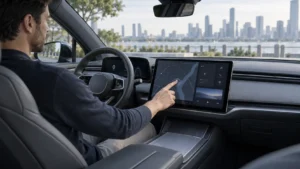
Automotive and mobility applications need displays that can handle long operating hours, sunlight exposure, vibration, temperature variation, and strict space limits. A display used in a vehicle console, charging station, fleet device, or smart mobility system must remain readable and stable under changing conditions.
Sunlight readability, wide viewing angle, wide temperature support, and strong interface compatibility are especially important. A reliable display solution helps drivers, operators, and passengers access information safely and clearly.
Visual Access Control and Smart Security Displays
Access control devices, smart door stations, building entry systems, and security terminals often require compact, bright, and responsive displays. A display in this category may need high-definition output, touch support, customized shape, and stable operation under frequent use.
The display must fit the device enclosure and support clear interaction. A customized screen can help the final product look more professional while improving everyday usability.
FAQ
What are the most important display specifications for industrial equipment?
The most important product specifications for choosing a display are: Display size, Display resolution, Display brightness, Viewing angle, Operating temperature, Connectors and interfaces, Touch-sensitive method, Backlight lifetime, Mounting method, Long-term supply availability. These need to match the environment in which the display will be used and the method of interaction.
Why is custom display integration important for device manufacturers?
Custom display integration enables a display to be properly integrated with a mainboard, housing, software, installation concept and user interface. This enables to avoid redesign and to be efficient during production. So especially for products which are going from a prototype to mass production custom display integration is very important.
Miqidisplay is a display manufacturer and supplier of LCD, TFT, IPS and OLED displays, original LCD panels and industrial touch screens. Also we provide driver boards and other custom display solutions for B2B projects. We support OEM and ODM display development. We can make cables, touch screens, integrate interfaces, modify connectors, change PCBs, add cover glass, mounting parts, etc. We also design custom back lights. For industrial, medical, automotive, security and smart device projects, you can contact us to discuss your display requirements, including display specifications, custom requirements, display samples and display solutions for your project.