






Monochrome displays still play a vital role in many technology areas, even though bright color screens are now common everywhere. These basic single-color screens most often show black text on a white background or green letters on black. They offer excellent reliability and very clear viewing.
Manufacturers and wholesale suppliers like Miqidisplay, a leading provider of modern display solutions, highlight the continued value of monochrome technology in industrial, medical, and automotive fields. With more than ten years of experience in research, development, and production, Miqidisplay provides custom monochrome LCD and OLED panels that meet tough global standards.
1. Understanding Monochrome Displays
Monochrome displays build images using only one color against a different background. They avoid the whole color spectrum and instead deliver sharp, clean results. The most common look is black text or graphics on a white field. Other popular styles include green phosphor on black (just like old computer terminals) or soft amber glow on dark backgrounds. Those styles still appear in many special-purpose devices.
At heart, these screens work by turning pixels on and off. The pixels change brightness to form letters, lines, or symbols. This simple on-off system keeps everything easy and clear. It creates strong differences between bright and dark parts. That strong contrast becomes very useful in places where people must read information quickly without any extra visual noise.
These displays first came from cathode-ray tube (CRT) designs but later moved to modern solid-state versions. Pixels are arranged in neat grids or fixed segments. They only light up when necessary to show data. In low light or direct sunlight, the high contrast (often above 1000:1 ratios) beats most color screens. It reduces eye strain and helps prevent reading mistakes. For engineers and developers, the straightforward design brings faster response and better resistance to electrical interference. That makes monochrome displays ideal for small embedded systems with limited power.
2. Historical Background
Early Computing
When personal computers first arrived, monochrome displays were the top choice. They were cheap and easy to produce. Well-known systems like the Apple II, released in 1977, used green-on-black screens that focused mainly on text. This helped programmers write and fix code without colorful distractions. The IBM PC from 1981 made monochrome CRTs the normal option. That choice helped computers enter offices and homes quickly. People liked the smooth handling of 80-column text. This strong foundation supported early software that put function ahead of fancy looks.
Graphical User Interfaces
As interfaces became more complex, monochrome screens adapted easily. The Xerox Alto in 1973 showed the first bitmapped GUI on a black-and-white display. It proved that windows, icons, and mouse pointers worked perfectly without color. Apple’s Macintosh 128K in 1984 brought the same concept to many more users. It used a 9-inch monochrome LCD to present pull-down menus and the desktop idea.
Industrial and Medical Use
Beyond home and office computers, monochrome displays found important places in harsh environments. Oscilloscopes starting in the 1950s used phosphor tubes to draw bright white waveforms on dark backgrounds. This was essential for analyzing signals. In hospitals, early ECG monitors and X-ray viewers relied on single-color screens to make problems stand out clearly. Factory control panels, especially on car production lines, used them for status indicators. Reliability was far more important than high resolution. That tradition lives on today. Modern monochrome screens handle vibration, dust, and electrical noise much better than full-color alternatives.
3. Benefits of Monochrome Displays
High Contrast
The strongest point of monochrome displays is their amazing contrast, sometimes higher than 2000:1 in newer models. This sharp, edge-to-edge clarity makes text easy to read under bright office lights or in dark areas. It is especially important for safety-critical equipment. In data-heavy jobs, good visibility cuts down errors and speeds up work.
Energy Efficiency
Power consumption stays extremely low, usually under 5 watts for small panels. Color screens with backlights often need 20 watts or more. The low power use extends battery life in portable devices and reduces electricity costs for equipment that runs non-stop. This matches current efforts to save energy.
Durability
These displays are made to last in tough conditions. They operate from -40°C to 85°C because they have fewer parts that can fail. They resist shocks and large voltage swings. That makes them popular in vehicles and rough worksites. They often last two to three times longer than color screens in harsh tests.
Simplicity
The clean design makes development and testing faster. There are no color drivers to write. Factories have higher success rates, which lowers cost by 30-50% per unit. Software also runs lighter, leaving more resources for the main task.
Focus on Information
With no color distractions, attention goes straight to the data itself. Studies show people understand information about 20% faster on single-color screens. This helps greatly in control rooms where fast decisions matter.
Types of Monochrome Displays
LCD (Liquid Crystal Display)
Liquid crystal monochrome screens are the most common for everyday uses. They twist tiny molecules to block or allow light when voltage is applied. Their matte surface cuts glare. They fit calculators and watches well, with viewing angles up to 170°. Custom segment designs let makers add special icons like battery bars at very low cost.
OLED (Organic Light Emitting Diode)
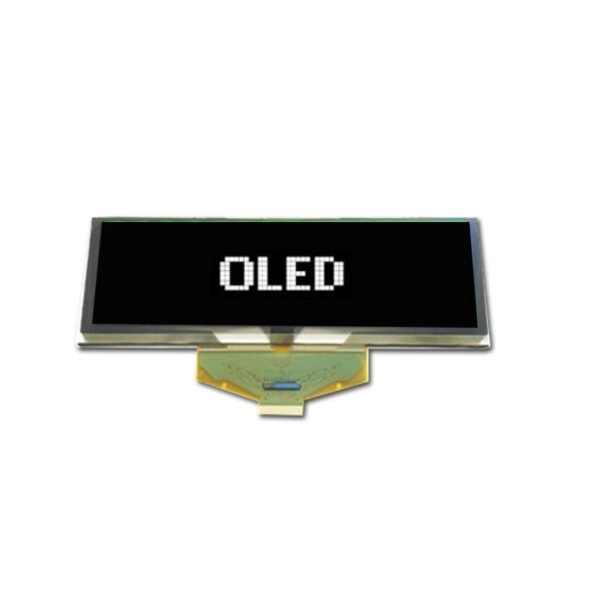
Self-emissive OLED monochrome screens light each pixel on its own. This gives true black and response times below one millisecond. They work perfectly for camera viewfinders. They offer 3000:1 contrast and can be flexible, though they usually cost about twice as much as LCDs.
VFD (Vacuum Fluorescent Display)
Vacuum tubes with glowing filaments create bright amber or green light. They shine strongly in dark environments with 1000-nit brightness. Car instrument panels favor VFDs for their 50,000-hour life, even if newer LEDs are thinner.
E-Paper Displays
Tiny ink particles move to form and hold images without power. They look like printed paper in sunlight and give 10:1 contrast. E-readers and shelf labels use them for weeks of display time. Refresh takes several seconds, so they suit mostly static content.
5. Applications of Monochrome Displays
Medical Equipment
Heart-rate monitors and infusion pumps depend on monochrome screens for clear waveforms and emergency alerts. Their low electrical noise does not interfere with sensitive sensors. This keeps measurements accurate in operating rooms and intensive care units.
Industrial Control Panels
Factory HMI panels display machine status and alarms inside dust-proof cases. Rugged models meet IP67 standards and monitor speeds or temperatures 24/7 without trouble.