











Display choice affects how a product works, appears, and lasts in real use. For engineers creating gear in fields like medical, industrial, agriculture, or defense, a bad pick can cause sight problems, strength issues, or supply troubles later.
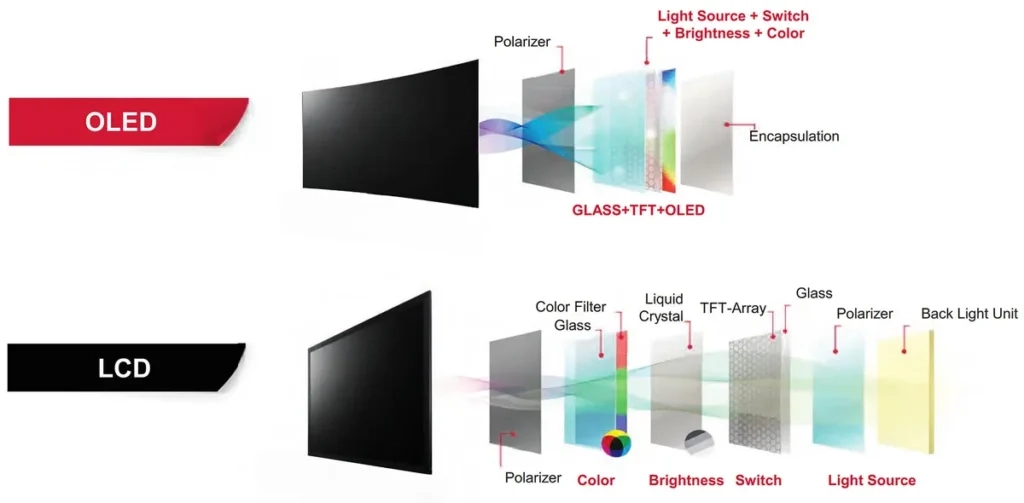
OLED and LCD stand as two of the most usual display types today, yet they fit quite different needs. OLED often gets praise for its strong contrast and thin build, while LCD keeps leading in dependability, energy saving, and lasting supply. Grasping the strong points and drawbacks of each aids teams in making wiser choices early in the design stage, especially when schedules are short and tech needs allow little mistake room.
Read further for a nearer view at how these two techs compare and how to pick the proper display for the next project.
Key Differences Between OLED and LCD
At their base, OLED and LCD screens create pictures in totally different ways. OLED (Organic Light-Emitting Diode) tech makes light from single pixels, so each pixel switches on or off by itself. This permits outstanding contrast and dark blacks, because black pixels stay really “off.” LCDs, however, depend on a steady backlight that glows through liquid crystals to form images. Though this method can cut contrast a bit, it offers big benefits in lasting time, steadiness, and price.
Engineers judging these two techs must look past basic specs. Factors like brightness in open-air places, chance of harm, and supply schedules all affect how well a display acts through a product’s whole life.
OLED vs LCD Image Quality Comparison
OLED gives high contrast, deep blacks, and bright colors via self-glowing pixels, reaching contrast ratios up to 100,000:1 in top modules. LCD supplies bright, steady imaging with high-res formats, often going past 4K in work-grade panels, though true black levels stay capped by backlight spill.
Brightness and Sunlight Readability Performance
OLED fights with top brightness, usually topping at 500–800 nits, so it works less well in straight sun. LCD panels often hit 1,000+ nits with anti-glare layers and transflective modes, and this keeps reading clear in outdoor farm or defense uses.
Power Consumption in Real-World Applications
OLED uses little power for dark stuff but jumps during bright views because of per-pixel light. LCD holds steady draw, with segment-type modules taking under 50mW—perfect for battery-run hand meters or IoT sensors.
Durability and Environmental Resilience
OLED stays touchy to damp, static, and burn-in, with work ranges often capped at -20°C to 70°C. LCD handles tough states, including -30°C to 85°C, strong shakes, and dust entry, meeting IP65 norms in toughened types.
Cost and Scalability for Volume Production
OLED making complexity pushes higher unit costs, especially in custom sizes. LCD gains from grown supply chains, giving cheap scaling from test models to millions of units each year.
Lifespan and Long-Term Reliability
OLED pixels fade slowly after 20,000–50,000 hours, risking ghosting. LCD backlights and liquid crystals pass 70,000 hours with little change, cutting field breaks in key systems.
Customization Flexibility for OEM Projects
OLED tweaking centers on usual sizes and bendy bases. LCD backs fully special designs—icons, segmented layouts, multi-interface links (MIPI, LVDS, HDMI), and optical bonding for better strength.
While OLED may draw for buyer electronics, LCDs suit better for industrial, medical, and vital tasks that need tough show and steady supply.
When OLED Makes Sense
OLED screens glow in tasks where looks guide the user feel. With rich contrast, deep blacks, and super-thin shapes, OLED fits well for sleek, high-end buyer electronics—think smartphones, wearables, and digital signs where sight charm stands first. The skill to switch single pixels on and off allows for amazing image depth and color energy that’s tough to beat.
Best Use Cases for OLED in Wearables and Portables
Small OLED units like the 0.96-inch 128×64 graphic display with SPI/IIC interface shine in smartwatches and fitness trackers, giving sharp icons and motions in dim light while keeping slim edges.
Limitations of OLED in Harsh Environments
OLED touchiness to wet and temp shifts limits outdoor placement. A 6.11-inch AMOLED with 1080×2340 resolution and 60,000:1 contrast acts great indoors but dims under straight sun and risks harm past 50°C.
Burn-In Risks and Mitigation Strategies
Fixed UI parts can lead to lasting image hold in OLED after long show. Changing content turns and pixel-move tricks help, but long-term fixed panels stay safer on LCD.
In brief, OLED can fit great for managed spots where design and image quality lead. For items used in the field, open to shakes, sun, or temp changes, it pays to check close if the display will last under true states.
When LCD Is the Smarter Choice
For engineers planning items that must act in unsure settings, LCD stays a trusty, bendy pick. These screens give a solid mix of strength, clearness, and cost-saving, making them a top choice for fields like medical, industrial, defense, and agriculture.
LCD Performance in Extreme Temperatures
Work LCD panels run steady from -30°C to 85°C, backing cold-chain track screens and desert-set defense systems without heat drift or stop.
Sunlight Readable LCD Solutions for Outdoor Use
Transflective TFTs and high-bright backlights (1,500 nits) keep sight in straight sun, key for farm machine panels and sea guide screens.
Low-Power LCD Options for Battery Devices
Segment and character LCDs take under 20mW in wait mode, stretching battery life in far sensors and hand check tools to years on one charge.
Custom LCD Integration with Touch and Interfaces
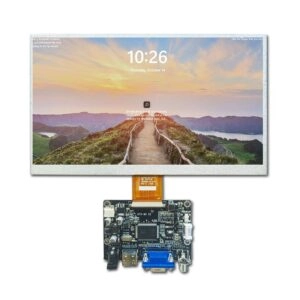
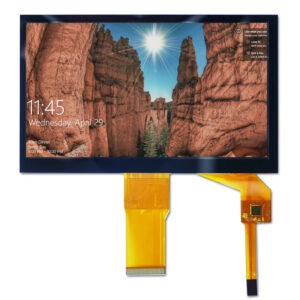
A 10.1-inch IPS panel with 1280×800 resolution and PCAP touch backs gloved work via HDMI/VGA, fitting smooth into factory HMI ends.
LCDs work well over wide temp spans, resist image burn-in, and give high bright choices for outdoor sight. Unlike OLEDs, they build for rough use and long-term steadiness. Engineers with tight power limits or items needing long life cycles often pick LCDs to skip surprise redesigns or supply problems.
Engineering Considerations
Display pick often drops to more than the screen alone. Engineers must count many tech limits that can move the choice between OLED and LCD.
Power Budget Optimization in Embedded Systems
Segment LCDs allow always-on state signs with microamp-level draw, while OLED’s changing use complicates power supply plans in energy-catch devices.
Touch Integration Challenges and Solutions
PCAP touch on LCD backs wet-hand and thick-glove work with set sensitivity, beating OLED’s thinner but weaker touch layers in work settings.
Optical Performance in High-Ambient Light
Optical bonding and anti-reflect coats on LCD remove inner reflections, keeping contrast in 100,000-lux spots—unreachable with usual OLED.
Interface Compatibility and Signal Integrity
LCD backs old (RGB, LVDS) and new (eDP, MIPI) links with strong EMI shields, ensuring signal steadiness in noisy factory floors.
Compliance and Certification Requirements
LCD modules easily reach medical IEC 60601, car AEC-Q100, and army MIL-STD-810 certifications, easing rule okay versus OLED’s material changes.
The proper display should fit with the rest of the plan, not fight it. That’s why it pays to team up early with a group that knows the factors and can help balance them without loss.
Takeaways
Each project brings its own needs, limits, and trade-offs. OLED might fit right for a sight-led interface in a managed spot, while LCDs often prove the wiser, longer-hold choice for rough, vital tasks. Knowing the tech demands up front makes it simpler to pick a display that will stand through tests, making, and true-world use.
FAQ
What are the main advantages of OLED over LCD for display projects?
OLED provides superior image quality with deep blacks and high contrast ratios (up to 100,000:1), ideal for applications requiring vivid visuals in controlled indoor settings.
When should LCD displays be preferred in industrial or medical applications?
LCD displays excel in rugged environments with wide temperature tolerance (-30°C to 85°C), burn-in resistance, and sunlight readability, ensuring reliability in agriculture, defense, and healthcare.
How customizable are OLED and LCD displays for OEM projects?
LCDs support extensive customization—including segmented icons, multi-interface integration, and optical bonding—while OLED customization focuses on standard sizes and flexible form factors.
What is the typical lifespan of OLED vs LCD modules?
OLED degrades after 20,000–50,000 hours with burn-in risk. LCD exceeds 70,000 hours with consistent performance, minimizing field replacements.
Which display consumes less power in battery-operated devices?
Segment LCDs use under 50mW, outperforming OLED in always-on or low-duty-cycle applications despite OLED’s efficiency in dark-mode content.
Partner with Miqidisplay for Tailored Solutions
Engineers seeking reliable OLED or LCD displays for demanding projects can turn to Miqidisplay, a leading manufacturer, supplier, and factory with over 20 years of OEM/ODM expertise in Shenzhen and Hangzhou.
Specializing in custom LCD monitors, TFT panels, and OLED modules—from 0.66-inch monochrome OLEDs to 57.2-inch stretched LCDs—Miqi delivers TS-16949 and ISO-9001 certified solutions for medical, industrial, and automotive applications. With 90% same-day shipping, 24/7 support, and global delivery to over 200 countries, Miqi ensures rapid prototyping and volume scalability.
Contact the team at mary@miqidisplay.com or +86 188 7965 2960 via WhatsApp to receive a customized quote within 48 hours. Elevate project outcomes with Miqidisplay’s one-stop display innovation.