










Capacitive touchscreens have grown into the main technology for today’s interactive screens. They power devices from smartphones to factory control systems. These screens provide smooth, natural interaction by spotting electrical shifts from human touch. Learning the basic ideas and build of capacitive touchscreens helps explain their wide use and strong performance in many fields.
Introduction to Capacitive Touchscreens
What Is a Capacitive Touchscreen?
A capacitive touchscreen includes a clear panel that spots touch by sensing changes in an electric field. The method depends on the conductive nature of the human body. Usually, the finger works as a conductor. It disrupts the screen’s electric field. This change gets noticed by a controller. As a result, it allows exact location spotting without any need for hard pressure.
Why Are Capacitive Touchscreens So Common Today?
The rise of capacitive touchscreens happened after multi-touch features appeared in consumer gadgets around 2007. Better sensor materials, smarter controller programs, and improved making processes fixed early problems. These issues included sensitivity troubles and gesture spotting. Such changes brought faster response, clearer visuals, and longer life. Therefore, capacitive technology became the top pick over older types in most cases.
Capacitive vs. Resistive: A Quick Comparison
Capacitive and resistive touchscreens stand as two key technologies. Each fits different settings.
- Input Type: Capacitive needs a conductive item, such as a bare finger or special stylus. Resistive reacts to pressure from any item.
- Multi-Touch Support: Capacitive allows real multi-touch actions. Resistive gives limited or no multi-touch.
- Durability: Capacitive screens have a strong glass surface with no moving parts. This offers longer life. Resistive screens can wear down over time from layer pressing.
- Optical Clarity: Capacitive uses fewer layers for better transparency and brightness. Resistive often adds films that lower clarity.
- Cost: Capacitive usually costs more because of complex materials. Resistive stays lower in cost.
- Usage Environments: Capacitive shines in consumer electronics, medical, and normal industrial places. Resistive still works in tough, outdoor, or glove-needed spots. In general, capacitive touchscreens have mostly taken over from resistive in common uses. They offer a better user feel.
Basic Working Principle
The Role of the Human Finger and Electric Fields
Capacitive touchscreens work by keeping a steady electric field over the sensor layer. When a conductive object like a finger comes close or touches the surface, it pulls a tiny charge. This shifts the local capacitance. The change gets spotted right away. Thus, it supports light touch or near-based interaction without any bending.
Self-Capacitance vs. Mutual Capacitance
Two chief detection ways exist: self-capacitance and mutual capacitance. Self-capacitance checks changes in capacitance for each electrode alone against ground. This way gives high sensitivity. It suits single-touch uses but has trouble with exact multi-touch because of “ghosting” issues. Mutual capacitance stands as the main method in current devices. It uses a grid of crossing rows and columns. Capacitance gets measured at each crossing point. This allows clear spotting of several touch points at once. It supports complex actions like pinch-to-zoom and rotation. So, it fits advanced interfaces well.
Charge Transfer and Signal Processing
When touch happens, the controller moves charge and handles the signal via analog-to-digital change. Modern chips filter noise. They adjust for outside factors. And they use programs to read touch spot, pressure shifts, and actions. Today’s controllers also add features like palm blocking and better noise protection. These ensure steady work in hard settings.
Structure and Materials
ITO Layers and Transparent Electrodes
The main sensor layer often uses Indium Tin Oxide (ITO). This clear conductive material gets shaped into diamond or grid patterns on a base. Higher line-per-inch (LPI) counts boost resolution and exactness. Yet, they add making difficulty and controller needs. ITO patterns get tuned for certain uses. Denser grids appear in high-precision industrial or medical displays.
Cover Glass and Protective Layers
A strengthened cover glass sits over the sensor for safety and visual quality. Consumer devices often choose thinner glass (0.7–1.1 mm) for light weight. Industrial panels use thicker glass (up to 8 mm) for damage resistance. Thicker covers need stronger drive signals from the controller to keep sensitivity. Extra treatments, such as anti-glare, anti-reflective, or anti-fingerprint coatings, improve use in bright or dirty places.
Flexible vs. Rigid Touch Panels
Rigid panels build on glass bases. They give steady support and appear often in fixed setups like kiosks and monitors. Flexible panels use PET or thin-film bases. These allow curved or rollable shapes for new uses. Flexible types trade some strength for bending ease. But they gain ground in wearable and car sectors.
Typical Applications in Industry and Consumer Electronics
Smartphones and Tablets
Capacitive touchscreens changed portable devices. They brought smooth multi-touch actions, high-resolution screens, and edge-to-edge looks. Their quick response supports advanced features like haptic feedback and stylus exactness.
Industrial Control Panels
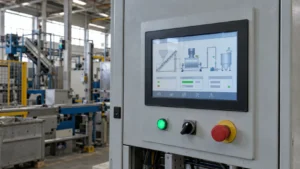
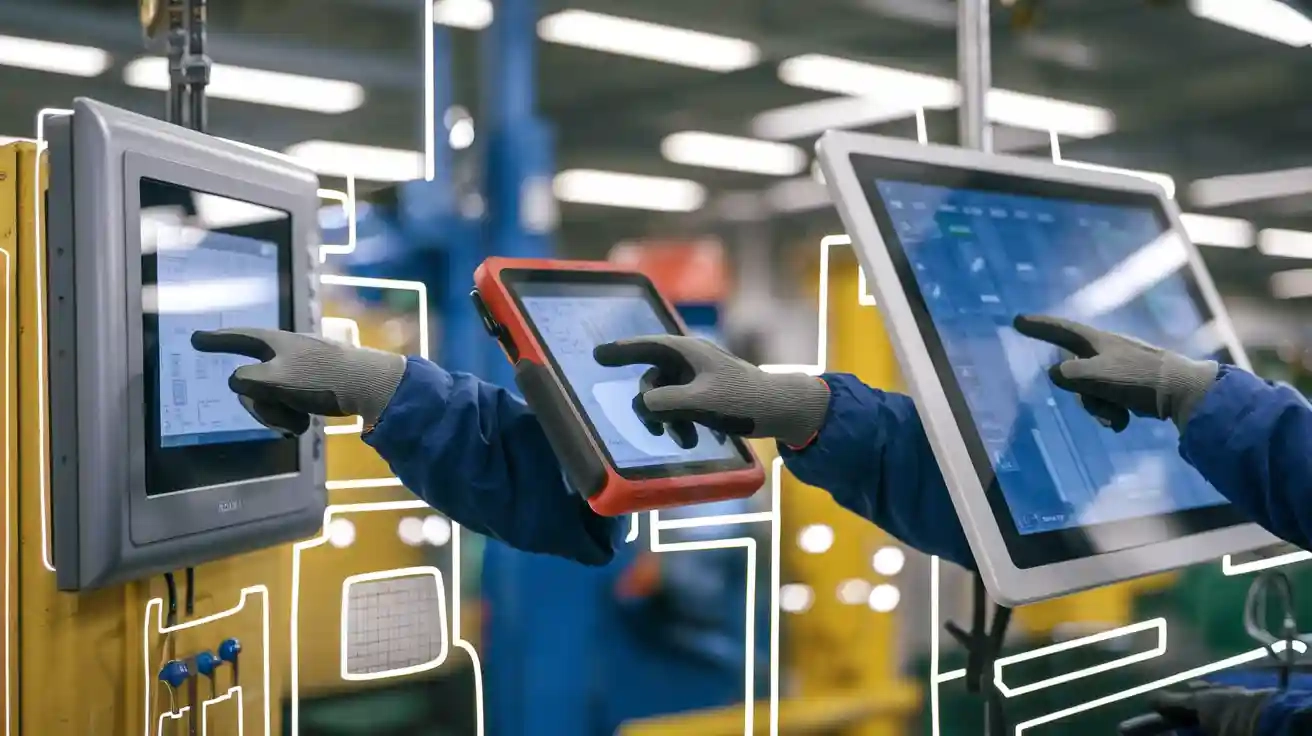
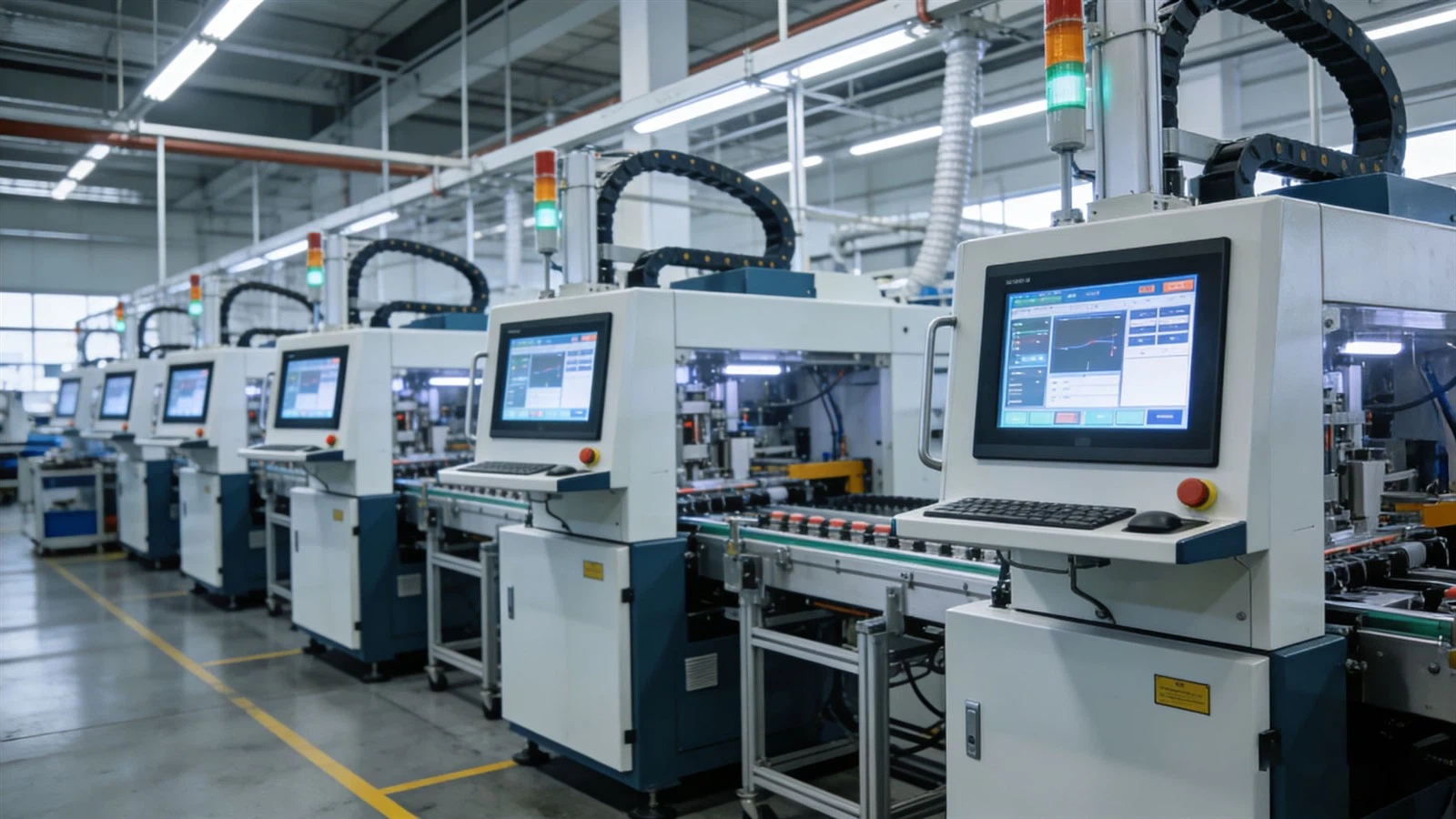
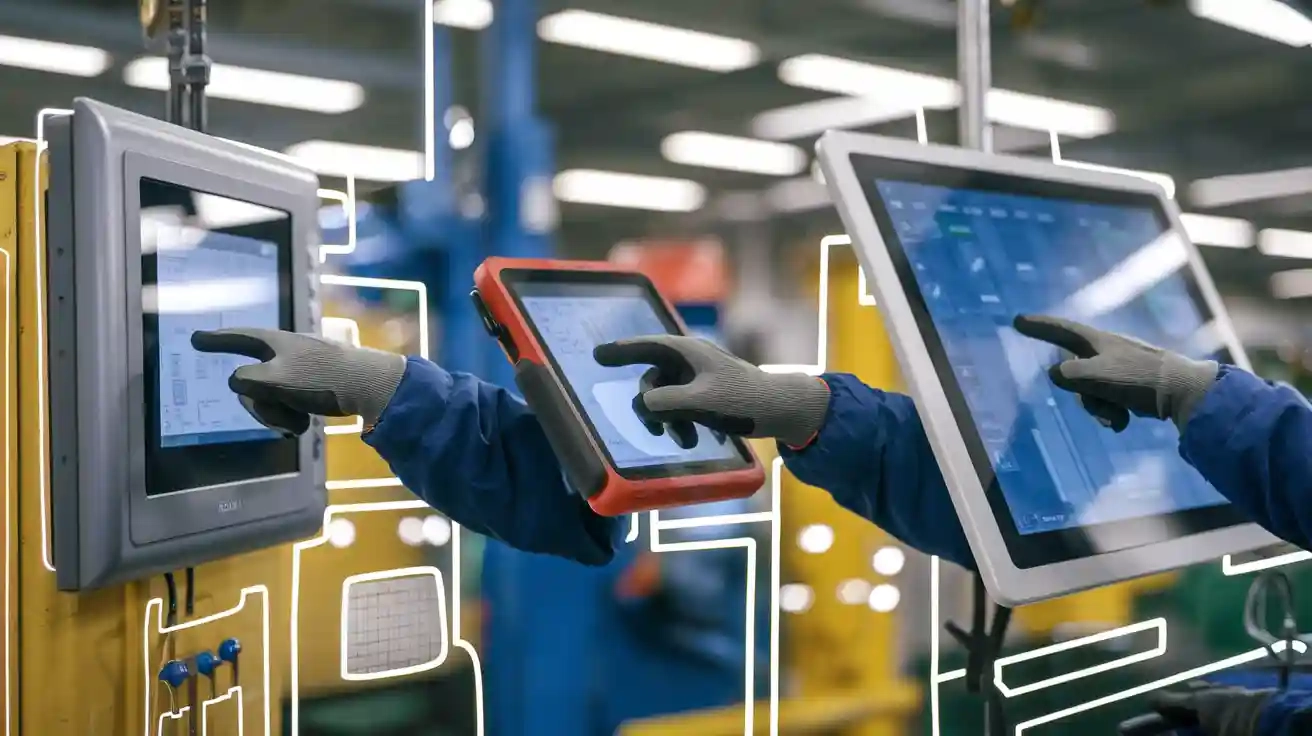
In human-machine interfaces (HMIs), capacitive panels give dependable work in factories. They support glove touch and moisture resistance for worker speed.
Medical Devices
Clean and easy-to-wipe surfaces make capacitive screens key in diagnostic tools and portable monitors. Glove support and high clarity ensure right use in clinic settings.
Smart Home Interfaces
Wall-mounted controls, thermostats, and intercoms gain from sleek, quick capacitive interfaces. These blend well into modern styles.
Advantages of Capacitive Touchscreens
Multi-Touch Capability
Support for several inputs at once allows natural actions. This boosts work in professional and consumer fields.
High Clarity and Responsiveness
Few layers and direct electrical spotting give great transmittance and almost instant response times.
Durability and Low Maintenance
Sealed glass surfaces fight scratches, liquids, and dirt. This cuts care in placed systems.
Water Interference and Gloves
Smart programs reduce water drop effects and support gloved work. These widen use in outdoor and pro settings.
Conclusion
Future Trends in Touchscreen Technology
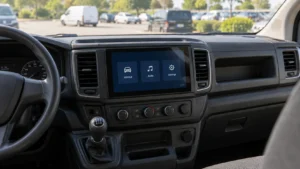
Current growth includes better force sensing, links with flexible displays, and improved action spotting. Capacitive technology keeps changing for new areas like car infotainment, health wearables, and augmented reality interfaces.
Why Capacitive Touchscreens Continue to Dominate
Better interaction, visual quality, and strength keep capacitive touchscreens as the standard for most interactive displays. (Word count: approximately 1220)
Frequently Asked Questions (FAQ)
What is the difference between self-capacitance and mutual capacitance?
Self-capacitance spots changes per electrode for simple single-touch setups. Mutual capacitance uses grid crossings for exact multi-touch and action support.
Can capacitive touchscreens work with gloves or in wet conditions?
Modern designs with special controllers support glove touch and water rejection via smart signal handling.
Are capacitive touchscreens more durable than resistive ones?
Yes, due to the solid glass surface and lack of pressure-sensitive layers. They offer better resistance to wear and outside factors.
What materials are used in capacitive touchscreen construction?
Primarily ITO for electrodes, tempered glass for cover, and substrates like glass or PET for rigid or flexible panels.
In which industries are capacitive touchscreens most commonly used?
Consumer electronics, industrial HMIs, medical devices, automotive systems, and smart home controls.
Partner with a Leading Capacitive Touchscreen Manufacturer and Supplier
For businesses seeking reliable capacitive touchscreen solutions, Miqidisplay stands as an experienced manufacturer, supplier, and factory with over 20 years in OEM/ODM display technologies. Specializing in projected capacitive (PCAP) panels with G+G structures, multi-touch capabilities (up to 10 points), and sizes ranging from 3.5 to 32 inches, Miqidisplay offers customizable options including USB/IIC interfaces, full lamination, glove/waterproof features, and coatings like AG/AR/AF/AB.
Certified under ISO-9001, ISO-14001, and TS-16949, Miqidisplay ensures high-quality production for industrial, medical, automotive, and outdoor applications.
Contact the team at mary@miqidisplay.com or +86 188 7965 2960 to discuss custom prototypes, volume supply, or integration requirements. Achieve seamless project integration with a trusted display partner.