


In the fast-changing world of digital signage and industrial interface design, the common 16:9 aspect ratio does not always work as the best choice. Architects, engineers, and retail designers continue to explore better ways to use space. A special type of hardware has grown popular in the market: the Bar LCD Stretched Display.
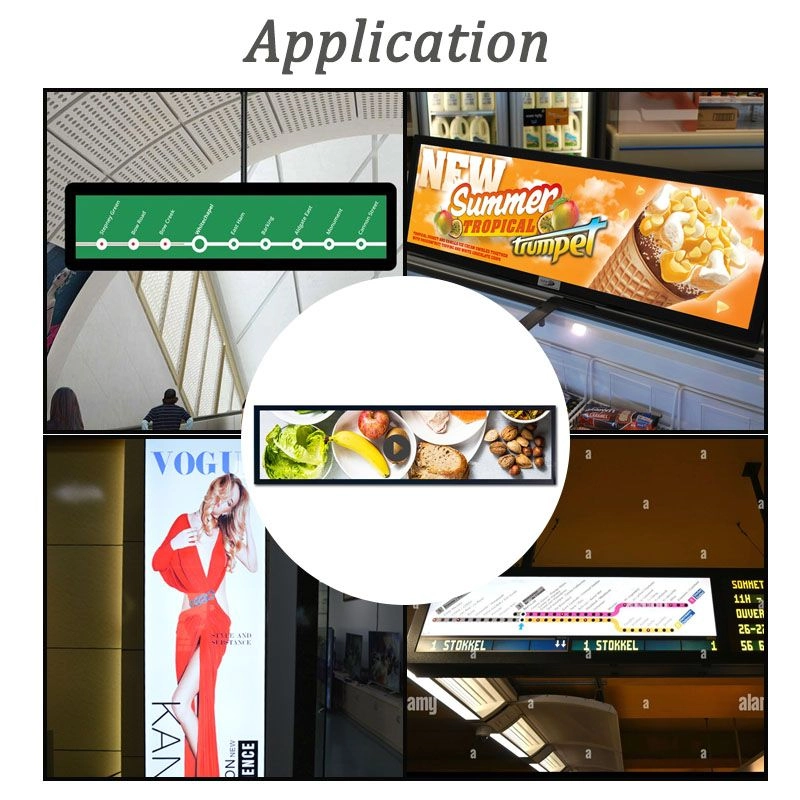
People also call these units ultra-wide displays, shelf-edge screens, or resizing LCDs. These special visual modules turn plain surfaces into active communication tools. They appear in tight spots such as the narrow headers inside subway cars or along the shelf edges in high-end boutiques. Bar LCDs make good use of every bit of commercial space.
Defining the Bar LCD Stretched Display
What is a Bar LCD Stretched Display?
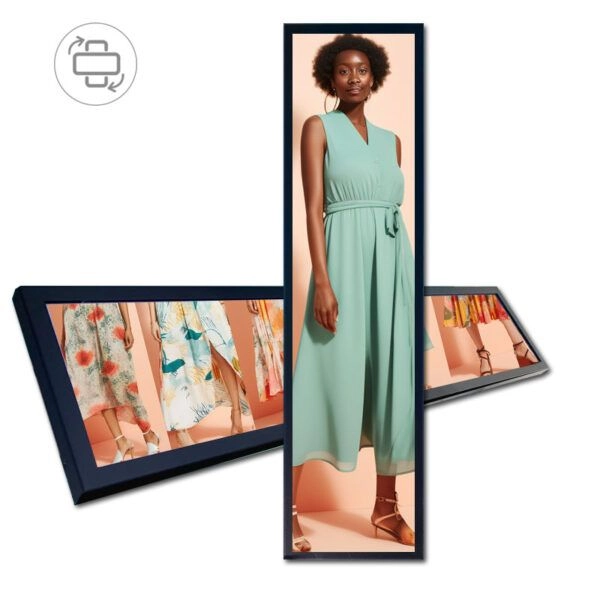
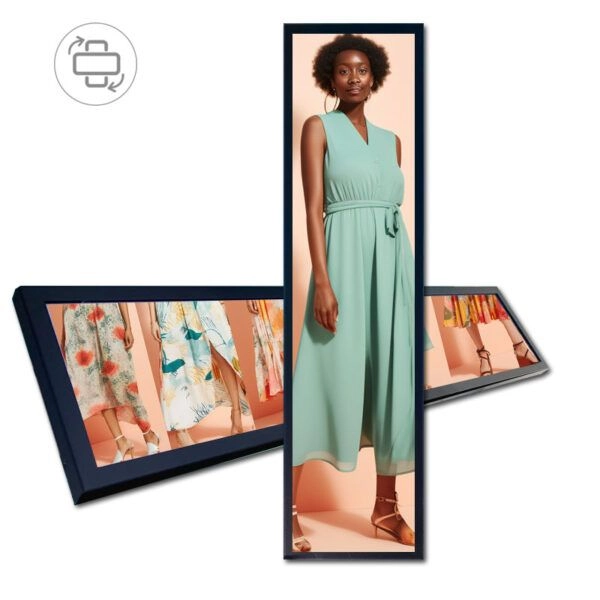
A Bar LCD Stretched Display is a liquid crystal display panel with an aspect ratio much wider than ordinary monitors. A typical consumer television uses a 16:9 ratio. In contrast, a Bar LCD comes with ratios such as 16:3, 32:9, or even more unusual formats like 58:9 or other extreme proportions.
Engineers design these displays to fit into long and narrow areas. A regular rectangular screen would not fit physically or would look out of place there. Even with their unusual shape, the units keep the main advantages of industrial TFT-LCD technology. They offer high color gamut, fast response times, and high resolution. The overall form looks like a strip or a bar.
Market Demand and Use Logic
Demand for these products has risen because of the attention economy. In busy public areas, people often overlook traditional billboards because of visual fatigue. Yet a high-brightness animated strip display set right on a supermarket shelf reaches the point of decision. It grabs consumer attention right away.
In industrial machinery, operators need wide views of data without a bulky square monitor that blocks their view.
Available sizes for stretched bar LCD products go from small options like 1.9 inch, 2.25 inch, and 2.86 inch up to bigger formats that include 19 inch, 24.3 inch, 36 inch, and 36.6 inch. Resolutions such as 1920×360, 1920×540, 2560×720, and 3840×1080 meet many different deployment needs.
Engineering Mechanics: Native vs. Cut Panels
Native Panel Manufacturing
It helps to know the manufacturing process before choosing a product. This knowledge affects durability and cost.
Method A uses native photomask manufacturing. The factory creates the glass substrate in the wide bar format from the beginning with advanced Gen lines. Workers lay out the internal circuits and thin-film transistors specifically for this aspect ratio at the start.
This way produces very stable performance with no chance of seal leakage. It also supports lower unit costs when orders exceed 10,000 units. Still, the initial tooling costs stay quite high. Only a few standard sizes become available.
Cut Panel (Resizing) Technology
Method B uses panel cutting technology, which people also know as resizing. Manufacturers start with a standard industrial panel. They apply precision laser cutting to slice it to the needed height.
The process cuts the glass substrate, seals the liquid crystals immediately to stop leakage, and redesigns the circuit board to control the remaining pixels. Good production applies industrial-grade UV adhesives on the cut edge. These adhesives block moisture and stop black spots from forming over years of use.
This method allows highly customizable sizes in which the height can be set exactly. It also works with lower minimum order quantities. The supplier must have strong sealing technology to guarantee long life and solid warranty support.
Special-shaped laser cutting handles round, square, triangle, or long strip formats. These options create higher commercial and industrial screen ratios with ultra-narrow frames.
Critical Technical Specifications for Buyers
Key Parameters to Evaluate
Buyers should pay close attention to certain specifications when they read a datasheet for a Bar LCD. These points matter more than they do for regular consumer electronics.
- Brightness levels usually sit between 300 nits and 1000 nits or even higher. Bar LCDs often go into brightly lit retail stores or semi-outdoor transport hubs. Standard 250-nit screens would look washed out in those places.
- Operating temperature ranges for industrial-grade units normally cover -20°C to +70°C. Some wider versions reach -30°C to +85°C. Consumer panels can fail and turn black under direct sunlight or high heat.
- Viewing angle performance requires IPS technology. Bar displays frequently get viewed from below on shelves or from sharp side angles in hallways. TN panels would show color inversion and make content hard to read.
- Interface protocols include LVDS, HDMI, MIPI, SPI, MCU, RGB/TTL, RJ45, RS-232, and USB. The non-standard EDID of the bar screen needs checking with the selected media player.
- Surface treatment with anti-glare coating becomes necessary in retail environments. It prevents reflections from overhead lights that could hide the content.
- Other choices include capacitive touch integration, cover glass, and custom backlights for better performance.
Strategic Industry Applications
Smart Retail and Shelf Edge Technology
The flexible nature of Bar LCD Stretched Displays lets them work well in smart retail environments. Dynamic pricing updates replace paper price tags across chain stores through ERP integration. Brand storytelling adds high-definition video advertisements for nearby products.
Split-screen functions show price information next to promotional content, improving both communication and sales conversion.
Public Transportation Systems
Public transportation passenger information systems gain from space-efficient designs. Stretched displays mounted above doors display dynamic route progress that updates through GPS.
Header ads create revenue when they take the place of static cardboard in ceiling areas. Wayfinding applications appear on narrow pillars or above counters in airports and stations.
Industrial HMI and Automation
Industrial HMI and automation environments use wide aspect ratios for broad views of production line schematics or data timelines. This arrangement improves operator reaction times and safety because it removes the need for horizontal scrolling on standard monitors.
Other Industry Scenarios
Other sectors include:
- Security monitoring and command centers
- Vehicle systems and transportation dashboards
- Exhibitions and digital signage
- Education and enterprise environments
- Gaming and casino applications
Ultra-wide formats deliver targeted information in tight spaces and improve user engagement.
Content Management & Software Configuration
Resolution and Signal Matching
Hardware makes up only part of the solution. Integrators often face difficulty when they create content for these non-standard shapes.
Resolution management means setting media players to output the exact native resolution and EDID of the panel, such as 1920×360 or 2560×720. Standard 1920×1080 signals would otherwise squeeze or distort the image.
Professional digital signage CMS platforms allow custom canvas sizes set pixel by pixel.
Zoning and Layout Optimization
Zoning and split-screen techniques take full advantage of the extra width. A wide bar display can split into several zones.
One section might handle branding, another might show local information, and a third could run scrolling tickers. This approach increases information density without creating visual clutter.
Installation, Thermal Management & Cabling
Thermal Considerations
Putting a Bar LCD in place involves different steps from mounting a standard television.
High-brightness backlights that reach 700 nits or more create noticeable heat. In small enclosures such as shelf edges, heat can build up and harm components.
Good practices include passive airflow vents, aluminum chassis that work as heatsinks, or active cooling fans for outdoor or heavy-use units.
Mounting and Mechanical Integration
Mounting standards differ based on size and application.
- Larger Bar LCDs may use VESA-compatible options
- Smaller shelf-edge strips often rely on side mounting brackets or magnetic strips
These methods ensure flexibility in installation.
Cabling and Power Design
Cabling requires careful selection of harnesses that support the chosen interfaces. Custom cable lengths and connector positions help fit specific enclosures.
Driver boards, also called AD boards, usually come in the kits. They require only power input, often 12V or 24V DC, and video signal connections.
Procurement Guide: Customization & MOQ
Standard vs Custom Solutions
Standard sizes versus custom sizes affect lead times and costs. Industry-standard cut sizes allow quicker delivery, usually within 2–3 weeks.
For exact dimensions that match particular machinery or enclosures, custom cuts become possible. These often require minimum order quantities of 50–100 units and longer lead times for tooling and validation.
Key Customization Factors
Buyers should consider several customization aspects:
- Mechanical drawings to confirm active area and outline dimensions
- Bezel width for enclosure compatibility
- Touch screen integration, especially PCAP technology
- High brightness tuning for specific environments
- Ultra-narrow frame designs
- Optical bonding for improved durability and readability
- Interface modifications for system compatibility
- Conformal coatings for harsh environments
Frequently Asked Questions (FAQ)
Q1: Can a standard PC drive a Bar LCD Stretched Display?
Yes. Graphics cards that allow custom resolution settings through control panels can drive these displays via HDMI, DisplayPort, or other compatible interfaces. The EDID must receive correct handling.
Q2: What is the expected lifespan of a Stretched LCD?
Industrial-grade Bar LCDs usually provide backlight lifespans of 50,000 hours to half-brightness. This time equals roughly 5–6 years of continuous 24/7 operation. Actual results depend on usage conditions and brightness settings.
Conclusion
As a leading TFT LCD display manufacturer and supplier specializing in custom industrial and medical solutions, Miqidisplay delivers one-stop ODM/OEM services backed by over 20 years of expertise, ISO-9001, ISO-14001, and TS-16949 certifications, and rigorous quality controls. The company’s stretched bar LCD portfolio, featuring sizes from compact 1.9-inch to large 36.6-inch formats with high-brightness IPS panels, wide temperature ranges, and flexible interfaces, supports precise project requirements through advanced laser cutting, touch integration, and tailored engineering.
Contact the Miqidisplay engineering and sales team today to discuss custom Bar LCD Stretched Display solutions that align with specific project specifications, volumes, and performance targets.