





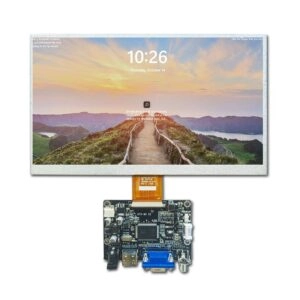
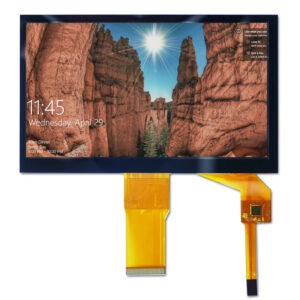


Selecting the right TFT LCD display creates real challenges for engineering and procurement teams that work on embedded systems. These screens find wide use in automotive dashboards, industrial human-machine interfaces, outdoor information terminals, and medical equipment. Not every project needs the highest temperature tolerance or the most advanced specifications. In many cases, a well-matched standard display gives the same reliability and performance.
With the growing use of devices in tough conditions, clear separation between standard and wide temperature TFT LCDs becomes very important.
Why Temperature Matters in TFT LCD Displays
Temperature has a strong effect on many layers of display performance. Even small changes in the environment can change key measurements and shorten the working life.
Liquid Crystal Response and Behavior
In low-temperature conditions, liquid crystal viscosity rises a lot. This slows molecular reorientation. The result includes image ghosting, delayed refresh rates, and slow interface responsiveness. At high temperatures, material stability drops. This can cause contrast changes, image retention, and faster aging of the liquid crystal layer.
TFT Backplane Characteristics
The TFT backplane sees lower carrier mobility in cold settings. This limits effective pixel charging and driving ability. In hot conditions, threshold voltage drift, higher leakage currents, and steady material wear reduce image quality and long-term uniformity.
Backlight Unit Efficiency
LED backlights show lower efficiency at sub-zero temperatures. They also experience faster lumen loss under long heat. Without good thermal design, brightness differences appear. These differences affect readability in important viewing situations.
Overall System Reliability Impact
Display performance has a direct link to connected control systems. In automotive instrument clusters or factory-floor HMIs, slow response or visual problems can add to operational errors or safety issues.
Standard TFT LCDs give enough performance for most climate-controlled indoor uses. Wide temperature variants mainly handle environments with thermal extremes or fast cycling.
Standard vs Wide Temperature TFT LCDs
Careful choice of TFT backplane technology balances cost, function, and durability across applications.
Common TFT Backplane Technologies
Amorphous silicon (a-Si) provides cost-effective manufacturing, wide availability, and reliable basic performance for general industrial panels. Limits appear under thermal stress through reduced mobility and slower switching.
Low-temperature polysilicon (LTPS) supplies high electron mobility. It supports faster response times and higher resolutions that fit detailed visuals in demanding interfaces.
Indium gallium zinc oxide (IGZO) has low leakage, strong temperature stability, and lower power consumption. These features make it helpful for long operation and energy-sensitive designs.
Hybrid LTPS/IGZO architectures join high mobility with low leakage. They deliver balanced speed, efficiency, and thermal resilience for advanced automotive and industrial wide temperature uses.
The best technology matches directly with specific mobility, power, and stability needs instead of defaulting to the widest temperature rating.
When Wide Temperature Displays Are Useful
Wide temperature TFT LCDs target deployments that face big thermal variation. Typical operating ranges extend from -30°C to +80°C or +85°C. They also include related storage capabilities.
Automotive Applications
Vehicle dashboards and center consoles must keep responsiveness and visibility. This holds true when vehicles sit in freezing winter conditions or strong summer heat. Stable performance prevents information loss and driver distraction across seasonal extremes.
Industrial HMI Deployments
Factory panels and outdoor production equipment meet high ambient heat from machinery, direct sunlight, or seasonal cold. Reliable operation cuts downtime. It also supports continuous process control.
Outdoor and Rugged Terminals
Public information kiosks, marine navigation units, and certain defense systems face year-round weather shifts. These include rapid day-to-night temperature changes. Additional features such as anti-vibration and anti-EMI shielding improve overall robustness.
Medical and Portable Devices
Field-deployed imaging or monitoring equipment experiences unpredictable thermal profiles. Consistent display behavior ensures accurate data presentation in mobile clinics or emergency settings.
While wide temperature solutions involve higher investment, controlled indoor environments gain little extra benefit. These settings favor standard modules for cost efficiency.
Key Considerations When Selecting a TFT LCD
Project teams review many connected parameters to reach compatibility and long-term value.
Operating Temperature Range
Exact definition of minimum and maximum expected conditions, including possible thermal gradients or cycling rates, decides the need for standard or wide temperature classification.
Brightness and Sunlight Readability
Outdoor or high-ambient-light installations need configurations that reach 700 to 1200 nits. These often pair with surface treatments or high-brightness LED arrays. The goal is to keep legibility against glare.
TFT Technology Selection
Choices among a-Si, LTPS, IGZO, or hybrid options weigh electron mobility, power budgets, and thermal behavior against project priorities.
Power Consumption and Thermal Management
Temperature-compensated drivers, efficient LED selection, and optimized layouts help keep uniform brightness. They also prevent internal hotspots.
Compliance and Certification Requirements
Automotive, industrial, or medical-grade projects often need relevant standards verification. This includes reliability testing under accelerated thermal conditions.
Interface and Resolution Matching
Options such as RGB/TTL, LVDS, or MIPI influence integration complexity, data throughput, and electromagnetic compatibility. Resolution selection matches content detail and typical viewing distances.
Long-Term Aging Considerations
Review of LED and TFT aging characteristics inside the planned temperature envelope supports accurate forecasting of maintenance intervals and total cost of ownership.
Material and Component Engineering for Thermal Resilience
Advanced material selections greatly improve wide temperature performance beyond basic ratings.
Liquid Crystal and Alignment Layer Improvements
Specialized mixtures keep lower viscosity across broad ranges. This minimizes cold-start delays. High-purity alignment layers reduce charge trapping. The trapping contributes to image retention at temperature boundaries.
Backlight and Driver Enhancements
Wide-temperature-rated LEDs with strong phosphor formulations pair with driver circuits. These circuits include real-time temperature sensing and adaptive current control. They preserve color point and luminance stability under varying conditions.
Mechanical and Protective Features
Reinforced bonding techniques and stable polarizers prevent delamination under combined thermal-mechanical stress. Integrated EMI shielding and anti-vibration designs further support signal integrity in noisy vehicular or industrial settings.
Testing and Validation Protocols for Wide Temperature TFT LCDs
Rigorous validation makes sure modules meet published specifications with enough margins.
Thermal Cycling and Operational Testing
Hundreds or thousands of transitions between extremes show hidden defects in materials or interconnections. Boundary-condition testing checks response time, contrast ratio, and viewing angle retention.
Uniformity and Power Profiling
Brightness uniformity measurements across the temperature spectrum detect possible variations from backlight or liquid crystal behavior. Power consumption profiling confirms operation stays within system budgets during compensation activation.
Accelerated Life and Mechanical Validation
Combined temperature-humidity exposure predicts field longevity. Drop, vibration, and shock tests confirm structural integrity for mobile or vehicle-mounted implementations.
Integration Challenges and System-Level Optimization
Successful deployment goes beyond module selection to full system considerations.
Mechanical and Electrical Integration
Cable routing, connector choices, and enclosure design must handle thermal expansion differences. The goal is to avoid stress points. Conformal coatings or potting compounds sometimes protect against condensation during rapid transitions.
Software and Firmware Compensation
Gamma correction or color temperature lookup tables based on internal sensors keep visual consistency. Monitoring functions enable predictive maintenance alerts in connected industrial or automotive platforms.
Power Supply Stability
Wide-input regulators with enough decoupling prevent voltage fluctuations. These fluctuations could appear as flickering or artifacts at temperature extremes.
Optimizing TFT LCDs for Extreme Conditions
Targeted design refinements maximize performance even in premium wide temperature modules.
Cold-Start Enhancements
Low-viscosity formulations combined with brief auxiliary voltage boosting or heating elements restore acceptable response times quickly during initialization.
High-Temperature Stabilization
Efficient LED selection, precision drivers with thermal feedback, and optimized stack-up designs dissipate heat well. They also preserve optical quality.
Hybrid Architecture Benefits
LTPS/IGZO hybrids deliver responsive visuals along with extended thermal margins. They suit both automotive clusters and rugged industrial panels.
Thermal Management Approaches
Passive solutions include metal frames, graphite sheets, or heat-spreading layers. Active elements such as small fans or thermoelectric devices apply in sealed enclosures where needed. Layout optimization balances airflow with dust protection.
Common Misconceptions About Wide Temperature TFT LCDs
Several assumptions can lead to poor selections.
Wide operating ranges do not automatically guarantee faster response or higher brightness in moderate conditions. Performance depends on underlying technology and specific optimizations.
Indoor or stable-environment projects rarely gain enough from wide temperature construction to justify the cost premium.
Power consumption profiles sometimes favor standard displays in benign settings. Compensation circuitry in wide variants introduces minor overhead without proportional gains.
FAQ
Q: Why does LCD response slow in cold conditions?
A: Increased liquid crystal viscosity at low temperatures slows molecular alignment changes required for image updates. Specialized formulations help mitigate this effect.
Q: Which TFT technology suits automotive applications best?
A: LTPS or LTPS/IGZO hybrid architectures provide strong mobility and thermal stability. Final selection balances cost, power consumption, and interface requirements.
Q: How is LED backlight performance preserved across temperature extremes?
A: High-efficiency LEDs, adaptive driver circuits, robust thermal paths, and occasional active cooling maintain consistent output and color accuracy.
Conclusion
As a leading display manufacturer and supplier with over 20 years of OEM/ODM expertise, Miqidisplay provides one-stop wide temperature TFT LCD solutions engineered for demanding environments. The company supports custom modules with operating ranges such as -30°C to 85°C, high-brightness options up to 1200 nits for superior sunlight readability, diverse interfaces including LVDS and MIPI, and integrated features like capacitive touch or optical bonding.
Business that need reliable wide temperature TFT LCD modules or fully customized display subsystems benefit from Miqidisplay’s rapid project review. This review often delivers tailored solution frameworks within 48 hours. It also includes end-to-end engineering support from specification through volume production and after-sales service. Contact the dedicated sales and technical team via email or WhatsApp for detailed quotations, technical consultations, and prototyping assistance on automotive, industrial, medical, or outdoor display projects.