






I. Introduction
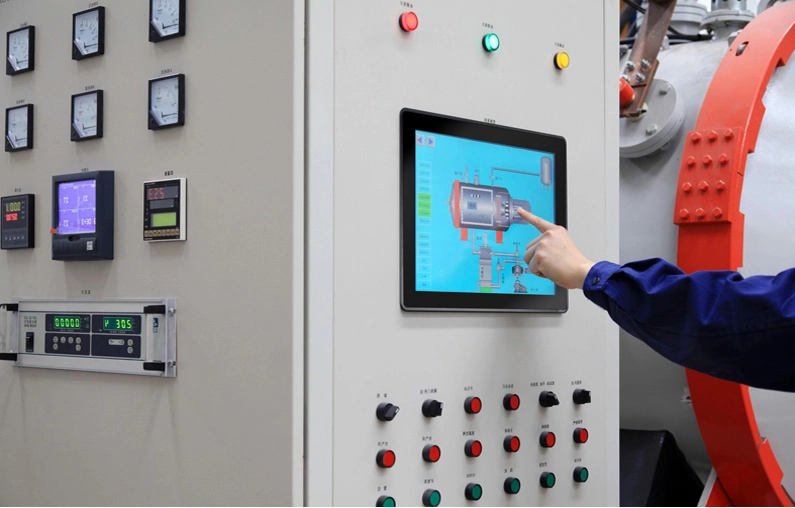
An industrial panel PC is a special all-in-one computer. It mixes a touchscreen display with a built-in computer system. These devices work well in tough places. They handle dust, water, shakes, and very hot or cold temperatures. Unlike regular home computers, industrial panel PCs keep running without problems. They form a key part of factory work, process control, and human-machine interfaces (HMI).
Choosing the right industrial panel PC matters a lot. It gives steady work in hard conditions and makes setup easier. Companies depend on these tools for clear data views, smooth machine checks, and quick process handling.
By picking a good industrial touch PC, companies boost system uptime, make equipment last longer, and gain better returns over time. This helps in fields like manufacturing, transport, and food processing.
II. Typical Applications & Use Cases
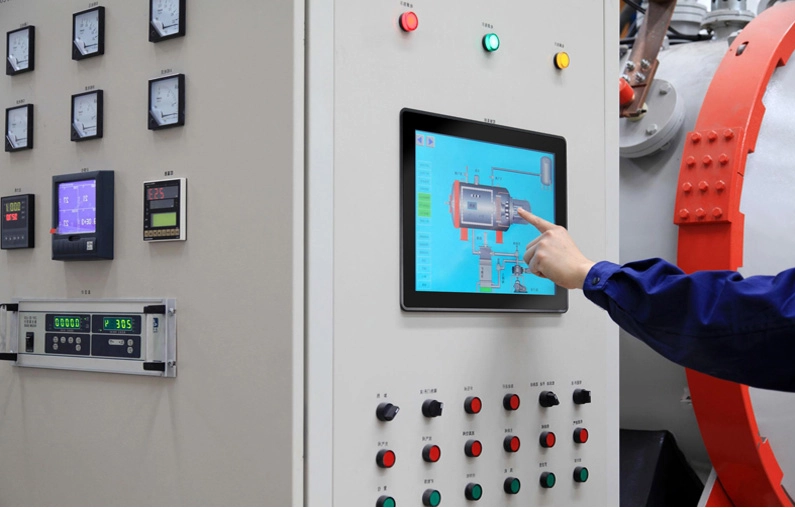
Industrial panel PCs act as the main support in many automation and control setups. Their strong build, touch screen, and no-fan design make them fit for factory floors and outdoor jobs.
A. Industrial Automation and Manufacturing
In today’s smart factories, panel PCs work as human-machine interfaces (HMIs) for SCADA systems. Operators watch production lines live, run machines with quick-response touch panel PCs, and gather data from sensors. This helps with predictive maintenance. These tools connect easily with PLC controls, robots, and MES platforms. They play a big role in Industry 4.0 and the growing Industry 5.0 efforts.
B. Applications in Harsh Environments
Rugged industrial panel PCs handle tough spots well. For marine settings, they use corrosion-proof stainless steel housings with IP66/IP69K ratings and bright displays for sunlight. In vehicles, vibration-proof units meet MIL-STD-810G standards. They suit trucks, forklifts, and mining machines. In food and beverage plants, sealed and easy-to-clean models have resistive or capacitive touchscreens. For outdoor kiosks and energy sites, they offer wide temperature work and clear screens. This fits oil and gas, wind farms, and solar plants.
C. Extended Industrial Use Cases
Outside normal automation, industrial touchscreen PCs appear in healthcare for medical imaging and digital stations. They also work in retail kiosks for tickets, sales, and self-service. Transport hubs use them for timetable displays and passenger info.
Industrial panel PCs adjust to many settings. They bring efficiency, steady work, and real-time control that normal PCs cannot match.
III. Key Selection Criteria for Industrial Panel PCs
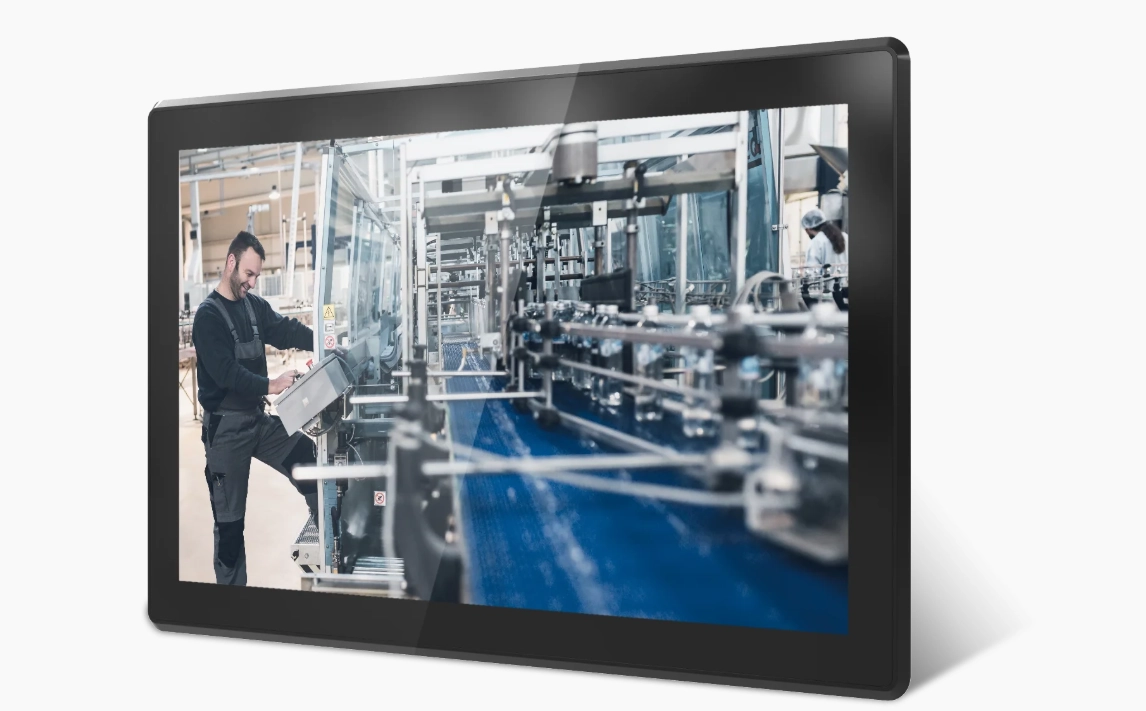
Picking the best industrial panel PC needs careful checks on strength, speed, screen tech, connections, and shape. This ensures it lasts in tough places and works well for a long time.
A. Robustness and Environmental Protection
Important features include strong protection against dust and water. IP65 and IP66 cover dustproof and waterproof cases. IP69K handles high-pressure cleaning in food and pharma work. Shock and vibration resistance follows MIL-STD-810G for moving uses. Fanless cooling uses passive heat sinks. This cuts failure risks in dusty spots.
B. Performance and Hardware Specifications
Speed decides how well it manages industrial tasks. CPU choices go from Intel Celeron and Atom for basic needs to the latest Intel Core i5/i7 or newer embedded chips made for 2026 jobs. Memory offers scalable DDR5 up to 64 GB or more. Storage uses fast NVMe SSDs for shock-proof work and speed. RAID adds backup. Upgrade options allow modular builds with PCIe slots for extras.
C. Considerations Regarding the Display
The screen is the main way operators interact. Sizes start from small 7-inch HMIs to big 27-inch ones. Resolution goes from Full HD to 4K and higher. Touch types include resistive screens for glove use and low cost, or projected capacitive for smooth multi-touch. Brightness over 1000 nits with anti-glare coating helps in bright light. Wide-angle views make it easier to see.
D. Connectivity and Extensibility
Linking to old and new IIoT systems needs many ports. These include RS-232/485, several USB 3.2/4.0, dual Gigabit Ethernet, and HDMI/DisplayPort. Wireless choices cover Wi-Fi 6E, Bluetooth 5.3, and 5G add-ons. Expansion slots support GPU cards, fieldbus links, or custom parts.
E. Assembly and Form Factor Options
Options provide flexibility. Panel mounting fits control cabinets. VESA mounting works on walls or arms. DIN rail suits automation boxes. Open frame designs help OEM builds.
IV. Design Alternatives: Panel PC vs. Box PC + Touchscreen
Companies often compare all-in-one panel PCs with box PCs plus separate industrial displays.
A. Advantages of Panel PCs (All-in-One)
Panel PCs combine touchscreen and hardware in one box. This saves space, simplifies setup, gives solid IP65/IP66 protection, and uses fanless cooling. They fit HMI, SCADA terminals, kiosks, and operator stations.
B. Advantages of a Box PC + Touchscreen Display
This setup allows high speed with the latest Intel Core or Xeon processors and separate GPU options. It makes maintenance easier, allows more customization, and scales well. It suits machine vision, AI work, and heavy data tasks.
V. Industry-Specific Recommendations and Scenarios
Industrial panel PCs meet special needs in different fields.
A. Marine and Aquatic Environments
Rugged units with IP66/IP69K protection fight saltwater rust. They work in wide temperatures and have bright touchscreens for ship navigation and offshore platforms. Washdown-ready models fit food and beverage processing.
B. Vehicle and Mobile Applications
Vehicle-mounted panel PCs need shock and vibration resistance (MIL-STD-810G). They take wide voltage input (9–36 V DC), use fanless cooling, and add 5G/GPS/Wi-Fi. This helps logistics, mining, and construction.
C. Energy, Outdoor Areas, and Harsh Industrial Sites
Sunlight-readable panels with optical bonding and anti-glare glass handle wide temperatures (-20°C to +70°C or more). They fit oil and gas, wind farms, and solar plants. This allows steady data views and remote checks.
VI. Leading Manufacturers and Market Participants
The industrial panel PC market has global and focused suppliers.
A. World Market Leaders
Advantech provides wide IP65 options for automation. Siemens works well with PLC/SCADA systems. Others focus on modular embedded computing and strong control setups.
B. Miqidisplay: Up-and-coming Brand for Industrial Panel PCs
Miqidisplay offers rugged industrial panel PCs with fanless builds, capacitive touchscreens, and the latest Intel processors like Celeron J6412, i5-8260U, or newer embedded series. Sizes go from 10.4 to 27 inches. They support tough environments with reliable all-weather, EMI-resistant work. This fits industrial automation, healthcare, finance, education, gaming, home automation, retail, and transportation.
C. Market Comparison Overview
Manufacturers stress wide product lines, easy integration, modular computing, high-performance control, and strong, flexible, cost-effective solutions for specific industries.
VII. Advantages of Panel PCs
Industrial panel PCs bring clear benefits over standard systems.
A. Space Efficiency and Integration
Compact cases cut cabinet space, reduce wiring, and make installation simple.
B. Robustness and Reliability
Sealed boxes, fanless cooling, and wide temperature work ensure steady performance in tough places.
C. IIoT and Connectivity Benefits
Many ports and wireless options allow smooth IIoT links for real-time data and predictive maintenance.
D. Advantages of Miqidisplay Industrial Panel PCs
Miqidisplay provides strong, fanless designs with capacitive touch, custom options, and reliable work for many uses.
VIII. Buying and Selection Process
A clear method helps ensure the right fit.
A. Step-by-Step Selection Guide
Check the environment for IP ratings. Define speed needs. Pick display features. Look at connections. Choose mounting. Review vendor support.
B. Miqidisplay Advantage
Miqidisplay makes selection easy with strong, fanless designs, flexible customization, and good value.
FAQ
What is the difference between resistive and capacitive touchscreens in industrial panel PCs?
Resistive touchscreens work with gloves and last long in tough places. Capacitive gives multi-touch ease and a smoother feel.
Why choose fanless industrial panel PCs?
Fanless builds stop dust buildup and moving parts. This boosts reliability in dusty or shaky areas.
How do industrial panel PCs support Industry 4.0 and 5.0?
They join with SCADA, MES, and IIoT spots for now watch, data check, guess care, and new human-machine team.
What screen sizes are common for industrial panel PCs in 2026?
Sizes go from 7-10 inches for small HMIs to 21-27 inches for full show and guide.
Partner with a Leading Manufacturer and Supplier for Custom Industrial Panel PCs
As a professional manufacturer, supplier, and factory of industrial displays and panel PCs, Miqidisplay offers high-quality, customizable solutions tailored to demanding industrial needs. With over 20 years of experience, OEM/ODM services, and a focus on rugged, reliable performance, Miqidisplay supports businesses worldwide in automation, harsh environments, and beyond. Contact the team today at mary@miqidisplay.com or WhatsApp +86 188 7965 2960 to request a quote, discuss custom specifications, or explore how Miqidisplay’s industrial panel PCs can optimize operations. Get in touch now for expert guidance and fast delivery.