






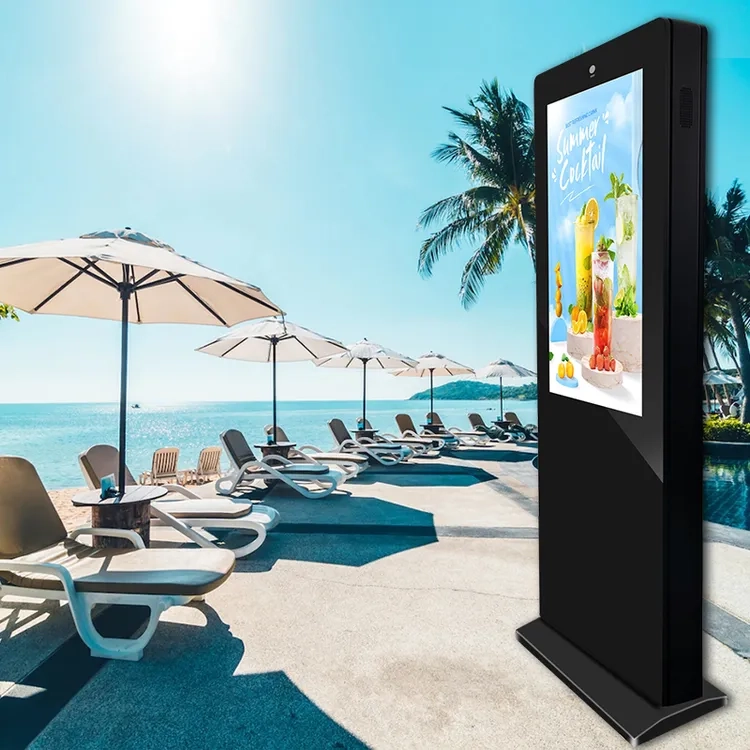
Sunlight ruins screens. Not in a real killing way, but it turns them hard to see. Faded. Useless. Screens placed outside shops, drive-thrus, or busy public areas frequently look dull or impossible to read during the day. This happens even if the equipment works fine inside. The main problem comes from using indoor-type panels in outdoor spots. People forget about strong natural light, high heat, and annoying reflections.
Lots of setups break down. Choices focus too much on low price instead of specs made for changing light conditions. When the picture gets hard to view, nobody notices the messages. Attention drops. Engagement falls. Returns shrink. This piece looks at why so many outdoor screens struggle in sunlight. It also gives practical fixes based on real engineering.
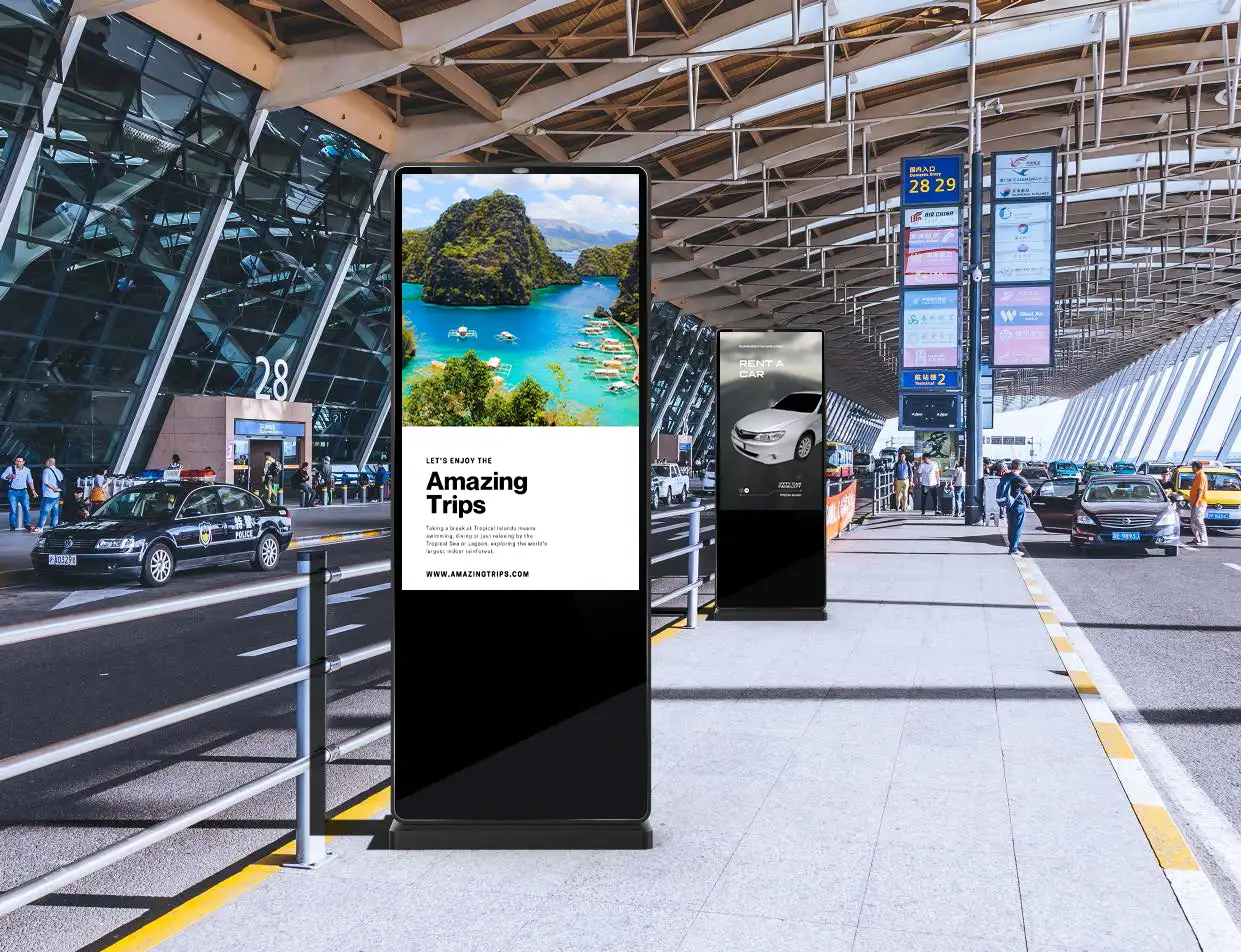
Why Most Outdoor Screens Fall Apart Under Sunlight
Sunlight causes most problems, not rain or wind. Strong daylight overpowers regular displays. Those units were never built for this kind of exposure. Plenty of panels marked “outdoor-ready” actually start as indoor ones. They get only small changes.
The Brightness Isn’t Built In
Brightness stands as the basic need for outdoor viewing. Indoor screens usually hit 300–500 nits. Many business models reach just 700–1,000 nits. Direct sun creates ambient light over 100,000 lux. Anything under 1,500 nits becomes almost invisible. Anything below 2,500 nits does not work well.
Perceived brightness drops fast. High surrounding light overpowers the light from the screen. Contrast gets weak without enough power. Things like HDR or bright colors mean little without strong enough light output.
Choose real high-brightness panels. They should give 2,500–4,000 nits steadily. Look for steady results across different temperatures. Some dim when hot. Long-term performance counts. Some panels drop 25–30% brightness in the first year.
Anti-glare ≠ Sunlight Readable
Matte or simple anti-glare surfaces spread reflections in normal light. But they scatter light and cut contrast in very bright sun. Such finishes often have air gaps between layers. This leads to inside reflections, parallax issues, and blurry edges.
Good sunlight readability needs optical bonding. It removes air gaps and cuts internal reflections. High-transmittance panels, UV/IR-blocking layers, and low-haze anti-reflective glass (2–5%) keep the picture clear. They also handle glare better.
Thermal Failure Kicks In Fast
Sun heat pushes inside temperatures way above normal air. It often goes past 70°C in bad enclosures. Electronics built for 40–50°C start to dim. Parts wear out faster. Thermal shutdowns happen. Backlights age quickly.
IP65 ratings guard against water. But they skip heat handling. Look for high T-case ratings. Use passive cooling like heat pipes or vapor chambers. Add active fans with variable speed. Include pressure-equalized builds to deal with expansion and stop moisture problems.
Specs Can Mislead
“Outdoor-rated” has no fixed meaning. It lets loose claims slip through. Panels might show IP ratings that ignore heat. Or 1,000-nit levels good only in shade. Or simple matte films called anti-reflective by mistake.
Check real measured full-field brightness under load. Look at operating temperature limits. See uniformity too. Note features such as optical bonding or UV resistance. Data from actual field tests shows true results. It goes past sales talk.
Why Brightness Decides Whether a Screen Succeeds or Disappears
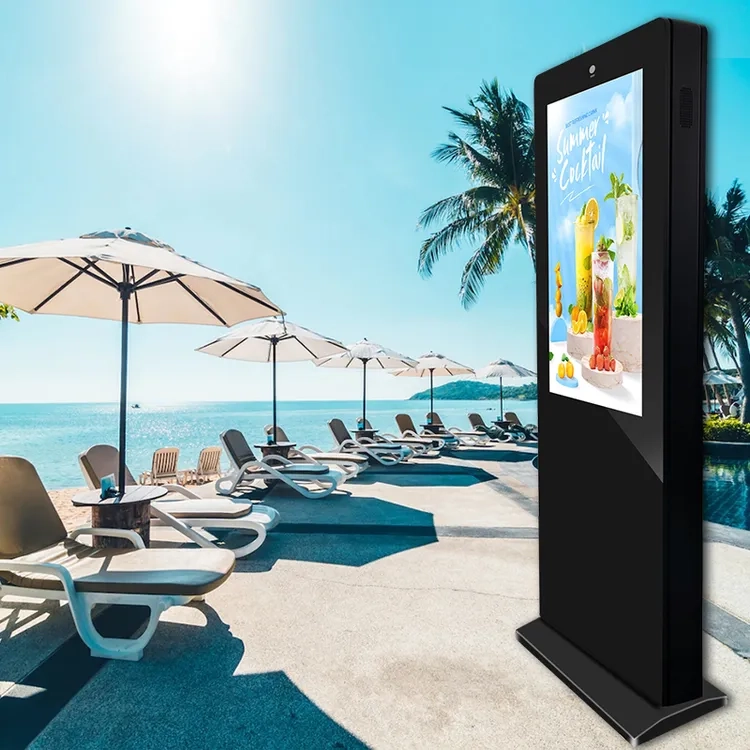
Brightness forms the main base for outdoor success. Not enough light stops content from standing out against daylight, reflections, and glare. Quality does not help here.
If You Can’t See It, It Doesn’t Matter
Content might run on perfect timing. Yet midday sun wipes out the messages. Promos, menus, and alerts turn unreadable. They lose purpose in places like retail, transit, or public info spots.
Brightness Is More Than a Number
Nits show output. But things like viewing angle, reflections, heat dimming, and aging change real results. Steady brightness across the whole screen, without heat cuts, marks the good displays.
Low Brightness Causes Downstream Failures
Hard-to-see screens cut engagement, sales, and ad worth. People blame content or timing. But the real issue stays.
Why People Get it Wrong
Building strong brightness costs extra. So many stop at levels fine only in shade. Sellers push enclosures or easy fit. They miss that no add-on fixes weak light in full sun.
How the Wrong Display Drains Budgets and Damages Trust
Bad visibility adds costs past the hardware. Money spent on content brings nothing when screens fade. Ad results drop. Budgets move away. Customers get annoyed by hard-to-read info. This adds work for staff and strains operations. Brand image suffers. Poor public displays suggest weak planning and low quality.
How to Pick a Display That Stays Visible in Direct Sunlight
Picking focuses on design for wild light and weather. Sunlight tests hardware hard. Wrong specs lead to breakdown.
Start With the Right Brightness Threshold
Use at least 1,500–2,000 nits for shaded spots. Go to 2,500 nits for direct sun. Pick 3,000–4,000 nits in high-glare areas. Require steady full-field output. Look for low drop over time. Check thermal stability too.
Demand Anti-Reflective and Optically Bonded Glass
Optical bonding cuts reflections under 1%. Multi-layer AR coatings hit visible light. Low haze keeps things sharp. Surface hardness (6H+) fights scratches.
Check Heat Resistance and Thermal Design
Look for 50–55°C steady work. Higher survival is better. Smart dimming, passive or active cooling, and good thermal parts stop hot spots.
Use Enclosures That Work With — Not Against — The Screen
Good airflow, matching protective glass, IP56+ ratings, and easy upkeep boost results. Right mounting keeps sensors and heat paths clear.
Don’t Skip Environmental Durability
Add UV resistance, water-repelling coatings, corrosion protection, and IK10 impact ratings. These help life in open places.
Why Screen Brightness Means Nothing Without Software Control
Hardware gives viewability. Control systems keep it steady. Scheduling, remote control, monitoring, and backup keep things running. Special media players manage high-res loops well. They support preloading and checks for smooth work.
How to Bring a Fading Outdoor Screen Back to Life
Not every problem needs a full swap. Check brightness settings and sensor setup first. Wrong adaptive controls often hold back output. Look at how enclosures affect air and optics. Adding AR-bonded glass or better vents can bring back performance. Upgrade players for stronger content control. Shift position to cut glare angles with light studies. If changes do not last, get expert help. It finds root causes quickly.
Get Outdoor Signage That Holds Up When the Sun Comes Out
Sunlight shows weak design fast. It costs viewability and money. Main points include focusing on steady high brightness, optical bonding, thermal control, and full system fit. Good choices stop failures. Smart fixes help current setups last.
Miqidisplay stands as a leading manufacturer, supplier, and factory specializing in high-brightness sunlight-readable TFT LCD displays. With over 20 years of OEM/ODM experience, the company delivers panels from 500 to 1200 nits (and customizable higher), wide temperature ranges (-30°C to 85°C in many models), IPS technology for superior contrast, and options like optical bonding or AR coatings. Products suit outdoor applications, including vehicle displays, industrial HMIs, and high-ambient-light signage. Certified to ISO-9001, RoHS, and more, Miqidisplay provides tailored solutions with global support.
Partner with a Trusted Sunlight Readable Display Manufacturer
Manufacturers, suppliers, integrators, and system builders seeking reliable high-brightness displays for outdoor digital signage should contact Miqidisplay. As a dedicated factory and supplier, the company offers custom sunlight-readable TFT LCD panels, engineering support, and fast delivery for OEM/ODM projects. Reach out via email at mary@miqidisplay.com or sale@miqidisplay.com, phone at +86 138 2318 1658 / +86 188 7965 2960, or WhatsApp at +86 188 7965 2960. Submit inquiries through the website form for prompt response on specifications, samples, or bulk requirements.
FAQ
What brightness level is required for direct sunlight outdoor digital signage?
At least 2,500 nits sustained output ensures visibility; 3,000–4,000 nits performs best in high-glare conditions.
Why do anti-glare coatings alone fail in sunlight?
Basic matte finishes scatter light and reduce contrast; optical bonding and AR coatings are essential to eliminate reflections and preserve sharpness.
How does heat affect outdoor displays?
Solar loading raises internal temperatures, causing throttling, degradation, or shutdowns. Wide-temperature panels and effective cooling mitigate this.
Can existing underperforming screens be fixed without full replacement?
Yes — recalibrate sensors, retrofit enclosures with bonded AR glass, upgrade players, or adjust angles to restore visibility in many cases.
What makes a display suitable for long-term outdoor use?
High sustained brightness, optical bonding, UV/IR protection, wide temperature tolerance, and robust enclosures ensure durability and performance.