




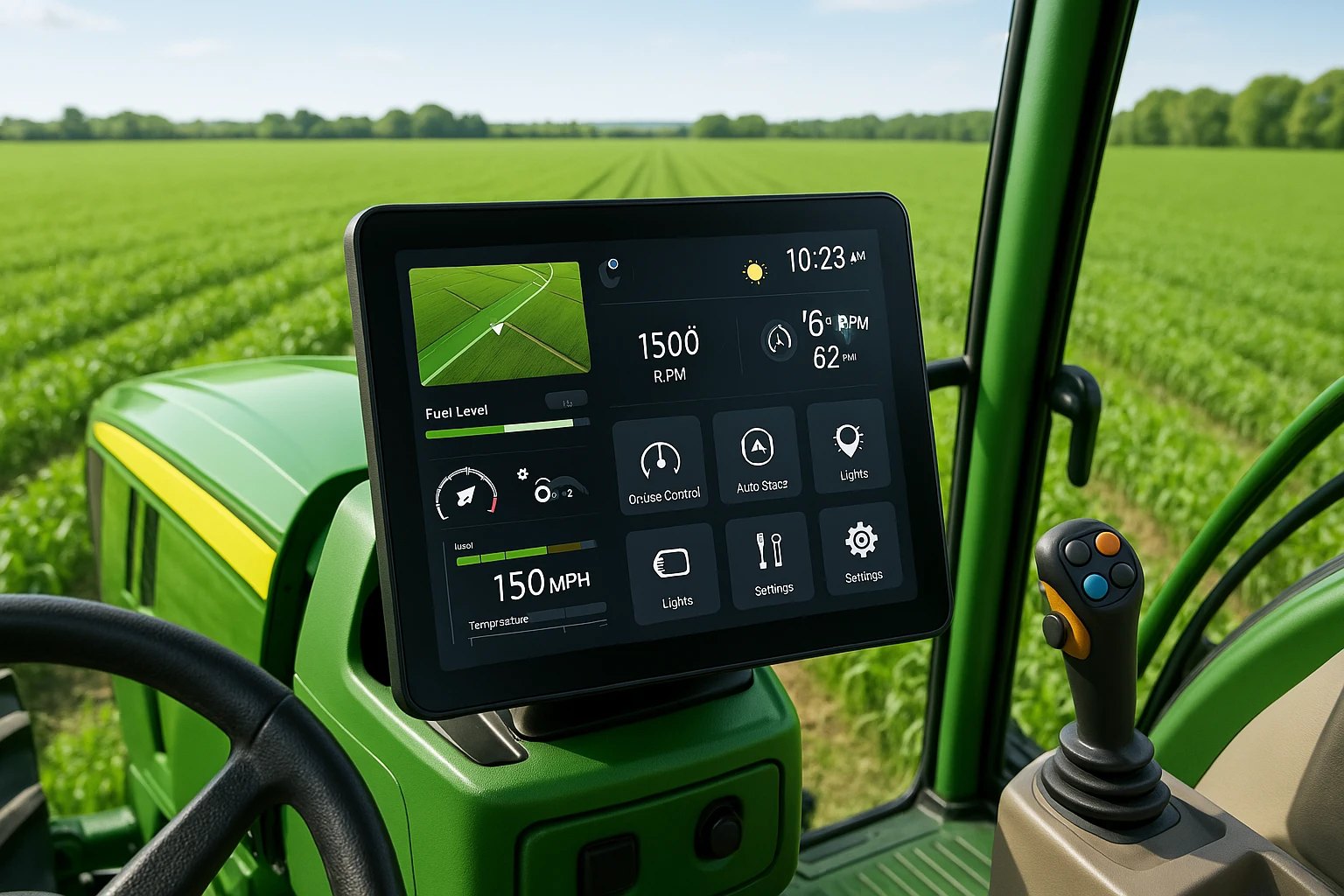
Current tractors and combine harvesters show complex tech bases. They stand well away from their old mechanical forms. These machines work as moving data points, exact control centers, and key links for operators. The operators try to better crop amount, work speed, and resource use in exact farming. For design engineers who build these systems, the display acts as a vital human-machine interface (HMI). This interface shapes work results in hard field spots.
Old display techs, such as black-and-white letter LCDs, split readouts, and simple picture panels, once met needs for basic measures like engine RPM or ground speed. But today’s needs ask for much better options. These options must deal with full picture data, live sensor inputs, GPS path overlays, and hard diagnostics.
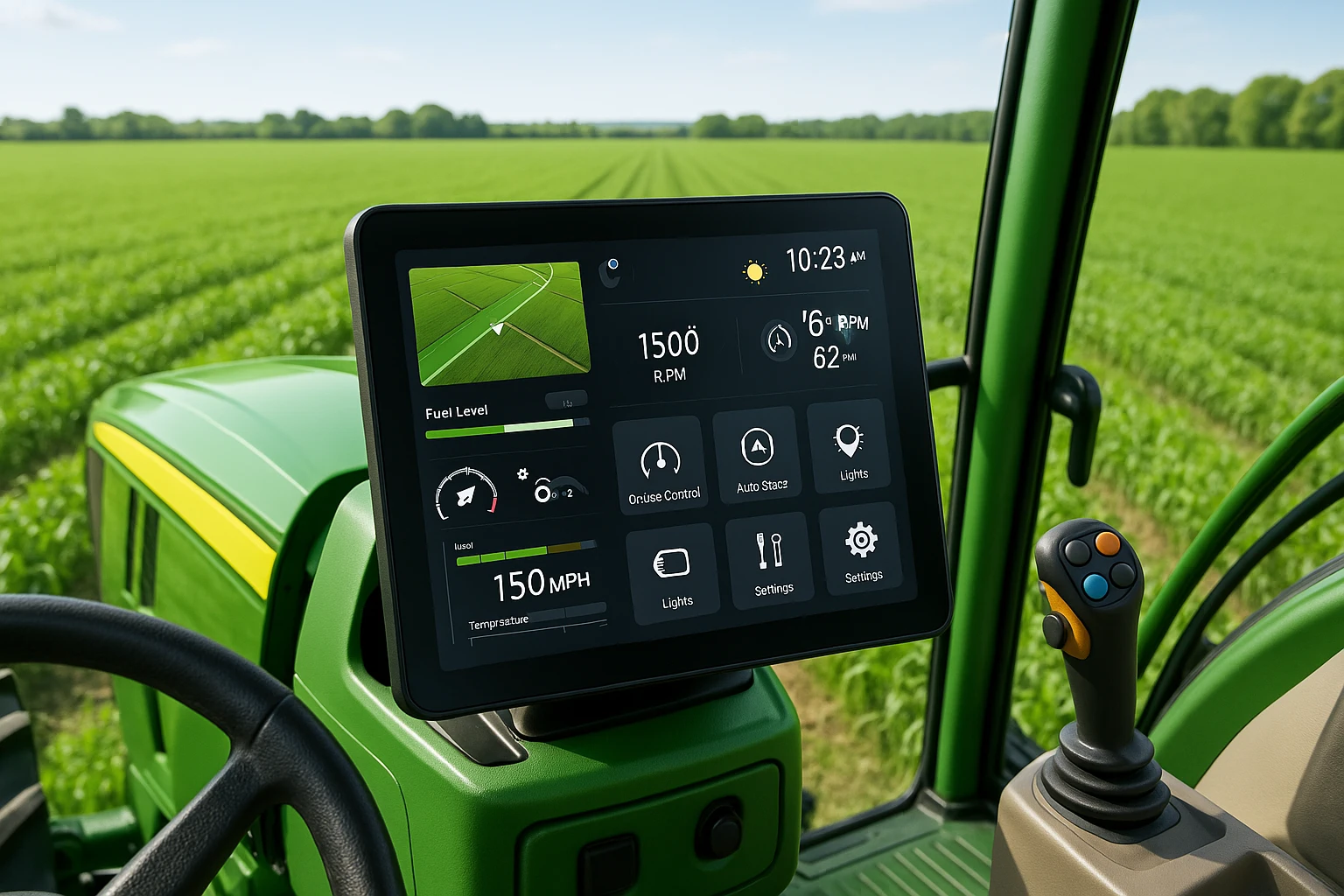
Beyond Basic Readouts: The Limitations of Legacy Displays in Modern Farming
Old displays show a few key weak points. These weak points block work in the current farm setting:
- Limited Information Density: Low resolution limits the show of full maps, many-part dashboards, or stacked data from IoT sensors and implement controls.
- Inadequate Readability in Variable Lighting: Direct sunlight and glare, common in open or enclosed cabs, often make screens fade out. Narrow viewing angles make operator sight hard during moving tasks.
- Minimal Interactivity: Fixed interfaces offer small help for natural input. This leads to use of physical buttons or other controllers.
- Basic Graphical Capabilities: Lack of color depth and video processing cuts the display of camera feeds, color-coded alerts, or schematic representations.
- Integration Challenges: Fit problems appear with current vehicle networks. These include CAN bus protocols and ISOBUS standards for implement interoperability.
- Suboptimal Operator Experience: Interfaces that do not reach the level of consumer devices add to higher mind load and lower efficiency.
Shifting to advanced TFT LCD technology fills these gaps. It provides better sharpness, strength, and function fit to farm needs.
Decoding TFT LCD Excellence for the Field
Advanced TFT LCDs add parts that beat old limits. They also meet the strict rules of off-road farm machinery.
1. Unparalleled Readability & Visual Performance: Clarity in All Conditions
Sunlight readability acts as the main need for displays in farm areas. High-brightness backlights at 800 nits, 1000 nits, or over 1500 nits keep text clear under strong light. Other techs help improve this work:
Anti-glare (AG) surface treatments spread reflections. Advanced anti-reflective (AR) coatings reduce light bounce with optical interference principles. This keeps contrast ratios.
Optical bonding removes the air gap between the TFT cell, touchscreen, and protective cover glass. It does this with an optically clear adhesive. This way cuts internal reflections. It raises color saturation and contrast. It stops fogging from temperature changes or humidity. It boosts overall structural integrity against impacts.
Wide viewing angle techs like IPS or MVA panels reach up to 178° horizontal and vertical angles. This ensures steady image quality no matter operator posture or cab position. Resolutions from WVGA (800×480) to Full HD (1920×1080) in standard sizes (7-inch, 10.1-inch, 12.1-inch) aid clear show of detailed GUIs, navigation maps, and same-time video streams. Full 24-bit color depth (16.7 million colors) allows natural visual coding for status indicators and warnings.
These features cut operator eye strain. They speed up decision-making. They help higher productivity during long field hours.
2. Rock-Solid Durability & Reliability: Built for the Agricultural Gauntlet
Farm machinery faces harsh conditions like dust, moisture, vibration, temperature swings, and chemical exposure. Strong TFT LCD modules add full protection steps:
Operating temperature ranges usually go from -20°C to +70°C. Extended types reach -30°C to +80°C to fit early cold and midday heat. Storage ratings often go beyond these levels. Component selection includes special liquid crystal materials, robust driver ICs, and high-reliability backlights. This ensures stable performance over this range.
Ingress protection ratings offer key sealing:
- IP65 gives dust-tight construction and resistance to water jets. It suits standard in-cab exposure.
- IP67 adds protection against temporary immersion.
- IP69K handles high-pressure, high-temperature wash-downs needed to remove agricultural residues.
Shock and vibration resistance meets standards like MIL-STD-810G. It uses reinforced mounting, dampening materials, and secure internal connections. Optical bonding adds to mechanical resilience. UV-stabilized bezels and cover lenses fight yellowing and degradation from long sun exposure. Chemically resistant materials hold against fertilizers, pesticides, and hydraulic fluids.
Backlight systems aim for MTBF of 50,000 hours or more. They pair with long-term component availability. This supports the long service life of farm equipment. It also cuts redesign cycles.
Such durability leads straight to fewer field failures. It brings lower warranty exposure. It keeps machine uptime for end users.
3. Rich User Interface (UI) & Enhanced User Experience (UX)
Advanced TFT LCDs allow creation of custom picture setups. These setups make complex operations smoother:
Custom GUIs include icon-driven navigation, real-time views of parameters like boom section status or tank levels, animated alerts, and built-in help documentation. Touchscreen integration grows interaction choices:
Resistive touch aids glove operation and stylus use at lower cost. Projected capacitive (PCAP) technology gives better clarity, multi-touch gestures (including pinch-to-zoom for mapping), and tuned sensitivity. This ensures reliable performance with various glove types or light moisture. Video decoding capabilities let simultaneous display of multiple camera feeds from rear, side, or implement-mounted sources. This improves situational awareness and safety.
Contextual soft keys and dynamic menus cut physical control clutter. They adapt functions based on current operating modes.
These parts together reduce cognitive demands. They shorten training periods. They raise overall operator satisfaction with the equipment.
4. Seamless Integration & Advanced Connectivity
The display serves as the main information hub in networked farm systems. Native support for CAN bus protocols (including J1939 and CANopen) allows two-way communication with engine ECUs, transmission controllers, hydraulic systems, and diagnostic modules. ISOBUS compliance lets the unit act as a Virtual Terminal. This aids plug-and-play control of compatible implements from diverse manufacturers. It reduces cab clutter from proprietary terminals.
Additional interfaces increase flexibility:
- RS-232/RS-485 for legacy sensor connections.
- Ethernet for high-speed data exchange, firmware updates, or integration with telematics platforms.
- USB for peripheral support and logging.
- Video inputs (HDMI, LVDS, MIPI) for direct drive from embedded processors.
Many solutions hold development tools, SDKs, or configurable environments. These speed up application software creation and system integration. This connectivity aids data logging for yield mapping, remote diagnostics, and cloud-based fleet management.
Enhanced Ruggedization Techniques for Demanding Environments
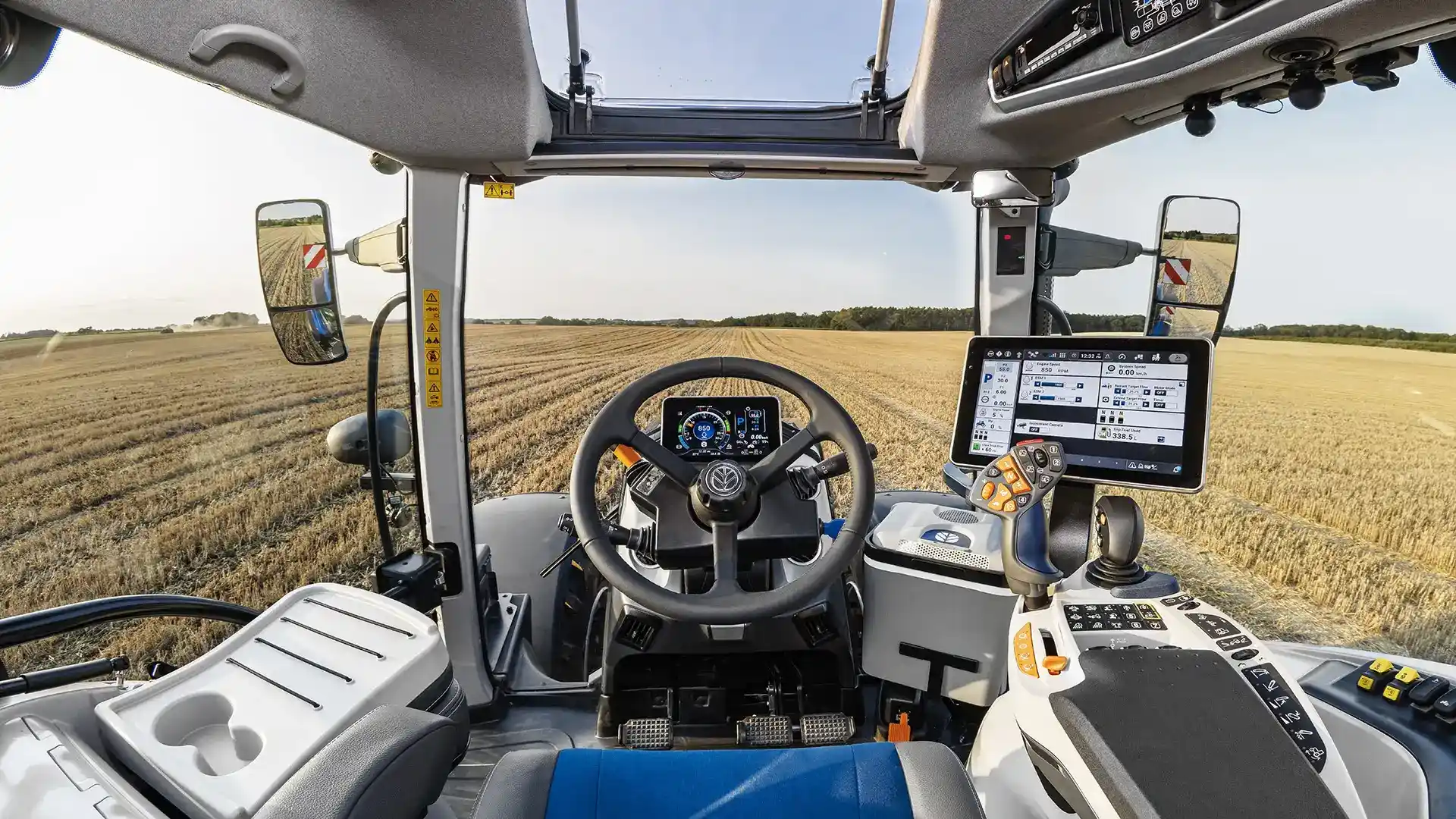
Past core specifications, special engineering techniques add strength to TFT LCDs for farm use. Conformal coatings guard sensitive electronics from moisture and contaminants. M12-style connectors offer secure, vibration-resistant cabling in exposed installations. Wide-temperature liquid crystal formulations and compensated backlight drivers keep consistent performance without color shift or response lag across thermal extremes.
Mechanical designs include reinforced frames and shock-absorbing mounts. These help survive repeated impacts from rough terrain. Electromagnetic compatibility (EMC) testing ensures the display works reliably amid interference from vehicle electrical systems or nearby machinery. These layered protections build a display solution made just for the uncertain conditions of large-scale farming operations.
Power Management and Energy Efficiency Considerations
Farm vehicles often depend on 12V or 24V electrical systems. These face big voltage changes during engine cranking or load shifts. Advanced TFT modules add strong power conditioning circuitry and low-power modes. These keep functionality while cutting draw on the machine’s alternator and battery. Efficient LED backlights with adjustable brightness via PWM or sensor feedback best use energy without losing visibility. Such considerations help meet overall vehicle efficiency goals. They also extend operational range in remote field settings.
Thermal Management Strategies in Enclosed Cabs
Enclosed operator cabs can see quick internal temperature rises from solar loading plus equipment heat. Effective TFT designs use heat-dissipating materials, well-placed vents or heat sinks, and thermally stable components. These prevent overheating of driver electronics or backlight units. In extreme cases, integrated temperature sensors allow automatic brightness or power adjustments to keep reliability. These strategies ensure consistent performance through long harvest days under changing climatic conditions.
The Miqidisplay Advantage: Partnering for Optimized Agricultural Display Solutions
Miqidisplay works as a premium display manufacturer. It has more than 20 years of OEM/ODM expertise in developing high-quality TFT LCD solutions. The company keeps certifications including TS-16949, ISO-9001, and ISO-14001. These support consistent quality across global supply chains. Its one-stop service model covers professional solution design, custom R&D, and end-to-end production tailored to demanding industrial applications.
FAQ
What brightness level is recommended for TFT LCDs in agricultural machinery?
Displays for tractor and combine use usually need a minimum of 800 nits. 1000–1500 nits work best to ensure clear visibility under direct sunlight.
Which touchscreen technology performs best with operator gloves in farming environments?
Projected capacitive (PCAP) touch, when properly tuned, offers excellent multi-touch functionality and reliability with various glove materials. Resistive touch remains a cost-effective option for single-touch applications.
Firms that are interested in finding a reliable and high-quality TFT LCD display for their next-generation tractors and combines may find Miqidisplay a good partner for their next display development project due to their expertise in custom display solutions, their high-quality engineering support, and the long lifespan of their products.
Firms that wish to learn more about Miqidisplay’s capabilities for their particular project requirements should contact their engineering team for a technical discussion or their sales team for sample evaluations for their agricultural HMI display requirements. This may be done via email at mary@miqidisplay.com or sale@miqidisplay.com, or via a call to +(86) 138 2318 1658 / +(86) 189 6801 5464.