






Ambient light, power budgets, and operating conditions shape how displays work in industrial and commercial systems. Engineers who pick between transmissive and transflective displays look at more than brightness numbers. Real-world readability comes from the way a display handles sunlight, indoor lights, and power limits. Knowing how these two types behave outside lab tests leads to better choices during early product planning.
This guide shows how transmissive and transflective displays act in daily settings. It also helps match each type to actual job needs.
People Also Ask (PAAs)
What is the difference between transmissive and transflective displays?
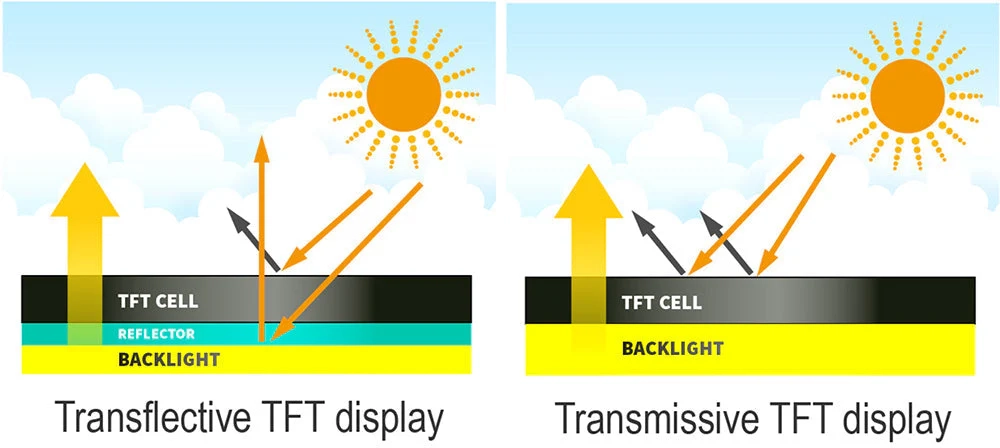
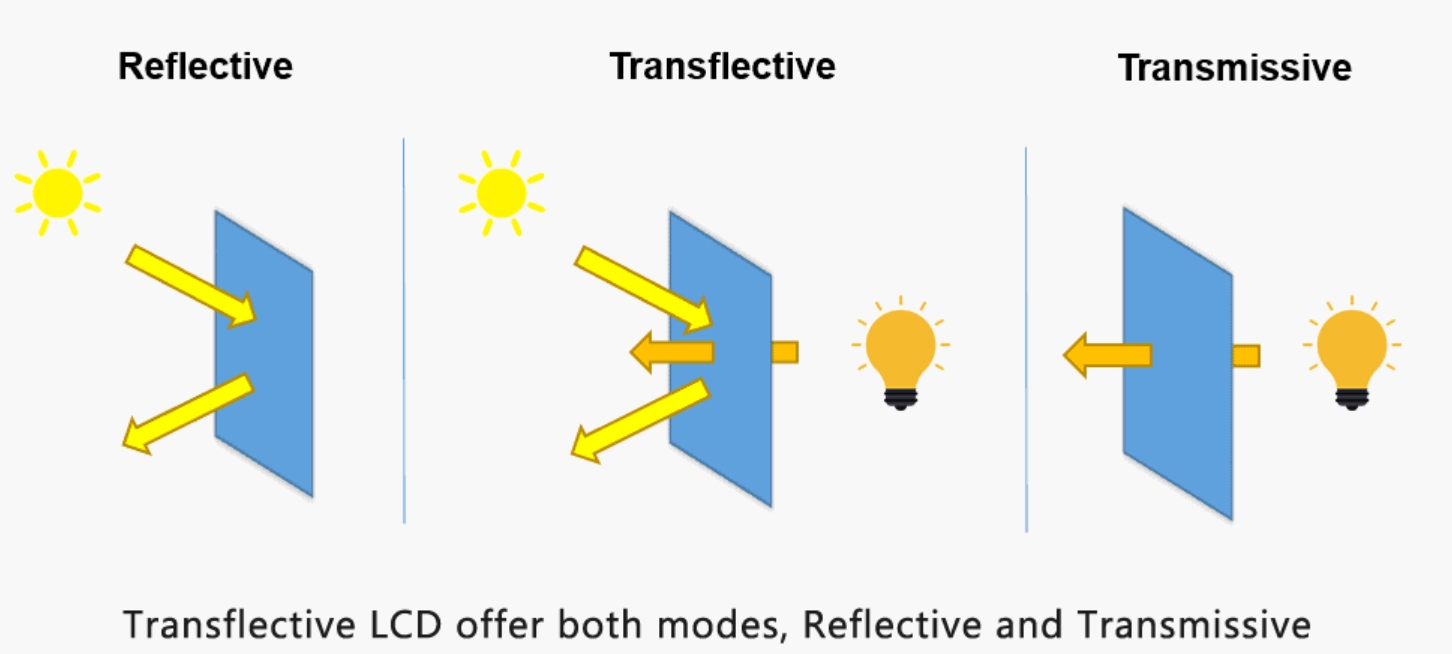
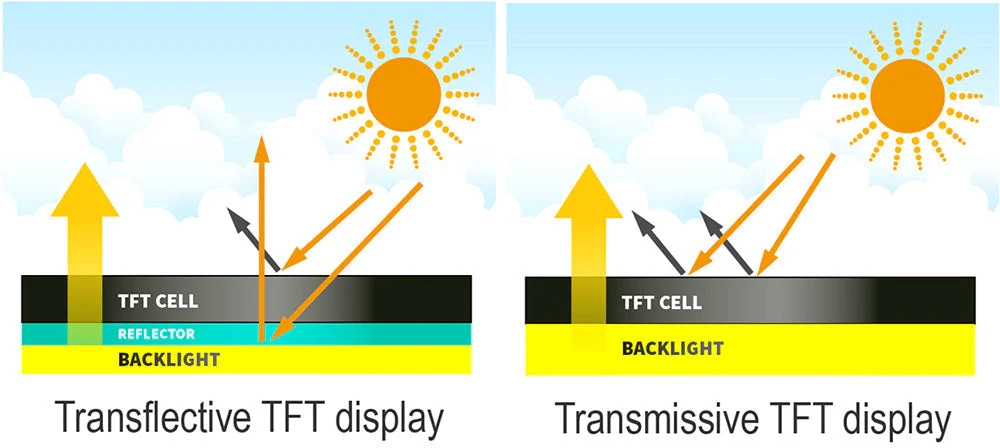
A transmissive display needs only its backlight to show images. A transflective display uses both reflected light from the room and its backlight so it stays clear in changing light.
Are transflective displays better for outdoor use?
Transflective displays usually work well in bright sun. They reflect outside light and cut the need for very strong backlights.
Understanding Transmissive Displays
A transmissive display uses only its backlight. Light comes from behind the liquid crystal layer. It passes through color filters and polarizers to reach the viewer. The screen does not use outside light to help the image.
Key Traits of Transmissive Displays
- They need the backlight on all the time
- They give steady brightness indoors
- They show rich colors and good contrast
- They work well where light stays controlled
All light comes from the backlight, so brightness stays easy to set. Raising the backlight helps in brighter rooms. This step also uses more power and makes more heat.
In factory control rooms, medical panels, and indoor instruments, transmissive displays give clear images. Performance stays steady because room light has little effect on the picture.
In direct sun, results depend on backlight strength and extra optical layers. Low brightness makes images fade. Designers often add brighter backlights measured in nits. Industrial transmissive units also use anti-reflective coatings to stay useful in tough spots.
Understanding Transflective Displays
A transflective display works in two ways. It has a partly reflective layer behind the liquid crystal. This layer bounces back room light and also lets backlight pass through.
In strong light the screen uses outside light. In dim areas the backlight turns on to keep the image visible.
Main Features of Transflective Displays
- They use both room light and backlight
- They need less backlight power
- They stay readable in sunlight
- They use less power on average outdoors
The reflective part helps when sun hits the screen. The display works with the sun instead of fighting it. This lowers the need for very high brightness.
In outdoor kiosks, farm machines, transport panels, and handheld tools, this dual action saves energy. Strong sun lets the screen run in reflective mode. Lower light brings the backlight back in.
Transflective displays often show less vivid color than high-brightness transmissive panels. They still give better clarity when light changes often. Options like tuned reflective layers and added touch panels help fit these screens to specific jobs.
Real-World Performance Comparison
Lab brightness numbers do not show full field results. Side-by-side tests in real settings reveal clear differences between the two types.
1. Sunlight Readability
Transmissive displays need high nit levels to beat glare. Results rest on backlight power and surface coatings. In strong outdoor light even bright units can wash out without optical bonding or anti-glare layers.
Transflective displays use room light to raise contrast. They stay clear with lower backlight settings. In outside use they often remain readable while drawing little power, which suits changing daylight.
2. Indoor Performance
Transmissive displays deliver rich color and steady contrast in offices or clinics. They shine where artificial light stays even and color accuracy matters.
Transflective displays work well inside too. Color may look a bit softer than on transmissive panels, yet they still give clear views across most indoor lighting.
3. Power Consumption
Transmissive displays run the backlight nonstop and draw more power. This is fine for plugged-in indoor gear but hard on battery units.
Transflective displays cut backlight use in bright spots by switching to reflective mode. Battery devices gain longer run time from the lower average draw.
4. Thermal Impact
Strong backlights create extra heat. In sealed enclosures this heat needs careful control. High-brightness transmissive designs can raise inside temperatures and call for better cooling.
Transflective designs lower heat in daylight by using less backlight. This helps parts last longer and allows simpler enclosures in hot or outdoor spots.
5. Long-Term Reliability
Both types last well when installed correctly. Constant high backlight use in transmissive panels can shorten backlight life. Transflective units often need less upkeep because average backlight hours stay lower in suitable places.
Key Engineering Considerations When Choosing Between the Two
Display choice should match light exposure, power setup, and enclosure limits.
Key Points to Check
- Range of expected light levels
- How often the unit will face outdoor conditions
- Power available
- Heat control limits
- Needed color accuracy
- Viewing angle needs
- Plans for optical bonding or coatings
Transmissive displays fit spots where light stays steady. Transflective displays suit places with direct sun or shifting brightness during the day.
Teams should also review enclosure materials and glass thickness. Optical bonding raises contrast and cuts reflections in either type. Anti-glare coatings add clarity without extra power. Matching specs early cuts later changes. Custom help from skilled makers supports exact integration.
When Transmissive Displays Are the Better Choice
Transmissive displays give steady image quality where lighting does not change much.
Common Uses
- Medical diagnostic gear
- Indoor industrial HMIs
- Lab instruments
- Commercial automation panels
- Digital controls in factories
These jobs gain from strong color, easy brightness control, solid contrast under artificial light, and little dependence on outside conditions. In steady indoor settings higher backlight levels stay within power and heat rules. Many industrial monitors and TFT modules use transmissive tech for this reliable behavior.
When Transflective Displays Offer a Performance Advantage
Transflective displays stand out where light shifts or direct sun cannot be avoided.
Typical Uses
- Farm machine interfaces
- Transport dashboards
- Outdoor kiosks
- Field service tools
- Portable industrial devices
They offer better sun readability, lower average backlight use, reduced power draw in daylight, and clear views without extreme brightness. Battery units and gear with limited cooling benefit from this efficiency. Custom features such as wide-temperature parts and rugged touch layers further help in harsh settings.
Making the Right Specification Decision
Choosing between transmissive and transflective displays calls for real-world condition checks rather than brightness specs alone. Indoor units with steady light often gain from transmissive color and clarity. Outdoor or variable-light jobs often favor transflective efficiency and sun performance.
Review of light exposure, power limits, and mechanical fit supports good results over the full product life. Items such as interface choices (HDMI, RGB, MIPI, etc.), temperature ranges, and touch integration also shape final success.
FAQ
What is the main difference between transmissive and transflective LCD technology?
Transmissive displays rely only on backlight. Transflective displays add a reflective layer that uses room light as well.
Which display type performs better in direct sunlight?
Transflective displays usually give better sun readability. They reflect available light and need less maximum backlight power.
Do transflective displays sacrifice color quality?
They can show slightly softer color than top transmissive panels. New materials have closed much of this gap for most industrial tasks.
How does power consumption compare between the two?
Transflective displays often use less average power in bright conditions because of reflective mode. This helps battery and power-sensitive systems.
What customization options are available for these displays?
Options cover custom backlights, touch panel add-ons (capacitive or resistive), interface changes, cover glass with optical bonding, mounting brackets, wide-temperature upgrades, and brightness tuning.
Partner with a Trusted Display Manufacturer and Supplier
For teams that need dependable transmissive and transflective solutions for industrial, medical, and commercial use, working with an experienced manufacturer helps. Miqidisplay focuses on custom TFT LCD, industrial monitors, and full display solutions with over 20 years of OEM/ODM work.
The company provides one-stop services that include high-brightness panels, optical bonding, rugged designs, and complete customization to meet exact conditions. Reach out to review specs, request quotes, and build display setups that improve reliability in real settings.
Contact the manufacturer today to move the next project forward with well-engineered display technology.