





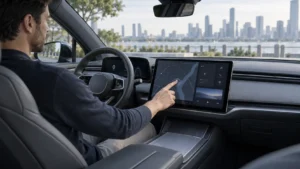
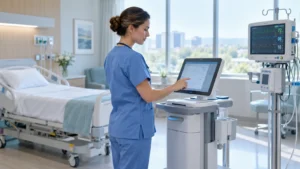

The display technology has evolved greatly from traditional panel displays to HDMI LCD touch screens that are widely applied to industrial, medical, automotive and embedded fields. As a leading display manufacturer, Miqidisplay has been providing high quality custom TFT LCD products with HDMI interface for various industries and applications. This article is going to trace back the history of making HDMI LCD touch screens, outline the main development and innovations, highlight the improvements in manufacturing process and share reader with future trends of producing HDMI LCD touch screens for B2B markets.
Early Beginnings of LCD and Touch Screen Technologies
Origins of Liquid Crystal Display Technology
The foundation for modern HDMI enabled LCD touch screens was laid in the mid 20th century with the invention of the Liquid Crystal Display (LCD). The first displays were simple alphanumeric displays in calculators and watches. These early displays used the twisted nematic (TN) mode, which provided very poor viewing angles and very limited color reproduction.
Early Touch Screen Innovations
Innovations in touch screen technology began to take shape in the 1960s and 1970s for various specialized control systems. The initial models were resistive touch panels that consisted of conductive layers separated by spacers. The technology allowed for single-touch and cost-effective interfaces, yet was often unable to withstand the rigors of harsh operating environments and therefore prone to failure.
Introduction of Digital Interfaces Leading to HDMI
HDMI was first introduced around the early 2000s as a single cable digital interface for all video and audio formats, in an attempt to rid the world of multiple analog and digital connections to LCD modules. In early years, it quickly replaced outdated connections such as VGA and replaced multiple single end LVDS connections with a single connector. Due to labor intensive nature of early manufacturing, it was confined to small production runs.
Challenges in Initial Integration
Simple driver boards were mounted into panels and the touch layers integrated manually into the screens. Initial displays based on the HDMI interface were targeted at the consumer electronics market. However for industrial applications the screens had to be made rugged and in addition be capable at low temperatures as well as have high brightness.
Technological Advancements in HDMI Integration
Shift to High-Performance Panel Technologies
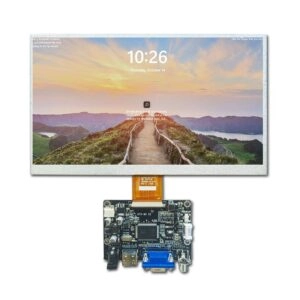
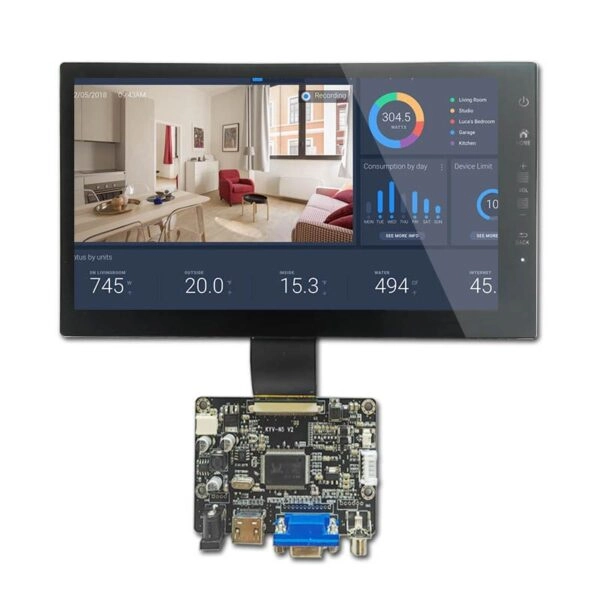
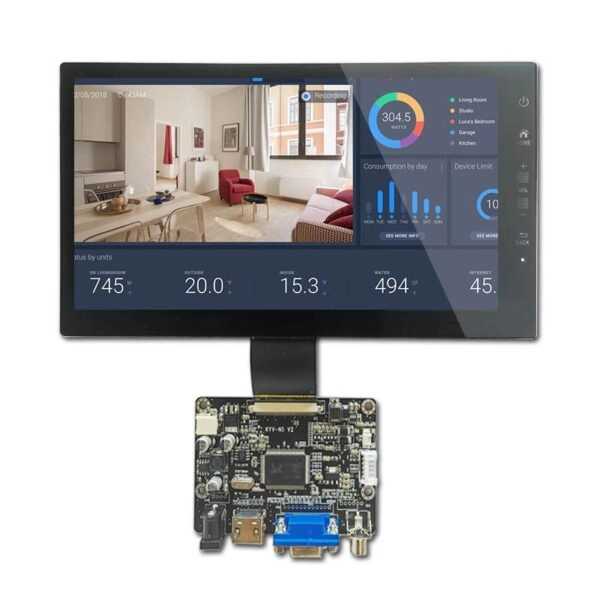
With the inclusion of HDMI in LCD touch screens a major step forward was achieved. The HDMI interface allows for the high-bandwidth transmission of video and audio signals in uncompressed form. Here resolutions from 720p up to 4K and more are possible with only a small delay. For this purpose HDMI driver boards were developed for TFT LCD displays, which are connected to the display panel.
Evolution from TN to IPS Displays
Two significant developments have occurred with monitor panels, first the change from TN panels to In-Plane Switching (IPS) panels which deliver superior color and a number of viewing angle benefits, including a maximum of 178 degrees, as well as greatly enhanced readability in sunny locations, ensuring that the monitor can be viewed from anywhere and in any lighting conditions. This makes such panels particularly suited to a number of outdoor as well as industrial applications.
Advancements in Touch Sensing Technology
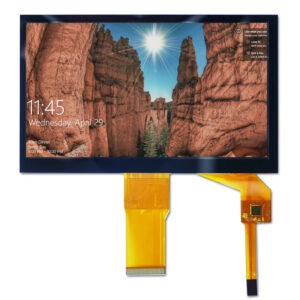
From supporting multi-touch gestures to the advent of projected capacitive (PCAP) sensing, capacitive touch technology has come a long way. The latest evolution, in-cell technology, puts touch sensors directly into the LCD structure of a display, allowing for very thin products and superior optical quality.
Optical Bonding and Environmental Enhancements
Automated optical bonding was implemented in the manufacturing process, eliminating air gaps between touch glass and LCDs. This feature reduces reflections and increases durability of the products in relation to moisture and dust. Furthermore, many products are designed for operation in a wide-temperature range from -30°C up to 85°C. High-brightness backlights (up to 1000 nits or even more) are implemented by using advanced LED arrays in combination with suitable optical films.
Customization for B2B Applications
The latest innovations in the consumer world of display and interaction are also now being used to address B2B challenges. In the Medical field, the special antibacterial glass and precise color calibration of the medical displays is being matched by Industrial HMIs that are encased in rugged IP-rated enclosures and have connectors that can withstand harsh industrial environments. As in the consumer world, Customization has become a core competency for manufacturers, who are now able to offer products with cables of custom lengths, PCB designs, and interface options such as HDMI alongside the MIPI, LVDS, or VGA interfaces commonly used in the mobile and industrial markets.
Manufacturing Processes and Quality Control Evolution
TFT Array Fabrication and Panel Assembly
The modern manufacturing of HDMI-enabled LCD touch screens typically occurs in a high-tech cleanroom equipped with an efficient production line. First, the TFT array is produced on glass and, using photolithography, various layers are deposited and then etched in order to create the thin-film transistors which control the individual pixels.
Touch Panel Production and Lamination
First, liquid crystal material is filled into the panel. Then the polarizers and the backlight module are attached to it. After that the production of the touch panel starts. Here the transparent conductive layer (ITO or other material) is applied and the electrodes are structured. Finally the touch panel is laminated on one side with the LCD panel by means of precise alignment tools.
HDMI Driver Board Integration
The HDMI driver board contains the video processor, power management and the firmware for best signal processing. After the final assembly, the touch functionality, display uniformity, EMC as well as environmental robustness are tested.
Quality Assurance and Standards Compliance
Quality control has been improved by multi-layer inspection, including automatic optical inspection, burn in test, and compliance with international quality control standards such as ISO 9001, RoHS and relevant industry standards. By analyzing production data and optimizing processes based on the data, high yield production has been achieved by working with suppliers to procure high quality components.
Supply Chain and Customization Capabilities
In order to service industrial environments, the modules can be equipped with conformal coating and reinforced frames. In addition, improved supply chain capabilities enable one-stop shopping for modules, such as the original panels or completely customized modules that include a driver board. This capability enables the OEM and system integrator to quickly bring to market reliable HDMI controlled LCD touch modules.
Current Trends Shaping the Industry
Modularity and All-in-One Solutions
New generation of HDMI LCD touch screens are designed to be modular and intelligent. The latest all-in-one solutions provide the complete package consisting of display, touch, HDMI input as well as audio and greatly simplify system construction.
High-Resolution and Low-Power Designs
Support high-resolution displays (Full HD and 4K) with fast response times to create dynamic HMI interfaces. Low power consumption is perfect for battery powered or energy aware applications.
Sustainability and Form Factor Customization
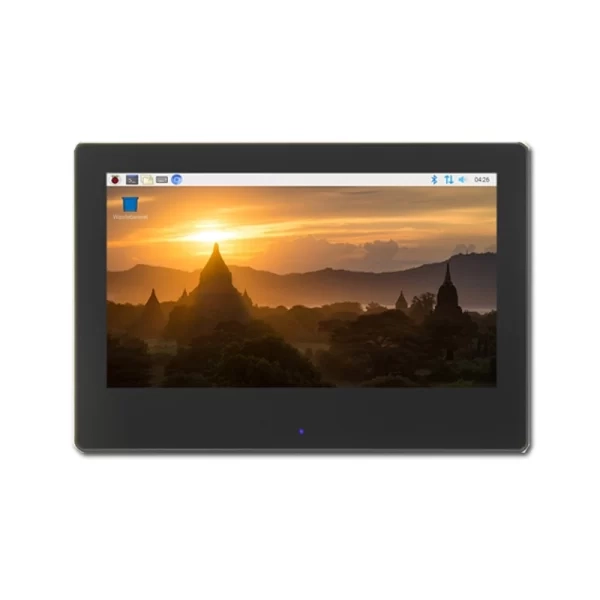
Material and product design can be driven by sustainability and use of recyclable materials, efficient use of energy in the backlight. Also the standard form factor of the display can be altered in order to support custom applications as eg consoles in cars or even access control systems. This can be bar-type, round or even square and we have displays of 2-7″ in size.
Enhanced Optical Performance
Note the typical requirements in terms of viewing angles, anti-glare coating and high brightness levels for different environments. Additionally Wide DisplayPort or HDMI interfaces allow for an easy integration into embedded platforms.
Long Lifecycle Support
For industrial and medical industries, manufacturers design products for long life cycles and keep components available for many years. Redesign efforts will be kept to a minimum.
FAQ
How is capacitive touch production different from resistive touch screen production?
Capacitive touch production requires very precise production of electrode patterns within the touch surface, supports multi touch, and uses more complex lamination processes than production of resistive touch screens which use simpler films and are typically used with a stylus and also by people who are wearing gloves as these screens are not very durable.
What determines the lifespan of an HDMI LCD touch screen?
The factors which influence lifespan are: The operating temperature range, the quality of the backlight and the protection of the touch layer. Also a strict quality test is done on these screens. High quality screens are able to work in very demanding conditions for a long time.
Partner with a Trusted Display Manufacturer and Supplier
Miqidisplay is a specialist display manufacturer with over 20 years of experience as an OEM/ODM supplier. We supply a range of high quality custom TFT LCDs including HDMI-integrated touch solutions as well as industrial grade monitors for medical, automotive and HMI applications. We supply standard HDMI TFT displays with driver boards as well as fully custom designs that can include a wide range of interfaces, high brightness to suit outdoor use, wide temperature range and rugged enclosures. Our displays are designed and manufactured to a high standard and we operate a strict quality control policy. We hold a number of international certifications and are able to dispatch goods worldwide.
Suppliers and manufacturers requiring reliable partners for large-scale or specialized projects can benefit from Miqidisplay’s engineering, rapid prototyping capabilities and long-term support. Enhance your equipment’s performance and simplify your procurement by working with an experienced display manufacturer who’s dedicated to providing innovative solutions to his customers. We’d love to hear about any custom requirements you may have and we can provide you with a detailed proposal for an HDMI LCD touch screen project.