

What Is a Stretched Bar LCD Display?
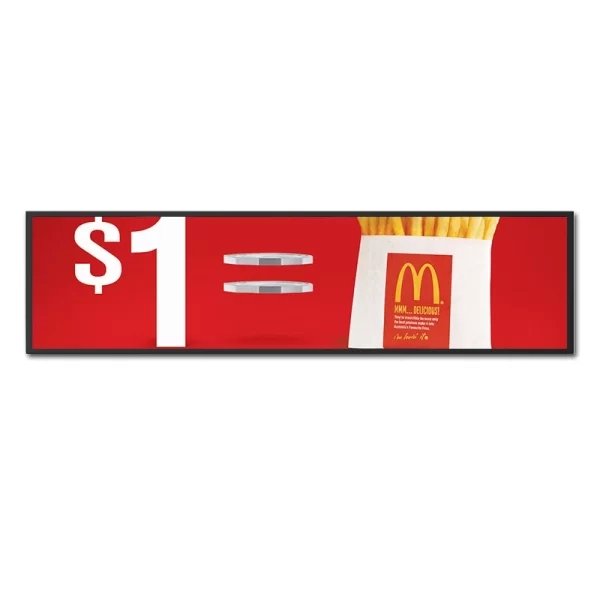
A stretched bar LCD display, also known as a bar-type LCD, bar LCD panel, or stretched bar monitor, has a long shape where the width is much greater than the height. These special TFT LCD modules usually come in sizes from small 2.9-inch versions to bigger industrial types over 15 inches. Makers create them for uses where normal rectangular displays do not match the space limits or the needs for showing information.
Advantages Over Standard Aspect Ratios
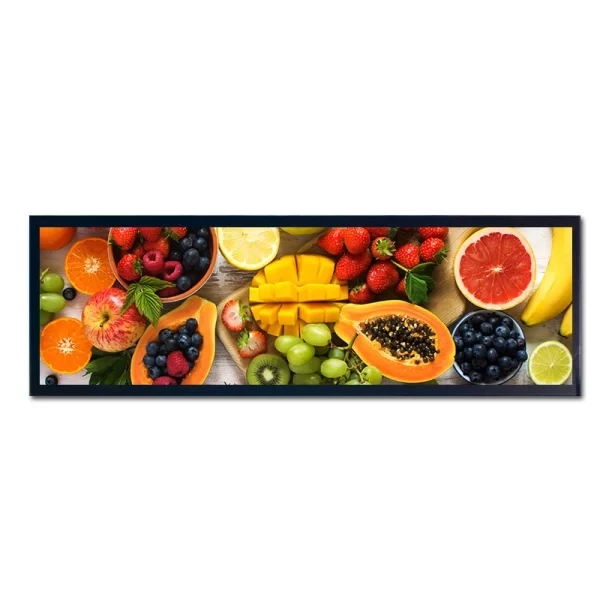
Stretched bar LCD displays give focused data streams, status indicators, scrolling text, or specific alerts unlike traditional 16:9 or 4:3 displays made for wide visual content. Their special shape allows easy placement into narrow cases, equipment panels, or straight display areas. This makes them useful in embedded systems and digital signage solutions. The need for these displays increases as industrial and commercial designs focus on efficient, purpose-built interfaces.
Key Differences Between Stretched Bar LCD and Traditional Displays
Space Efficiency Benefits
Stretched bar LCD displays offer clear advantages in areas with limited space. In setups with little vertical room or tight internal layouts, these panels use valuable space well while they keep good visibility for important information. Traditional displays often need larger mounting areas. Bar-type solutions fit smoothly into shelves, control strips, or console interfaces.
Visual Focus and Design Distinction
Visual focus is another clear benefit. The long profile helps direct attention to key content such as system status, promotional messages, or operational data. This shape stands out in places full of standard rectangular screens. It improves engagement through its own design difference without complex user interface changes.
Durability and Integration Flexibility
Many stretched bar LCDs support wide operating temperature ranges. They have high brightness levels good for difficult lighting conditions. They also have strong mechanical setups. These features make sure they work well in continuous operation common to industrial or public environments. Standard consumer-grade panels may not perform well enough in those places.
Where Are Stretched Bar LCDs a Good Fit?
Embedded and Consumer Applications
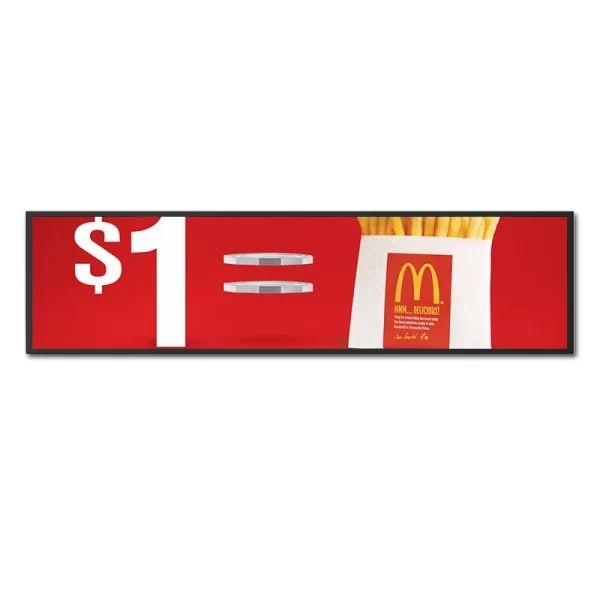
Stretched bar LCD modules work well across many embedded and commercial applications. Uses include retail shelf-edge promotion screens for pricing or product details. They appear in fitness equipment interfaces that show workout metrics. They also fit smart appliance control panels in refrigerators, ovens, or coffee machines.
Industrial and Transportation Uses
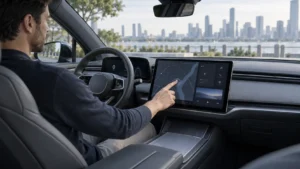
In industrial settings, these displays act as machine status bars that provide real-time operational feedback. Elevator floor indicators gain from the linear format for better visibility. Audio equipment control panels, automotive center console strips, and building automation interfaces use the compact, wide-view design. Larger formats show up in transportation hubs for route information or public guidance systems.
Additional Sector Applications
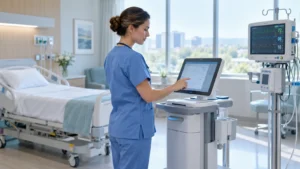
The versatility reaches healthcare environments for patient guidance. It includes corporate lobbies for announcements. It also covers entertainment venues for dynamic menus or schedules. Their ability to present multi-zone information in tight spaces makes them ideal for modern human-machine interfaces. Traditional screens would disrupt product aesthetics or functionality in those cases.
Choosing the Right Interface: RGB, LVDS, MIPI, SPI, or MCU
Understanding Interface Options
Interface selection plays a key role when one specifies a stretched bar LCD display. The choice depends on the host processor, required resolution, cable length, power constraints, and overall system architecture.
Suitable Applications for Each Interface
RGB (parallel) interfaces fit smaller modules and MCU-driven systems with shorter cable runs. They offer straightforward implementation for basic status displays. SPI interfaces work well for low-power, small-resolution applications where efficiency matters more than high refresh rates. MCU (8/16-bit) options provide compatibility with microcontrollers that lack dedicated display controllers.
Advanced Interface Solutions
For larger panels or demanding environments, LVDS delivers strong performance over longer distances. It is preferred for industrial single-board computers or Linux-based platforms. MIPI DSI supports high-speed, low-power operation with modern application processors. It is ideal for advanced embedded designs. Bridge solutions allow compatibility between different host and panel interfaces when necessary. Engineers should evaluate processor capabilities early. This step helps reduce extra components and ensures good system stability.
Resolution and Pixel Density: How to Decide What You Need
Resolution Ranges by Size
Resolution needs for stretched bar LCD displays change based on viewing distance, content type, and application demands. Smaller panels around 2.9 to 4.3 inches often have resolutions such as 320×120 or 480×128. These work for simple text and icons at close range.
Mid-Size and Larger Panel Options
Mid-size options around 6 to 8.8 inches support higher resolutions like 800×280 or 1280×320. These enable detailed dashboard interfaces or scrolling content. Larger modules up to 12 or 15 inches reach resolutions such as 1920×720. They support complex UI elements in automotive clusters or industrial HMIs.
Pixel Density Considerations
Pixel density (PPI) ensures readability across different viewing distances. For distances of 0.5 to 1 meter, densities above 100 PPI deliver sharp text and graphics. Closer viewing applications benefit from 150 PPI or higher to reduce pixelation. Content analysis guides final decisions. This includes whether the content is textual, graphical, or video. Environmental factors like ambient light levels also play a part.
Touch Integration on Bar LCD Modules
Capacitive Touch Implementation
Adding touch functionality to stretched bar LCD displays needs careful planning. Capacitive touch (CTP) stays preferred for most modern projects. It gives multi-touch support and sleek glass surfaces. Custom elongated sensors may need longer lead times. This requires early supplier coordination.
Calibration and Bonding Techniques
Calibration needs attention on high aspect-ratio panels. Firmware adjustments for axis scaling and edge compensation keep accuracy across the full length. Optical bonding (OCA) improves performance. It removes air gaps. It also helps sunlight readability and reduces reflections in demanding environments.
Alternative Touch Technologies
Resistive touch offers an alternative for gloved operation or cost-sensitive projects. It adds thickness and may reduce optical clarity. Thorough testing of the full touch area during prototyping prevents production issues. Compatibility with protective cover glass and specific environmental requirements should factor into specifications.
Mechanical and Structural Considerations
FPC Exit Direction and Routing
Mechanical design aspects influence stretched bar LCD implementation in important ways. Flexible printed circuit (FPC) exit direction often needs customization. Side or bottom exits are common because of the narrow profile. Folding or rerouting options solve housing conflicts when planned during the design phase.
Backlight Uniformity and Mounting
Backlight uniformity across extended lengths presents considerations for larger panels. Suppliers should provide data on brightness consistency. Mounting methods include bezel, adhesive, or bracket. These must account for potential deflection in longer configurations. Environmental ratings for wide temperature operation and vibration resistance ensure reliability in industrial applications.
Customization for Structural Fit
Custom cover glass, connectors, and enclosures further tailor the module to exact project needs. Early engagement with manufacturers streamlines these mechanical adaptations.
Available Sizes and Specifications
Compact Size Options
Stretched bar LCD displays come in diverse sizes tailored to specific applications. Compact options from 2.9 to 6.3 inches suit embedded devices and small interfaces. They often include high-brightness variants and IPS technology for wide viewing angles.
Mid-Range and Large Industrial Formats
Mid-range panels around 8 to 12 inches balance visibility and space efficiency for equipment consoles. Larger industrial stretched monitors extend beyond 20 inches in some configurations. They support digital signage with optimized wide-format resolutions. Multiple interface options, touch integration, and ruggedized features expand applicability.
Procurement: Standard vs Custom Options
Benefits of Standard Configurations
Projects can begin with standard stretched bar LCD sizes for faster evaluation and lower initial costs. These modules often support configurable interfaces and touch options without core panel alterations. Sample quantities facilitate thorough testing before production scaling.
Custom Development Process
Custom sizes and features become necessary for exact housing dimensions or specialized performance criteria. They involve higher engineering investment and lead times. Custom solutions deliver optimal integration. Volume considerations influence minimum order quantities. Suppliers provide technical support throughout development and qualification.
FAQ
What are the typical applications for stretched bar LCD displays?
Stretched bar LCD displays serve retail promotions, industrial HMIs, transportation information systems, smart appliances, fitness equipment, elevators, and automotive interfaces. Their elongated shape optimizes narrow or linear spaces.
How do I choose the right interface for a bar-type LCD?
Selection depends on the host processor, resolution needs, and cable distance. LVDS and MIPI suit larger or high-performance systems. RGB, SPI, or MCU fit smaller MCU-based designs. Compatibility testing is recommended.
Are custom sizes and touch options available?
Yes. Manufacturers support custom dimensions, FPC routing, touch integration, brightness levels, and environmental adaptations to meet project-specific requirements.
What viewing distances work best for different resolutions?
Lower PPI suits distant viewing in signage applications. Higher densities benefit close-range interfaces. Content type and ambient conditions also influence choices.
Conclusion
As a leading display manufacturer and supplier, Miqidisplay specializes in high-quality stretched bar LCD solutions. These include standard and fully custom TFT LCD modules tailored for industrial, commercial, and embedded applications. With extensive experience in OEM/ODM services, the company delivers precision-engineered panels. The panels feature customizable interfaces, touch integration, high-brightness options, and rugged designs. They meet stringent industry certifications.
For businesses requiring stretched bar LCD displays or related custom display technologies, engaging directly with experienced manufacturers like Miqidisplay ensures access to innovative solutions. These solutions receive support from proven expertise in the field. This partnership approach supports efficient development cycles and long-term supply stability. They are essential for successful product launches and system integrations.