





Industry 4.0 keeps pushing changes in manufacturing, automation, and heavy equipment areas. Engineers and operations teams deal with more pressure to add smart interfaces to factory floors, control systems, fluid dispensing machinery, handheld devices, and other industrial setups. Updating these systems improves safety, efficiency, and long-term reliability. Yet the work brings real technical demands.
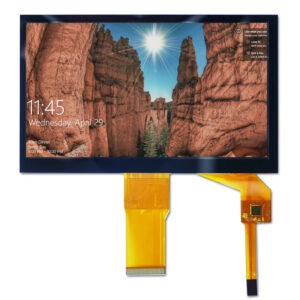
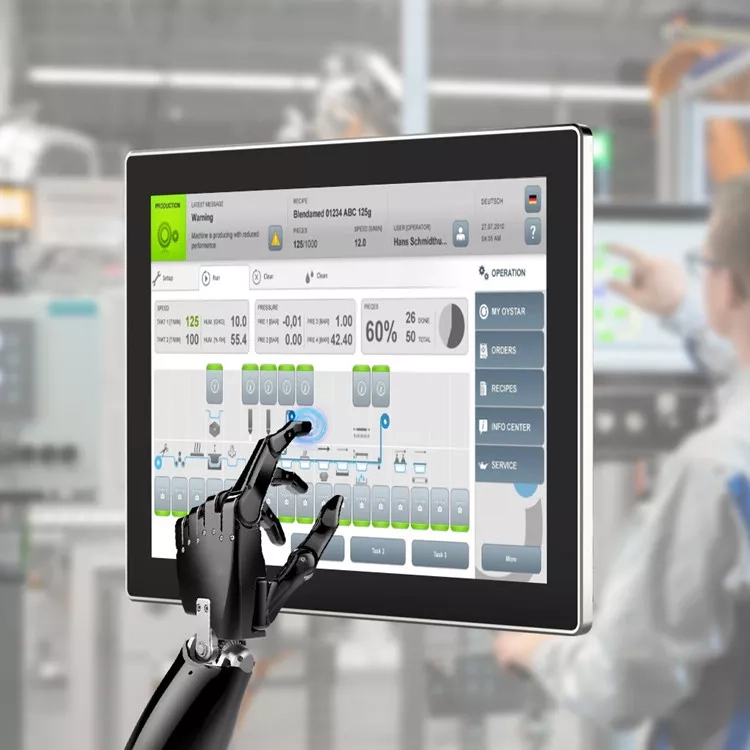
Traditional resistive touch technologies and mechanical button interfaces often break down after repeated use. They cause early wear and operational downtime. Projected Capacitive (PCAP) touchscreens once stayed limited to consumer devices. Now they form the base for industrial human-machine interfaces (HMIs). Features like multi-touch gestures and smooth, bezel-free designs have turned into standard expectations in tough environments.
Harsh industrial conditions create special problems for sensitive electronics and delicate materials that appear in standard capacitive displays. Operators often switch between heavy manual labor and precise interface work. They may do this hundreds of times in one shift. Equipment can face strong chemical cleaning or build up layers of dirt without regular care. Good touchscreen display design needs to handle these facts while backing Industry 4.0 goals. The sections below look at the main points.
1 – Heavy Duty Cover Glass and Coatings
Role of Cover Glass in Industrial Environments
The cover glass stands as the most visible and important part in any industrial touchscreen display. It handles constant physical contact, impacts, abrasion, and exposure to the surroundings. Commercial-grade options usually depend on thin 0.5–2 mm layers of glass or plastic-film mixes built for kiosks or consumer tablets. These materials do not have the strength needed for oil refineries, steel fabrication facilities, or similar high-impact places.
Limitations of Plastic Materials
Plastic cover layers give benefits in weight-sensitive fields such as aerospace or wearables. There thin profiles and flexibility count. Still, plastic has trouble with industrial issues like extreme heat, corrosive chemicals, scratching, and repeated hard hits. Gloves worn by operators often carry grease, metal shavings, dirt, or process fluids. These items move straight to the interface. Tools or materials held during work raise the chance of accidental hits. Although advanced plastics have gotten better in hardness, they usually do not reach the durability levels required by most factory environments.
Advantages of Industrial-Grade Glass
Industrial applications instead need technical glass made beyond standard commercial or architectural specs. High-hardness formulas reach 9H+ ratings that plastic cannot equal. Extra steps such as acid-etching, chemical strengthening, and thermal tempering raise impact and breakage resistance. Special coatings add further performance. They bring anti-fingerprint, anti-reflection, anti-smudge, and anti-bacterial qualities. These treatments help visibility, make cleaning easier, and support hygiene. They do this without losing optical clarity.
Thickness Design and Mechanical Testing
Cover glass thickness plays a key role in overall system design. It ranges from 2 mm to 10 mm or more based on expected mechanical stress. Engineers check risks through standard tests. These include ball-drop, boot-kick, and head-impact simulations. The goal stays the same. They seek the right balance of ruggedness to meet or exceed industrial lifecycle needs. At the same time they control weight, cost, and optical performance. Custom shaping, edge treatments, and optical bonding give extra protection against moisture and debris entry.
Long-Term Reliability Benefits
Right material choice and improvement make sure the interface stays working and visually clear even after years of heavy use. This method cuts down field failures. It also supports steady operator interaction across different production conditions.
2 – Custom Firmware & Tuning
Glove Compatibility Challenges
Many industrial jobs require operators to wear protective gloves. These range from thin nitrile to thick leather or cut-resistant types. PCAP touchscreens depend on conductive contact for detection. This creates compatibility issues with non-conductive or heavily insulated materials. Standard setups often work with thin surgical-style gloves without changes. However, heavy-duty leather gloves, needed in high-voltage or extreme settings, block conductivity. They require specific adjustments.
Firmware Sensitivity Optimization
Touch controller firmware needs careful tuning. It must detect input through certain glove types or ranges used on site. This calibration keeps responsiveness while stopping false activations from environmental noise.
Moisture and Environmental Interference Handling
In outdoor or moisture-prone places, rain, mist, saltwater, or industrial fluids add more problems. Uncontrolled moisture can cause wrong touches. These might lead to safety incidents or process errors. Firmware optimization filters such interference. It does this without creating too much electromagnetic interference (EMI). That EMI could affect nearby equipment or break certification standards.
System-Level Integration and Stability
Good tuning looks at the full operational context. It includes glove materials, ambient humidity, chemical exposure, and electromagnetic conditions. This process delivers reliable multi-touch performance even when operators wear thick protective gear. Integration with system-level software allows smooth gesture recognition. It also prevents accidental inputs during high-vibration or dynamic tasks.
3 – Extended Temperature Operation
Temperature Challenges in Industrial Settings
Industrial environments often expose equipment to temperature extremes far beyond those in office or consumer settings. Direct sunlight, freezing conditions, or nearness to heat-generating machinery add stress on display parts. Standard commercial LCD panels usually operate between 0°C and 50°C. Outside this range, visibility drops—screens wash out in heat or stay unresponsive until warmed in cold conditions. In severe cases, liquid crystal fluids can freeze. This causes permanent damage.
Industrial-Grade Display Solutions
Industrial-grade solutions start with extended-temperature LCD panels. These support reliable performance from -30°C to 85°C or wider ranges. They remove the need for warm-up periods or external heating elements in many setups. For extreme climates, extra options such as integrated heaters, solar shielding, or high-brightness backlights ensure steady readability under direct sunlight or low-light conditions.
Material and Component Durability
Material selection goes beyond the LCD itself. Cover glass, adhesives, polarizers, and electronics must keep integrity across the full temperature range. Vibration and thermal cycling resistance add to overall system longevity. Wide-temperature TFT LCD modules with strong driver boards support stable operation in automation cabinets, outdoor kiosks, or mobile industrial devices.
Visibility and Display Performance Enhancements
High-brightness improvements, sometimes reaching 700 nits or more, boost visibility in brightly lit facilities. IPS technology gives consistent color and wide viewing angles. This helps operators who come to the interface from different positions. These features work together to deliver interfaces that stay functional and easy to read no matter the ambient conditions.
Additional Design Considerations
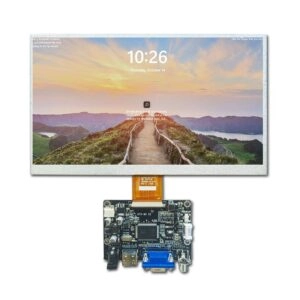
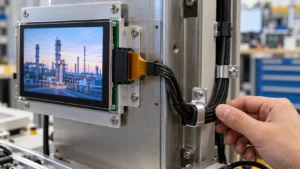
Additional considerations in industrial touchscreen display design include dust and water resistance ratings such as IP65 or higher on select models. Conformal coatings protect internal circuitry from humidity and contaminants. Multiple signal interfaces (HDMI, VGA, DVI, USB) help integration with existing control systems. Rugged enclosures and mounting options fit panel or open-frame installations in space-constrained or vibration-heavy environments.
Integrated Industrial Panel PC Solutions
Industrial panel PCs with embedded processors extend functionality by combining display, computing, and I/O in one unit. These systems support automation software while keeping the same environmental resilience as standalone monitors. Customization options allow adjustment of cable lengths, connectors, PCB layouts, and mounting hardware to match exact mechanical requirements.
Testing and Certification
Throughout the design process, rigorous testing validates performance under combined stressors—temperature, humidity, impact, and electrical noise. Compliance with international standards for quality, environmental management, and industry-specific certifications ensures suitability for global deployments.
As industrial operations adopt smarter equipment, touchscreen interfaces must deliver durability, usability, and reliability without compromise. Careful attention to cover glass specifications, firmware optimization, and thermal management enables systems that operators trust and equipment owners depend upon for continuous uptime.
FAQ
What thickness range is typical for cover glass in industrial touchscreen displays?
Cover glass thickness commonly spans from 2 mm to 10 mm or more. It is determined by impact risks and environmental demands. Thicker, strengthened glass combined with appropriate coatings enhances breakage resistance in heavy-use industrial settings.
How does custom firmware support glove use with PCAP touchscreens?
Firmware tuning adjusts sensitivity thresholds and noise filtering algorithms to enable reliable detection through various glove materials. These include thick leather or cut-resistant types. It does this while minimizing false touches from moisture or contaminants.
What operating temperature ranges are available for industrial LCD panels?
Extended-temperature LCD panels typically support -30°C to 85°C operation. This enables consistent performance across global climates without additional heaters in standard conditions. Further enhancements expand suitability for extreme environments.
Conclusion
The industries that design or update their machinery should have reliable display manufacturers who will provide complete customization solutions for tough usage conditions. With its experience of more than 20 years in OEM and ODM manufacturing, Miqidisplay provides a one-stop shop solution that specializes in TFT LCD, IPS, and OLED displays designed for industrial settings.
The company caters to a variety of industrial displays and rugged panel PCs with glove-compatible PCAP touch screens, wide temperature range capabilities, high brightness, conformal coating, and IP ratings. Miqidisplay offers customized options that include toughened glass with customized coating, firmware optimization, optical bonding, customized mounts, and interface adjustments as per the project requirements.
Get in touch now to talk about your project needs and get your project-specific assistance.