




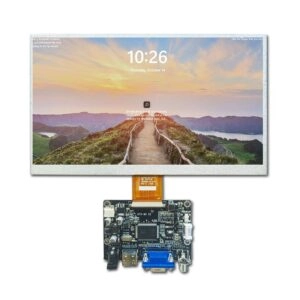
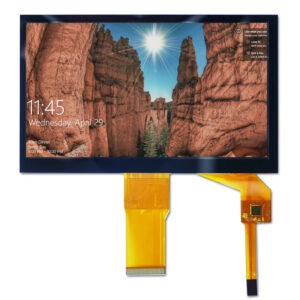
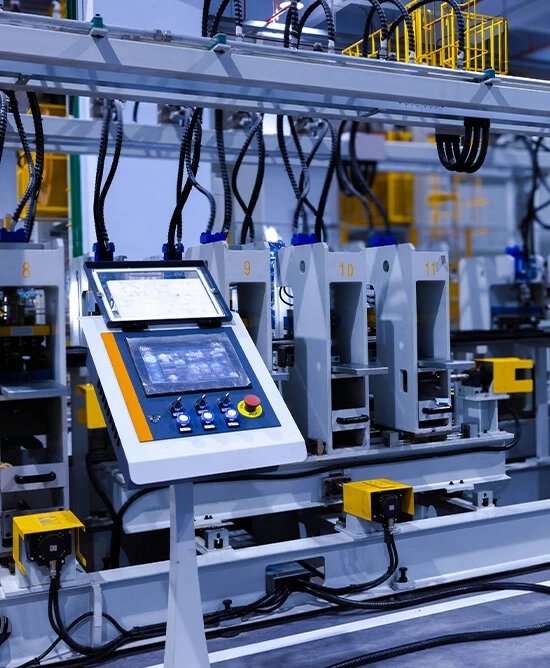
Industrial TFT LCD displays are used in applications where the normal TFT display is not able to function consistently. High Brightness for use in the outdoors, Wide Temperature for use in extreme environments and Long Life for 24/7 operation are key characteristics that enable Industrial TFT Displays to function in applications such as Outdoor Human-Machine Interfaces, Marine Displays, Public Information Displays and Kiosks, In Vehicle Displays and Heavy Industrial Control Panels. Manufacturers and system integrators require displays that can operate in a wide variety of environments and Industrial TFT Displays are designed to function in a broad range of situations.
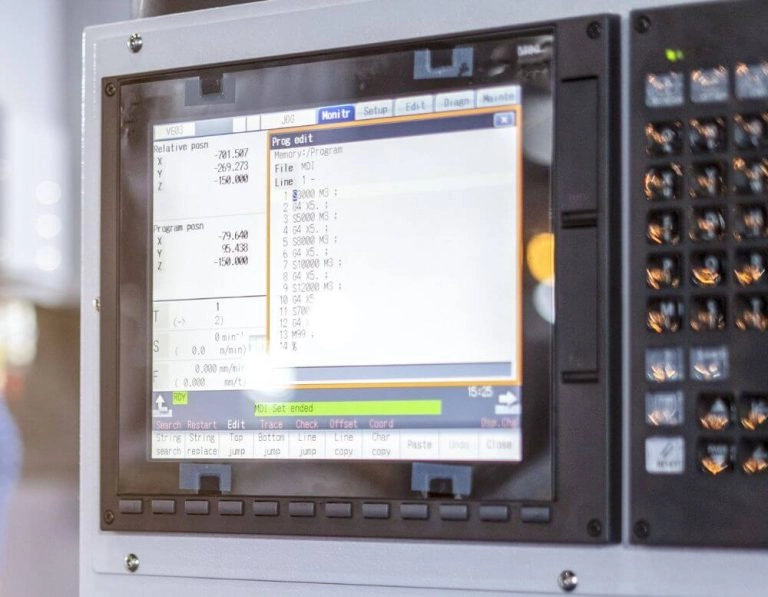
Sunlight Readable
The displays are exposed to illuminance levels in outdoor environments which reach up to 10,000 lux on overcast days and exceed 100,000 lux on sunny days. The images on standard panels with 300 nits are no longer clearly visible due to excessive reflections. To enable effective reading of the content also in very bright ambient light, industrial sunlight-readable TFT-LCD displays feature a high backlight luminance, special optical designs and detailed engineering.
How to Choose a Brightness Level
When selecting displays for installation, it is necessary to determine the specific lighting conditions at the site. On an overcast day, for example, typical outdoor lighting levels would be around 10,000 to 25,000 lux. In direct sunlight, this can rise to 32,000 to 100,000 lux and above. A sheltered outdoor location used for semi-installed products may have an effective level of around 800 to 1,200 nits but exposed locations will require higher levels of around 1,500 to 2,500 nits and would also benefit from anti-reflective treatments.
Brightness uses nits. The value is in cd for each square meter. Nits show how much light the panel gives off on its own. When light moves in the room, black begins to look lighter. The difference between dark and light does not look as sharp. Most projects leave a margin of 20 to 30 percent to cover backlight fading over time.
Readability of the content is also affected by the design. The white characters on a dark background provide clear edges but are sensitive to low reflection surfaces. In contrast, dark characters on a light background provide better reflection stability but require more power. Thicker lines and icons are easier to read than fine details at high brightness. In addition, content viewed through polarizers, such as in a marine or automotive environment, must have the polarizers oriented correctly to read the content.
Optical Bonding Process
Optical bonding uses glue to keep the display layers together. This makes the display look clear and helps the display stay good for a long time. You can use optically clear adhesive film or liquid optically clear adhesive. The thickness can be between 50 and 1,000 μm. The project needs will decide what thickness to use. It helps when the materials fit together well. Glass, glue, and cover layers should stretch and shrink in the same way when it gets hot or cold. This can lower stress. This can stop white marks. This can help keep the layers from coming apart when the temperature changes.
Adhesives are selected based on high transmittance of greater than 98% at 550nm, low haze of less than 0.5% and matched refractive index to minimize interface reflections. The adhesive is subject to extensive aging test including UV and Damp Heat test to confirm long term stability. The production is carried out in cleanroom with controlled surface preparation, precise alignment, fixed vacuum, and strict curing process to prevent defects.
Surface Treatment Comparison
Surface treatments make surfaces ready for glue or paint. Surface treatments clean off dirt. Surface treatments help things stick better. Some ways are to use solvent cleaning. You can try ultrasonic cleaning. Plasma treatment is another way. There is also corona treatment. UV ozone activation can help as well. The main goal is to get the surface energy between 38 and 50 mN/m. Lowering the water contact angle is important because it helps wetting.
Special primers and silane coupling agents can increase the chemical bonding to special substrates. The mechanical surface treatment by roughening produces adhesion by interlocking. However, it has limitations on smooth optical surfaces, since increased haze can occur. The process control, i.e. reproducibility, and the equipment maintenance have a large influence on the production output and the long time adhesion.
Wide Temperature
Most regular TFT LCDs work when the temperature stays between 0°C and 50°C. Industrial wide-temperature models run from -30°C to 85°C and sometimes go higher. People use these models outside, in cars, and in rough factory places.
Technical Challenges at Extreme Temperatures
For low temperatures the high viscosity of the liquid crystal causes long reaction times and oscillations. For high temperatures the temperature is approaching the clearing point of common liquid crystals, resulting in a low contrast or even a black out of the image. To solve these problems special wide-temperature liquid crystals are used in combination with reinforced polarizers and high-stability adhesives. In module level tests liquid crystal displays are subjected to thermal shock and thermal cycling tests until more than 500 hours without any delamination, bubbles or performance degradation.
Working vs Storage Temperature Considerations
The operating temperature rating is different from the storage temperature rating. Designs need to handle the heat from backlights and driver circuits. This heat often makes the surface warmer than the air around it. Good thermal paths like heatsinks and interface materials help keep things steady. Conformal coatings and a strong build help keep out vibration, moisture, and dust in tough places.
Application Benefits in Harsh Environments
Wide-temperature industrial TFT LCDs can work in very hot deserts, in cold arctic weather, and in places where factory conditions change. These displays keep working when heat or cold can stop other screens. I can still see clear images even if the temperature gets very high or very low. The screen keeps working and does not slow down or stop when the weather is rough.
Long Life
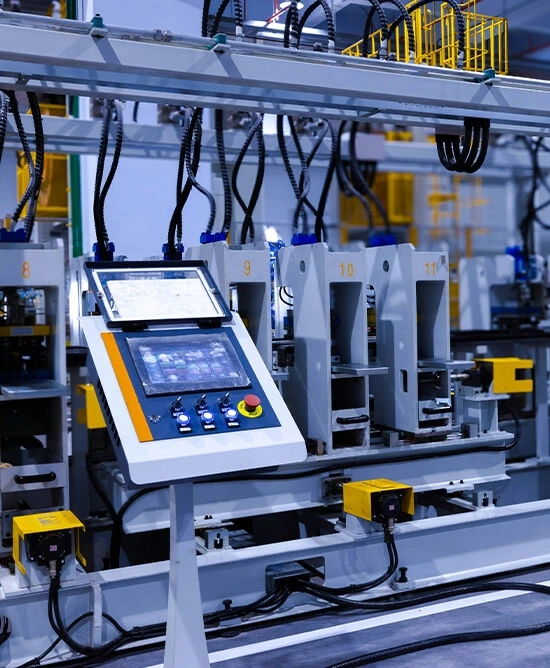
For industrial applications, where products are in use for long periods of time and have to be taken out of service as little as possible, the extended operational life of a display is important. High-quality backlights for example are designed to reach 50,000 hours to 50 % brightness. The initial burn-in is followed by a fine-tuning of the drive current in order to reach the designed life while keeping the heat generation as low as possible.
Backlight Lumen Maintenance Standards
When people talk about lifetime, they use terms like L70 or L50. L70 means the light gives at least 70 percent of its first brightness. L50 means the light drops to half of its first brightness. Keep the LED junction temperature under 80°C. A good thermal design helps to lower the temperature. Using polarizers with high stability and driver circuits with high MTBF helps the system run for a longer time. Accelerated life testing looks at how a thing works when people use it in a way that makes it wear out faster than usual.
Strategies for Extending Operational Life
Brightness headroom lets you use less power each day. This can help the backlight work for a longer time. For example, when shipping starts with higher brightness and later switches to lower brightness during normal use, the brightness does not wear out as fast. Pick the right parts. Keep water out. Stop shaking. Build strong frames. This helps the device last for years. I check the device often and change the brightness when I need to. The device works better outside that way. The battery also lasts longer.
FAQ
What brightness level should I use in direct sunlight?
If you want to use a screen outside when the sun is out, the screen should have between 1,500 and 2,500 nits. The screen should have an anti-reflective layer and use optical bonding. These features make it easier to see the screen.
What are the temperature ranges of the wide-temperature industrial TFT LCDs?
The standard range for these modules is from -30°C up to 85°C. For specific high or low temperature requirements there are also variants available.
What factors lead to a long backlight lifetime of industrial displays?
Industrial displays with long backlight lifetime are equipped with high-efficiency-LEDs, are driven with constant drive current, feature an excellent thermal concept and a burn-in test. This allows for a lifetime of 50,000 hours and more.
Partner with a Trusted Industrial TFT LCD Manufacturer and Supplier
Miqidisplay offers custom industrial TFT LCD modules with high-brightness sunlight-readable displays, wide-temperature panels, optical bonding, touch integration, and ruggedized designs for demanding applications.
Miqidisplay makes and sells TFT LCD screens. The company has many types of screens. These include standard displays and industrial monitors. Miqidisplay can also make custom products for different projects. The portfolio has screens that stay clear in sunlight. These screens use LCD. The screens work when it is hot or cold. You can use the screens in factories. You can use the screens in cars. You can use the screens outside. You can ask the team when you have technical questions. You can talk to the team when you have an idea for a project. You can reach out to the team when you need help with the supply chain.